January 2026 marked a period of unprecedented state violence and intensified human rights violations across Iran. The nation witnessed a massive and spontaneous uprising, erupting in over 400 cities, met with a bloody and coordinated crackdown by the ruling regime. While this report is dedicated to the alarming rise in executions within the Iranian prison system during January, it must be underscored that these executions occurred in parallel with a much broader and more horrific campaign of violence, amounting to crimes against humanity committed in the streets.

Eyewitness accounts, medical evidence, and leaked state documentation reveal that during the January uprising, the Iranian regime implemented what can only be described as a policy of extermination. Protesters—men, women, youth, children, and even the elderly—were targeted with lethal force, including direct headshots, execution-style killings of the wounded, and the systematic elimination of those receiving medical treatment. Hospitals were transformed into centers of repression, wounded individuals were abducted or killed inside medical facilities, and mass graves—such as those uncovered in Behesht-e Rezvan Cemetery in Mashhad—were used to secretly bury the dead.
Official state media acknowledged the deaths of 3,117 protesters, but credible estimates suggest the true number is far higher. At least 50,000 individuals were arrested nationwide. Doctors, artists, students, and lawyers were among the detainees, many of whom were subjected to enforced disappearance, torture, and coercion into forced confessions. Security forces and judicial officials openly admitted to the goal of rapid and harsh punishment without regard for due process.
One particularly chilling revelation came from Ahmad Ghadiri, a regime-affiliated figure, who stated that the regime should have killed protesters en masse in the streets to avoid the “cost” of executing them later in prison. This admission reveals the deliberate and systematic nature of the killings—not as spontaneous acts of repression, but as a premeditated state policy.
Iran Human Rights Monitor (Iran HRM) emphasizes that these horrific crimes—including massacres, torture, sexual violence, and extrajudicial executions—demand comprehensive and independent investigation. Separate reports will be published to document the full extent of these atrocities and to present evidence to international human rights bodies for legal accountability.
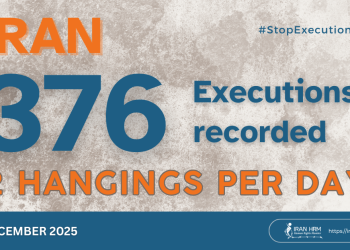
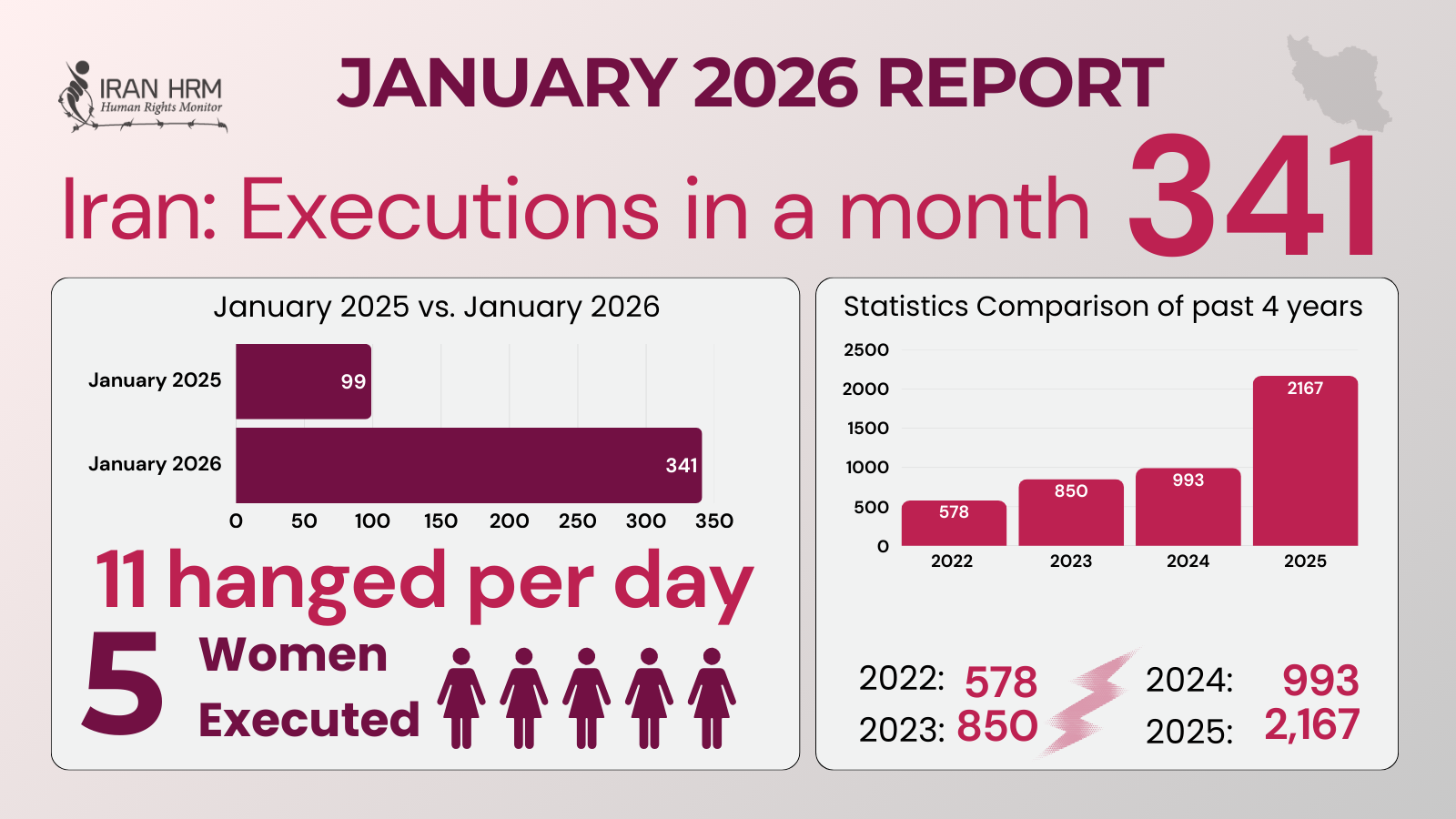
This report, however, focuses specifically on the execution of prisoners during January 2026. More than 341 executions were recorded, with 72 carried out in the final days of the month alone—averaging one execution every two hours. Many of these were conducted in secrecy and without fair trial, further highlighting the regime’s use of the death penalty as a tool of terror and retaliation.
The continuation of executions inside prisons reflects the regime’s ongoing attempt to crush dissent beyond the streets. It is the silent extension of a massacre that began with bullets and continues with gallows.
Overview of January 2026 Executions
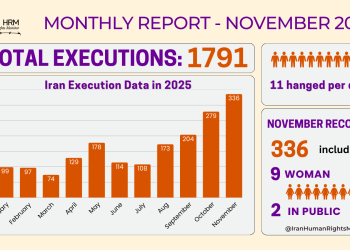
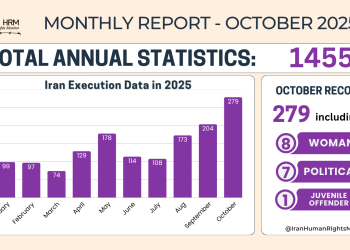
In January 2026, the Iranian regime executed at least 341 individuals in its prisons, a figure that includes 5 women. This marks the fourth consecutive month where the execution toll has exceeded 300, highlighting a deliberate and desperate strategy by the ruling dictatorship to instill fear and quell the ongoing nationwide uprising. The provinces of Razavi Khorasan, Khuzestan, Isfahan, Lorestan, Fars, and Kerman witnessed particularly high numbers of executions. The total number of executions for January 2026 significantly surpasses those of previous years, including approximately three times the number in January or Persian month of Dey 2025 (117), 3.5 times in Dey 2024 (101), and five times in Dey 2023 (65), indicating a systematic and accelerated campaign of state-sponsored killing.
Detailed Breakdown of Executions in January 2026
January 1 & 3: A total of 9 prisoners were executed. Among them were 35-year-old Ebrahim Bazvand, 22-year-old Hashem Memari, and Arman Masjedi in Tabriz; 28-year-old Asghar Shahi, 30-year-old Khalil Rahmani, and 26-year-old Fahim Rasoulzadeh in Shiraz; Khodayar Mirzazadeh in Taybad; Mola Moradghobadi in Bojnurd; and Hossein Morad Zamani in Ferdows.
January 4: 16 prisoners were sent to the gallows. These included Ahmad Saki and Noureddin Eidizadeh in Nahavand; Asghar Babaei in Hamedan; Hamidreza Moradi in Dezful; Shakaram Masti in Kermanshah; Mohsen Ghaedrahmat in Aligudarz; Soroush Khani in Karaj; Kazem Sourian in Khorramabad; Sajjad Golmohammadi in Ardabil; Vali Karambeygi in Borujerd; Arman Nazari in Semnan; Amin Elahi in Qom; Saeed Rostami in Qazvin; a prisoner named Nima in Bandar Abbas; Ebrahim Bazvand in Tabriz; and Aidin Salavati in Arak.
January 5: 16 prisoners, including Tayebeh Hekmat, a woman, were hanged. The victims were Armin Aghaei in Kerman, Allahkaram Beigi in Bam, Siavash Namdari in Gorgan, Nourmohammad Shahsavari in Yazd, Fereydoun Moshirikhah and another prisoner in Ahvaz, Mojtaba Rezaei in Saveh, Gholamreza Saeedi in Kashan, Tayebeh Hekmat and Karim Asgari in Zanjan, 27-year-old Amir Sarlak in Dorud, and Sasan Jourablou in Neyshabur. Additionally, Abdullah Dashti in Behbahan, Abdolnour Shabani in Ahvaz, Mohammad Javad Rasouli in Nowshahr, and Rostam Hariri in Semnan were executed on this day.
January 6: 12 prisoners were executed. They were Farajollah Tabarok in Borazjan, Mehran Chupani in Jiroft, Moslem Haji Babaei and another prisoner in Ahvaz, Soltan Morad Rasouli in Khaf, Karam Shahbahri in Birjand, Fardin Sohrabzadeh in Ilam, Mohsen Teymouri in Rasht. Also, Majid Madadi in Ferdows, Arsalan Arabi in Rasht, Alibakhshi Khanmohammadi in Bukan, and Amir Hamzeh-Palangi, a 21-year-old Baluch citizen, in Kerman.
January 7: A total of 33 prisoners, including Soheila Azizi, a woman, were executed. Among them were Ali Ardestani (son of Ahmad), executed on charges of ‘espionage’; Kaveh Panahi and Ali Neyrang in Yazd; Yazdan Allahyari, Hal Pishva, Omid Nobakht, and a prisoner with the surname Hosseini in Qezelhesar Prison. Also, Khodarahm Mehri in Esfarayen, Ahmad Hemmati in Gonabad, Mahyar Mohammadi in Sanandaj, Karim Bozorkar and Mohammad Jolaei in Dezful, Sharif Hadavi in Mahshahr, Mohammad Moradi and Sohrab Niroumand in Bandar Abbas, Ruhollah Aghapour in Mahabad, Abbas (Almas) Mehdinejad in Sabzevar, Bagher Bazvand in Malayer, Bahman Yarbigi in Damghan, Mosayeb Chamani in Chabahar, Soheila Azizi and another prisoner in Mashhad, Davood Bagherzadeh in Bushehr, Behzad Alipour in Shahrekord, Khodamorad Hemmati in Kashmar, Sobhan Yeganeh in Shiraz, and Hamed Niazi in Qezelhesar.
January 8: 7 prisoners were executed. They included Ramin Navazi in Bojnourd, Shahram Aghcheli in Sari, Valikaram Beigi in Quchan, Nemat Gholami, Jamilollah Shahi, 33-year-old Mohammad Ashraf, and another prisoner in Taybad.
January 10: 11 prisoners were hanged. The victims were Mostafa Sheikhi in Khorramabad, Samyar Emkani in Kermanshah, Ebrahim Raiati in Hamedan, Bahman Shokri in Dezful, Masoud Mardani in Yasuj, Mehdi Babaei in Nahavand, Sasan Amini and another prisoner in Karaj, Reza Shahmohammadi, Younes Parsa, and another prisoner in Aligudarz.
January 11: 9 prisoners were executed. They were Abdolhossein Zakipour in Arak, Mola Jozipour in Semnan, Samirad Zali in Borujerd, Aeen Mousavi in Qom, Hamid Khatib in Ardabil, Jabbar Gholipour in Qazvin, Behzad Niazi and another prisoner in Bandar Abbas, and Alireza Bagheri in Tabriz.
January 12: 12 prisoners were hanged. These included Arta Saei in Nowshahr, Ali Teymouri in Gorgan, Parviz Khani in Neyshabur, Sobhan Ghasemi in Dorud, Hossein Jalili in Zanjan, Sattar Ahmadi and three other prisoners in Isfahan, Javad Bahrami in Saveh, Sajjad Bamari in Kerman, and Habibollah Shakeri in Kashan.
January 13: 14 prisoners, including one unnamed woman, were executed. The victims were Jalal Bakhtiari in Borazjan, Karim Piri in Bam, Kiumars Sanaei in Khaf, Aziz Alipanahi, Hamed Latifi, and another prisoner in Yazd, Najafali Navabi in Jiroft, Mohammad Amin Baghlani in Ahvaz, Morteza Gholami in Ilam, Sohrab Fathi in Birjand, Akram Rezaei and Hamzeh Jafari in Rasht, Kourosh Bozorgmehr in Sanandaj, and Mohammad Javad Naeimi in Gonabad.
January 14: 16 prisoners were executed. They included Khosro Abdi in Sabzevar, Yaser Akbari in Shahrekord, Arman Mohammadian and Mostafa Azizi in Kashmar, Dariush Bozorgi and Mehrshad Asadabadi in Mahabad, Sharif Dehghani in Shiraz, Armin Aghapour in Bushehr, Jalil Shahbazi in Mashhad, Ali Aghahemmati in Chabahar, Mousa Asgari in Damghan, Seyed Ali Hatami in Ferdows, Ehsan Ansari in Quchan, Aziz Moradhosseini in Esfarayen, Borzou Mehdinia in Malayer, and Farshad Heidarikia in Bojnourd.
January 15: 4 prisoners were hanged. The victims were Azim Omari in Behbahan, Saleh Kaabi in Mahshahr, Omid Jamshidi (Mehrabi) in Sari, and another prisoner in Taybad.
January 17: 6 prisoners were executed. Among them were 30-year-old Afshin Jabbari, Kheirullah Goljani, and Kamran Manafi in Qazvin; Malek Kave’i in Bandar Abbas; Yarmorad Bakhshi in Ardabil; and Aboutaleb Gholami in Tabriz.
January 18: 14 prisoners were hanged. These included Yazdan Mardanpour in Kermanshah, Fereydoun Goudarzi in Aligudarz, Pouya Najafi in Dezful, Bijan Shahrokhi in Khorramabad, Akbar Ganji in Nahavand, Ali-Asghar Shahi in Yasuj, Shiroudeh Maghsoudi in Borujerd, Asad Salahshour in Semnan, Eshaq Niyazi in Arak, Susha Abdi in Hamedan, Abdolhossein Yari in Karaj, Mostafa Koushki and another prisoner in Qom, and 22-year-old Kian Manouchehri in Yazd.
January 19: 9 prisoners, including Kimia Khani, a woman, were executed. The victims were Iman Neyri in Kerman, Goodarz Barzegar in Kashan, Faramarz Amuzad in Nowshahr, Bahram Hassanpour in Saveh, Kiarash Langroudi in Zanjan, Kabir Akhlaghi in Gorgan, Navid Jabbari in Neyshabur, Alireza Barani in Dorud, and Kimia Khani in Isfahan.
January 20: 8 prisoners were hanged. They included Mardan Saedi in Birjand, Foroud Sagvand in Khaf, Kamran Ghiasvand in Ilam, Mikail Bahari in Borazjan, Nader Eini in Bam, Mobin Golmohammadi in Yazd, Sirous Meshkini in Jiroft, and Rastin Majidi in Ahvaz.
January 21: 21 prisoners were executed. The victims were Momen Abdipour in Mahshahr; Ashkan Kahar and another prisoner in Rasht; Jalal Papi in Nowshahr; Shahoo Safari in Sanandaj; Touraj Rashidi in Esfarayen; Houshang Maleki in Ferdows; Mohammad Karim Najafi and Amir Moghadam in Qezelhesar Prison; Saeed Javan in Damghan; Jamshid Khanzadeh in Shahrekord; Jabbar Ganji in Chabahar; Nabiollah Kaabi in Bushehr; Siavash Arabi in Kashmar; Soltan Morad Sharafinia in Sabzevar; Avat Amiri in Mahabad; Valikaram Souri in Khorramabad; Kiarash Dinari in Malayer; and Mousa Sadri, Afshin Mohammadi, and another prisoner in Shiraz.
January 22: 2 prisoners, Nariman Sohrabi in Bojnourd and Abdullah Panjshiri in Taybad, were hanged.
January 24: 16 prisoners were executed. Among them were Amanj Karvanchi and Arsalan (Abdolrahman) Sheikhi, hanged on charges of ‘baghy’ (armed rebellion) for their alleged membership in ISIS. Other victims included Najafali Sagvand in Khorramabad, Ariyo Emami in Karaj, Reza Goudarzi in Aligudarz, Safi Abdoli in Dezful, Shayan Nourmohammadi in Hamedan, a prisoner named Jafarzadeh in Sanandaj, Amin Motamedi in Yasuj, Mostafa Mohammadi in Nahavand, and Nariman Kheradmand in Kermanshah. Additionally, 27-year-old Sajjad Farhadpour in Khomein, three unnamed prisoners in Qezelhesar (Karaj), and Taleb Mohammadian in Semnan were executed.
January 25: 14 prisoners, including Leila Joudaki, a woman, were hanged. The victims were Ali Moradi and Mohammad Nouhani, Baluch citizens, in Zahedan; 28-year-old Bahram Haddadshokri and Siavash Dorostkar in Ardabil; Ebrahim Abdoli and Pejman Safari in Tabriz; Leila Joudaki in Qom; Alimohammad Behjat in Borujerd; Mahmoud Shafiei in Semnan; Teymour Rostami in Qazvin; Ahmad Jalili in Bandar Abbas; Majid Torki in Nowshahr; Esmaeil Niazi in Arak; and Mehdi Alihosseini in Ahvaz.
January 26: 10 prisoners were executed. They included Javad Shabani in Nowshahr, Ehsan Kamarei in Neyshabur, Mohammad Gharacheh in Zanjan, Saeed Ghasemi in Saveh, Ashkan Khodayari and another prisoner in Isfahan, Rahman Nobakht in Gorgan, Saman Sarlak in Dorud, Amirhossein Faghani in Kashan, and Dariush Mehrani in Kerman.
January 27: 11 prisoners were hanged. The victims were Javad Haghighat and Abolfazl Beigmohammadi in Zanjan, Rajabali Nourzad in Rasht, Khodakaram Moradi in Birjand, Sanjar Dowlat-Rashid in Bam, Mojtaba Azizi in Khaf, Ghobad Fathi in Ilam, Abbas Karami in Borazjan, Mehdi Balali in Ahvaz, Mehran Akhbari in Jiroft, and Karim Enhesari in Yazd.
January 28: 16 prisoners were executed. Among them was Hamidreza Sabet Esmaeilpour (son of Gholamhossein), executed on charges of ‘espionage and intelligence cooperation’ with a hostile service. Other victims included Saeed Malikan in Qezelhesar, Foad Amini in Mahabad, Sajjad Khani in Esfarayen, Farhad Namazi in Sabzevar, Arshia Chegeni in Shiraz, Nima Afshari in Malayer, Khosro Pezeshki in Damghan, Armin Aghapour in Mashhad, one prisoner in Chabahar, Darvish-Abbas Yadegari in Kashmar, Hossein Mousavi in Shahr-e Kord, Mokhtar Hassani in Bushehr, and Hashem Abbasi in Ahar. Additionally, Amir Rouhi in Kerman and Amir Hossein Tavakoli Zanyani in Shahr-e Kord were executed.
Conclusion and Call to Action
The relentless escalation of executions in January 2026, reaching 341 recorded cases, is a stark indicator of the Iranian regime’s desperate attempts to cling to power amidst an intensifying nationwide uprising. These brutal tactics, including unjust trials and mass hangings, are not merely judicial actions but tools of political repression aimed at terrorizing the populace and suppressing dissent.
Iran Human Rights Monitor (Iran HRM) unequivocally condemns these atrocities and calls upon the international community, including all human rights organizations, the United Nations, and advocates for justice, to take immediate and decisive action. It is imperative to hold the Iranian regime accountable for its egregious crimes against humanity and to pressure it to halt the machinery of execution and repression against its own citizens.