Launch of a Series of City-Focused Reports on the Local Dimensions of Repression
Examining the Elements of Crimes Against Humanity in Iran
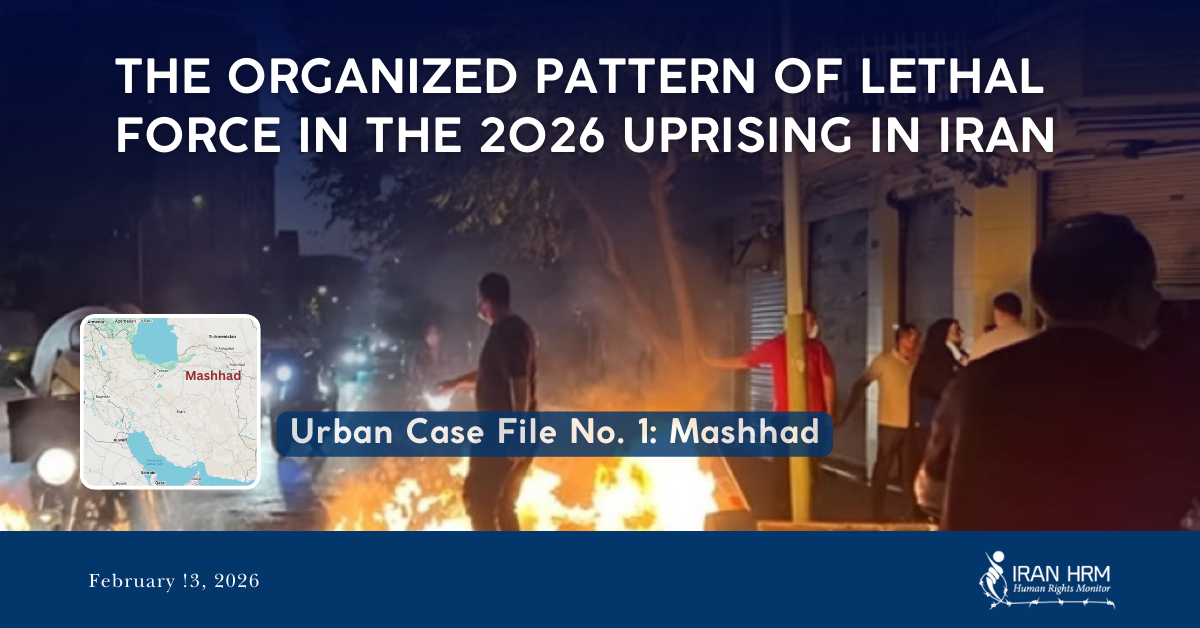
This report constitutes the first city-focused case file within a broader series examining the 2026 uprising. Focusing on the city of Mashhad, it documents the pattern of repression at the local level. Similar case files concerning other cities across Iran will follow.

The Nationwide Framework of Repression in the 2026 Uprising
The nationwide uprising of 2026 was met with a violent and coordinated response by the security and law enforcement forces of the ruling regime in Iran. Reports collected from various cities across the country indicate that the use of live ammunition against unarmed protesters, mass arrests, torture to extract forced confessions, and systematic pressure on the families of those killed were implemented simultaneously in multiple locations.
A comparative review of events across different cities reveals recurring patterns in the management of the repression of protests by the security and law enforcement forces of the ruling regime in Iran. These include direct targeting of vital areas of the body, nighttime burials or restrictions on information regarding burial sites, the imposition of heavy financial demands for the release of bodies or detainees, and the transfer of detainees to detention facilities under inhumane conditions. These similarities go beyond isolated incidents and point to the existence of a coordinated operational policy.
Where the required material and mental elements are established, these actions may be consistent with the definition of a “widespread or systematic attack against a civilian population” under international criminal law. This report, focusing on Mashhad, examines evidence of the implementation of this pattern.
Use of Lethal Force Against Protesters in Mashhad
On 8 and 9 January 2026 (corresponding to 18 and 19 Dey 1404), multiple pieces of evidence indicate the direct use of live ammunition against unarmed individuals in the streets of Mashhad. Published footage shows that, in some cases, armed forces fired at citizens from a very close distance.
In one circulated video, two young men are seen walking past security forces when they are suddenly shot. The distance of the shooting is estimated to be approximately one meter. The footage shows no indication of a threat or attack by the two individuals, and both collapse immediately after being struck.
Under international standards governing the use of force, firearms may only be used where there is an imminent threat to life. In this case, the available visual evidence does not demonstrate such circumstances.
At the same time, Ahmad Alamolhoda, Friday Prayer Leader of Mashhad, stated in his 23 December 2025 (2 Dey 1404) sermon:
“Media affiliated with the enemy use artificial intelligence to place fabricated slogans over images of gatherings to create the impression that the people have turned away from the Revolution.”
In his sermon of 28 December 2025 (7 Dey 1404), he further warned that “if the enemy infiltrates, the events of 2009 will be repeated,” emphasizing the necessity of confronting behind-the-scenes actors.
Security officials and local commanders of the Revolutionary Guard and law enforcement forces also described the actions taken as “confrontation with rioters affiliated with the enemy.” In certain statements, the use of firearms on 8 and 9 January was justified as a response to “organized violence” or “terrorist acts.”
These positions, by framing protests as a security threat and attributing them to an “enemy project,” provide a discursive context that may be relevant in assessing the link between official rhetoric and the widespread use of lethal force.
Documented Case: Abbasali Ramazani
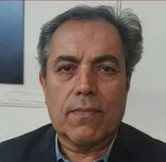 Abbasali Ramazani, over 70 years old and a former political prisoner from the 1980s, was shot during the protests in Mashhad and died as a result. At the time of the incident, he had been released under electronic monitoring and was under judicial supervision.
Ramazani had previously been arrested and convicted for activities supporting families of political prisoners and had been summoned to Vakilabad Prison in August 2024 (Mordad 1403) to serve his sentence. The killing of an elderly individual with a known heart condition who was under official supervision raises serious questions regarding the necessity and proportionality of the use of lethal force.
Night Burials and Reports of Possible Mass Graves
Following the deadly events of January, reports emerged regarding the nighttime transfer of bodies to Behesht Reza Cemetery in Mashhad. Field sources indicated the arrival of refrigerated vehicles at unusual hours and burials conducted outside ordinary procedures.
Some accounts attributed to individuals connected to the cemetery suggest that pre-dug pits were used and that multiple bodies were buried simultaneously within a designated area. Families have also reported being denied precise information about burial locations.
Due to the lack of independent access to burial records and restrictions on field investigation, full verification of these claims requires independent review. Nevertheless, the consistency of separate accounts underscores the urgency of further investigation.
Heavy Financial Demands and Conditions for the Release of Bodies and Detainees
In certain cases, extremely large sums were demanded for the release of the bodies of those killed. Families referred to these payments as the “cost of the bullet.” Until such sums were secured, bodies reportedly remained in morgues.
Simultaneously, some families were required to sign pre-prepared forms specifying causes of death that absolved security forces of responsibility. In one case, a father was compelled to sign a document stating that his son had been a “Basij member” and had been “killed by protesters.” In another case, refusal to sign resulted in the withholding of the body.
In cases involving detainees, heavy bail amounts were imposed, forcing many families to sell assets or incur debt. This pattern reflects the use of economic and administrative mechanisms as instruments of pressure.
Widespread Arrests and Conditions in Vakilabad Prison
Following the violent suppression of protests in Mashhad, arrests continued in a broad and multi-phase manner. Arrests were not confined to protest sites but extended to homes, workplaces, and even to families seeking information about detained relatives. This pattern suggests an organized effort not merely to disperse crowds but to suppress any potential for continued protest activity.
According to information received from informed sources, a significant number of detainees were transferred to Vakilabad Prison in Mashhad, which became a central detention facility for protest-related arrests. A recently released detainee reported severe overcrowding, prolonged judicial uncertainty, and the detention of 18- and 19-year-olds alongside individuals convicted of ordinary crimes.
The witness stated that interrogations involved intense psychological pressure and, in some cases, physical abuse. Some detainees were pressured to accept security-related charges or sign pre-drafted confessions. Access to independent legal counsel was limited, and in certain cases families were required to retain lawyers approved by judicial authorities.
Mohammad-Hossein Doroudi, Prosecutor of Razavi Khorasan Province, acknowledged on 17 January 2026 (27 Dey 1404) that individuals had been arrested in connection with the protests in Mashhad and described the arrests as part of efforts to confront what was termed “rioting and insecurity,” emphasizing the continuation of judicial action.
This official acknowledgment indicates that arrests extended beyond the immediate protest scenes and continued in an organized manner under judicial supervision.
In addition to the documented cases presented in this report, the names of confirmed victims in Mashhad as of the date of publication are provided in the Annex at the end of the article
Legal Analysis of the Mashhad Case
The evidence collected from Mashhad indicates that the suppression of the January protests was not limited to isolated uses of force but involved coordinated lethal, security, and judicial measures implemented across multiple layers.
- Violation of the Right to Life
The use of lethal force against unarmed protesters, particularly where no imminent threat to life is demonstrated, is inconsistent with Article 6 of the International Covenant on Civil and Political Rights and the UN Basic Principles on the Use of Force and Firearms. Targeting vital body areas and shooting from close range, if established, may demonstrate unnecessary and disproportionate use of force.
- Inhuman Treatment and Systematic Pressure on Families
Night burials, restrictions on burial information, heavy financial demands for body release, and compelled signing of predetermined documents may constitute inhuman treatment and organized pressure against victims’ relatives, extending beyond ordinary law enforcement measures into the realm of societal intimidation.
- Arbitrary Detention and Fair Trial Violations
Mass arrests lack transparency, restricted access to independent counsel, coercion to confess, and disproportionate bail conditions conflict with fair trial guarantees under international human rights law.
- Elements of a Widespread or Systematic Attack Against a Civilian Population
The combination of coordinated firearm use, repetition of patterns across city locations, centralized post-killing management, and multi-layered pressure on families and detainees may, if linked to an established policy or directive, meet the elements of a widespread or systematic attack against a civilian population under international criminal law.
The continuation of similar patterns across multiple cities underscores the necessity of examining the role of local and national authorities in authorizing, endorsing, or facilitating these actions.
Conclusion and Need for Independent Investigation
The documented evidence in the Mashhad case—ranging from the direct use of lethal force against unarmed individuals to mass arrests, organized pressure on families, and reports concerning burial practices—demonstrates a pattern that, if the required elements are established, may fall within the framework of a widespread or systematic attack against a civilian population.
Given the nature, scope, and repetition of these events, urgent and effective investigation within the mandate of the Fact-Finding Mission and other international human rights mechanisms is essential. Such review should include examination of operational directives, access to arrest and burial records, and determination of potential responsibility of officials at various levels.
Annex I
Confirmed Victims in Mashhad
As of the Date of Publication
Total Confirmed Victims: 62
Note: This list is based on verified information collected up to the date of publication. The verification and documentation process remains ongoing.
- Ahmad Pouyan
- Siavash Tork Tabrizi
- Ali Abazari
- Alireza Morovati
- Mehdi Eskandarian
- Mehdi Dalaei
- Siavash Esmaeili
- Hossein Salehi
- Ali Bagheri
- Ali Fatehi
- Mehdi Ebadollahi
- Mehdi Kermani
- Ali Mashhadi
- Bahman Mousapour
- Shahrouz Mehrabi
- Mehdi Keshavarz
- Ali Belal
- Amir Ghomi
- Amir Jangholi
- Amir Mohammad Bolourian
- Maryam Mohammadzaheri
- Mozir Ahmadi
- Ahmad Shakarpour
- Armin Soltan Mohammadi
- Mehdi Bagheri
- Meysam Abbasabadi
- Milad Bahrami
- Mohammad Ali Edrisi
- Hamidreza Bagheri
- Meysam Ghanbari Rad
- Mojtaba Rostaei
- Alireza Najari
- Ashkan Torabzadeh
- Mohammad Mehdi Salari
- Nima Ahmadi
- Alireza Ghadiri
- Amir Heydari
- Mehdi Mardan Nik
- Mehdi Chabok
- Purria Mirbehrouzian
- Dastgir Gorgij
- Abolfazl Sheikh Veisi
- Mohammad Reza Sadeghi
- Amir Ali Bastani
- Majid Khordmand
- Hossein Nikseresht
- Seyed Mohammad Hosseini
- Zahra Najafi
- Reza Gholipour
- Nirovana Ahmadi
- Taha Ghaemi
- Fatemeh Emamdoost
- Mahmoud Kazemi
- Abolfazl Norouzi
- Arshia Askari
- Majid Zangeneh
- Amir Reza Shabani
- Hamidreza Haddadi
- Ehsan Golmakani
- Iman Asadi
- Jafar Javidi
- Javad Zabet Loghaei