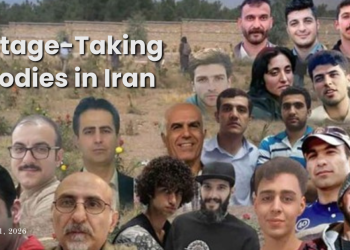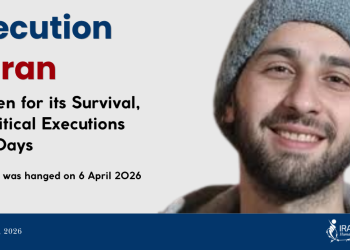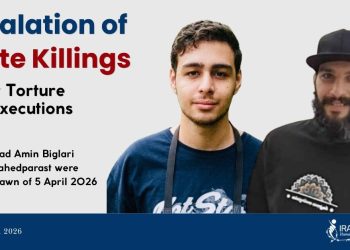
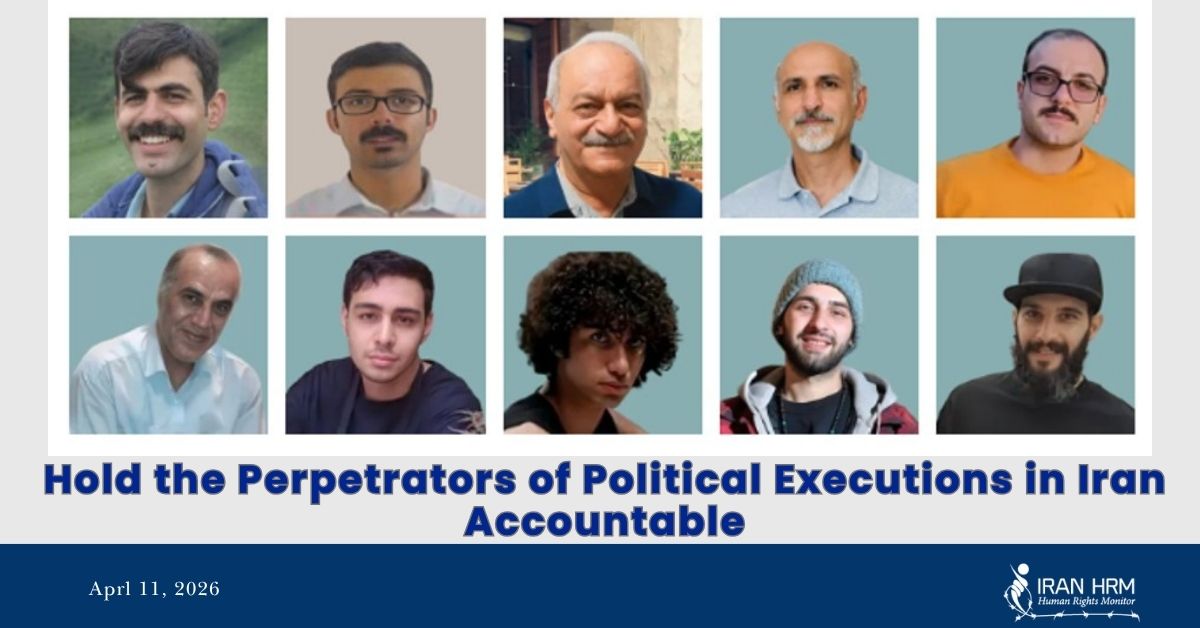
Between March 30 and April 9, 2026 (10-20 Farvardin 1405), ten political prisoners were executed in Qezel Hesar Prison. These individuals included political prisoners Vahid Bani-Amerian, Mohammad Taghavi, Babak Alipour, Pouya Ghobadi, Abolhassan Montazer, and Akbar Daneshvarkar, along with four detainees from the nationwide uprising of January 2026: Amirhossein Hatami, Mohammad-Amin Biglari, Shahin Vahedparast, and Ali Fahim.

These executions were accompanied by a violent raid on the political ward. Reports received by Iran Human Rights Monitor (Iran HRM) indicate that this process was coordinated and conducted under the direct supervision of prison officials, including Allah-Karam Azizi (Governor) and his deputy, Hassan Ghobadi (Azizi’s deputy), with Ghasem Sahraee serving as the officer on duty.
Report from Inside the Prison
At approximately 9:30 PM on Sunday, March 29, over 20 guards from the Qezel Hesar prison raided Hall 4 to transfer six members of the People’s Mojahedin Organization of Iran (PMOI/MEK) for execution. The raid was commanded by Hassan Ghobadi. At this hour, prisoners were in their cells, and the arrival of the guards was unexpected as it fell outside the usual hours for inspections.
Two guards stood by each cell, entered, and told the prisoners: “Come out of your cells without touching anything; it’s an inspection.” This was a calculated deception to ensure prisoners complied without resistance. To further reassure them, Hassan Ghobadi stated: “There is no problem; it is just a routine check.”
Once the prisoners gathered in the corridor, the guards began calling names, revealing their true intent to take the six PMOI members. When they attempted to handcuff Vahid Bani-Amerian from behind, he resisted. Several guards jumped on him, repeatedly striking his head and face until he was bloodied. Saeed Masouri, who had not yet entered the corridor, shouted: “Kill us all! Death to Khamenei!”
Ghasem Sahraee, the duty officer, asked political prisoner Ali Younesi for his name. When Ali responded and provided his last name, Sahraee punched him violently in the face, causing immediate swelling. Subsequently, 21 prisoners were handcuffed and taken to the administrative area (“Zir-e-Hasht”) before being sent to solitary confinement. There, the six condemned prisoners were separated. One by one, their fellow inmates kissed them, said their final goodbyes, and vowed to continue their path.
The Perpetrators of the Slaughter
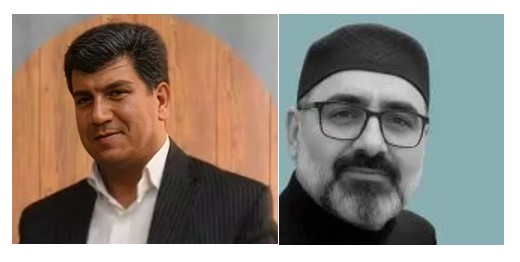
Allah-Karam Azizi
As a primary manager within the national prison system, Allah-Karam Azizi has played a key role in widespread human rights violations. He is directly responsible for fabricating cases against political prisoners, depriving them of medical services, and overseeing systemic violence.
- Execution Hub: Prisons under his management recorded the highest number of executions in the past year, highlighting his structural role in implementing the death penalty.
- Corruption and Abuse: Reports indicate organized corruption within his facilities, including the distribution of narcotics and extortion.
- Direct Involvement: Witness testimonies place him physically at the scene of executions, personally supervising the process.
Legal Violations under the UDHR:
- Article 3 (Right to Life): Massive executions under flawed judicial processes.
- Article 5 (Prohibition of Torture): Documented beatings and psychological warfare.
- Article 9 (Arbitrary Arrest): Fabrication of cases and prolonged detention without transparency.
- Article 10 (Fair Trial): Issuing heavy sentences through opaque proceedings.
- Article 1 (Violation of Human Dignity): Detention conditions, degrading treatment, and the systematic pressure exerted on prisoners and their families.
Ghasem Sahraee
The history of this official’s involvement in raiding wards and beating political prisoners is extensive. On July 26, 2025, over 100 special guards and Ministry of Intelligence agents raided Unit 4 under the orders of Azizi and Ghobadi. Ghasem Sahraee was the lead perpetrator.
- Threats of Mass Killing: Witnesses state Sahraee, dressed in camouflage, repeatedly told prisoners: “We will kill all of you.” When challenged, he brazenly replied: “We are doing the right thing; we will make all of you disappear.”
- History of Violence: Previously at Rajai Shahr Prison, he was notorious for his brutality:
- October 2021: Severely beat hunger strikers Behnam Mousivand and Soheil Arabi.
- July 2022: Injured Reza Mohammad Hosseini’s legs and back during a transfer to solitary.
- Other Assaults: Attacked Dr. Farhad Meisami and the ailing Mehdi Meskin-Navaz with tasers and batons. He once brutally beat Mohammad-Hossein Haghighatmanesh simply for writing slogans in the snow.
- Sexual Violence and Sadism: On January 15, 2023, after a prisoner reported Sahraee had threatened him with gang rape, Sahraee raided his cell and attempted to strangle him. Witnesses describe Sahraee as exhibiting “pathological pleasure” during acts of violence.
The conduct attributed to Ghasem Sahraee and other Qezel Hesar Prison officials constitutes a clear manifestation of grave and systematic human rights violations. Under international standards, the following principles have been blatantly violated:
- Article 5 of the Universal Declaration of Human Rights (UDHR): Prohibition of torture and cruel, inhuman, or degrading treatment.
- Article 3: The right to life and security of person; death threats and attempted strangulation are direct violations of this right.
- Article 9: Prohibition of arbitrary arrest and exile; secret transfers to solitary confinement exemplify this violation.
- Article 10: The right to a fair and public hearing; depriving prisoners of legal counsel and contact with their families contravenes this principle.
The Policy of Denial, Impunity, and International Duty
For years, the Islamic Republic has evaded accountability, refusing entry to international fact-finding missions. This practical impunity has emboldened officials like Ghasem Sahraee to continue systemic violence without fear of prosecution.
The events at Qezel Hesar are not isolated incidents; they are part of a broader pattern of nighttime raids, beatings in camera blind spots, and secret transfers to solitary confinement aimed at breaking the spirit of resistance and physically eliminating political opponents.
The names Allah-Karam Azizi, Hassan Ghobadi, and Ghasem Sahraee are symbols of a violent structure that will continue to claim victims until there is international accountability.
Remember: Silence, inaction, and the lack of international accountability are the greatest accomplices of the torturers and executioners.