-
Analytical Introduction
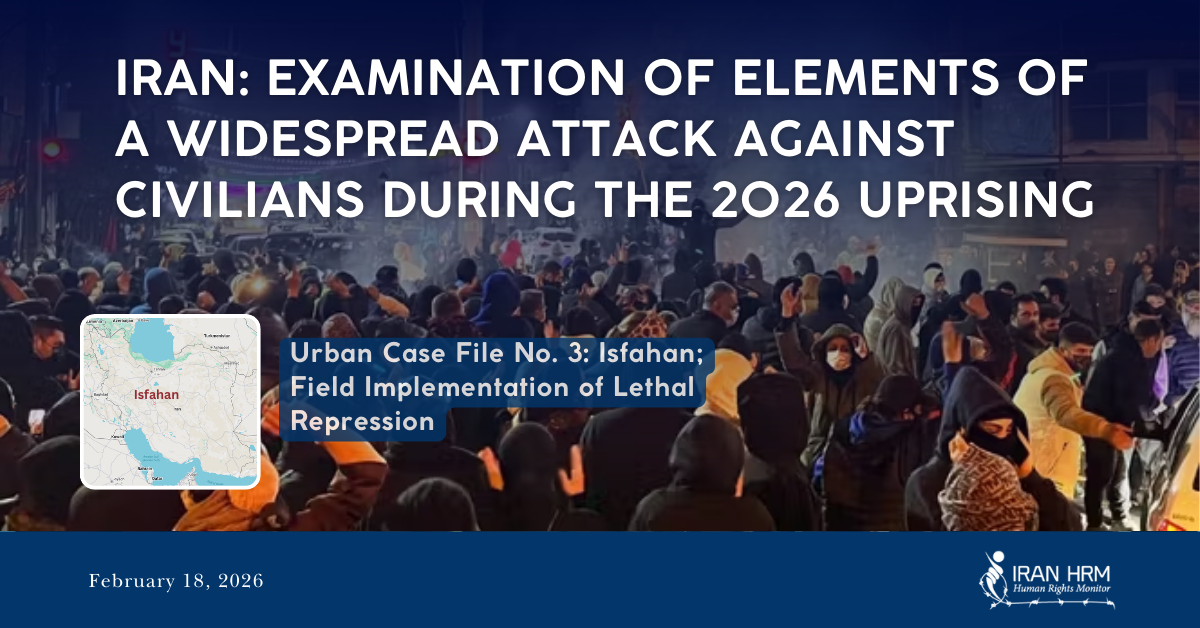
Isfahan Province emerged as one of the principal sites of street repression during the nationwide protests of 2026. Field reports, eyewitness testimonies, and information provided by families of victims indicate a coherent pattern in the conduct of security forces toward civilian gatherings. This pattern includes the use of lethal force, obstruction of medical assistance, security-controlled handling of bodies, and pressure exerted on detainees following arrest.

The collected evidence suggests that actions undertaken in Isfahan went beyond crowd dispersal. In multiple instances, individuals were directly targeted, and subsequent events were tightly controlled. This urban case file examines documented incidents, eyewitness accounts, official positions, and the legal implications of the conduct of armed forces in this province.
-
Chronology of Events and Key Repression Sites in Isfahan
During January 2026, Isfahan became one of the central nodes of nationwide protests. Demonstrations took place across several urban axes and extended to surrounding towns within the province.
2.1 Internet Shutdown and Deployment of Armed Forces
On 9–11 January 2026, corresponding to 18–20 Dey 1404, internet access was restricted or shut down as security forces intensified their presence in major streets. The disruption significantly hindered real-time reporting, requests for medical assistance, and documentation of events. Witnesses described widespread deployment of armed units in main squares and residential entrances.
2.2 Direct Fire and Use of Live Ammunition
Consistent testimonies indicate that, in several locations, security forces opened direct fire without prior warning. Live ammunition was reportedly used, and multiple protesters were struck on site. Reports further indicate targeting of upper body areas, including the chest and head.
Witnesses also reported the pursuit of wounded individuals into side streets. In some cases, companions hid injured protesters in vehicles or enclosed spaces to prevent further shooting or arrest.
2.3 Dr. Hesabi Street as a Central Flashpoint
Dr. Hesabi Street was one of the main protest locations in Isfahan. Video footage from the area shows large crowds and intense confrontations. The use of firearms formed part of the security response in this area.
2.4 Obstruction of Medical Assistance
In cases of gunshot injuries, immediate transfer to medical facilities was significantly hindered. The presence of armed forces and fear of arrest disrupted emergency response efforts, contributing in certain cases to fatal or irreversible outcomes.
2.5 Severe Bodily Injuries and Eye Enucleations
Reports from Isfahan include severe injuries to the head and face, as well as cases of serious ocular trauma. Some injuries reportedly resulted in permanent vision loss or surgical removal of the eye. The consistency and severity of these accounts make this issue a central component of the Isfahan case file.
-
Documented Case: The Shooting and Death of Milad Ghasemi
On 10 January 2026, corresponding to 19 Dey 1404, Milad Ghasemi, aged 38, was shot on Dr. Hesabi Street. According to companions, security forces fired at him from behind using live ammunition.
The impact rendered him immediately immobile. Companions moved him into a nearby alley to avoid further gunfire.
3.1 Concealment to Prevent Further Shooting
Witnesses state that he was hidden under a parked vehicle for a period of time to prevent additional shooting. He remained in severe hemorrhagic condition without immediate access to medical care.
3.2 Death Before Reaching Hospital
Once security presence temporarily subsided, he was transported by private vehicle to a hospital. He died before arrival. Severe blood loss was cited as the primary cause of death.
3.3 Family’s Search and Body Retrieval
For several days, his family was unaware of the location of his body. At Bagh Rezvan cemetery in Isfahan, families were reportedly instructed to leave and await text notification. Identification and release of bodies occurred under security supervision.
3.4 Handling of Bodies
Witnesses described bodies stored in dark body bags, with families required to conduct individual identification. Reports also referenced night burials and severe restrictions on funeral ceremonies. In some cases, allegations of secret or collective burials were raised.
-
Video Evidence of Close-Range Shooting
On 5 February 2026, corresponding to 16 Bahman 1404, a video was released showing a security officer firing at a protester from less than one meter away. Local sources reported arterial rupture and severe bleeding as a result.
4.1 Proximity of Fire and Assessment of Conduct
Close-range discharge against an unarmed and vulnerable individual raises serious questions regarding necessity and proportionality. The situation suggests the availability of less harmful alternatives.
4.2 Targeting of Sensitive Areas
Field reports indicate repeated targeting of upper body areas, including the head and face. Reported eye injuries align with this pattern.
4.3 Secondary Consequences and Delayed Treatment
The security environment contributed to delayed medical treatment. Such secondary effects are relevant in evaluating the proportionality of force used.
-
Situation of Detainees; Dastgerd Prison
5.1 Documented Case: Abolfazl Jamshidi
According to information provided by family members, Abolfazl Jamshidi was beaten following arrest and suffered a ruptured eardrum. Effective medical treatment has reportedly not been provided despite his condition.
5.2 Lack of Official Registration
Reports indicate that some detainees were not formally registered, limiting families’ access to information and legal recourse.
-
Official Positions of Authorities
In statements published in state-affiliated media in Isfahan Province, judicial and law enforcement officials described the protests as “riots” and emphasized firm action against “instigators.”
Asadollah Jafari, Chief Justice of Isfahan Province, stressed judicial action against protest leaders. Akbar Salehi, Prosecutor of Isfahan, stated that security constituted a red line and that unlawful gatherings would face prosecution. Statements from provincial police asserted that forces acted within the law.
These official statements did not provide detailed information regarding the use of live ammunition or the number of casualties.
-
Legal Assessment of Elements of a Widespread Attack
The documented evidence highlights several critical elements:
- Use of lethal force against unarmed civilians
- Obstruction of medical assistance
- Restrictions on body release and allegations of night or collective burials
- Beatings and denial of medical care in detention
If proven to be widespread and systematic, these elements may be relevant in assessing the nature and scope of actions taken against the civilian population.
-
Call for Independent Investigation
Based on documentation of 201 confirmed deaths in Isfahan Province, reports of direct shootings, allegations of secret or collective burials at Bagh Rezvan cemetery, cases of eye enucleation, and denial of medical care to detainees, it is necessary that the United Nations Human Rights Council Fact-Finding Mission be granted full access to:
- Forensic medical records
- Cemetery registration records
- Hospital documentation
- Detainee lists and detention facilities
- The chain of command responsible for operational decisions
Independent and unhindered access is essential for determining accountability.
-
List of Confirmed Victims in Isfahan Province
Based on names confirmed by families and verified against location data, 201 individuals have been documented as killed in Isfahan Province during the January 2026 protests. Documentation efforts remain ongoing.
Annex I
Confirmed Victims – Isfahan Province (January 2026 Protests)
Isfahan (City)
- Milad Iranpour
- Hossein Iranpour
- Mehdi Fakhari
- Amirreza Fathian
- Masih Shahverdi
- Mobin Ashouri
- Mohsen Chitsaz
- Ali Estakhri
- Alireza Kharbo
- Zohreh Shamaei-Zadeh
- Zahra Bagheri
- Morteza Shahzeydi
- Sami Seif
- Pouria Hamzei
- Pouria Dehghani
- Abbas Aminzadeh
- Hossein Barati
- Mohammad Kiani
- Hossein Monjezi
- Asghar Naser Karimonvand
- Hamidreza Hemmati
- Mehrad Sadeghi
- Milad Ghasemi
- Hamid Ganji
- Aria Heydari
- Masoud Faghihzadeh
- Mohammad Touki
- Mona Hosseini
- Mohammad Ranjbar
- Mohammad Matin Ranjkesh
- Hamidreza Vatanjoo
- Armia Lachiani
- Hajar Eshaghi
- Abolfazl Bakhtiarpour
- Ahmad Mohammadpour
- Esmail Beigi
- Ali-Mohammad Sadeghi
- Akbar Jahangiri
- Omid Hassanpour
- Amir Radmanmehr
- Arman Kalantari
- Mohammad Nemati
- Babak Jafari
- Abolfazl Rajaei
- Abolfazl Tavousi
- Bita Akbari
- Mohammadreza Bahmani
- Majid Sharafi
- Peyman Barati
- Ehsan Khajavi
- Hamidreza Soleimian
- Danial Zamani
- Mohsen Chegini
- Firouz Ahmadi
- Hananeh Azizi
- Roshanak Molaei
- Romina Momeni
- Babak Bayatian
- Leila Azimi
- Mohammad Rajabi
- Mehdi Asadi
- Farhad Farsi
- Mitra Abbasian
- Nader Mohammadi
- Soroush Eshaghi
- Ahmadreza Mehrab-Bik
- Farid Seifi
- Mahmoud Sheikhan
- Mohammad Masoumi
- Yousef Shojaei
- Mehrzad Behdarvand
- Mohammad Mehdi-Zadeh
- Amir-Ali Mozani
- Mohammad Pirmoradian
- Mohammad Mohammadi
- Soroush Khabazian
- Amin Ghorashi
- Hooman Kiani
- Sadegh Asgari
- Adel Matlabnejad
- Abdollah Hadizadeh
- Mohsen Abedi
- Mehdi Haghdoost
- Erfan Momeni
- Ali Ramazani
- Ali Ghorbani
- Ali Mahmoudi
- Ahmadreza Rahimi
- Parham Davoudi
- Ghazal Janghorban
- Majid Hashemi
- Mohammadreza Shapouri
- Mehdi Chooghadi
- Ali Baratian
- Parsa Enayati
- Mehdi Samnar
- Meysam Nouri
- Nima Shafiei
- Hanieh Natarsia
- Moḥammad Sadegh Mehrabi
- Nima Kadkhodaei
- Ramin Raei
- Rahmat Jamali
- Afshin Rezaian
- Hamed Talebi
- Kourosh Ziaei
- Naser Tavakolian
- Mohammad Paymard
- Rasoul Salehi
- Farshid Mokhtari
- Abolfazl Bajoul
- Mojtaba Shahpari
- Hamid Mazaheri
- Hadi Havaei
- Alireza Pahlavani
- Majid Siasi
- Mehdi Mostafaeipour
- Hassan Ghasemi
- Mohsen Ahmadpour
- Seyed Hossein Mousavi
- Javad Ranjbar
- Pouya Ghashghaei
- Amirabbas Baghestani
- Arefeh Beigi
- Moḥammadamin Aghilizhadeh
- Alireza Bakhshizadeh
- Pouria Jahangiri
- Hossein Rahimi
- Rostam Mobarakabadi
- Abdollah Adibi
- Seyed Alireza Mousavi
- Esmail Panahi
- Mohammad Asadi
- Mikaeil Mostafavi
- Majid Esmaeili
- Malakeh Rezvian
- Davood Soltani
- Pejman Nikbakht
- Hamdollah Soleimian
- Hojjat Maleki
- Davood Forghani
- Soroush Sadeghizadeh
Shahinshahr
- Abolfazl Shahri
- Omid Khorsand
- Sajjad Akramkhan
Najafabad
- Mehdi Akbari
- Aida Rahimi
- Hossein Jozaghian
- Mahmoud Maleki
- Amirhossein Khodadadi
- Mojtaba Jouzi
- Omid Ghasemi Nafchi
- Rahim Heydari
- Mohsen Abbasi
- Ainaz Rahimi
- Majid Chatrayi
Zarinsahr
- Moḥammadreza Rahimi
- Ali Mehri
- Fatemeh Khodadadi
- Mehdi Touqani
- Moḥammad Rahimi
- Elham Taghiani
- Abdollah Adibi
- Esmail Ahangari
Foladshahr
- Amir Mohammad Hatami
- Foad Safi
- Armin Dehghaneh
- Mostafa Amiri
- Shahram Sarlak
- Rasoul Ziaei
- Younes Cheraghi
- Abolfazl Mousavi-Far
- Reza Kavousi
- Ali Salehpour
- Soheil Keykhaei
- Reza Taheri
Falavarjan
- Amirhossein Ebrahimi
- Peyman Haroun Rashidi
- Ali Yazdani
- Moḥammadreza Ahmadi
- Hamid Mirlouhi
- Farzaneh Rahnama
- Jabbar Ghaffarpour
Mobarakeh
- Farzad Talebi
- Milad Nouri
Yazdanshahr
- Esmail Aslani
- Reza Ahmadi Lar
- Moḥammad Sepyani
- Mehdi Hosseini Monjezi
Shahreza
- Abbas Goudarzi
- Zahra Mohammadi
- Mehdi Chooghadi
Golpayegan
- Mehdi Saleh-Khan
Naein
- Moḥammad Khalili
- Ashkan Rostami
- Mehdi Ebdali
- Iman Najjarhosseini
Homayounshahr
- Akbar Jamshidi
- Hessam Shomali
- Nader Karimi
Joneqan
- Hadi Ghanbarpour