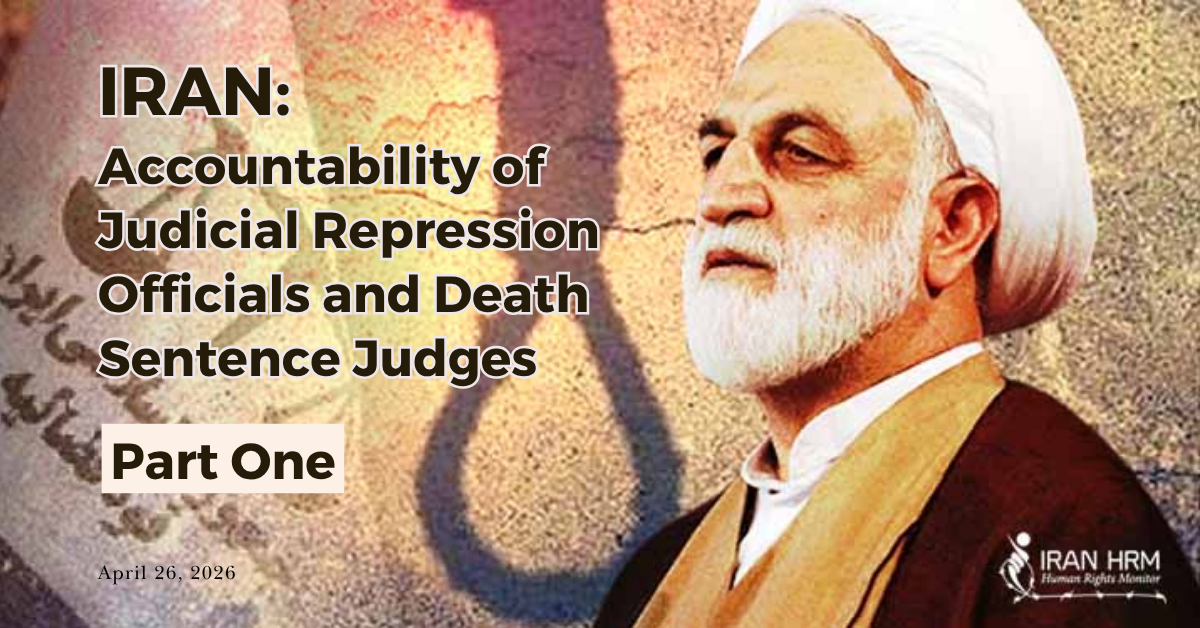
Examining the role of Iran’s judiciary chief and key judges in systemic repression and executions
A series of reports previously published under the title “The Judiciary in Iran; A Legal Instrument of Repression within the Framework of Velayat-e Faqih” demonstrated that the judiciary in Iran is not an independent institution for the administration of justice, but rather a component of an organized system of repression. This body of work clarified that the executors of judicial repression, from Revolutionary Court judges to branch heads and other judicial officials, operate within a framework directed by principal authorities, namely the Supreme Leader and heads of the judiciary; a structure in which the judicial apparatus, instead of safeguarding rights and justice, has been transformed into a tool for consolidating political power and suppressing dissent, protesters, and political and ideological prisoners.

Within this context, some of these individuals have become known in public discourse and human rights documentation as “death judges,” due to their role in issuing expedited death sentences, disregarding fair trial standards, denying defendants the right to defense, and relying on security-driven case fabrication. These practices have directly contributed to the deprivation of the right to life and the commission of serious human rights violations. While responsibility for such repression does not lie with a single individual or a limited number of judges, these figures, due to their direct, continuous, and symbolic roles in issuing and enforcing death sentences, must be prioritized for accountability and prosecution in competent judicial mechanisms addressing crimes against humanity and other serious violations. The aim of this report is neither revenge nor the perpetuation of violence, but rather truth, accountability, fair trial, and ending impunity; accountability that must be pursued not only in a future democratic Iran, but also through examining and advancing possible mechanisms under current conditions.
In this framework, the present report examines several prominent examples of those responsible for judicial repression in Iran; officials and judges who have played roles at various stages, including security case construction, issuance of heavy sentences, denial of fair trial, and particularly the imposition of death sentences against political prisoners, prisoners of conscience, and protesters. Names such as Gholamhossein Mohseni Ejei, Abolghasem Salavati, Saeed Mortazavi, Seyed Mousa Asef al-Hosseini, and Iman Afshari represent only a small portion of a broader network that has, over recent years, transformed the judiciary of the ruling regime in Iran into one of the primary instruments of repression. The purpose of examining these individuals is not merely to recount the past, but to clarify the foundations of responsibility and the necessity of accountability in competent judicial mechanisms both under present conditions and, inevitably, in a future democratic Iran.
Section One: The Judiciary Chief and Judicial Officials in Death Sentence Branches of Tehran and Karaj
Gholamhossein Mohseni Ejei; Architect of Judicial Repression at the Top of the Judiciary since 2021
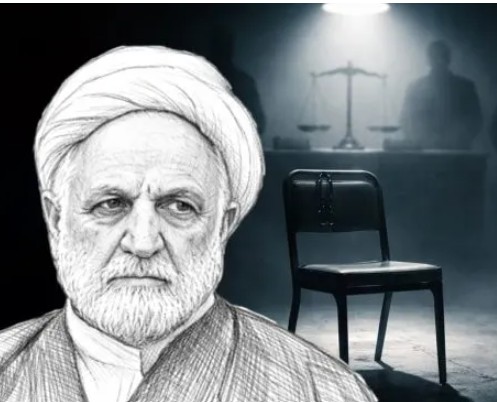 Gholamhossein Mohseni Ejei, head of the judiciary since 2021, has in recent years been among the principal authorities behind intensified judicial repression, accelerated security proceedings, and the legitimization of death sentences and asset confiscation in political and protest-related cases. His statements during meetings held on April 19 and 20, 2026, with judicial officials provide a clearer and more explicit picture of this role. He openly declared: “In handling the cases of individuals acting as foot soldiers and collaborators of the invading enemy, normal procedures must not apply; at all stages and in all bodies, including prosecution offices, courts, and the Supreme Court, these cases must be handled in an extraordinary and special manner.”
He further emphasized the acceleration of case processing, stating: “Now that the judiciary has assumed a wartime posture, when a judicial official assigns a case to investigators in the morning, they must demand its return by the afternoon; in some cases, the investigator must leave their office, go to the prison, question the accused on-site, and carry out the process of informing them of the charges, in order to expedite the preparation of the indictment.”
The significance of these statements lies not only in accelerating procedures but also in explicitly ordering the swift implementation of death sentences and confiscation rulings. He stressed: “Once a sentence becomes final and has gone through its legal procedures, the responsible judicial authorities must not permit delay or hesitation in its execution, whether it concerns deprivation of life or confiscation of property.” He further stated that in such cases, the execution of death sentences constitutes justice, and failure to carry them out would mean justice has not been served.
These positions demonstrate that Ejei is not merely overseeing judicial repression but is among those directly shaping and ordering the suspension of ordinary judicial processes, accelerating indictments, and expediting the implementation of death sentences in political and security cases. His own characterization of the judiciary as having adopted a “wartime posture” further indicates that, within this logic, the judicial system has shifted from an institution of justice to a mechanism of internal war against society and dissent. Accordingly, Ejei must be regarded among the foremost officials subject to investigation and prosecution in competent international and human rights mechanisms for his direct role in directing and intensifying judicial repression; a responsibility whose pursuit under existing legal frameworks constitutes an urgent necessity to prevent the continuation of grave human rights violations.
Concentrated Repression Branches in Tehran; Branches 15, 26, and 28
A significant portion of political and security-related cases in Tehran is concentrated in specific branches of the Revolutionary Court, particularly Branches 15, 26, and 28. The importance of these branches lies not only in the volume of cases referred to them, but also in the repeated appearance of their names in human rights documentation and in cases involving political activists, journalists, human rights defenders, religious minorities, and protesters. This concentration demonstrates that judicial repression in Iran is not sporadic or incidental, but rather organized through identifiable and structured judicial nodes. In Branch 15, Abolghasem Salavati is known as one of the judges issuing heavy sentences, including death sentences, against political prisoners and protesters. In Branch 28, the record of Mohammad Moghiseh reflects unfair trials and severe sentences in political and security cases, which can be cited as part of this branch’s past record. In Branch 26, Iman Afshari has emerged as one of the judges issuing death sentences and long-term imprisonment against political prisoners and human rights activists. These patterns show that the issue extends beyond a few notorious judges and reflects the existence of centralized and deliberate mechanisms of repression within the Revolutionary Court system.
Abolghasem Salavati; Judge of Branch 15 and a Central Figure in Death Sentence Trials
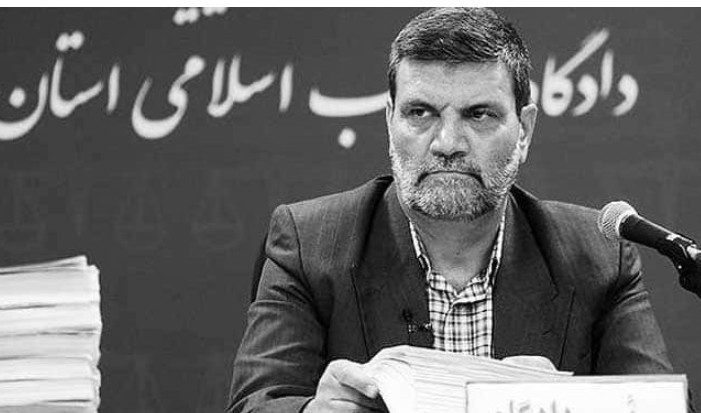 Abolghasem Salavati is one of the most well-known figures of judicial repression in Iran; a judge whose name has become synonymous with security trials, blatant violations of fair trial standards, and the issuance of death sentences and heavy prison terms against protesters, political activists, journalists, and prisoners of conscience. In the courts under his authority, defendants have repeatedly been denied the right to choose independent legal counsel, hearings have been conducted in brief and non-public sessions, and confessions obtained under pressure have been used as primary evidence in rulings. Cases such as those of Mohsen Shekari, Mohammad Ghobadlou, and several defendants from the 2019 and 2022 protests illustrate only part of his record.
Salavati’s role in judicial repression is not limited to past cases; it is clearly evident in the recent wave of death sentences. According to available information, death sentences for a group of protesters connected to the January 2026 protests, including Amirhossein Hatami, Mohammad Amin Biglari, Shahin Vahedparast, and Ali Fahim, were issued on February 7, 2026, in Branch 15 of the Tehran Revolutionary Court under his authority and were subsequently upheld by the Supreme Court. The executions of these individuals between March 31 and April 6, 2026, alongside the name of co-defendant Abolfazl Salehi Siavashani, once again demonstrated that Branch 15 remains one of the primary centers for converting protest-related cases into death sentences. Furthermore, on March 31, 2026, it was reported that seven additional men in a case related to the January 2026 protests had been sentenced to death in Branch 15 under Salavati on charges of moharebeh and were at imminent risk of execution. This continuity demonstrates that Salavati is not only a notorious figure of past judicial repression, but also an active executor of the judicial phase of repression in Iran and must be prioritized for investigation and prosecution in international judicial mechanisms as well as in a future democratic Iran; at the same time, the pursuit of his criminal responsibility within existing international legal frameworks remains both relevant and necessary.
Saeed Mortazavi; Symbol of the Nexus Between Prosecution, Repression, and Impunity
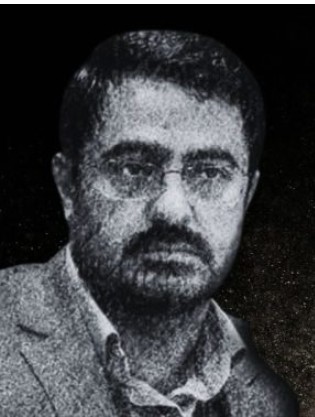 Saeed Mortazavi represents one of the most prominent examples of the transformation of prosecution authorities and the judiciary into direct instruments of repression in Iran. His record begins with the mass closure of newspapers and the prosecution of journalists and extends to widespread arrests, politically motivated prosecutions, deaths in detention, and efforts to conceal evidence of abuse. During a period that became one of the darkest chapters in the history of Iran’s press, he demonstrated how the law could be used as a tool to silence the public sphere. In the case of Zahra Kazemi, the Iranian Canadian journalist who died following her arrest in 2003, his name became associated with unlawful detention, the process leading to death in custody, and attempts to obscure the truth.
The most striking symbol of his record, however, remains the Kahrizak detention center tragedy. Following the 2009 protests, the transfer of detainees to a facility where torture, humiliation, and death occurred became closely linked to Mortazavi, and the deaths of Mohsen Ruholamini, Amir Javadifar, and Mohammad Kamrani turned this connection into one of the darkest episodes of judicial repression in Iran. The significance of Mortazavi in this report lies not only in his presence in notorious cases, but in the convergence of multiple stages of repression in his role; the silencing of media, the direction of political prosecutions, the transfer of detainees into cycles of abuse, and ultimately the benefit of impunity. For this reason, Mortazavi must be considered among those figures who should be prioritized for investigation and prosecution in specialized mechanisms addressing serious crimes and crimes against humanity, as well as in a future democratic Iran; a responsibility whose pursuit within existing international frameworks is also necessary.
Seyed Mousa Asef al-Hosseini; A Death Sentence Judge in Karaj and an Agent of Provincial Repression
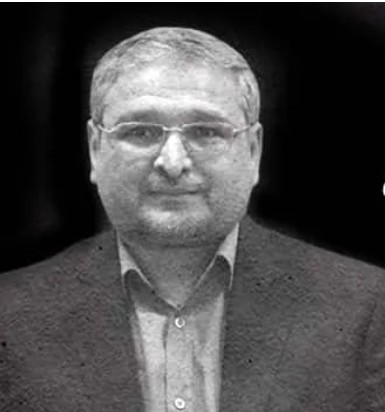 Seyed Mousa Asef al-Hosseini is one of the prominent figures in the reproduction of judicial repression beyond Tehran; a judge whose name has repeatedly appeared in cases involving protesters, death sentences, and expedited and non-public proceedings in Karaj, the capital of Alborz Province. His significance is not limited to issuing several severe rulings, but lies in the convergence of multiple violations within the cases under his authority; denial of access to chosen legal counsel, reliance on confessions obtained under pressure, disregard for allegations of torture, and the issuance of heavy or capital sentences through processes incompatible with fair trial standards. This record is particularly important in demonstrating the “provincialization” of judicial repression; that the same security logic and the same pattern of death sentences have been replicated in Revolutionary Courts outside Tehran.
The cases of Mohammad Mehdi Karami and Seyed Mohammad Hosseini provide clear examples of Asef al-Hosseini’s direct role in issuing death sentences against protesters. Following the 2022 protests in Karaj, these individuals were arrested in connection with the killing of Ruhollah Ajamian and brought before Branch 1 of the Karaj Revolutionary Court under his authority. The proceedings were conducted with remarkable speed, without adherence to minimum fair trial guarantees, and within a highly securitized environment. The defendants were denied effective access to independent legal counsel and stated in court that their confessions had been obtained under torture and pressure. These claims were disregarded, and the court relied on those confessions and security reports to issue death sentences. The executions carried out on January 7, 2023, despite ongoing domestic and international legal objections, turned this case into one of the clearest examples of the use of Revolutionary Courts for the rapid elimination of protesters. In addition, his role in handling cases involving 15 detained children and adolescents during the Karaj protests demonstrated that this pattern was applied even to minors with the same degree of severity and disregard for due process.
Alongside these cases, the executions of Mohammad “Nima” Masoum Shahi and Hamed Validi on April 20, 2026, based on rulings issued by Branch 3 of the Karaj Revolutionary Court, indicate that Karaj remains an active center for death sentences in political and security cases. Although the name of the presiding judge in this case has not been clearly identified in public sources, this continuity shows that the mechanism of issuing death sentences in Karaj is not limited to a single case or period. Accordingly, Asef al-Hosseini must also be regarded as among those officials who should be subject to investigation and prosecution in competent international mechanisms or in a future democratic Iran for their direct role in death sentences, unfair trials, and the repression of protesters; an issue whose articulation at the level of international human rights bodies and legal experts remains necessary under current conditions.
Iman Afshari; A Judge of the New Wave of Death Sentences and Security Repression
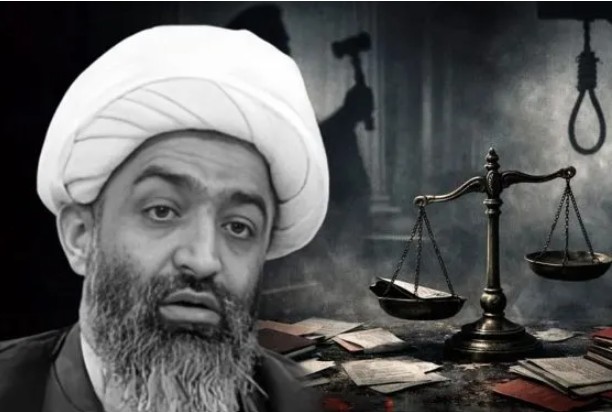 Iman Afshari, head of Branch 26 of the Tehran Revolutionary Court, is one of the prominent figures in the new wave of judicial repression in Iran; a judge whose name has in recent years been associated with the issuance of death sentences, long-term imprisonment, and the security prosecution of political prisoners, protesters, women, civil society activists, and religious minorities. His significance lies not only in the severity of his rulings, but also in the transformation of Branch 26 under his authority into one of the main centers for converting security-related cases into severe punishments. In cases under his jurisdiction, denial of fair trial rights, reliance on security agency reports, and the issuance of death sentences or heavy prison terms have become recurring patterns.
Afshari’s record in several key cases clearly illustrates this pattern. The recent wave of executions in April 2026 is directly linked to his name. Mohammad Taghavi Sangdehi and Akbar Daneshvarkar were executed on March 30, Babak Alipour and Pouya Ghabadi Bistouni on March 31, and Vahid Bani Amerian and Abolhassan Montazer on April 4, 2026; six political prisoners whose cases, involving accusations of affiliation with the People’s Mojahedin Organization of Iran, culminated in death sentences issued in Branch 26 of the Tehran Revolutionary Court under Afshari’s authority. This continuity demonstrates that Afshari is not merely a strict judge, but one of the active executors of a new generation of judicial repression; a generation that has turned the Revolutionary Court into a tool for political elimination, social intimidation, and the consolidation of a security-driven system. Accordingly, he must also be considered among those officials who should be subject to investigation and prosecution in international mechanisms and in a future democratic Iran for their direct role in issuing death sentences, conducting unfair trials, and implementing organized repression; at the same time, the examination of his accountability within existing international legal frameworks must also be pursued.
These individuals are not merely a few isolated names within the judiciary of the ruling regime in Iran; they constitute key nodes in a concentrated mechanism of repression at the core of the Revolutionary Courts. From the head of the judiciary to Branches 15 and 26 and the courts of Karaj, what is observed is not the administration of justice, but the legal organization of elimination, intimidation, and political punishment. However, judicial repression in Iran is not limited to Tehran and a few well-known branches.
In the second part of this report, the role of judges in provincial centers in Mashhad, Isfahan, Ahvaz, Shiraz, and Tabriz will be examined; judges who, with the same security logic, the same disregard for fair trial, and the same use of death sentences and heavy punishments, have reproduced repression on a nationwide scale. That section will also show that these practices cannot be considered merely judicial misconduct; rather, they must be understood as part of an institutionalized mechanism of elimination and as grounds for the necessity of prosecution to protect human rights laws and conventions, including the Universal Declaration of Human Rights and the International Covenant on Civil and Political Rights, as well as in a future democratic Iran. At the same time, raising these responsibilities within existing legal and international mechanisms is a necessary step to curb the continuation of this pattern under current conditions.