As the regime’s killing machine accelerates following recent suppression orders, a harrowing video smuggled out of Iran on January 10 reveals the true scale of the carnage. In the footage from the Kahrizak Medical Examiner’s Office, the citizen journalist reports seeing approximately 2,000 bodies on the ground awaiting identification.

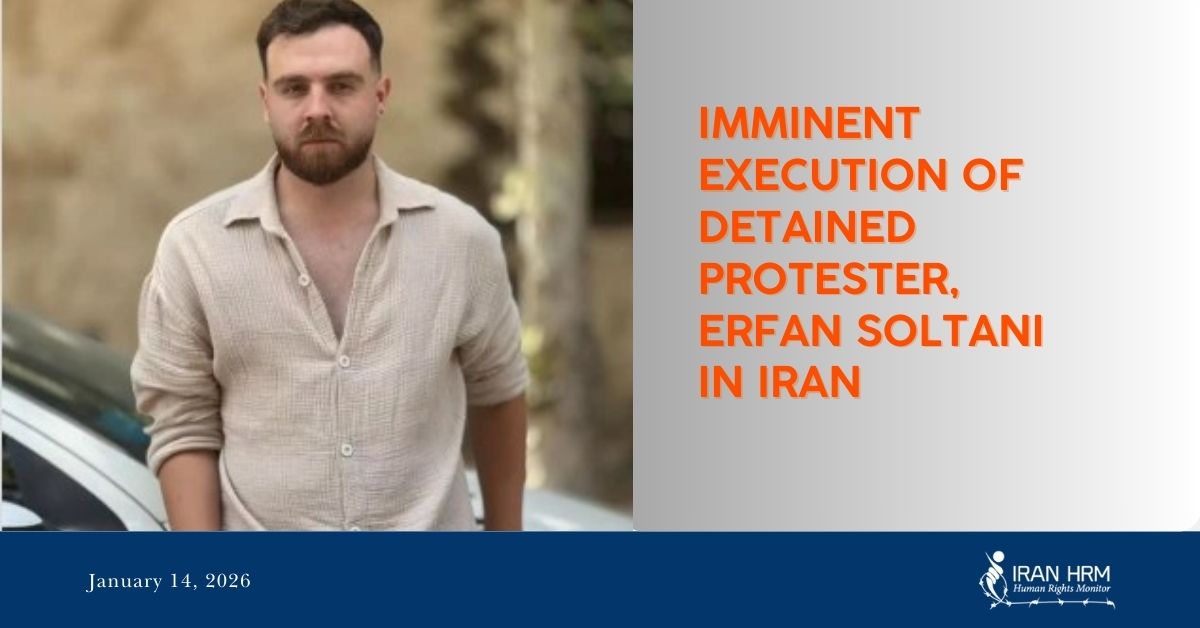
Amidst this slaughter, the case of Erfan Soltani, a 26-year-old arrested during protests in Fardis, Karaj, has become a grim symbol of “systematic vengeance.” Only days after his arrest, he was sentenced to death without due process—a verdict issued with such speed it constitutes “State-Sanctioned Murder.”
The Final Meeting: Countdown to a Crime
According to his family, security agents contacted them with a chilling ultimatum: Erfan has been sentenced to death, and they are granted a brief “final visit” this coming Wednesday (today, Jan. 14). His entire detention, interrogation, and sentencing occurred in a vacuum of legality—no lawyer, extreme torture, and forced confessions. This rapid execution timeline is a clear attempt to intimidate the nation through blood.
From the 1988 Massacre to Today: The Price of Inaction
This horrific scenario is a repetition of history. The imminent execution of Erfan Soltani and the threat to countless other political detainees of the protests are directly linked to the 1988 Massacre, where thousands of political prisoners were executed in weeks. We must state clearly: If in 1988, when the Iranian Resistance sounded the alarms, the international community had responded decisively to prevent that genocide, we would not be witnessing the reproduction of those atrocities today. Decades of impunity for leaders like Khamenei and his “chief Justice,” Eje’i, have emboldened them to restart the killing machine for their survival.
International Community: From Concern to Responsibility
Silence or diplomatic rhetoric in the face of this slaughter is a “green light” to the perpetrators. Under international conventions, including the 2005 World Summit Outcome Document and the Rome Statute, when a state systematically commits “Political Genocide” against its citizens, the Responsibility to Protect (R2P) is triggered:
“Responsibility to protect populations from genocide, war crimes, ethnic cleansing and crimes against humanity”
- Paragraphs 138 & 139 (2005 World Summit): States that the international community must act through the Security Council under Chapter VII when a state fails to protect its population from crimes against humanity.
- Genocide Convention (1948) – Article 1: Contracting parties are obligated to prevent and punish the crime of genocide.
- Rome Statute – Article 7: Defines “Crimes Against Humanity” as widespread or systematic attacks against civilians, including murder, torture, and enforced disappearances.
Urgent Call for Action
Time has run out for Erfan Soltani and the thousands detained in January’s uprising. Silence is complicity. We demand:
- Emergency Diplomatic Pressure: Immediate intervention to stop the execution of Erfan Soltani.
- International Fact-Finding Mission: Urgent access to detainees to prevent a repeat of 1988.
- End of Impunity: Referral of these crimes to the UN Security Council.
Every second of delay costs a human life. Do not let Wednesday’s “final visit” become the start of another mass slaughter.