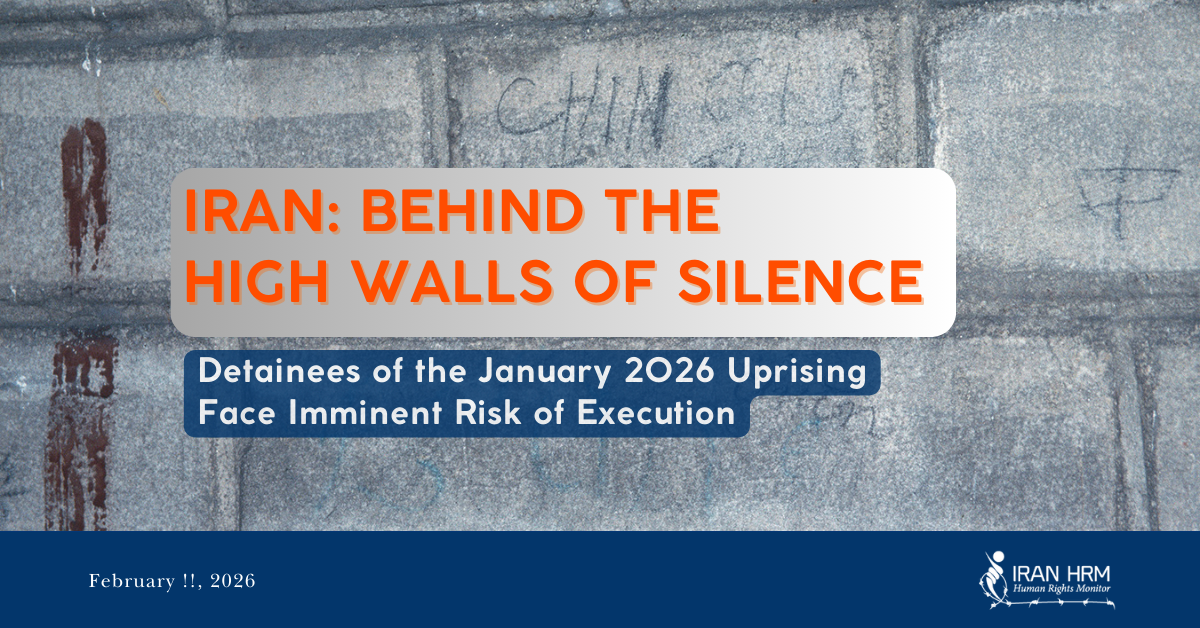
Detainees of the January 2026 Uprising Face Imminent Risk of Execution
While public attention has shifted away from the streets, the judicial suppression machine of the Islamic Republic is moving with unprecedented momentum. An analysis of official stances between January 7 and January 21, 2026, reveals a criminal “roadmap” for the physical elimination of protesters. In remarks published by the Tasnim News Agency on January 21, 2026, Gholam-Hossein Mohseni-Eje’i stated in a threatening tone: “The primary elements who held roles of leadership (Ameriyat), agency (Ameliyat), direct involvement (Mobasherat), or causality (Sababiyat) will certainly be prosecuted and punished with decisiveness and in the shortest possible time.”

These keywords—specifically the emphasis on charges such as “leadership in terrorism” and “direct involvement in armed actions” (as reported by the Judiciary Media Center on January 14)—are not merely media descriptions. They constitute a legal groundwork for indicting detainees with charges of “Baghi” (armed rebellion) and “Moharebeh” (enmity against God), which under the laws of the Islamic Republic lead directly to the death penalty. When the Fars News Agency (January 14) designates the trial of individuals accused of using “explosive materials” as a priority, it is, in effect, issuing a draft of judicial murder warrants to the judges.
How are these directives of “speed and decisiveness” executed on the ground? The following shocking facts demonstrate how Ejei’s words have been translated into “official calls for espionage,” “torture in secret detention centers,” “hasty death sentences,” and even “coups de grâce fired at detainees.” These measures aim to suppress the January 2026 uprising behind prison walls—a place where the boundary between detention, state-sanctioned murder, and execution has vanished.
Mass and Arbitrary Arrests: The First Step of “Ejei’s Justice”
The first step in implementing “Ejei’s justice” is the purging of society through an espionage network and secret detention centers. Suppressive forces utilize local informants to identify and arrest protesters. On February 6, 2026, the regime’s Hamoon TV network aired an advertisement officially calling for snitching and espionage:
Presenter: “Greetings, zealous Iranian compatriot… thanks to your compassionate cooperation, various groups of terrorists were identified and dismantled in recent days. Now it is your turn to do your part… the telephone numbers 110, 113, and 114 are waiting 24/7 for your responsible reports.”
This systematic call for espionage has led directly to the formation of “unofficial black sites,” where the reports of local informants translate into brutal arrests. For instance, the Soroush (Ahmadi-No) detention center in Shiraz serves as a precise operational symbol of this cycle of espionage and repression. Located on North Ahmadi Street, adjacent to the Investigation Department and across from Dastgheib Stadium, this facility is the primary destination for protesters identified by local informants—who are mostly drug traffickers operating under the protection of State Security Forces (SSF). Upon arrival, and without any legal process or even interrogation, detainees are subjected to severe beatings to instill terror from the outset in an environment devoid of lawyers or oversight. As many of these individuals are not registered in any official prison database, concerns regarding systematic disappearances and murders in these safe houses have escalated.
Shooting Detainees: “Decisiveness” That Does Not Wait for the Courtroom
The “decisiveness” sought by the Head of the Judiciary often does not even wait for a show trial, leading directly to “state murder” and Extrajudicial Execution within the detention centers.
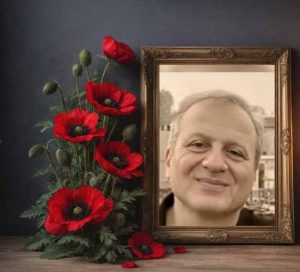
Shocking Fact: Dr. Ali Abbas Zoraghchian, 52, a Gilak citizen from Sari with a PhD in Computer Engineering from Amirkabir University of Technology, was arrested during the nationwide protests in January 2026 in the city of Sari. He was in perfect health at the time of his arrest; however, a few days later, security forces contacted his family, instructing them to collect his body. Available evidence indicates that he was subjected to a coup de grâce while in custody. This is undoubtedly not an isolated case, as previous eyewitness reports have mentioned many cases of coup de grâce at the wounded and those under arrest.
Fabricated Charges and the Risk of Execution Against the Elite and Youth; The code name, “Speed”
The directive for “speed” in trials has manifested in specific cases targeting the lives of Iran’s elite and youth. Many face charges of Moharebeh and Baghi:
- Erfan Soltani (Fardis, Karaj): Arrested on January 8. His family was informed he faces grave security charges. He was even sentenced to death, a ruling rescinded following international outcry; however, tragic experience shows such individuals are often retried and sentenced in silence.
- Omid Ara (Yasuj): Arrested on January 9. His sentence was issued with the “haste exemplified by Ejei’s orders.” According to reports from January 25, 2026, his family was notified that his death sentence has been finalized and will be executed soon.
- Amin Pourfarhang (Shirwan): A Chemical Engineering graduate from Sharif University and a pharmacy student. He faces a death sentence, and judicial authorities have blocked his lawyer’s access to the case file.
- Javid Khales: A young soldier who refused the order to fire on the people. He has been sentenced to death in Isfahan Prison. His case is being held under a total media blackout.
- Somayeh Nazari: A Kurdish citizen arrested on January 8 or 9, 2026. She faces the charge of Moharebeh in the Kermanshah Juvenile Correction Center, a charge that carries an extremely high probability of the death penalty.
The list also including individuals such as Salah Yousefi, Shervin Bagherian, Saeed Zare, Mohammad Abbasi and his daughter, Mohammad-Reza Tabari, Dr. Sobhan Esmaeil-Doust, Shayan Shakibaei, and others facing capital charges is only a fraction of this catastrophe. Eje’i directly commanded: “It is wartime… these cases must not be delayed; they must be greatly accelerated.”
Enforced Disappearances: Crimes in the Shadows of Silence
In the continuation of the wave of arrests, the inhumane tool of Enforced Disappearance has taken on vast dimensions. Notable is the arrest of four sisters in Tehran: Tara Davoodi, a former surveying engineering student at the University of Isfahan, and her sister Kimia Davoodi, a former law student at Razi University in Kermanshah. They were arrested more than 21 days ago, and their family remains in total ignorance of their fate.
Two other sisters, Mona and Niusha Nakhaei, were arrested on January 9, 2026, solely because their vehicle was present on a Tehran street on the night of January 8. They have been deprived of their most basic rights, including access to counsel and regular contact, having had only two brief phone calls with relatives before vanishing into silence.

Global Silence in the Face of a Bloodthirsty Regime’s Desperation
The recourse to torture for forced confessions, executing coup de grâce in detention centers, and the issuance of hasty death sentences are not signs of strength, but symbols of the regime’s terror and desperation in the face of the ongoing uprising. By commanding “acceleration in punishment,” Eje’i has effectively confessed to the failure of the judicial system against the will of the nation.
However, what is presented in this report is only the tip of the iceberg of an ongoing atrocity. The authorities’ insistence on “wartime trials” is a grave warning to the international community and international institutions. Every day of silence is an endorsement of death warrants for elites like Amin Pourfarhang and youths like Omid Ara. The world must not allow Ejei’s claimed “decisiveness” to turn into a political massacre behind the closed doors of prisons. The truth cannot be buried by execution; the blood spilled in the streets, hospitals, prisons, detention centers, and safe houses of this religious dictatorship is proof that the January 2026 uprising will not be halted by the gallows. Responsibility for every drop of blood spilled lies directly with the commanders who today issue murder orders from official podiums.
The time for international action to save lives is down to the second. Every second of hesitation can equal an execution, a death sentence, a coup de grâce for a detained protester, or torture to extract forced confessions leading to executions.