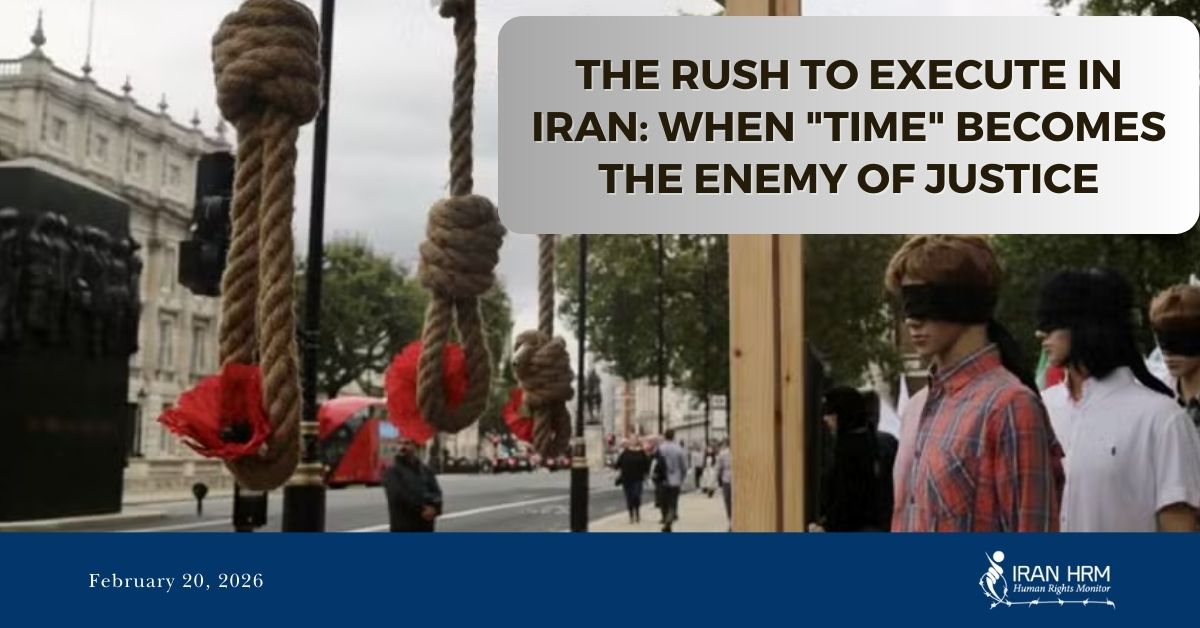
While only about 40 days have passed since the January 2026 uprising, the judicial apparatus of the Islamic Republic knows no mercy. Gholam-Hossein Mohseni-Eje’i, the Head of the Judiciary, delivered a chillingly clear message during his recent trip to Isfahan (February 16, 2026): “Speed in Slaughter.” He claimed: “The people rightfully expect and demand that we hasten the processing of cases involving the main elements of the riots; we are determined in this regard.” (Source: Mizan News Agency)

Show-Trial Justice: Sentences Issued Before the Court Convenes
In the judicial system led by Eje’i, the concept of “innocence” does not exist. In Isfahan, he branded protesters as “criminals” before they had even set foot in a courtroom. According to all international laws, every individual is presumed innocent until their guilt is proven in a fair trial. However, in Tehran, the verdict is issued first, followed by a trial lasting only a few minutes to fulfill the mere formalities of execution. This is not adjudication; it is a “political purge” conducted under the guise of law.
Shocking Figures
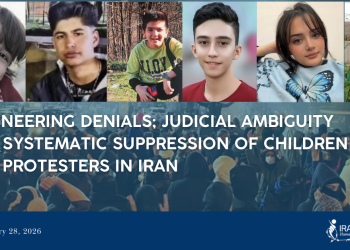
Behind these polished bureaucratic words, a human tragedy is unfolding. According to a report by ILNA News Agency (February 17, 2026), the spokesperson for the Judiciary revealed horrific numbers: 10,538 individuals summoned for prosecution and 8,843 indictments issued. This means thousands of people are on the brink of receiving sentences handed down in sham trials that last only minutes. Even more disturbing is the deliberate targeting of the younger generation; Farshad Ebrahimpour, a member of the Parliamentary Education Commission, admitted: “About 28 percent of the detainees have been under 20 years old.” (Source: Rouydad 24, February 16, 2026)
One Tragedy, Two Narratives
- Mohammad-Amin Biglari (19 years old): Sentenced to death in a case linked to the nationwide protests of January 2026. The sentence was issued by Branch 15 of the Revolutionary Court, presided over by the notorious Judge Salavati. It has been reported that during the Supreme Court stage, the defense was deprived of access to the case file and the possibility of an effective defense. Hassan Aghakhani, one of Biglari’s lawyers, stated that his client’s case was processed alongside six other defendants in a single, collective hearing at Branch 15. According to him, the maximum penalty (death) was considered for all defendants.

He added that the charge against Mohammad-Amin Biglari, according to the court-appointed lawyer, was ” Enmity against God” (Moharebeh). However, official details of the charges and the case evidence were never provided to the lawyers chosen by the family. According to the lawyer, the hearing took place on February 7, and the verdict was issued only one day later, on February 8. Hassan Aghakhani stated that he and his colleague, Ms. Sadrinia, declared their representation during the appeal stage at the Supreme Court as chosen counsel. However, the head of Branch 9 of the Supreme Court allowed neither a study of the case file nor the opportunity to present a defense. He emphasized that without access to the case contents, it is impossible to prepare a supplementary defense brief.
- Abolfazl Karimi (35 years old): He was arrested while suffering from physical injuries and was subjected to the most brutal pressures to force a self-incriminating confession. His trial was conducted online, further obstructing a transparent and fair process.
This system dismisses international resolutions as “worthless” (Judiciary spokesman, ILNA February 17, 2026) and, instead of administering justice, seeks to “uproot the protests.” We must be the voice for these thousands before Ejei’s “haste” machine reaches its final destination.