Call for the Immediate Implementation of Resolution 211 of the Supreme Judicial Council
A Legal Obligation to Prevent a Humanitarian Disaster in Prisons
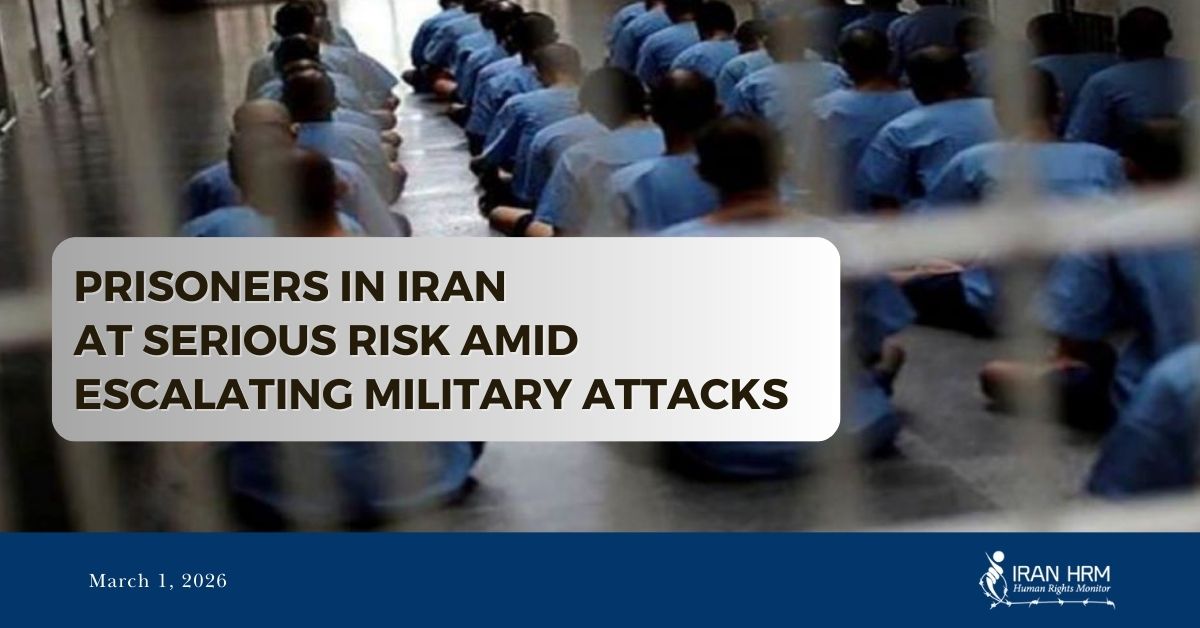
With the onset of renewed aerial attacks and the expansion of military hostilities in Iranian cities, prisons have become among the most vulnerable facilities in the country. Prisoners, who are entirely under the control of security and judicial authorities, have no practical means to evacuate, seek shelter, or protect themselves.

In such circumstances, the threat to prisoners’ lives arises not only from external attacks, but also from the way prisons are managed internally by the ruling regime in Iran.
Resolution No. 211 of the Supreme Judicial Council was adopted precisely for situations of this nature. Its implementation today constitutes an urgent and non-derivable legal obligation.
Resolution No. 211; A Binding Legal Instrument to Safeguard Prisoners’ Lives
Resolution No. 211 of the Supreme Judicial Council, dated 22 Dey 1365 (January 12, 1987), provides that:
In the event of an emergency in war zones that endanger the lives of prisoners, prosecutors are obligated to promptly review the status of detainees and take all necessary legal measures to protect their lives.
These measures include:
- Modification or acceptance of new bail arrangements.
- Granting conditional release.
- Temporary leave or release for work outside prison.
- Temporary release upon bail or surety.
- Transfer of dangerous offenders to secure facilities or other prisons.
The use of the phrase “it is necessary” in the resolution establishes a binding obligation, not administrative discretion. Following the end of the emergency, sentences may continue to be enforced.
No formal repeal of this resolution has been recorded; it remains legally in force.
Fulfilment of Emergency Criteria; Applicability to the Current Situation
Resolution 211 becomes operative when:
- A wartime emergency exists.
- The lives of prisoners are placed at risk.
Given the reported military attacks on Iranian cities, the criteria outlined in Resolution 211 are objectively and credibly engaged.
Prisons located in cities exposed to attack—including Evin Prison, Greater Tehran Prison, Qezel Hesar Prison, Qarchak (Varamin) Prison, and other detention facilities in targeted areas—fall directly within the scope of this resolution.
The 23 June 2025 Attack on Evin Prison; A Documented Warning
On 23 June 2025, during the 12-day war, Evin Prison in Tehran was struck in an aerial attack. According to official statements by Iranian judicial authorities, reported by Reuters, at least 71 individuals were killed, including prison staff, detainees, and visitors.
The Office of the United Nations High Commissioner for Human Rights stated that Evin Prison is not a military objective and that targeting it could constitute a serious violation of international humanitarian law.
Following the attack, concerns intensified regarding the internal management of the crisis. Reports indicated that the evacuation and transfer of prisoners were carried out with the use of force, including beatings and degrading treatment.
This episode demonstrated that in times of armed conflict, the danger does not arise solely from external military action; internal decisions can significantly aggravate harm.
In light of the documented events of 23 June 2025, the risk to prisoners is not hypothetical but foreseeable. In such circumstances, failure to adopt preventive measures, including implementation of Resolution 211, may be regarded as a failure to discharge a legal duty.
Dual Threat Under Current Conditions
Under the present circumstances, prisoners face a dual threat:
- The risk of external military attacks;
- The risk of inaction, delay, or violent conduct within detention facilities.
If Resolution 211 is not implemented and non-dangerous detainees are neither released nor relocated, the continued confinement of prisoners in high-risk environments would result from an internal administrative decision, rather than being an unavoidable consequence of war.
In conditions of overcrowding, lack of standard shelter facilities, limited emergency evacuation routes, and potential communication blackouts, failure to take preventive action may lead to a humanitarian disaster.
International Legal Obligations; Protection of Prisoners During Armed Conflict
In addition to the binding domestic obligation under Resolution 211, the ruling regime in Iran is bound by international humanitarian law to protect the lives of detainees.
Fourth Geneva Convention of 1949
Under the Fourth Geneva Convention, civilians must be protected against the effects of armed conflict.
Article 27 stipulates that protected persons “shall at all times be treated humanely and protected.”
Prisoners, regardless of whether they are accused or convicted, fall within the category of protected persons during armed conflict. Deprivation of liberty increases the responsibility of the detaining authority; it does not diminish it.
Additional Protocol I of 1977 – Article 58
Article 58 requires parties to a conflict, to the maximum extent feasible, to remove civilians from areas of danger and to take other necessary precautions to minimize harm.
This provision directly applies to prison settings, where detainees are unable to evacuate on their own and only the detaining authority can decide on transfer, evacuation, or protective measures.
Call for Immediate Implementation of the Law
Considering escalating military tensions, families of detainees and legal advocates have called for the immediate enforcement of Resolution 211.
Specific demands include:
- Immediate review of the status of all detainees in cities exposed to attack.
- Temporary release of non-dangerous prisoners.
- Transfer of dangerous offenders to secure facilities.
- Reduction of prison overcrowding.
- Guarantees of detainees’ communication with their families.
- Prohibition of any violent or punitive conduct under the pretext of emergency conditions.
These demands are grounded in domestic law and international legal standards.
Conclusion
As military attacks continue against Iranian cities, prisoners remain entirely dependent on the decisions of the detaining authorities. Resolution No. 211 of the Supreme Judicial Council provides a clear legal mechanism to prevent disaster within prisons. The 23 June 2025 attack on Evin Prison demonstrated that the risk to detainees is real and documented.
Under current circumstances, implementation of this resolution is not a political option but an urgent legal duty to safeguard human life.
Any delay in its enforcement, or any use of wartime conditions to intensify security measures or violent treatment, may engage the legal responsibility of the ruling regime in Iran
During war, prisoners must not become silent victims of crisis.
Requests to International Human Rights Mechanisms
Considering the armed conflict, the documented attack on Evin Prison on 23 June 2025, and the binding legal obligation under Resolution 211, international human rights bodies are urged to:
- Undertake Immediate Monitoring
Request the UN Special Rapporteur on the situation of human rights in Iran and relevant UN mechanisms to:
- Urgently assess the implementation of Resolution 211.
- Seek official clarification from the ruling regime in Iran regarding measures taken to mitigate risks to detainees.
- Demand transparency concerning transfers and communication restrictions.
- Preventive Statements Issue
Request from the Office of the High Commissioner for Human Rights to:
- Reaffirm the non-derivable responsibility of the detaining authority to protect prisoners;
- Emphasize that prisons are not military objectives and detainees are protected persons.
- Monitor Transfers and Prevent Enforced Disappearances
Urge international mechanisms to:
- Closely monitor any transfer of prisoners during wartime.
- Remain vigilant regarding risks of enforced disappearance or prolonged incommunicado detention.
- Ensure Independent Access and Field Assessment
Call for independent and immediate access to detention facilities located in cities exposed to attack to:
- Assess safety and protective measures.
- Examine transfer conditions.
- Prevent violent conduct or enforced disappearance.
- Ensure transparency regarding detainees’ whereabouts.
- Emphasize Full Implementation of Resolution 211
Urge the international community to call upon the ruling regime in Iran to fully implement Resolution 211, including:
- Temporary release of non-dangerous prisoners.
- Reduction of overcrowding.
- Safe transfer of high-risk detainees.
to prevent a recurrence of the humanitarian consequences witnessed in June 2025.