An Immediate Threat to the Lives of Thousands of Prisoners in Iran
1. Iranian Prisoners Between Two Simultaneous Threats: War and Internal Repression
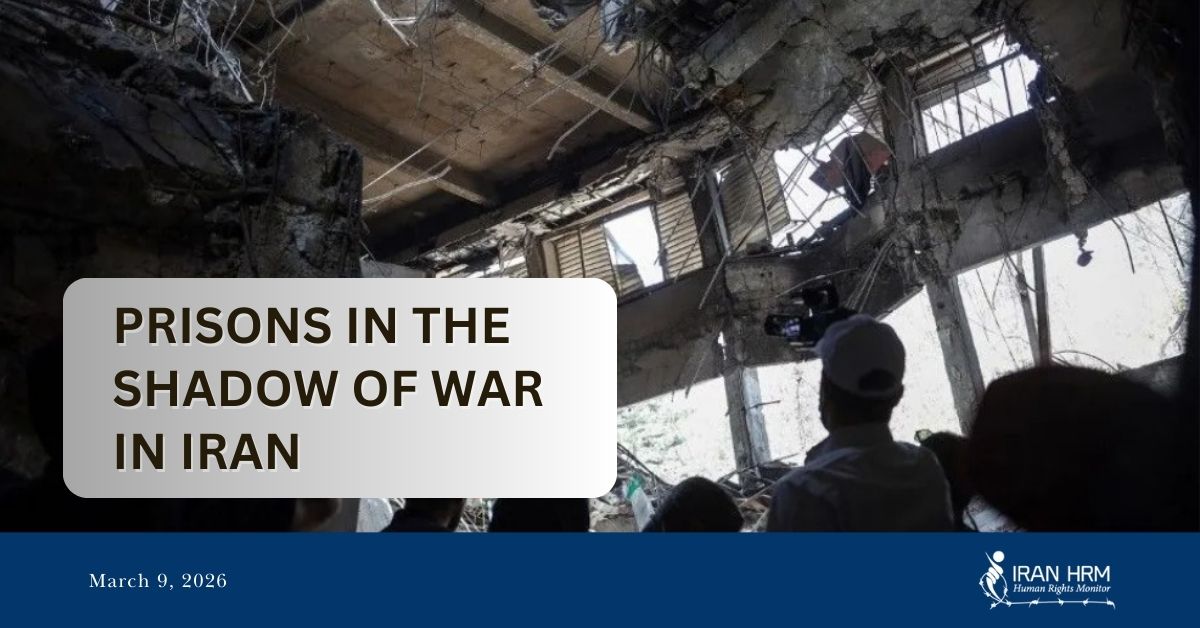
With the escalation of military confrontations and the expansion of wartime conditions in Iran, concerns about the safety and lives of prisoners across the country’s prisons have significantly increased. Prisoners that were already struggling with severe overcrowding, limited medical facilities, and restricted communication between prisoners and their families and lawyers are now facing circumstances in which the risks associated with war may dramatically intensify the vulnerability of detainees.

At present, prisoners in Iran face two simultaneous threats. On the one hand are the direct or indirect consequences of military operations and the proximity of some prisons to sensitive facilities. On the other hand, are the policies and actions of the ruling regime in Iran, including restrictions on prisoners’ contact with their families, disruptions in access to food and medical services, locked prison wards, and forced transfers between detention facilities.
This situation is particularly alarming for political and ideological prisoners, death-row inmates, imprisoned women, children held with their mothers, and prisoners suffering from illness. These groups face compounded risks to their right to life, health, and human dignity during wartime conditions.
2. Background of the Crisis
Why Prisons Become High-Risk Locations During War
Even before the onset of wartime conditions, prisons in Iran faced serious structural problems, including overcrowding, limited medical facilities, and widespread restrictions on prisoners’ access to lawyers and family members. Reports from previous years indicate that political prisoners, women prisoners, and individuals sentenced to death have often been held under extremely difficult conditions.
In wartime situations, these vulnerabilities intensify. The closed nature of prisons and the limited ability to relocate prisoners mean that in the event of security or military crises, detainees become entirely dependent on prison authorities for access to food, water, medical services, and protection of their lives.
In Iran, the lack of transparency regarding prison conditions, restrictions on communication between prisoners and their families, and the possibility of transfers to undisclosed locations may further aggravate these risks.
3. Conditions in Iranian Prisons During Wartime
Reports on Food Shortages, Administrative Disruptions, and Prisoner Transfers
Available reports indicate that conditions in several prisons across Iran have deteriorated significantly following military confrontations and heightened security developments. The table below summarizes the most important reported developments in various prisons across the country.
Analytical Overview of Prison Conditions in Iran During Wartime
| Prison | City | Reported Developments | Main Risks |
| Evin | Tehran | Missile strike on prison wall; suspension of food distribution in some wards; closure of prison store; transfer of at least 50 prisoners to Greater Tehran Prison | Risk of military attacks, food shortages, forced transfers |
| Qarchak | Varamin | Severe shortage of drinking water; limited medical services; some staff leaving their posts | Health crisis among female prisoners |
| Qezel Hesar | Karaj | Heightened security environment; closure of outdoor exercise areas | Restricted prisoner movement; risk in case of attack |
| Greater Tehran Prison (Fashafouyeh) | Tehran | Explosions reported around the prison; transfer of prisoners from Evin; severe overcrowding | Food shortages and security risks |
| Dizel-Abad | Kermanshah | Prisoners protesting restrictions and intervention by security forces | Internal tensions and security pressure |
| Mahabad | Mahabad | Transfer of at least 18 Kurdish political prisoners to Miandoab Prison | Forced transfer and lack of information for families |
| Vakilabad | Mashhad | Intensified restrictions; shortage of food and medical services | Concerns about accelerated executions |
| Adel-Abad | Shiraz | Increased presence of security forces; restricted communication | Reduced transparency about prisoner conditions |
| Tabriz Central Prison | Tabriz | Limited contact between prisoners and the outside world; families expressing concern | Food shortages and security pressure |
| Urmia Central Prison | Urmia | Severe shortages of water and food; political prisoners denied leave | Humanitarian crisis inside the prison |
| Qom Prison | Qom | Possible transfer of political prisoners and foreign nationals from Evin | Risk of forced transfers during wartime |
| Lakan Prison | Rasht | Increased restrictions; concerns about executions amid reduced oversight | Risk of execution under limited monitoring |
| Dastgerd Prison | Isfahan | Severe restrictions and shortages of essential resources | Limited access to essential services |
| Zanjan Central Prison | Zanjan | Explosions reported near the prison; increased security measures | Security threats to prisoners |
| Marivan | Marivan | Damage to prison wall during March 1 attacks; families gathering outside prison | Physical insecurity of the prison |
| Sanandaj | Sanandaj | Transfer of political prisoners from an IRGC detention facility; some releases on heavy bail | Forced transfers and judicial pressure |
4. Political and Ideological Prisoners
The Risk of Intensified Repression and Executions Under the Cover of War
Among all prisoners in Iran, political and ideological detainees are among the most vulnerable groups during wartime conditions. Past experience shows that during periods of political or security crises, pressure on these prisoners often intensifies and additional restrictions are imposed.
Following the nationwide protests of December 2025, a large wave of arrests took place across Iran, and thousands of individuals were detained on security-related charges. Many of these detainees remain in prisons throughout the country, with some facing serious legal cases and the risk of death sentences or executions.
Human rights activists warn that wartime conditions, combined with reduced public oversight and restricted communications, may increase the likelihood of intensified repression against political prisoners. Concerns have been raised about accelerated executions, increased security pressure, and transfers of prisoners to remote detention facilities.
Reports also indicate that some political prisoners have faced harsher restrictions during wartime, including limited access to medical care, family contact, and legal representation. Such limitations may further endanger their well-being.
Many human rights organizations emphasize that during military conflict the risk of violations against political and ideological prisoners increases, and that international monitoring and attention to their situation must be strengthened.
5. Women Prisoners and Children Held with Their Mothers
One of the Most Vulnerable Groups in Wartime Conditions
Women prisoners represent one of the most vulnerable groups during wartime. In prisons such as Qarchak, reports indicate severe shortages of drinking water, limited access to medical services, and disruptions in prison administration.
Reports also suggest that approximately 60 female political prisoners have been transferred to an underground ward described as having poor sanitary conditions, high humidity, and inadequate ventilation.
In some prisons, children are held alongside their imprisoned mothers. These children face the same dangers confronting prisoners, including food shortages, limited medical services, and insecurity caused by ongoing military conflict.
6. Immediate Risks Facing Prisoners if the War Continues
From Military Attacks to the Collapse of Basic Prison Services
Reports from various prisons across Iran indicate that if military confrontations continue, prisoners may face a range of serious risks.
Risk of Injury or Death from Military Attacks
Many prisons in Iran are in urban areas or near sensitive military facilities. In the event of attacks targeting nearby locations, prisoners could face direct danger, particularly in situations where prison wards remain locked and emergency evacuation is impossible.
Collapse of Essential Services
In some prisons, reports indicate that administrative, service, or medical staff have abandoned their posts. Such circumstances may disrupt food distribution, access to drinking water, and medical services, potentially leading to a humanitarian crisis inside prisons.
Risk of Intensified Repression and Executions
With communications restricted and public oversight reduced, concerns have emerged about increased security pressure on political prisoners and the possibility of accelerated executions.
Forced Transfers
Transfers of prisoners between facilities without informing their families may lead to prolonged uncertainty about detainees’ whereabouts and increase the risk of enforced disappearance.
7. Legal Analysis
Violations of Domestic Law and International Obligations
Directive No. 211 of the Supreme Judicial Council
Directive No. 211 of Iran’s Supreme Judicial Council, adopted on January 12, 1987, establishes specific obligations for judicial authorities during emergency and wartime conditions. According to this directive, prosecutors must review the status of prisoners and temporarily release non-dangerous detainees, while transferring dangerous offenders to secure locations if necessary.
However, available reports indicate that this directive has not been implemented in relation to many political prisoners.
International Humanitarian Law and the Nelson Mandela Rules
Under the Fourth Geneva Convention, civilians held in detention are considered “protected persons,” and states are obligated to safeguard their lives and security.
Additionally, the United Nations Standard Minimum Rules for the Treatment of Prisoners (the Nelson Mandela Rules) emphasize that prisoners must have access to food, drinking water, and medical services always.
8. International Warnings and Reactions
Growing Global Concern Over the Safety of Prisoners
UN Human Rights Experts – Including Mai Sato, Special Rapporteur About Human Rights in Iran
United Nations human rights experts have warned that in some prison’s wards have been locked, communications have been cut, and prisoners are facing shortages of food and medical care. Mai Sato has also emphasized that such conditions leave prisoners highly vulnerable to serious human rights violations.
Independent International Fact-Finding Mission on Iran (FFMI)
The mission has warned about the risk of torture, ill-treatment, and enforced disappearance affecting many prisoners.
Office of the United Nations High Commissioner for Human Rights (OHCHR)
This body has called for the immediate protection of prisoners, the release of arbitrarily detained individuals, and a halt to the implementation of death sentences.
9. Appeals to the International Community
Urgent Measures to Protect Prisoners
Given the serious risks to the lives of prisoners in Iran, international organizations and governments are urged to take the following actions:
- Immediate release of political prisoners and arbitrarily detained individuals
- Suspension of all executions
- Granting humanitarian leave to non-violent prisoners, the sick, and women
- Ensuring prisoners’ access to food, water, and medical services
- Allowing independent international monitors access to prisons
- Providing transparency regarding transferred detainees
10. Conclusion
Iran’s Prisons: A Humanitarian Crisis in the Shadow of War
Reports from prisons across Iran indicate that as wartime conditions intensify, prisoners throughout the country face serious risks. Shortages of essential resources, restricted communications, forced transfers, and increased security measures have created a range of threats to prisoners’ lives.
Under such circumstances, protecting the lives and health of detainees is a direct responsibility of the authorities governing Iran. Failure to take adequate measures to safeguard prisoners during wartime may lead to serious human rights violations and irreversible consequences for thousands of detainees.