Systematic Exploitation and Extorsion of Prisoners Amidst War in Iran
Transforming the “Right to Liberty” into a Tool for Plunder and Blackmail
Source: Exclusive Documentation from Mashhad Central Prison and Judicial Complexes

1. SITUATION ANALYSIS: VIOLATION OF THE “DUTY OF CARE” DURING WARTIME
Under the Additional Protocols of the Geneva Conventions and the UN Basic Principles for the Treatment of Prisoners, during times of war or national emergency, states bear an intensified “Duty of Care” toward incarcerated individuals. This obligation includes:
- Granting release or furlough to non-violent offenders with minimal bail to reduce prison density.
- Relocating prisoners to safe zones to prevent them from becoming military targets or indirect victims of conflict.
Current Reality in Mashhad: Instead of facilitating the release of prisoners, the Iranian judicial system is intentionally creating procedural deadlocks. The regime is exploiting the fog of war and the heightened fear of families to force them to engage in mass extortion, effectively holding prisoners as “financial hostages.”
2. ANATOMY OF THE “JAVDANI” CORRUPTION NETWORK
This extortion ring is operated by a family named Javdani (consisting of two brothers and their son-in-law). Their operational headquarter is located above a radiator and heating package agency in the Elahieh district of Mashhad.
- Exploitation of Vulnerable Villagers: The network employs elderly individuals who wear “Shrine Servant” (Khadem-e Haram) clothing to gain the trust of impoverished villagers in areas such as Kalat Naderi. Under the guise of charity, religious ceremonies, and clearing minor debts, they obtain legal power of attorney from these villagers. They then use the deeds of these orchards and lands as bail collateral for the gang’s high-profile clients. (In one village near Kalat Naderi, 70% of orchards are currently tied up as collateral for this gang).
- Astronomical “Rent” Rates: The gang charges families 40 to 60 million IRR per 1 billion IRR of bail collateral annually. In murder cases where bail is set between 30 to 40 billion IRR, the annual profit is staggering.
- Brokerage Network: Street-level “visitors” and brokers outside prisons and courts receive a 5% to 8% commission for directing desperate families to the Javdani network.
- Fraudulent Appraisals: Court-certified experts are bribed to overvalue low-worth rural land. For instance, a property worth 500 million IRR is appraised at 3 billion IRR to cover heavy bail requirements.
3. JUDICIAL COLLABORATION: THE CHAIN OF COMMAND
This empire operates with the direct support of high-ranking judicial officials:
- Sadegh Safari (Special Murder Investigator in Mashhad): Works closely with the network, setting excessively high bail amounts to force defendants toward the Javdani gang.
- Hojatoleslam Shuja-pour Fadaki (Judge of Branch 5 of the Khorasan Criminal Court): Systematically refers cases to this network of brokers.
- Tabatabaei (Prison Oversight Judge): A primary partner in distributing the illicit profits generated by the Javdani network.
- Hassan Heidari Imani (Former Investigator, Branches 201 and 904): Despite being officially dismissed, he remains a key figure behind the scenes, brokering major economic corruption cases in Mashhad.
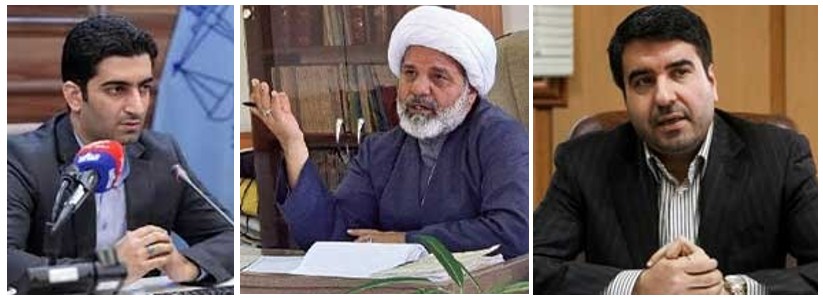
THE PRISON “CULTURAL DEPARTMENT” THE CENTER OF EXTORTION ON DEATH ROW
While war conditions should trigger expedited pardons and sentence reductions, the “Pardon and Clemency Council” in Mashhad Prison—operating under the Cultural Department—has become a marketplace for human lives.

- Operation: Under the supervision of Amir Pasban (Internal Director of Mashhad Prison) and seven clerics (Imams of the prison wards), this council targets inmates on death row, particularly those convicted of drug offenses.
- Bribes for Life: The network accepts luxury cars (laundered through specific showrooms), apartments, and land in exchange for fabricating “repentance letters” (Tobeh-nameh), submitting pardon requests, or delaying the date of execution.
LEGAL ANALYSIS AND CALL TO ACTION
The actions of the judiciary and prison authorities in Mashhad constitute Crime Against Humanity and organized criminal activity:
- Financial Hostage-Taking: Intentionally keeping prisoners in a high-risk war zone for extortion is a violation of Common Article 3 of the Geneva Conventions.
- Systemic Discrimination: Liberty is only accessible to those who can pay bribes to the Javdani gang or Amir Pasban, violating Article 26 of the ICCPR.
Appeal to the International Community:
- We urge Ms. Mai Sato to investigate the situation in Mashhad Prison as a prime example of “trading human lives for profit during wartime.”
- We call for targeted human rights sanctions against Amir Pasban, Sadegh Safari, and the Javdani family for their roles in systematic extortion and the violation of the right to a fair trial.
- We demand international pressure to halt the “sale of pardons,” which results in the execution of the poor while allowing corrupt individuals with financial means to go free.
This report underscores that the Iranian regime is not only failing in its responsibility to protect prisoners during the current war but has transformed the prison system into a “trading post” to plunder the last assets of a desperate population.