Legal Analysis of New Directives from the Head of the Judiciary, Imminent Executions, and Violations of International Conventions
The Doctrine of “Priority of Internal Suppression over External War”
Contrary to international norms where governments focus on border protection during military conflicts, recent statements by high-ranking officials of the Islamic Republic reveal that the “streets of Iran” and “political dissidents” are the primary and ultimate targets of the sovereignty.
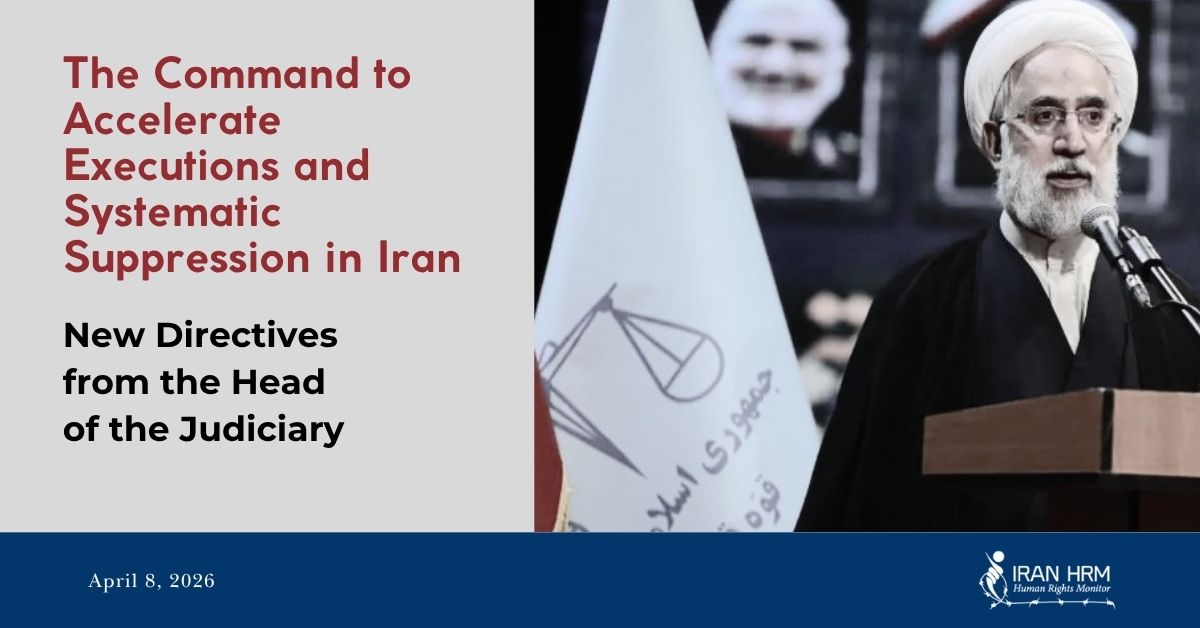
- Gholam-Hossein Mohseni-Eje’i (Head of the Judiciary – Rokna & Mizan, April 7, 2026): He explicitly issued the command to accelerate state killings. Addressing his First Deputy (Khalili), he stated:
“Our sentences, Mr. Khalili, must be issued more frequently. Both regarding the confiscation of assets and the issuance of death sentences—you must truly accelerate these.”
- Haji-Sadeghi (Supreme Leader’s Representative in the IRGC – Shabakeh Khabar, April 3, 2026): In a threatening tone directed at protesters, he declared:
“I give the youth one piece of advice… the era of mercy is over.”
- Mohammad Movahedi-Azad (Attorney General – Rokna, April 5, 2026): He revealed the creation of a public espionage network, announcing that over 7,000 public reports against “elements linked to foreign entities” have been received, with orders issued for their rapid processing. It is noteworthy that judicial officials recently declared that the punishment for “espionage and communication with foreign media” is asset confiscation and death. These statements represent a systematic effort to police society and criminalize civic activities.
Legal Analysis: These statements demonstrate an “Organized Criminal Intent” for the physical elimination of dissidents. Issuing orders to “increase death sentences” prior to due process signifies the total destruction of judicial independence and the transformation of the Judiciary into a “Killing Machine.
Gross Violations of Due Process and Execution of Child Offenders
Current cases demonstrate a systematic violation of Articles 6 and 14 of the International Covenant on Civil and Political Rights (ICCPR):
- The Case of Mohsen Eslamkhah: A protester from the 2022 prostests (Mahsa Amini Uprising). He was only 17 years old (a child) at the time of the alleged incidents but has been sentenced to death on charges of “Moharebeh” (Enmity against God) and “Efsad-fil-Arz” (Corruption on Earth). He was held for two months in the Urmia Intelligence Detention Center under severe torture to extract forced confessions. His execution is a flagrant violation of the Convention on the Rights of the Child and Article 6 of the ICCPR.
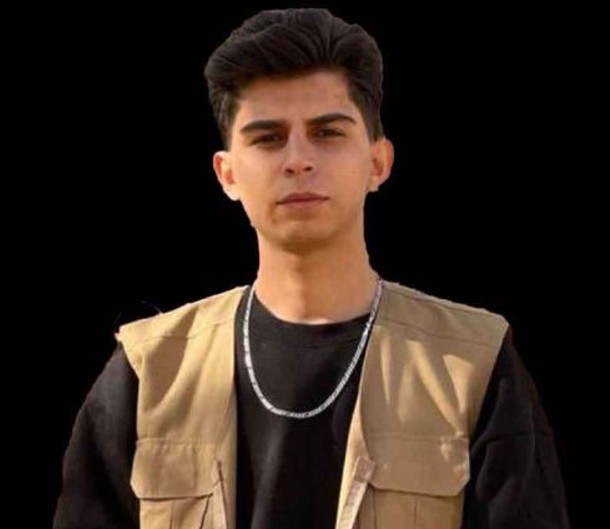
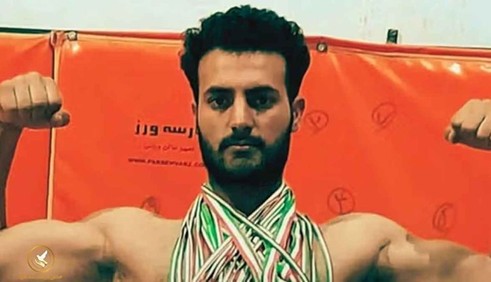
Mohsen Eslamkhah The Case of Benyamin Naghdi: A protester from the January 2026 protests and an athletic champion. He was arrested in Shiraz, and the risk of his execution in the coming hours is extremely grave. His “confessions” were broadcast in the state media immediately after his arrest, violating the “Presumption of Innocence” and the right to a “Fair Defense.” He was sentenced to death without access to a fair trial, based on televised confessions obtained under duress.

 Resistance and Suppression in Ghezel Hesar Prison
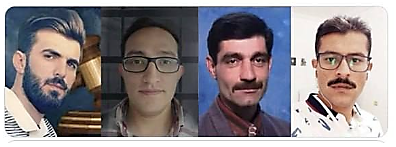
Reports from Unit 4 of Qhezel Hesar Prison reveal a bloody confrontation between resistant prisoners and the execution machine. During the transfer of Mohammad Taghavi Sangdehi and Akbar Daneshvarkar for execution, 22 political prisoners who resisted the move were brutally beaten and transferred to solitary confinement.
Following the execution of six members of the People’s Mojahedin Organization of Iran (MEK/PMOI)—Akbar Daneshvarkar, Mohammad Taghavi Sangdehi, Pouya Ghobadi, Babak Alipour, Vahid Bani-Amerian, and Abolhassan Montazer— who were taken to solitary confinement among the 22, most of the rest of these prisoners were returned to the general ward. However, four political prisoners, including Saeid Masouri (26 years in prison), Loghman Aminpour, Meysam Dehbanzadeh, and Sepehr Emamjomeh, remain in solitary confinement under severe communication restrictions. These individuals are also accused of affiliation with the MEK, which doubles the threat to their lives.
Secret Executions and Murder Under Torture (The Iceberg Scenario)
Under the cover of the global internet blackout in Iran, horrifying reports of extrajudicial killings are emerging:
- The Borujerd Crime: On January 8, 2026, six citizens were arrested. Only 12 days later, the lifeless bodies of three of them, Davoud Hashemi (41), and twin brothers Ali and Reza Kakavand (42)—were delivered to their families.
- Warning: Given the communication blackout and the prevailing security atmosphere, this represents only the “tip of the iceberg.” The number of executions and murders under torture in secret detention centers and remote prisons is undoubtedly far higher than the information leaking out.
Legal Profile of the Perpetrator: Gholam-Hossein Mohseni-Eje’i
Understanding the background of the current Head of the Judiciary is essential for international prosecution:
- Judicial-Security Background: Eje’i is a graduate of the Haghani School and a close associate of the “Butcher of Evin,” Assadollah Lajevardi. In the 1980s, he played an active role in interrogations and issuing death sentences.
- Gross Human Rights Violations: During the 1988 Massacre of political prisoners, he served as the Judiciary’s representative in the Ministry of Intelligence. He was also a key operative in the “Chain Murders” of dissidents.
- Extrajudicial Conduct: In legal records, he is noted for physical violence and direct brutality against defendants and critics. He is infamously known among the public as “Eje’i the Ear-Eater” (Gosh-khor) following an incident where he physically assaulted and bit the ear of critic Isa Saharkhiz.
- International Sanctions: Due to his direct role in bloody suppressions and systematic human rights violations, he is on the sanctions lists of the United States and the European Union. However, these sanctions have not deterred his criminal directives.
Responsibility of the International Community and International Law
Based on the principle of the “Responsibility to Protect” (R2P) and given that the Islamic Republic is committing “Crimes Against Humanity,” the international community is obligated to:
- UN Security Council: Must immediately review the case of political executions in Iran as a threat to global peace and security.
- UN Human Rights Council: Must activate its monitoring mechanisms to prevent the execution of Mohsen Eslamkhah (child offender) and Benyamin Naghdi.
- Principle of Universal Jurisdiction: Judges and prosecutors involved in these sentences (including Eje’i and Movahedi-Azad) must be criminally prosecuted in UN member states under the principle of Universal Jurisdiction.
The regime’s execution machine, under Eje’i’s direct command, is using the wartime environment to carry out a political purge of dissidents. While the internet is cut and the people’s voices are being throttled, international bodies have a direct responsibility to intervene. Silence in the face of this staggering slaughter is not merely inaction—it is complicity in a crime that history will not forget.
For the political prisoners facing execution, time is measured in seconds.