Since the outbreak of war between Iran and the United States on February 28, 2026, at least 48 political executions have been carried out by Iran to date. Most recently, 5 political prisoners named Mohammad Amini-Dehaqani, Aref Khoshkar, Erfan Esfandiari, Gol-Mohammad Mohammadi, and Mehdi Khanaki—the first four being arrested protesters and the last a member of the People’s Mojahedin Organization of Iran (PMOI/MEK)—were executed within a one-week period from July 15 to 22, 2026. Even more painful than the executions themselves is the extent of inaction by the international community in attempting to halt them; no tangible material action has been taken.

This global inaction has emboldened the Islamic Republic, and now this unbridled suppression has accelerated across various other fronts against political prisoners—an acceleration to which the free world, regrettably, has given a green light.
Depriving Families of Executed Prisoners of Funeral Ceremonies
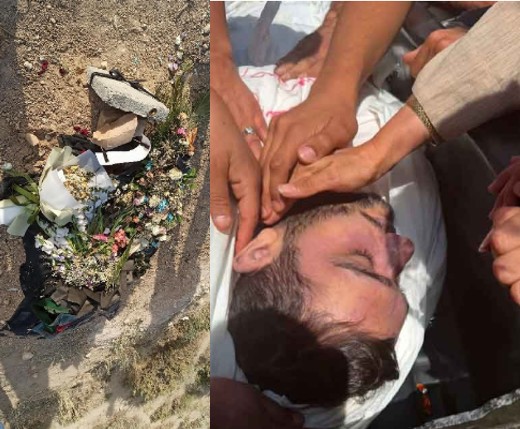
The Islamic Republic, as with many other executed political prisoners, refused to hand over the bodies of Erfan Esfandiari, 18, and Gol-Mohammad Mohammadi, 23, to their families and buried them secretly. The hanged body of Erfan Esfandiari was buried in a desert area around Buin Miandasht in Isfahan Province next to two other unmarked graves. Erfan Esfandiari’s family traveled for about four hours to reach their son’s burial site and were permitted to stay at his grave for only about five minutes to bid their final farewells.
The hanged body of Gol-Mohammad Mohammadi, a 23-year-old political prisoner, was likewise buried in a remote area in Tiran and Karun County, located in the western part of Isfahan Province, with his family granted only limited access to his grave.
 Death Sentence Issued for Political Prisoner Issa Chari
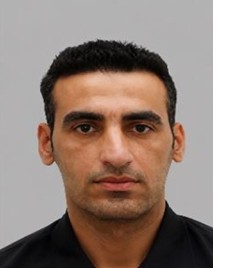
Isa Chari, a 37-year-old political prisoner, has been sentenced to death by Branch 23 of the Tehran Revolutionary Court, presided over by Judge Mohammad-Mehdi Shahmirzadi. The charges brought against him are stated as “membership in the People’s Mojahedin Organization of Iran (PMOI/MEK)” and “carrying out anti-security actions.” Issa Chari, a father of two young children and a Baluch citizen from Aq-Qala, worked as a laborer in a poultry farm in Varamin to earn a living. He was arrested by security forces in Varamin on December 7, 2025. This political prisoner was recently transferred from Khorain Prison in Varamin to solitary confinement in Hall 35 of Qezel Hesar Prison.
His transfer to solitary confinement, coinciding with the issuance of his death sentence, has heightened concerns regarding his situation and the imminent risk of execution. Over the past seven months, from the time of his arrest until the notification of the death sentence alongside his transfer to solitary confinement, no information regarding the prisoner’s status, location of detention, or legal proceedings had been made public. His transfer to Ghezel Hesar Prison was the first piece of information the family obtained regarding his condition.
Sentenced to Death Three Times Solely Due to Similar Clothing
Ahad Shokouhian, a political prisoner and one of the detainees of the January 2026 protests who was sentenced to death three times by Branch 26 of the Tehran Revolutionary Court, released an audio recording from inside prison emphasizing his innocence. He states that he was sentenced to death solely because he was wearing clothing similar to an individual present at the scene. He also described the proceedings of his case as unjust, stating that he was deprived of the right to an effective defense and due process. (Audio file in Persian is attached)
Death Sentence for Amir-Hassan Akbari-Monfared for a Crime Not Committed
 The judiciary of the Islamic Republic has sentenced political prisoner Amir-Hassan Akbari-Monfared, a 22-year-old accounting student detained in Evin Prison, to death on charges of “Baghi (armed rebellion) through connection with the People’s Mojahedin Organization of Iran (PMOI/MEK).” This sentence was issued solely due to his family relation to Farshid Asadi, an office attendant who killed death judges such as Razini and Moghiseh. Amir-Hassan is sentenced to death by Branch 15 of Tehran’s Revolutionary Court, presided over by the notorious judge, Salavati. He was arrested a day after the killing of these judges during a raid by intelligence agents on January 19, 2025, and was subjected to severe torture in Evin Prison to extract forced confessions.
Threat of Execution and Continued Pressure on 5 Political Prisoners
Five political prisoners detained in Qezel Hesar Prison are under severe pressure from agents of the Judiciary of the Islamic Republic.
Abolfazl Rahbar, 23, employed as a house painter, and his cousin Omid Rahbar, 24, a laborer—both arrested in January 2026—have been accused by the judiciary of “membership in the People’s Mojahedin Organization of Iran (PMOI/MEK).” According to informed sources, prison officials recently verbally informed these two prisoners that Abolfazl Rahbar has been sentenced to 20 years and Omid Rahbar to 26 years in prison. To date, no written notification or details regarding their legal proceedings or case documentation have been issued.
Agents of the Islamic Republic judiciary have threatened Vahid Azizi—42 years old, originally from Khomein and residing in Jannat Abad, Tehran, holding a PhD in Civil and Groundwater Engineering, who was arrested during protests on January 6, 2026—with the issuance and execution of a death sentence.
Mostafa Imani, 39, from Karaj, a writer and designer with a master’s degree in art, is another political prisoner who has been threatened with execution by the prosecutor’s office. He was arrested on March 29, 2026, on charges of “connection with and membership in the People’s Mojahedin Organization of Iran (PMOI/MEK)” and remains in detention.
Farshid Dovaltyari, 41, a driver, has been in detention since November 2025 and remains in a state of legal limbo. Earlier, on December 6, 2025, an intelligence ministry-affiliated news agency, without naming him, published his photograph while alleging the charge of “gathering weapons”—a claim for which no official details or documentation have been presented to date. This charge could be framed as “Moharebeh” (waging war against God) and result in a death sentence.
It Cannot Be Left Unsaid
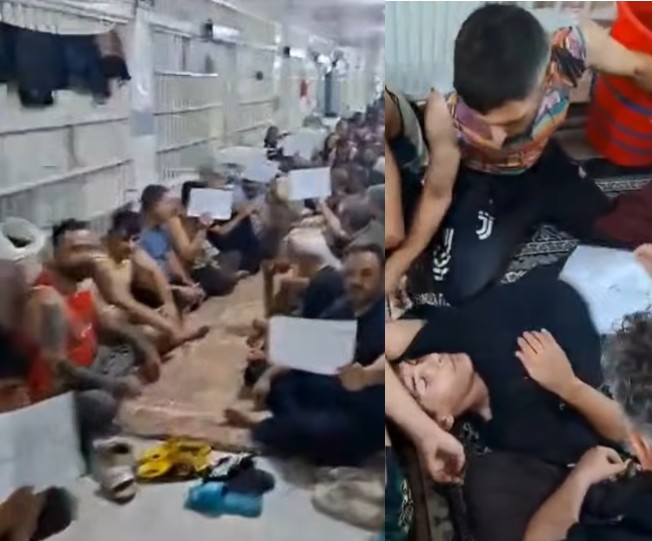
Although this document focuses on political prisoners, it is impossible not to mention the 12th day of the hunger strike by 1,500 ordinary-crime prisoners on death row in Qezel Hesar Prison in Karaj, in the hope of awakening human conscience to take concrete action to end such rampant trampling of human rights.
An informed source regarding the conditions in the prison stated: “Many of the striking prisoners are facing severe physical weakness after twelve days of hunger strike, yet no effective measures have been taken to address their health status.” No independent medical team has been dispatched to assess the health condition of the hunger strikers, and prison officials have offered no response to their raised demands.
 The Collapse of International Morality: A Test for the Global Community and International Human Rights
The continuation of this unbridled suppression by the Islamic Republic of Iran against political prisoners and the hasty execution of death sentences is not only a profound human crisis in Iran, but also a vital test for the credibility of the covenants and values of the international community. Although the efforts and declared positions of human rights authorities have always been respected, the harsh realities on the ground—ranging from the denial of the right to a fair trial to the execution of death sentences and indifference toward the lives of 1,500 human beings on hunger strike—demonstrate a disturbing gap between ratified international principles and concrete actions.
The continuation of this situation and the failure to take tangible steps confront international norms with the serious risk of ineffectiveness and the degradation of moral standards. The international community, responsible United Nations bodies, and UN’s member states, in order to safeguard their very purpose of existence and defend human dignity, urgently need—now more than ever—to transcend ineffective frameworks and employ decisive diplomatic and executive tools to compel Iranian authorities to immediately halt death sentences. Practical standing against this human catastrophe is the sole way to prevent the collapse of humanity’s collective conscience and the blatant negation of all achievements in the history of human rights.
Critical and Immediate Actions Required by the International Community, the UN, and Member States:
- Immediate Diplomatic and Punitive Action: Immediately and unconditionally conditioning all diplomatic, political, and economic relations with the Islamic Republic on the complete halt of the execution machine and the annulment of death sentences for political and conscience prisoners.
- Urgent Dispatch of Fact-Finding and Monitoring Missions: Exerting comprehensive pressure on the Iranian government to unconditionally grant entry to representatives of the UN High Commissioner for Human Rights, the UN Special Rapporteur, and independent international missions to inspect the country’s prisons (particularly Ghezel Hesar and Evin) in order to comprehensively assess the detention conditions of all political prisoners, prisoners of conscience, and death row inmates, evaluate their judicial proceedings, and conduct independent medical examinations of hunger strikers and victims of torture.
- Targeted Human Rights Sanctions: Identifying and listing all judges issuing Revolutionary Court verdicts (including judges of Branches 15 and 26), interrogators, and Prisons Organization officials on human rights sanction lists, and pursuing their international prosecution under the principle of Universal Jurisdiction.
- Summoning and Demanding Accountability from Iranian Ambassadors: Summoning the ambassadors of the Islamic Republic in UN member states to issue explicit, official warnings regarding the legal, political, and international consequences of continuing the trend of hasty executions and the suppression of the prisoners.
- Shifting the Paradigm of Drug Offenses Evaluation in International Bodies: Ceasing all economic or technical cooperation by international agencies (such as the United Nations Office on Drugs and Crime – UNODC) with Iran’s Drug Control Headquarters until the complete cessation of drug-related executions.
- Guaranteeing Judicial Transparency and the Right to a Fair Trial: Compelling Iran to abolish illegal procedures, including forced confessions under torture, the issuance of death sentences based on vague charges (such as “Baghi” and “Moharebeh”), and guaranteeing the right of all defendants to free and independent access to legal counsel of their choice and a fair trial.