Systemic Violations of Due Process and Right to Life
Executive Summary at a Glance
- Issuance and Confirmation of Death Sentences for January 2026 Protesters: Issuance of death sentences for Mohsen Babaeian, Borzou Rezaei, and Arman Almasi by Revolutionary Courts, and the final confirmation of death sentences for three protesters in the Pakdasht case (Ehsan Hosseinipour, Matin Mohammadi, and Erfan Amiri) by the Supreme Court.
- Proceedings Driven by Torture and Forced Confessions: Severe physical and psychological torture during interrogations to extract coerced confessions, false promises by security agents of leniency, and judicial disregard for defendants’ statements regarding coerced admissions.
- Juvenile Status of Defendants at Time of Arrest: Arrest and sentencing to death of Ehsan Hosseinipour, Matin Mohammadi, and Erfan Amiri, who were aged between 17 and 18 at the time of their detention.
- Denial of Chosen Legal Counsel and Judicial Prosecution of Lawyers: Dismissal and barring of independent defense attorneys, alongside judicial prosecution of lawyers (Amir Raeesian and Milad Panahipour) for publicly raising human rights concerns regarding due process violations.
- Explicit Violations of Domestic Laws and International Obligations: Direct contradiction with Articles 35, 37, 38 and 91 of the Constitution of the Islamic Republic of Iran, Articles 3, 5, 9, 10, and 11 of the Universal Declaration of Human Rights (UDHR), and Articles 6, 7, 9, and 14 of the International Covenant on Civil and Political Rights (ICCPR).
Introduction
The issuance and execution of death sentences against individuals arrested during nationwide protests in Iran have taken on increasingly alarming dimensions. An examination of recent cases involving protesters in Tehran, Arak, and Pakdasht demonstrates that the judiciary of the Islamic Republic—relying on confessions extracted under torture, denying access to independent legal representation, and ignoring the minor age of defendants at the time of the alleged offenses—violates the most fundamental principles of fair trial and international human rights law.

Case-by-Case Breakdown of protesters Sentenced to Death
- Case of Mohsen Babaeian and Borzou Rezaei (Greater Tehran Prison)
- Mohsen Babaeian:
 A participant in the January 2026 protests in Tehran who was transferred to Fashafouyeh (Greater Tehran) Prison after several months of detention and torture in security facilities. His trial was held in July 2026 before Branch 26 of the Tehran Revolutionary Court, presided over by Judge Iman Afshari. He was sentenced to death on charges of “Moharebeh” (Enmity against God), a verdict recently formally communicated to him in prison.
- Borzou Rezaei:
A resident of Kermanshah and a protester from the January 2026 demonstrations who was arrested in March 2026 and subsequently transferred to Greater Tehran Prison. His court session took place approximately two months ago in Branch 23 of the Tehran Revolutionary Court. His death sentence on charges of “cooperation with hostile states” was recently served to his attorney. Details regarding the evidence relied upon and the conditions of his interrogation remain obscured in opacity.
- Case of Arman Almasi (Arak Prison)

- Arrest and Charges:
Arman Almasi, 43, married and father to two children aged 2 and 6, was arrested in the early morning of January 4, 2026, when Markazi Province intelligence officers raided his home in Mahallat. The charge levied against him is “setting fire to a Mahallat Intelligence Department vehicle.” Following his arrest, he was transferred to a detention center and has been held for nearly eight months in Arak Prison, the administrative center of Markazi Province.
- Torture, Forced Confessions, and Broken Promises:
Reports indicate severe physical and psychological pressures during the first five days of detention aimed at extracting coerced confessions. Security agents used physical torture alongside false promises that admitting guilt and offering financial compensation would guarantee immunity from the death penalty. Relying on these assurances, his family sold their shop and inventory to pay 8.5 billion IRR in damages for the vehicle. Nonetheless, the Arak Revolutionary Court issued a death sentence, disregarding his statements regarding torture and the invalidity of the confessions.
- Rejection of Defense in Court and Issuance of Death Sentence:
Arman Almasi’s trial took place approximately three months ago at the Arak Revolutionary Court. During the hearing, he explicitly detailed the abuse, pressure, and forced confessions during interrogation, but the presiding court rejected his defense and issued a death sentence. The case is currently under review by the Supreme Court.
- Case of Ehsan Hosseinipour, Matin Mohammadi, and Erfan Amiri (Pakdasht Protesters)

- Arrest and Confirmation of Sentences:
These three individuals were arrested on January 8, 2026, in Pakdasht in connection with a fire at the “Seyyed al-Shohada” Mosque during which two Basij members were killed. They were tried in Branch 26 of the Tehran Revolutionary Court (presided over by Judge Iman Afshari) on charges including “involvement in the murder of two Basij members,” “intentional arson of a religious facility,” “destruction of public property,” and “assembly and collusion against national security.” They were sentenced to death. These verdicts have been upheld by the Supreme Court and forwarded to the implementation office.
- Juvenile Status at Time of Arrest:
The defendants were between 17 and 18 years old at the time of their arrest (Ehsan Hosseinipour is currently 19, and Matin Mohammadi is 17).
- Dismissal of Counsel and Confessions Under Torture:
The evidentiary base of the case relies overwhelmingly on confessions obtained under coercion. Furthermore, Amir Raeesian, chosen counsel for Ehsan Hosseinpour, was barred from representing his client by judicial order.
Intensification of Repression: Judicial Prosecution of Defense Lawyers
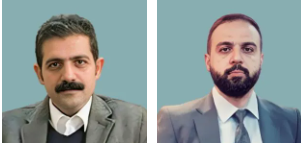
In a campaign to enforce censorship and eliminate defense rights, judicial proceedings have been initiated against defense attorneys Amir Raeesian and Milad Panahipour for publicly reporting the denial of legal counsel to Ehsan Hosseinipour. Amir Raeesian stated that the presiding judge explicitly removed him from the case. He noted that the primary material against Hosseinipour consisted of admissions taken while the defendant was held in severely restrictive, forced conditions without access to an adequate defense.
In Branch 3 of the Security Prosecutor’s Office, both attorneys were formally charged with “spreading falsehoods” (for public human rights reporting) and “propaganda against the system” (for signing a joint statement by 49 lawyers). They were released on bail. These steps reflect a systematic attempt to criminalize legal defense work and silence independent lawyers.
Legal Assessment: Violations of Domestic and International Norms
- Violations of Iranian Domestic Law:
- Violation of Article 35 of the Constitution: Denial of the right to chosen legal representation and the removal of defense attorneys from proceedings.
- Violation of Article 37 of the Constitution: Disregard for the presumption of innocence and issuing capital sentences based on unverified, coercive interrogations.
- Violation of Article 38 of the Constitution: Absolute prohibition of torture for extracting confessions. Under this article, coerced confessions carry no legal validity or weight.
- Violation of Article 91 of the Islamic Penal Code: In cases involving defendants under the age of 18, death sentences have been imposed without adequately assessing and establishing their intellectual maturity and mental development at the time of the alleged offense. This is contrary to Article 91 of the Islamic Penal Code, which provides for the possibility of refraining from imposing the death penalty or qisas where a juvenile offender’s maturity and understanding of the nature and consequences of the crime have not been established.
- Violations of International Treaties and Conventions:
- Universal Declaration of Human Rights (UDHR): Violation of Article 3 (Right to Life), Article 5 (Prohibition of Torture and Cruel Treatment), Article 9 (Prohibition of Arbitrary Arrest), Article 10 (Right to a Fair and Impartial Hearing), and Article 11 (Presumption of Innocence).
- International Covenant on Civil and Political Rights (ICCPR):
- Article 6: Arbitrary and unlawful deprivation of life.
- Article 7: Imposition of physical and psychological torture to extract confessions.
- Article 9: Arbitrary detention and prolonged holding in security facilities without clear charges.
- Article 14: Denial of fair trial guarantees, barring of chosen defense counsel, and criminalization of professional legal defense activities.
- Convention on the Rights of the Child (CRC): Violation of Article 37(a), which strictly prohibits the imposition of capital punishment for offenses committed by individuals under 18 years of age.