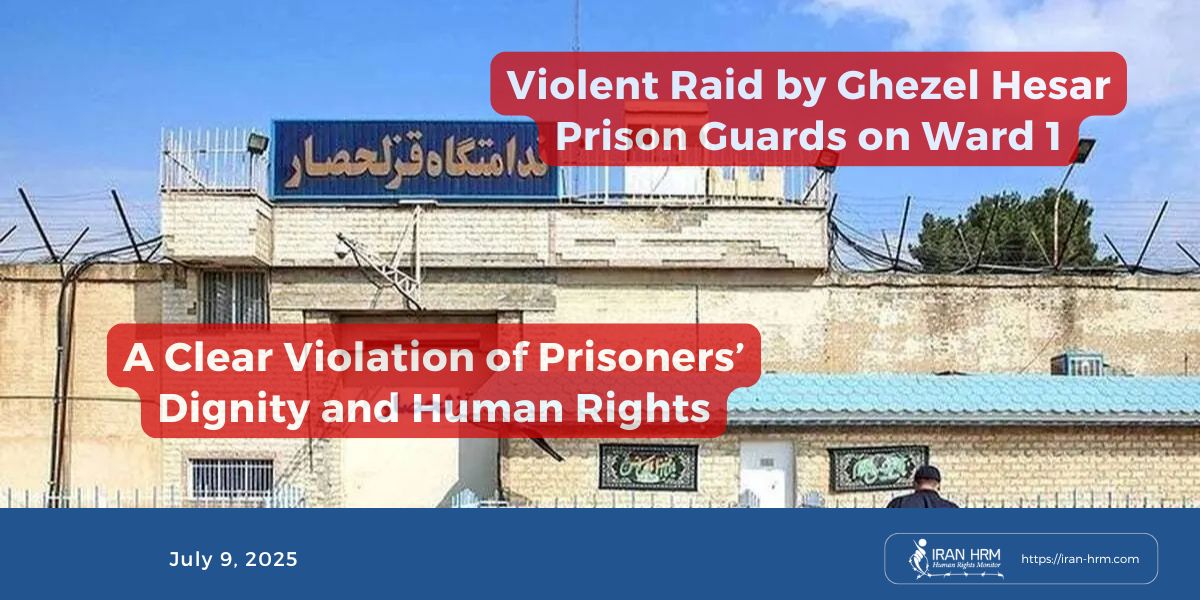
A Clear Violation of Prisoners’ Dignity and Human Rights
On Monday, July 7, 2025, Qezel Hesar Prison once again witnessed an organized and violent assault by prison guards against inmates. According to reports, the special guard unit stormed Ward 1 of the prison, thoroughly searching all prisoners’ personal belongings. During this harsh inspection, a large amount of prisoners’ property—including clothes, blankets, books, hygiene items, and even essential medicines—was damaged or completely destroyed.

This action, justified by prison officials as a “security check,” in practice blatantly targeted the human dignity of the prisoners and made their living conditions even more difficult. Eyewitnesses and prisoners’ families described the raid as “brutal” and “humiliating,” an event that clearly amounts to psychological torture and the creation of a constant atmosphere of fear and insecurity inside the prison.
Systematic Violation of Prisoners’ Rights in Qezel Hesar
In recent years, Qezel Hesar Prison in Karaj has repeatedly come under criticism from domestic and international human rights organizations due to overcrowding, appalling living conditions, and frequent acts of violence. Published reports indicate that, with the approval of prison management, the prison guard unit has repeatedly raided various wards, destroying personal belongings, threatening and beating inmates, and creating an environment full of repression and terror. Meanwhile, prisoners are often deprived of basic rights such as access to legal counsel, medical care, and even the ability to file effective complaints.
Media Silence and Families’ Protests
While independent media and human rights organizations have reported on this incident, state-controlled domestic media remain completely silent. This deliberate silence is part of a consistent policy of concealing the true conditions of prisons in Iran. Nevertheless, prisoners’ families have protested on social media, calling for the attention of domestic and international bodies to their children’s plight. They have emphasized that such actions constitute psychological and physical torture, and that prisoners should not be kept under such inhumane conditions.