A documented account of the deliberate targeting of women with intent to kill during the nationwide uprising in Iran
They are standing.
Facing the Revolutionary Guards.

Fists clenched.
Voices raised.
The bullets did not strike the legs.
Not the hands.
They struck the head.
The heart.
The face.
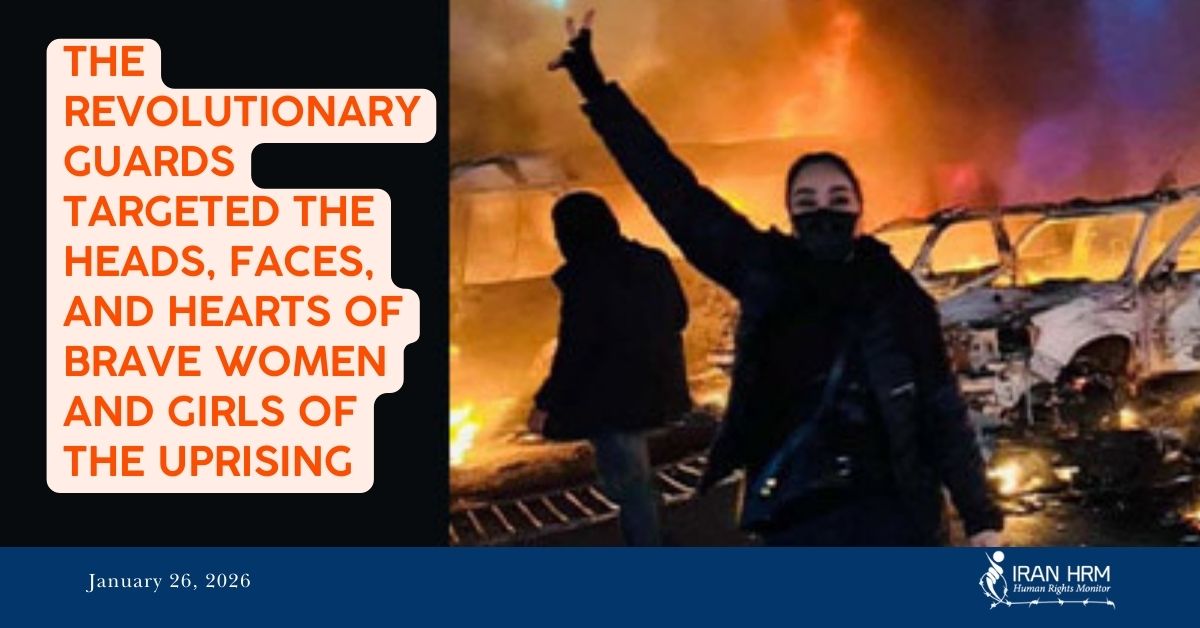
In a video that emerged from the nationwide uprising of January 2026, the moment of firing is captured. Women who stood their ground and confronted armed forces were shot and fell. The firing distance was close. The angle calculated. The impact lethal. These shots were not warnings; they were verdicts.
This image is not a story of escape. It is a story of standing. A story of women who did not retreat and did not abandon the streets.
These shootings were not meant to disperse the crowd. They were meant to extinguish resistance.
The Pattern of Fire; a Direct Response to Defiance
What appears in the recorded videos and field testimonies is not a momentary reaction or the result of chaos among armed forces. A clear and identifiable pattern emerges; repeated, consistent, and deliberate: shots aimed at points that ensure death. The head. The face. The heart. This was a technical and conscious choice, carrying only one meaning; the physical elimination of protesters.
At moments when women and girls of the uprising refused to leave the streets and stood their ground before the Revolutionary Guards, the nature of repression changed. There were no warning shots. No targeting of non-lethal body parts. Bullets were fired directly at vital organs. This shift was not sudden; it was a calculated response to defiance.
In these scenes, courage was not met with retreat; it was met with death.
Testimonies: Recording Moments That Cannot Be Denied
“The shots came from above. From rooftops. The angle was such that they only hit the head or the heart. These were not shots meant to frighten; they were meant to finish.”
“No one turned their back. Women were at the front. Fists clenched. When the firing began, we understood they had decided not to disperse the crowd, but to eliminate it.”
“First tear gas, then gunfire. When women stood their ground and did not retreat, snipers were deployed. The shots were precise and deliberate.”
These testimonies are not isolated accounts. Placed together, they reveal a single decision made in advance.

Recorded Deaths; Names of Women Who Stood Their Ground
Maedeh Moradikya, 22, Tehran
9 January 2026; shot directly in the head while present in the street.
Arezu Abedi, 50, Isfahan
9 January 2026; shot in the head on Bagh-e Daryacheh Street.
Mona Hosseini, 57, Isfahan
8 January 2026; struck in the face by live ammunition; transferred to hospital and pronounced dead.
Sonia Salehi-Rad, 34, Shiraz
8 January 2026; directly targeted in vital organs during the uprising.
Ghazal Aghaei Lindi, 28, Tehran (Qal‘eh Hasan Khan)
9 January 2026; fatally shot by security forces in the street.
These are only a few of the recorded names. The actual number of those killed is far greater than what has been possible to publicly document.
The Hospital; Where the Pattern Was Confirmed
The transfer of the wounded to medical centers did not interrupt the street narrative; it completed it. The simultaneous arrival of bodies with similar injuries confronted medical staff with a single reality; gunshot wounds to the head, neck, chest, and heart.
In many cases, death was declared before any medical intervention. The firing distance was close. The bullet trajectory direct. The pattern of wounds was repetitive and consistent; a clear indication of a single, deliberate decision.
The Collapse of the Official Narrative
Claims that protesters were “armed” collapse in the face of this evidence. The women who were targeted stood with clenched fists, not weapons. No evidence of armed confrontation by protesters has been recorded.
When shots are limited to vital organs, the official narrative becomes irreparable. What was perceived as a threat was not weapons, but defiance itself.
Legal Classification; When a Pattern Becomes a Crime
The deliberate targeting of civilian women through direct gunfire to the head, face, and heart constitutes a clear case of extrajudicial killing. The repetition of this pattern across multiple cities places it within the framework of a widespread and systematic attack against a civilian population; conduct that, under international law, amounts to crimes against humanity.
Responsibility for these crimes does not rest solely with the shooters. The chain of command and the architects of these actions; Ali Khamenei and Ebrahim Raisi’s judiciary Chief Gholamhossein Mohseni Ejei, bear direct responsibility for this criminal campaign.
International Positions; a Rare Consensus on Intent to Kill
Following the release of images and field testimonies documenting direct gunfire to the heads, faces, and hearts of women protesters, several leading international human rights bodies adopted unusually explicit and convergent positions, all pointing to a deliberate and lethal pattern.
- Amnesty International
Amnesty International has confirmed in multiple reports and statements related to the Dey protests that security forces used live ammunition and pellet guns against protesters.
The organization has documented that a significant number of victims were killed by direct gunfire to the head, heart, and chest; a pattern which, according to Amnesty, demonstrates “intent to kill” or, at minimum, complete disregard for the right to life.
Among the recorded victims are dozens of women and children killed by close-range gunfire.
- UN Fact-Finding Mission on Iran
The Independent International Fact-Finding Mission reported to the UN Human Rights Council that credible evidence indicates the commission of crimes against humanity during the repression of protests, particularly against women.
The Mission documented killings, arbitrary detention, torture, rape, and other forms of sexual violence carried out in a widespread and systematic manner against civilians.
Through analysis of videos and forensic medical records, UN experts identified deliberate targeting of women’s heads, chests, faces, and eyes; acts resulting in blindness or death and classified as gender persecution.
In its January 2026 report, the Mission also confirmed the use of snipers and military-grade weapons in residential areas, noting that some women were killed by headshots while standing on balconies or behind windows inside their homes.
- Amnesty International concluded in its legal memorandum of 14 January 2026 that the repeated and organized nature of these killings exceeds ordinary repression and constitutes mass killing under conditions of internet shutdown.
- The Guardian
An investigative report by The Guardian, based on interviews with doctors and nurses who secretly treated protesters, exposed a pattern of gender-based targeting.
According to the report, security forces repeatedly fired at women’s faces and sensitive body areas.
Medical professionals noted that while men were more often shot in the legs or lower torso, women were deliberately targeted in ways that caused permanent injury or death.
Conclusion
This report is not a narrative of fear; it is a record of courage and resistance by a generation in uprising. Women and men who did not retreat were answered with bullets. Their bodies are evidence. The pattern is clear. This case will not be closed through denial, nor erased by time.