Crimes in Security Detention: The Murder of Hossein Ghavi (Silavi) Under Torture
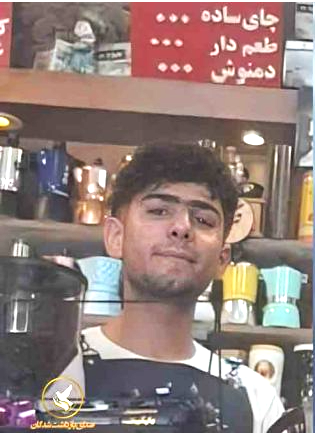
Amid recent military tensions, security agencies have intensified the suppression of citizens by exploiting the “atmosphere of war.” Hossein Ghavi (Silavi), a 28-year-old and the sole breadwinner for his family, who suffered from a physical disability (paralyzed in the legs), was arrested at his workplace by the Islamic Revolutionary Guard Corps (IRGC). He was accused of “filming bombed areas” and maintaining contact with foreign entities. However, reports indicate that this disabled youth died under brutal torture while in detention.

- Legal Analysis: The death of Hossein Ghavi is a clear instance of “Death in Custody” and an absolute violation of the prohibition of torture (Article 7 of the ICCPR). Given his physical disability, the violence inflicted upon him is considered “Double Cruel Treatment,” and the responsibility for his life lies directly with the detaining entity (IRGC).
The Execution Machine in Qezel Hesar: Execution of January 2026 Uprising Protesters
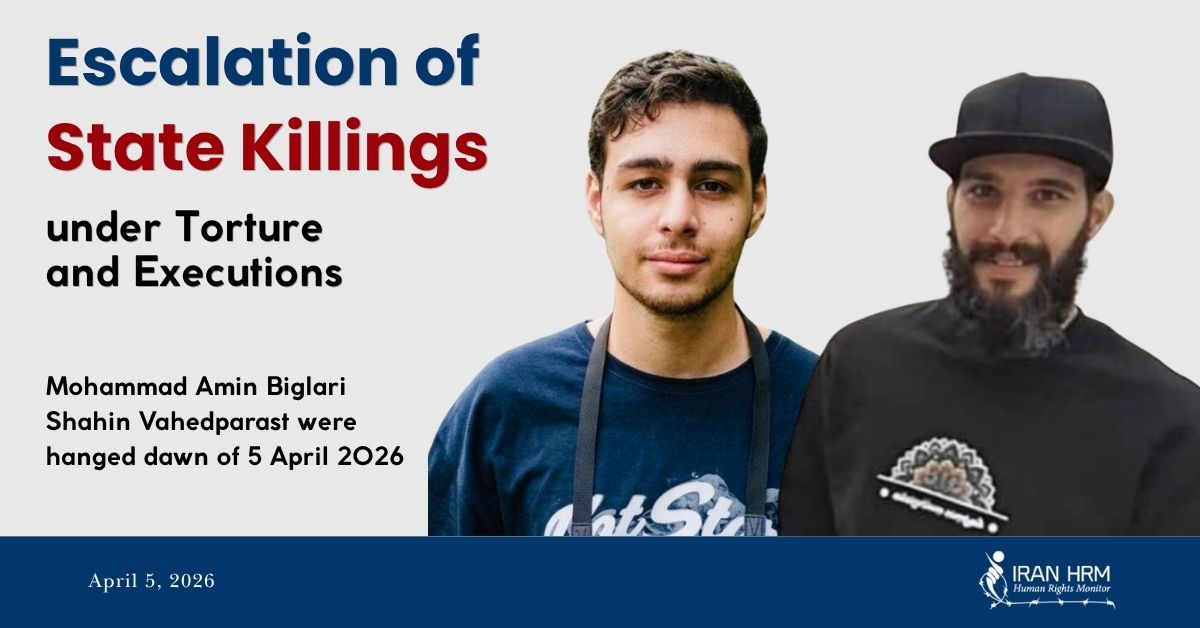
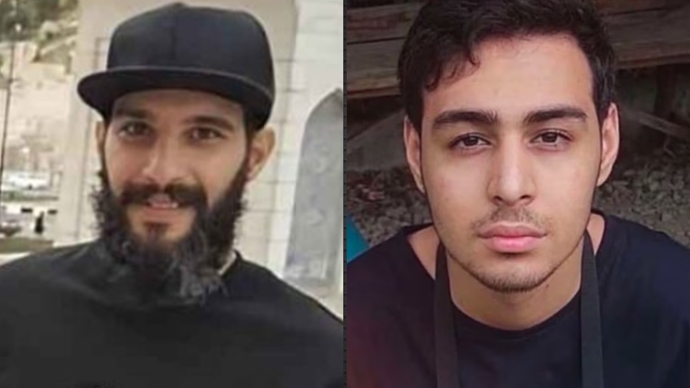
At dawn on April 5, 2026, the death sentences of Mohammad-Amin Biglari and Shahin Vahedparast, detainees of the January 2026 nationwide protests, were carried out at Qezel Hesar Prison. The charges against them were “intent to assault an armory” and “acting against national security.” Reports indicate that confessions were obtained under torture and served as the primary basis for the sentences. Furthermore, leaked videos of the fire at the “Mahmoud Kaveh” Basij base in East Tehran, along with statements from defense attorneys, challenge the official state narrative. These two individuals were sent to the gallows just three days after their co-defendant, Amir-Hossein Hatami, 18, was executed. These sentences were issued in a rushed and unfair process, less than a month after their arrest.
Violations of International and Domestic Law:
The Iranian regime has carried out these executions by trampling upon multiple layers of law:
Violation of International Standards (Conventions and Covenants):
- Right to Life and Fair Trial (Article 14, ICCPR): Issuing and executing a sentence in less than a month deprived the defendants of adequate time to prepare a defense and access independent counsel.
- Absolute Prohibition of Torture (Article 7, ICCPR): Reliance on confessions obtained under duress is a direct violation. Under international law, such confessions have no legal standing.
- Lack of Proportionality: Under international standards, the death penalty should only be reserved for the “most serious crimes” involving intentional killing.
Violation of Domestic Laws (Constitution and Penal Code):
- Prohibition of Torture (Article 38 of the Constitution): Explicitly forbids torture for obtaining confessions, rendering such “confessions” null and void.
- Right to Counsel (Article 35 of the Constitution): Denying access to chosen counsel violates the fundamental rights of the accused.
- Due Process (Criminal Procedure Code): Ignoring exonerating evidence (the base fire videos) violates the requirement for an evidence-based judicial process.
Urgent Alert: Imminent Danger for Prisoners in Solitary Confinement
The systematic transfer of prisoners to Unit 3, Ward 35 of Qezel Hesar Prison is the final warning sign of impending execution. Currently, the lives of Abolfazl Salehi Siavashani and Ali Fahim, who were transferred to solitary confinement alongside the recently executed, are in immediate danger.
Judicial Arms of Repression: Background of the “Death Judges”
A) Abolqasem Salavati (The “Judge of Death” – Branch 15) Known by the public as the “Second Khalkhali” and the “Interrogators’ Scribe,” Salavati is the head of Branch 15 of the Revolutionary Court.
- Record in Protests: He issued death sentences for protesters in 2009, 2019, and 2022 (including Mohammad Ghobadlou, despite a mental health condition).
- Suppression of Minorities: He is responsible for the execution of Kurdish prisoners (e.g., Farzad Kamangar, Shirin Alam-Houli, and the Moradi brothers) and Baha’is.
- Sanctions: He has been under human rights sanctions by the EU since 2011 and the US since 2019.
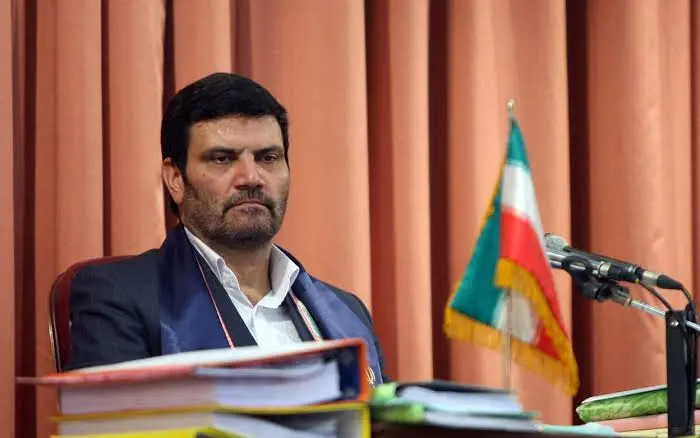
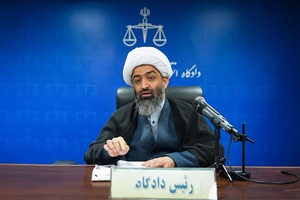
B) Iman Afshari (The Executioner of Branch 26) The head of Branch 26, Afshari, specializes in heavy sentences for political prisoners and religious minorities.
- Recent Atrocities: He issued the death warrants for 6 political prisoners (Taghavi, Bani-Ameryan, Alipour, Ghobadi, Montazer, and Daneshvarkar) executed in early April 2026.
- Weaponizing “Baghi” and “Moharebeh”: He has sentenced individuals like Behrouz Ehsani and Mahan Sadrat to death, turning Branch 26 into an “execution factory.”
Responsibility of the International Community and Human Rights Bodies
Silence or merely ceremonial reactions to this new wave of “state killings” effectively validates the Islamic Republic’s strategy of using war conditions to settle scores with protesters. When domestic judicial mechanisms are controlled by judges like Salavati and Afshari, the responsibility to protect the right to life falls upon international institutions.
We call upon the United Nations, the Human Rights Council, and democratic governments to:
- Dispatch an Urgent Fact-Finding Mission: To investigate the conditions of those in solitary confinement in Ghezel Hesar and halt further executions.
- Exercise Universal Jurisdiction: To prosecute and issue international arrest warrants for Abolqasem Salavati and Iman Afshari for crimes against humanity.
- Condition Diplomatic Relations: All political or economic engagement must be explicitly conditioned on the immediate cessation of executions and the release of January 2026 protesters.
- Hold the IRGC Accountable: For the murder of citizens under torture, such as Hossein Ghavi (Silavi), within informal detention centers.
Inaction in the face of these tragedies will not only be a dark stain on the record of human rights organizations but will embolden the regime’s execution machine to consume more lives. The clock for the prisoners remaining in solitary confinement is ticking in seconds