Foreword
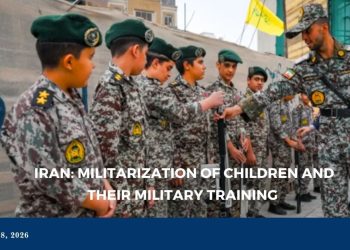
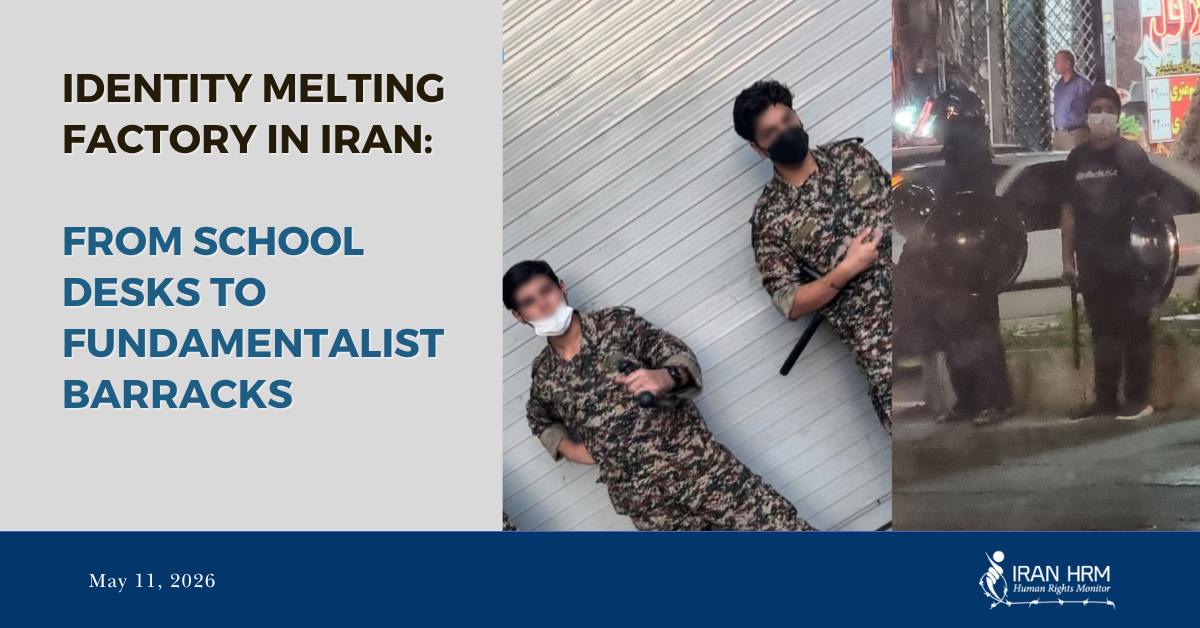
When we previously warned about the “training of oppressive forces for survival” regarding the establishment of new police high schools and the architecture of repression, we did not envision that this “ideological training” of children and adolescents—turning them into levers for the regime—would reach the staggering dimensions we detail in this special report.

What we observed in the form of “Police High Schools” is merely the tip of the iceberg of a macro-strategy titled “Hybrid Purging and Aggression against the Educational System.” Following recent uprisings, the Islamic Republic has concluded that controlling the streets is impossible without controlling the “child’s mind.” Based on extracted documents and news, this vast landscape consists of several operational layers, which are detailed with sources in this report.
This report demonstrates that the Islamic Republic has focused its efforts on the Ministry of Education to raise “ideological humans”—read: “individuals committed to the Velayat-e Faqih and fundamentalism”—where the child and their rights hold no meaning. If the world does not halt this process, and particularly if the global internet shutdown persists, in a generation or two, Iran will no longer recognize the global community. The land that was once the cradle of civilization and wisdom will be transformed into a hub for exporting fundamentalism and terrorism, posing a “human nuclear threat” to the entire world through the violation of all human rights and values.
This structural overhaul of the education system to raise a generation aligned with the ruling ideology is more than just founding a few specialized schools; it is a macro-social engineering project designed to ensure long-term survival and expand ideological influence. This is not only an internal crisis for Iranian national identity and a violation of every right a child or adolescent should possess, but also an international security challenge due to its potential to export fundamentalism.
Chapter One: The Conflict of Two Worldviews
UNESCO 2030 vs. The Fundamental Transformational Document
Education in Iran is no longer a civil institution; it has been transformed into a subset of the defense-security structure of the Islamic Republic. In this regime, “Global Citizens” are not raised; instead, the education system focuses on “training ideological soldiers.”
Tabnak- May 1, 2019 – https://www.tabnak.ir/fa/news/895932/
According to a report by Tabnak on May 1, 2019, Ali Khamenei, then leader of the Islamic Republic, labeled the UNESCO 2030 Agenda as a document that seeks to “train soldiers and subjects for the West” within Iranian schools.
He stated: “Westerners expect our devout teachers… to train soldiers for them in their classrooms, so that our students become soldiers and subjects for those suit-and-tie-wearing savages who easily kill people.” He then named Morteza Motahhari as a true teacher, praising him for “instilling deep Islamic thoughts in the minds of the youth.”
Khamenei further described the “Organization for Educational Research and Planning” as the heart of the Ministry, commanding that: “The educational materials produced by this organization must be consistent with the Fundamental Transformational Document.” He emphasized the necessity of “subtly and correctly incorporating the messages and teachings of the Revolution into all educational texts” and insisted that teacher-training universities must raise individuals who are “teachers of religion, piety, and the Revolution in the truest sense of the word.”
UNESCO 2030 vs. The Fundamental Transformational Document
These two documents represent two completely opposing roadmaps for the future. One is drafted based on global standards and “Human Rights,” while the other is founded on the so-called “Islamic-Revolutionary Ideology” represented by the regime of the Islamic Republic for its survival and the cultivation of “ideological humans.”
Comparative Analysis of the Two Documents Based on Official Records
- UNESCO Education 2030 Agenda
Adopted in 2015 as part of the United Nations’ “Sustainable Development Goals” (SDG 4), its primary objective is to “ensure inclusive and equitable quality education and promote lifelong learning opportunities for all.”
Core Pillars:
- Gender Equality: Elimination of all forms of discrimination between girls and boys in access to education.
- Global Citizenship: Education for peace, human rights, and tolerance toward all cultures and religions.
- Health Education: Age-appropriate health and sexual education to prevent diseases and social harms.
- Inclusive Education: Ensuring free access to schooling for children with disabilities, minorities, and the impoverished.
The Basis of the Regime’s Opposition: In 2019, Ali Khamenei explicitly stated that this document “raises soldiers for the West” and declared concepts such as gender equality to be in direct conflict with Islam. He emphasized that Iran’s educational system must not be dictated by external global agendas.
- The Fundamental Transformational Document of Education (Iran)
Approved in 2011 by the Supreme Council of the Cultural Revolution, this document serves as the “Constitution of Education” in the Islamic Republic. Its goal is to shift the educational system toward raising individuals who achieve “Hayat-e Tayyiba” (a pure life based on Islamic criteria).
Core Pillars:
- Velayi Education: Raising a generation with “absolute commitment and adherence” to the principles of the Revolution and the Velayat-e Faqih.
- Gender Roles: Emphasis on preparing girls for the roles of “wife and mother” and promoting the culture of Chastity and Hijab.
- Rejection of the West: Elimination of any Western educational models and replacing them with religious-based humanities.
- Militarization of Education: Cultivating “defense readiness” and a “Jihadi spirit” in students from an early age.
Key Performance Indicators: A Comparative Overview
| Feature | UNESCO 2030 Agenda | Fundamental Transformational Document |
| Ultimate Goal | Skilled and Inquisitive Global Citizen | Ideological Soldier Committed to the Velayat |
| Gender | Full Legal and Educational Equality | Segregation Based on Traditional Roles and Hijab |
| Values | Peace, Tolerance, and Human Rights | Jihad, Self-Sacrifice, and Martyrdom |
| Authority | Science and International Standards | Religious Texts and the Leader’s Decrees |
Legal Implication: Violation of the Child’s Best Interests
This shift in approach is a flagrant violation of the Principle of the Best Interests of the Child (Article 3 of the CRC). According to this principle, in all actions concerning children, the best interests of the child shall be the primary consideration. However, in the “Transformational Document,” the survival of the political system is prioritized over the mental well-being and the right to choose of the child.
Comparative Analysis of the UNESCO 2030 Agenda and the Fundamental Transformational Document of Education in Iran
This analytical report examines the confrontation between these two fundamentally different worldviews: one rooted in “Human Rights and Global Peace” (UNESCO 2030) and the other based on “Religious Ideology and the Training of Repressive Cadres” (The Fundamental Transformational Document of the Islamic Republic).
https://journal.cesir.ir/article_146300.html
- Vision and Ultimate Goal: Citizenship vs. Loyalty
- UNESCO 2030 Agenda: The primary objective is to raise a “Global Citizen”—an individual who respects human rights, possesses critical thinking skills, and strives for peace, tolerance, and environmental preservation. In this document, education is a tool for personal empowerment and sustainable development.
- Fundamental Transformational Document (Iran): The ultimate goal is to achieve “Hayat-e Tayyiba” and raise “Soldiers of the System.” In this document, the school is not an environment for inquiry but a factory for producing individuals who exhibit absolute submission to the Velayat-e Faqih and ideological dogmas.
- Gender Equality and Social Roles: Equality vs. Segregation
- UNESCO 2030 Agenda: Emphasizes the total elimination of gender discrimination. Girls and boys must have equal access to educational and vocational opportunities, and curricula must not promote gender stereotypes.
- Fundamental Transformational Document (Iran): Defines education based on “segregated roles.” Girls are trained for traditional roles (motherhood and wifehood) and “Chastity and Hijab,” while boys are prepared for military and “Jihadi” roles. This approach directly contradicts international conventions on the rights of the child.
- Rights-Based Approach vs. Duty-Based Approach
- UNESCO 2030 Agenda (Fundamental Rights): Defines education as a “Right” for every human being. The goal is to empower the student to recognize and defend their rights.
- Fundamental Transformational Document (Divine Duties): Views education as a tool to familiarize the students with their “Duties” toward the Creator and the Velayat-e Faqih. In this view, instead of questioning their rights, the student is trained for “obedience and fulfillment of duty” toward the regime.
- Scientific Objectivity vs. Ideological Filters
- UNESCO 2030 Agenda (Evidence-Based): Emphasizes teaching sciences based on scientific methodology, research, and empirical evidence. The goal is to reach scientific truth without religious or political preconditions.
- Fundamental Transformational Document (Islamization of Sciences): Focuses on the “Islamization of the Humanities.” Concepts that conflict with official ideology (such as modern psychology, universal human rights, or Western sociological theories) are removed or distorted to align with the government’s narrative.
- Global Digital Literacy vs. Information Quarantine
- UNESCO 2030 Agenda (Open Access): Promotes media literacy and access to modern technologies to join the global information society. It emphasizes “freedom of information” as a driver for development.
- Fundamental Transformational Document (National Intranet and SHAD Platform): Limits virtual education within the confines of the “National Information Network” and monitored applications (such as SHAD). The goal is to create an “Information Bubble” to prevent what the regime calls a “Cultural Onslaught,” ensuring students only access approved sources.
- Pluralism vs. Monopolism
- UNESCO 2030 Agenda (Respect for Diversity): Education must be based on respect for racial, religious, linguistic, and ideological diversity, aiming for peaceful coexistence among all beliefs.
- Fundamental Transformational Document (Ideological Monopoly): Bases education exclusively on the official religion and the government’s specific interpretation of it. Religious minorities and dissenters are ignored or labeled as “deviant movements.”
Comparative Summary of Key Educational Pillars
| Comparison Pillar | UNESCO 2030 Agenda | Fundamental Transformational Document |
| Educational Basis | Rights-based (Individual as a right-holder) | Duty-based (Individual as a duty-bound agent) |
| Scientific Content | Neutral and based on global standards | Biased and based on “Islamization” |
| Communications | Media literacy and open web access | National Intranet and surveillance platforms (SHAD) |
| Acceptance of Differences | Pluralism and tolerance for dissenters | Ideological monopoly and elimination of opposing thoughts |
Strategic Indicators Table: Survival Strategy vs. Global Standards
| Indicator | UNESCO 2030 (Global Standard) | Transformational Document (Regime Survival) |
| Education Core | Human Rights and Global Peace | Jihad, Self-Sacrifice, and Martyrdom |
| Scientific Approach | Secular, research-based, and scientific | Ideological, rejecting Western humanities |
| Freedom of Thought | Promoting inquiry and critical thinking | Raising loyal cadres and absolute obedience |
| Information Access | Open internet and global media literacy | National Network (SHAD) and Digital Quarantine |
| Role of Military | School is a non-military and safe zone | Presence of FARAJA (Police) and Clerics (Amin Project) |
Militarization of Education: From Schools to Barracks
The most dangerous divergence lies in the “Militarization of Education.” While international protocols (like the Safe Schools Declaration) stress keeping schools free from military influence, the “Transformational Document” paves the way for security agencies:
- Police High Schools: Converting schools into cadre-building centers for repression.
- Amin Project: The presence of 10,000 clerics for the ideological surveillance of students.
- Curricula Overhaul: Deleting peace concepts and replacing them with texts promoting “Sacred Violence.”
Global Consequence: A Threat to Human Security
Replacing the 2030 Agenda with the Transformational Document is not merely an internal issue; it signifies the disconnection of a generation from global values. This system produces a generation that, due to “Digital Isolation” and “Systematic Brainwashing,” perceives the world as an enemy. This process turns Iran from a cradle of civilization into a hub for training fundamentalist forces—a structural threat to global peace and security, achieved by trampling upon the universal rights of children and adolescents.
The “Police High Schools” previously discussed are the operational and strike-force components of this “Transformational Document”—raising cadres who are not only brainwashed but also militarily trained to repress others.
A Closer Look at the “SHAD” Network
AsrIran- December 14, 2025
https://www.asriran.com/fa/news/1123173/
Ali Bagherzadeh, the Minister’s advisor and head of the Human Resources Center within the SHAD Steering Committee, stated: “The SHAD network is not merely a video education service; it is a complete educational, pedagogical, and cultural ecosystem… As a controlled and ‘clean’ environment under the constant supervision of specialized teams, SHAD provides students with access to healthy and appropriate content. Websites and sources that receive content approval are prioritized in search results, and access to inappropriate words, sites, and environments has been effectively blocked for student users.”
Now, we highlight an example of what this official deems “appropriate cultural education” for children:
Student News Network – May 4, 2026
https://snn.ir/fa/news/1400691/
Wide Reception of the “Havagardan” Animation
According to the Student News Network (SNN) on May 4, 2026, the satirical animation “Havagardan” (The Aviators) was released on the SHAD platform during the “Ramadan War” and met with an extensive reception from students, reaching over 40,000 simultaneous viewers in a single broadcast. The report claims this demonstrates the high capacity of animation and satire to convey “educational” and attractive concepts to the younger generation.
What is the “Havagardan” Satire?
Tasnim News Agency- March 17, 2026
https://www.tasnimnews.ir/fa/news/1404/12/27/3543224/
Tasnim News Agency reported on March 17, 2026, that this animation series was launched on SHAD with the goal of “familiarizing adolescents with the defensive capabilities and capacities of the Islamic Republic of Iran.”
- Content: The series introduces Iranian weaponry, specifically in the fields of missiles and drones, and depicts military confrontations between Iran and the “Zionist regime” in a story-driven, entertaining format.
- Technique: An innovative feature of this work is “characterizing” individual Iranian weapons based on their inherent technical traits to create a closer connection between the adolescent audience and military/technical concepts.
The Humanitarian and Legal Conflict
While education should be “training for peace,” this initiative endears war instruments to children at an age when they lack the capacity to discern the catastrophic consequences of conflict. This is a direct violation of Article 29 of the Convention on the Rights of the Child (CRC), which mandates that education should foster understanding and friendship among all nations.
Using satire and animation to normalize missiles and drones in the minds of children constitutes “Incitement to Violence.” This is occurring while the “hidden anxiety” among Iranian children has reached a warning level, as admitted by Seyyed Hassan Mousavi Chelak, the Deputy for Social Health of the State Welfare Organization:
Hamshahri Online- April 26, 2026
https://www.hamshahrionline.ir/news/1032237/
Hamshahri Online reported on April 26, 2026, that in a national screening program for child anxiety:
- Out of approximately 899,793 screened children (ages 5 to 6), 186,772 were identified as suspected of having anxiety disorders.
- About 76% of these children (141,293) were referred to counseling centers for psychological services.
- The Warning: If chronic anxiety is not treated at this age, the risk of depression, personality disorders, and even substance abuse increases in later years. Untreated childhood anxiety also leads to academic decline, weakened social skills, and chronic disorders in adulthood.
Legal Conclusion
The recent actions of the Islamic Republic in implementing the “Fundamental Transformational Document” and revoking the UNESCO 2030 Agenda constitute a flagrant violation of Article 26 (Section 2) of the Universal Declaration of Human Rights and Article 29 of the CRC. Education must be directed toward “strengthening respect for human rights and fundamental freedoms,” not serving as a tool to ensure the survival of a regime through the exploitation of childhood.
The “Fundamental Transformational Document” is effectively an “Isolation Protocol.”
- Digital Isolation: When the regime cuts off global internet access and confines students within the SHAD platform, it is executing the “technological” pillar of this document.
- Military Execution: The “Police High Schools” represent the military-executive branch of this same strategy.
This structure demonstrates that the Islamic Republic not only disregards the international rights of children and adolescents but actively seeks to construct a “One-Dimensional Human” devoid of independent analytical ability—the exact opposite of the inquisitive, empowered global citizen that international standards aim to cultivate.