The question today is no longer whether torture exists in Iran.

Over the past several years, reports issued by the United Nations Special Rapporteur on the situation of human rights in Iran, the UN Secretary-General, the Independent International Fact-Finding Mission established by the UN Human Rights Council, Amnesty International, and numerous international media outlets have consistently documented the use of torture, forced confessions, prolonged solitary confinement, sexual violence, denial of medical care, and other forms of cruel, inhuman, or degrading treatment against detainees.
The findings of the Independent International Fact-Finding Mission concluded that, during the suppression of nationwide protests, serious human rights violations—including arbitrary arrests, physical and psychological torture, sexual violence, and forced confessions—were committed in a widespread and systematic manner against protesters. The Mission further stated that some of these violations may amount to crimes against humanity under international law.
Likewise, successive reports by the UN Special Rapporteur have expressed grave concern over the continued use of torture, deaths in custody, deliberate denial of medical treatment, and other forms of ill-treatment, while repeatedly highlighting the absence of independent investigations and effective accountability for perpetrators.
In light of this extensive body of documentation, the central question is no longer whether torture occurs in Iran. Rather, the fundamental issue is why, despite overwhelming evidence, these practices continue unabated and why victims continue to face enormous obstacles in proving the abuses committed against them.
This report therefore adopts a different perspective. Instead of examining torture solely as a series of individual violations, it analyzes it as part of an institutional mechanism that begins with arbitrary arrest, continues through interrogation and unfair judicial proceedings, is reinforced by denial of medical care and the concealment of evidence, and ultimately sustains itself through impunity and the absence of accountability.
From SAVAK to the Islamic Republic: The Continuity of a Repressive Legacy
Torture in Iran did not begin with the establishment of the Islamic Republic.
During the final decades of the Pahlavi monarchy, the State Intelligence and Security Organization (SAVAK) became internationally notorious for its systematic use of arbitrary detention, physical and psychological torture, and forced confessions against political opponents. Figures such as Parviz Sabeti remain deeply embedded in the collective memory of former political prisoners from that era.
The 1979 Revolution promised an end to torture and authoritarian rule. Yet the historical record of the past four decades demonstrates that this cycle was not dismantled; rather, it evolved into a broader and more sophisticated system of repression.
While differing accounts exist regarding the transfer of certain former security personnel into the post-revolutionary security apparatus, what is clearly established by historical evidence is the continuity of repressive methods. Arbitrary detention, prolonged solitary confinement, torture, forced confessions, unfair trials, and the deliberate creation of public fear have remained defining characteristics of state repression.
In this sense, what endured after the Revolution was not merely the survival of individual actors but the preservation of a security doctrine in which torture is treated not as an exceptional abuse but as an instrument for suppressing political dissent.
When Torture Evolves from Individual Abuse into an Institutional Practice
What has repeatedly emerged from political cases over the past four decades is not simply the occurrence of torture but the reproduction of a recurring pattern.
That pattern begins with arbitrary arrest, continues through coercive interrogations, forced confessions, and judicial proceedings that fail to meet international standards of due process, and often ends without any independent investigation or meaningful accountability.
Article 7 of the International Covenant on Civil and Political Rights unequivocally prohibits torture and all forms of cruel, inhuman, or degrading treatment or punishment. Similarly, the Convention against Torture obliges States to conduct prompt, impartial, and effective investigations whenever credible allegations of torture arise. This prohibition constitutes a peremptory norm of international law and admits no exception—not in times of war, political instability, national emergency, or threats to national security.
Despite these unequivocal legal obligations, successive reports issued by the UN Special Rapporteur, the UN Secretary-General, the Independent Fact-Finding Mission, and independent human rights organizations have documented strikingly similar patterns across Iran. These include arbitrary detention, prolonged solitary confinement, denial of access to family members and lawyers of choice, physical and psychological abuse, forced confessions, denial of adequate medical care, and the use of coerced statements during judicial proceedings.
The Independent Fact-Finding Mission concluded that these violations were not isolated incidents attributable to individual officers. Rather, similar practices were documented across multiple provinces and involved different security, intelligence, and judicial institutions. Such consistency is one of the strongest indicators, under international human rights law, of a structural pattern rather than isolated misconduct.
From this perspective, the focus is no longer the conduct of a single interrogator or detention facility. Instead, attention must be directed toward the broader institutional framework whose combined decisions, practices, and omissions allow this cycle of abuse to persist.
Torture Begins Before the First Blow
In many documented cases, torture begins long before physical violence is inflicted.
Reports by the UN Special Rapporteur and the Independent International Fact-Finding Mission indicate that numerous individuals arrested during nationwide protests were held in complete incommunicado detention for days or even weeks. Their families were not informed of their whereabouts, access to independent legal counsel was denied, and all communication with the outside world was deliberately severed.
The Fact-Finding Mission concluded that arbitrary arrests, detention in undisclosed locations, and the widespread use of prolonged solitary confinement formed an integral part of the authorities’ response to public protests. In many instances, these conditions themselves created the environment in which subsequent torture and coercion became possible.
The Istanbul Protocol, the internationally recognized standard for the effective investigation and documentation of torture; identifies prolonged solitary confinement, incommunicado detention, denial of access to legal counsel, independent medical professionals, and family members as conditions that substantially increase the risk of torture and other forms of cruel, inhuman, or degrading treatment.
Accordingly, torture cannot be understood solely as the moment when physical violence occurs. Once a detainee is stripped of legal protection, isolated from the outside world, and deprived of independent oversight, a structure is created that not only facilitates torture but also makes its documentation and subsequent accountability significantly more difficult.
The documented cases of political prisoners such as Motaleb Ahmadian, Gholamhossein Kalbi, Afshin Baymani, Seyed Abolhassan Montazer, Forough Taghipour, Arghavan Fallahi, and many others demonstrate that prolonged solitary confinement, incommunicado detention, sustained psychological pressure, and the denial of fundamental rights have become recurring features of security-related prosecutions in Iran.
Forced Confessions: The Intended Outcome of Torture
An examination of documented political cases demonstrates that torture is frequently employed not merely to inflict suffering or punish detainees, but to produce confessions.
These confessions become the central link connecting arrest, interrogation, prosecution, trial, and ultimately sentencing.
The UN Special Rapporteur, the Independent Fact-Finding Mission, and numerous human rights organizations have documented repeated cases in which detainees—particularly protesters, political activists, and civil society actors—were subjected to severe physical and psychological abuse, threats of execution, intimidation against family members, sexual violence, prolonged solitary confinement, and sleep deprivation in order to force them to sign pre-written statements or participate in recorded “confessions.”
In several documented cases, these coerced confessions were broadcast through state-controlled media before judicial proceedings had even begun, effectively undermining the presumption of innocence and compromising the possibility of a fair trial.
Amnesty International has likewise reported that statements extracted under torture or other forms of coercion have repeatedly been admitted as evidence before Iran’s Revolutionary Courts, while allegations of torture raised by defendants have routinely been ignored or dismissed without independent investigation.
Such practices directly violate Article 15 of the Convention against Torture, which obliges States to ensure that any statement established to have been obtained through torture shall not be invoked as evidence in any proceedings.
Yet available documentation indicates that, in numerous Iranian cases, disputed confessions have not only remained part of judicial files but have served as the principal basis for lengthy prison sentences and even death penalties.
Cases involving Mansour Dehmardeh, Gholamhossein Kalbi, Seyed Abolhassan Montazer, Behrouz Ehsani, Mehdi Hassani, Hamid Hossein-Nejad Heydaranlou, and other political prisoners have drawn repeated concern from human rights organizations regarding allegations of torture, coerced confessions, and serious violations of fair trial guarantees.
The End of Interrogation Is the Beginning of the Struggle for Truth
For many victims, torture does not end when interrogation ends.
In numerous Iranian cases, the next stage consists of preventing victims from proving that torture occurred.
The Istanbul Protocol requires that allegations of torture be documented promptly through independent medical examinations, psychological evaluations, and detailed recording of the victim’s testimony. Independent medical documentation, informed consent, preservation of evidence, and protection of victims constitute essential elements of an effective investigation.
However, reports by United Nations mechanisms and international human rights organizations indicate that victims in Iran have frequently been denied access to independent physicians, medical examinations have been delayed, physical injuries have gone undocumented, and complaints alleging torture have been dismissed without impartial investigation.
The UN Special Rapporteur has repeatedly expressed concern over the absence of independent investigative mechanisms capable of examining allegations of torture and has noted that perpetrators are rarely held accountable.
Similarly, the Independent Fact-Finding Mission concluded that the absence of independent investigations, the lack of accountability, and the persistence of impunity are not isolated shortcomings but integral components of the broader pattern of repression documented in Iran.
For many survivors, therefore, the real struggle begins after they leave the interrogation room—a struggle to preserve evidence, document injuries, and establish the truth of what they endured.
Every delay in recording physical or psychological injuries, every obstacle preventing access to an independent physician, and every complaint dismissed without investigation ultimately reinforces the very system that enables torture to continue.
Medical Deprivation: Torture Continued by Administrative Decision
Torture is not always inflicted through beatings, electric shocks, or physical violence. In many cases, severe physical and psychological suffering is deliberately prolonged through the denial of adequate medical care.
In recent years, the UN Special Rapporteur on the situation of human rights in Iran, the UN Secretary-General, and numerous international human rights organizations have repeatedly expressed concern over the deliberate denial of medical treatment to political prisoners and prisoners of conscience. Their reports emphasize that refusing hospital transfers, delaying specialist treatment, withholding essential medication, or neglecting serious medical conditions—particularly when used as a form of punishment or coercion—may constitute cruel, inhuman or degrading treatment and, in certain circumstances, amount to torture.
The United Nations Standard Minimum Rules for the Treatment of Prisoners (the Nelson Mandela Rules) affirm that prisoners are entitled to the same standard of healthcare available in the community and that all medical decisions must remain independent of security or political considerations.
Nevertheless, numerous documented cases indicate that political prisoners in Iran have been denied access to specialist treatment for months or even years despite clear medical recommendations. In some instances, prisoners have been transferred to hospital only after their health had deteriorated dramatically or when their lives were already in imminent danger.
Cases involving Motaleb Ahmadian, Gholamhossein Kalbi, Afshin Baymani, Forough Taghipour, Arghavan Fallahi, and many other political prisoners illustrate a recurring pattern in which healthcare is transformed from a fundamental human right into another instrument of punishment and coercion.
Why Does This Cycle Continue?
Perhaps the defining characteristic of torture in Iran is not merely its occurrence, but the persistence of impunity.
Article 12 of the Convention against Torture requires States to undertake prompt, impartial, and effective investigations whenever there are reasonable grounds to believe that torture has occurred. Article 13 further guarantees every victim the right to complain and to be protected against intimidation or retaliation.
Successive UN reports concerning Iran, however, have repeatedly concluded that these obligations remain largely unfulfilled. The Independent International Fact-Finding Mission found that the absence of independent investigations, the lack of accountability, and the continued impunity enjoyed by perpetrators are among the principal factors enabling serious human rights violations to recur. It further concluded that the failure to ensure accountability substantially increases the likelihood of future abuse.
Impunity in this context extends far beyond the failure to prosecute individual interrogators. It encompasses the absence of accountability throughout the entire chain of responsibility—from arbitrary arrest and interrogation to prosecutorial decisions, judicial proceedings, prison administration, medical documentation, and the handling of complaints submitted by detainees and their families.
Every allegation of torture dismissed without an independent investigation becomes part of a broader institutional pattern that enables similar abuses to be repeated.
Survivors After Release: Freedom Does Not End Torture
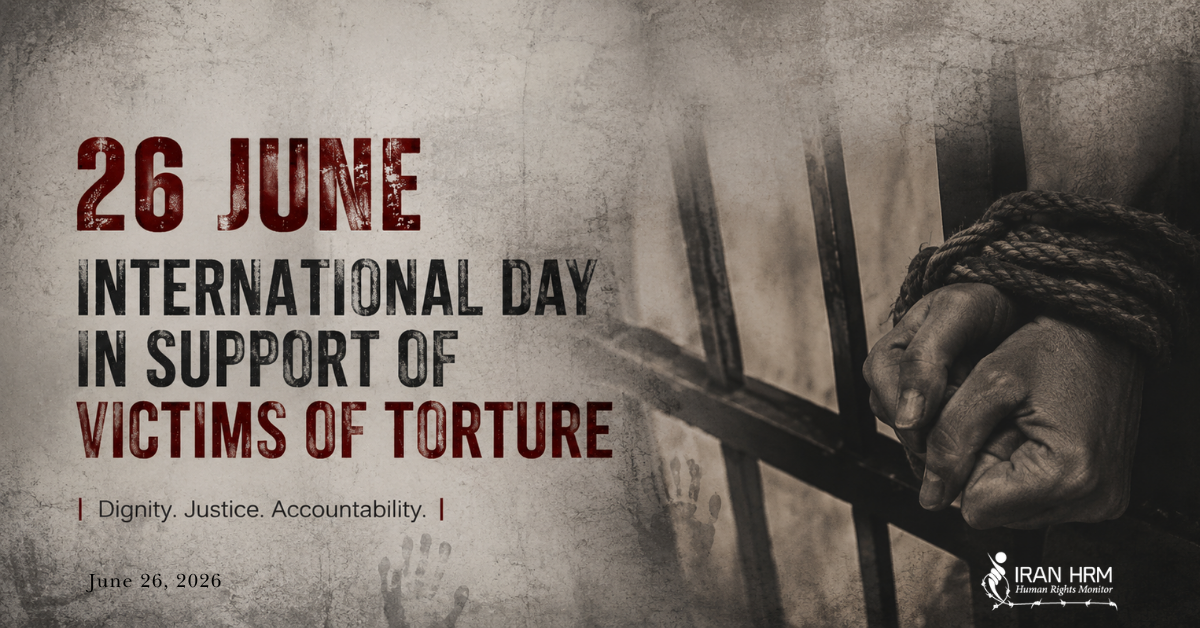
The International Day in Support of Victims of Torture is not only about those who remain behind bars.
For many survivors, torture continues long after their release.
The Istanbul Protocol recognizes that torture leaves profound and lasting psychological consequences, including Post-Traumatic Stress Disorder (PTSD), chronic anxiety, depression, sleep disorders, persistent feelings of insecurity, cognitive impairment, and severe social isolation. For this reason, psychological assessment is considered as essential as physical examination in documenting torture.
Former political prisoners in Iran frequently continue to experience repeated summonses by security authorities, restrictions on employment, pressure against family members, constant fear of re-arrest, and limited access to adequate medical or psychological care.
Freedom from prison therefore does not necessarily mean freedom from torture. For many survivors, imprisonment marks only the beginning of a long struggle with its enduring physical, psychological, social, and economic consequences.
Torture as an Instrument of Fear and the Preservation of Repression
An examination of four decades of documented human rights violations—particularly those committed during the suppression of nationwide protests—demonstrates that torture in Iran cannot be understood merely as a method of extracting confessions or punishing individual detainees.
Instead, arbitrary arrests, prolonged solitary confinement, physical and psychological torture, forced confessions, denial of medical care, unfair trials, severe prison sentences, executions, and the systematic impunity enjoyed by perpetrators form interconnected elements of a broader machinery of repression.
The function of this machinery extends well beyond breaking the will of individual prisoners.
Its broader purpose is to send a powerful message to society: that political dissent, peaceful protest, civic activism, or opposition to state policies may result in arrest, torture, prolonged imprisonment, or even execution.
Viewed in this context, torture is not confined to interrogation rooms. Its consequences are reproduced throughout society by cultivating fear, raising the perceived cost of dissent, and discouraging future public mobilization.
Likewise, the concealment of torture, obstruction of independent documentation, denial of medical treatment, dismissal of victims’ complaints, and the continued impunity of perpetrators are not isolated failures. Together they constitute different components of a single institutional system that sustains repression through intimidation.
Silence in the face of torture—or the failure to hold perpetrators accountable—not only denies justice to individual victims but also reinforces the conditions under which similar violations are likely to recur.
Conclusion
The International Day in Support of Victims of Torture, observed annually on 26 June, commemorates one of the most fundamental principles of international law: the absolute prohibition of torture under all circumstances. No government, public official, political emergency, or national security consideration can justify its use.
The combined findings of the UN Special Rapporteur, the UN Secretary-General, the Independent International Fact-Finding Mission, international human rights organizations, and numerous documented cases of political prisoners in Iran reveal a consistent and recurring pattern: arbitrary arrest, prolonged solitary confinement, physical and psychological torture, forced confessions, denial of medical care, unfair judicial proceedings, severe punishments or executions, and ultimately, impunity for those responsible.
Combating torture therefore requires far more than condemning isolated acts of abuse. It demands independent documentation in accordance with the Istanbul Protocol, unrestricted access to independent lawyers and medical professionals, prompt and impartial investigations, effective remedies for victims, and accountability at every level of the chain of command.
Today, torture in Iran is no longer solely an issue affecting individual prisoners. It has become a matter of society’s collective right to live free from fear.
As long as torture, forced confessions, unfair trials, executions, and impunity continue to function together as instruments of repression, the ultimate victims will not be political prisoners alone, but an entire society deprived of freedom, human dignity, and the fundamental right to peaceful dissent.
Breaking this cycle is therefore not only essential for delivering justice to victims of torture; it is a prerequisite for restoring the rule of law, safeguarding fundamental human rights, and ending impunity for serious human rights violations in Iran.
Selected Documented Cases of Political Prisoners Illustrating Recurring Patterns of Torture in Iran
| Name | Documented Human Rights Violations |
| Motaleb Ahmadian | More than 230 days in solitary confinement, prolonged denial of specialized medical care, physical and psychological abuse, over 15 years of imprisonment without furlough |
| Gholamhossein Kalbi | Fourteen months in solitary confinement, torture to obtain confessions, denial of medical treatment, more than two decades of imprisonment without furlough |
| Afshin Baymani | More than 25 years of imprisonment, denial of medical care, repeated prison transfers, temporary enforced disappearance, continuous pressure |
| Seyed Abolhassan Montazer | Prolonged solitary confinement, physical and psychological torture, denial of fair trial guarantees, risk of execution |
| Mansour Dehmardeh | Electric shocks, severe beatings, forced confession, denial of access to legal counsel, death sentence |
| Behrouz Ehsani | Solitary confinement, allegations of torture, disputed confessions, death sentence |
| Mehdi Hassani | Allegations of torture, coerced confessions, violations of fair trial guarantees, death sentence |
| Hamid Hossein-Nejad Heydaranlou | Torture to extract confessions, threats against family members, denial of defense rights, death sentence |
| Forough Taghipour | Prolonged imprisonment, denial of prison furlough, sustained pressure, denial of adequate medical care (according to documented reports) |
| Arghavan Fallahi | Security-related pressure, denial of prisoners’ rights, restrictions on medical care and family contact (according to documented reports) |