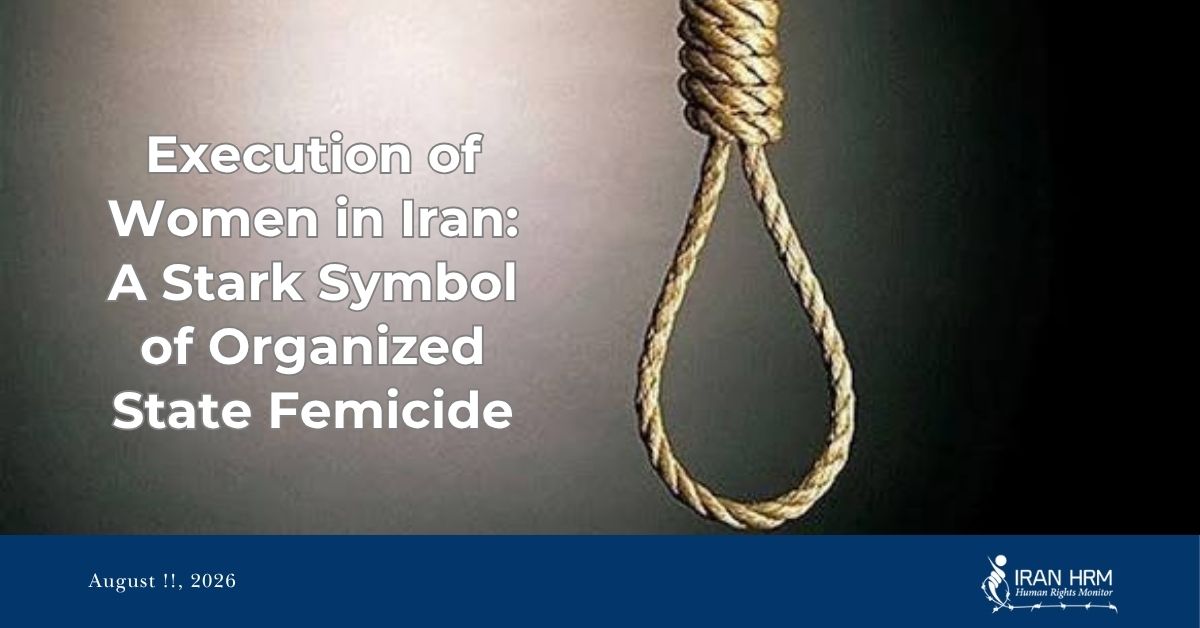
Iran’s ruling regime is internationally recognized for its deep-seated misogyny. Setting aside various social dimensions of this issue, the executions of women in Iran are not only one of the most glaring symbols of the violation of the right to life—manifesting state femicide rooted in misogyny—but the Islamic Republic also holds the world record for executing women, with at least 348 women executed in Iran since 2007. This figure does not account for politically motivated executions of female prisoners; if included, the total number would reach into the thousands.

During the presidency of Masoud Pezeshkian alone, 109 women have been executed. The most devastating aspect of these executions is that the majority of women executed by the clerical regime are themselves victims of domestic violence and discriminatory family laws. Many committed homicide in self-defense, while others became trapped in drug trafficking due to dire economic conditions and the desperate need to support their children. Many women, after enduring years of chaotic living conditions, physical abuse, sex trafficking by their husbands for income, and the impossibility of obtaining a divorce due to the regime’s discriminatory laws against women, committed homicide either intentionally to save themselves or inadvertently in self-defense.
A large number of these executions are never officially announced by the Iranian judiciary and are only brought to light through grassroots reports and human rights activists.
Average Annual Execution Rate of Women in Iran
Between 2021 and 2025, the Iranian judiciary executed an average of 31.5 women annually for ordinary/non-political crimes. In many instances, this punishment is disproportionately and unfairly applied against low-income and impoverished communities, as well as religious and ethnic minorities. Currently, numerous women remain on death row. Some are incarcerated in Qarchak Prison in Varamin, with the majority being mothers of one or more children.
Recent Female Execution Victims in Iran
Among the recent victims of female executions in Iran are:
- Marziyeh Nayeri: At dawn on Saturday, August 8, 2024, Marziyeh Nayeri was executed in Qazvin Prison. She was 24 years old and a victim of child marriage. Five years prior, while attempting to defend herself against a simultaneous attempted rape by her husband and his friend, she committed homicide. In court, Marziyeh swore under oath that she had repeatedly been subjected to attempted rape by her husband’s friends in the past too. She had picked up a knife on the day of the incident solely to protect her honor and life. However, the court rejected her claim of “Legitimate Defense” (Self-Defense under Article 156 of the Islamic Penal Code) and sentenced her to death. In Iran’s judicial system, the heavy burden of proving the strict conditions of self-defense rests entirely on the victim. Victims of domestic violence, hampered by a lack of legal awareness, unfair interrogations during detention, and deprivation of independent legal counsel, are unable to meet this burden, leading courts to hang women who acted to defend their lives and dignity.
With the execution of Marziyeh Nayeri in Qazvin Central Prison, the number of women executed in the calendar year 2026 reached 20. Up to the time of this report, her execution has not been announced by state media or official sources inside Iran.

- Mahtab Shirmohammadi: 32 years old, from Tabriz and a mother of a young daughter, was arrested three years ago on homicide charges and sentenced to death. She was executed on August 2, 2026, in Yasuj Prison. The fatal incident occurred during a verbal altercation with her husband over his marital infidelity.
- Azam Gerami: 58 years old and a mother of three, Azam Gerami was executed in Yasuj Prison on Saturday, July 18, 2026. She had been sentenced to death eight years prior on murder charges. As of the publication of this report, no official government entity or state media outlet has announced her execution.

- Parvin Chardoli: 39 years old and a mother of several children, Parvin Chardoli was hanged at dawn on July 15, 2026, in Qezel Hesar Prison in Karaj. She was arrested on December 15, 2019, accused of killing her stepson. According to an informed source, the court was aware that she was not the perpetrator and demanded she reveal the true killer’s name. When Parvin refused to name the killer, the court sentenced her to death instead. This judicial approach constitutes a blatant violation of the “Presumption of Innocence” and the “Principle of Individual Criminal Responsibility” in penal law, as the judiciary is legally prohibited from issuing a death sentence without establishing the defendant’s direct role beyond a reasonable doubt, especially when used merely as leverage or punishment for refusing to implicate another person.
The Escalating Trend of Executions of Women in Iran
Examining the execution statistics of women from 2021 onward reveals a sharp upward trajectory, rising from 18 women executed in 2021 to 64 women in 2025—a 3.5-fold increase over five years. Such figures regarding ordinary women reflect, on one hand, the deeply deteriorated economic and social conditions driving women into illicit activities such as drug offenses. On the other hand, it underscores the severe degradation of basic legal protections that every woman should enjoy within a marriage, including the right to divorce and protective laws against domestic violence and the husband’s exploitation of her body for financial gain.
A Father Has the Right to Kill His Daughter
While numerous women who committed homicide unintentionally to defend their dignity and lives have been executed, the laws of the Islamic Republic grant fathers the legal right to kill their daughters without facing the death penalty. The primary foundation of this systemic injustice is Article 301 of the Islamic Penal Code, which explicitly states: “A father or paternal grandfather shall not be subject to Qisas (retribution/execution) for killing his child.” This statutory provision serves as a structural license for domestic violence and “honor killings.” One of the most heartbreaking examples revealing this deep injustice and anti-woman legal system is the murder of Fatemeh Soltani by her father.
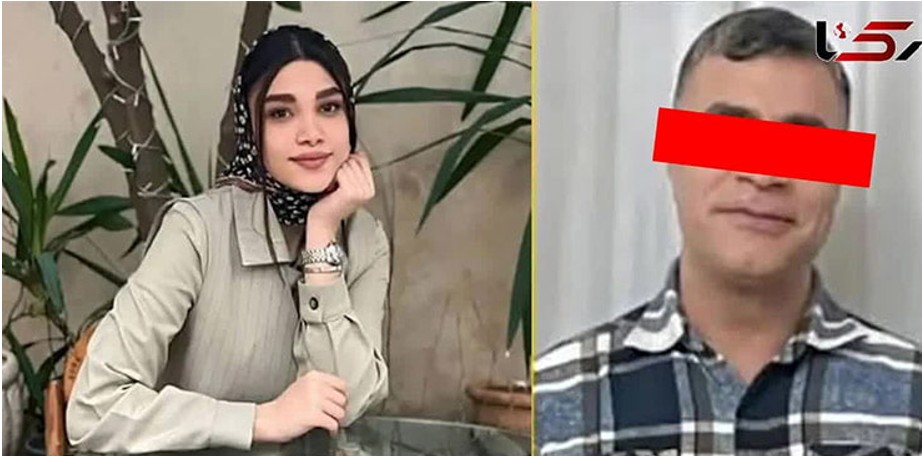 (Photo from Rokna News Agency)
According to a report by the state-run newspaper Donya-e-Eqtesad on July 26, 2026, a father who stabbed his 17-year-old daughter to death in front of her workplace in Islamshahr in 2024 was exempted from execution under Article 301 and sentenced merely to 8 years in prison and the payment of blood money (Diyah).
This 8-year sentence for Fatemeh Soltani’s father is not an isolated exception but rather represents a systematic pattern within Iran’s judiciary. Previous instances of horrific acts categorized as “honor killings” further demonstrate this pattern.
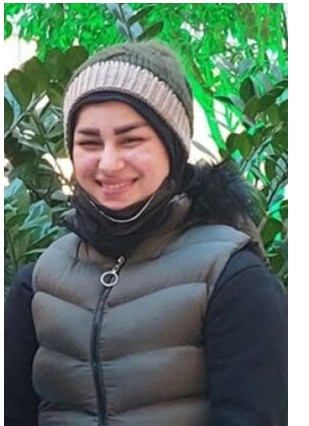
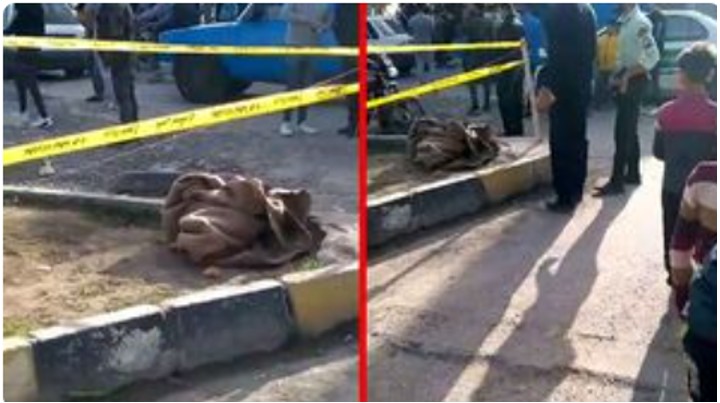
Mona Heydari, a victim of child marriage, was brutally murdered by her husband at the age of 17. Forced into marriage with her cousin at age 12, Mona was eventually decapitated by her husband with the help of his brother, who then paraded her severed head through the city streets with a smile. He was sentenced to only 8 years in prison and was released shortly thereafter following a pardon from the victim’s legal guardians (Olia-ye Dam— who was her father, also the perpetrator’s uncle). Mona was the mother of a 3-year-old son and had repeatedly sought a divorce but was continually forced to abandon her efforts.
 (Photo from Tabnak)
Concrete Steps for the International Community
While the Iranian government stands as one of the few regimes globally to systematically institutionalize discrimination against women at all levels of legislation, the execution of 64 women in 2025 and its accelerating pace in 2026 are the logical outcomes of a structure in which “being a woman” is not viewed as an independent human identity, but rather as a subordinate entity existing to serve men.
In a reality where the religious dictatorship’s constitution has blocked the path to equality from the outset, the Civil Code marginalizes women by halving their economic value and legal standing, the Family Law traps women in a cycle of violence through child marriage and the deadlock of divorce, and Article 301 of the Islamic Penal Code provides a structural license for “honor killings” by exempting fathers from Qisas (retribution in kind); a monstrous judicial system exacts vengeance on women who attempt to break through this solid barrier to save their own lives, dragging the most vulnerable and isolated victims of domestic violence to their deaths.
The performance of the Islamic Republic’s judiciary in cases involving the execution of women constitutes an explicit violation of foundational international human rights instruments that Iran is legally obligated to uphold:
- Violation of the Right to Life and Prohibition of Cruel Treatment (Articles 3 and 5 of the Universal Declaration of Human Rights – UDHR): The systematic deprivation of the right to life of women who are themselves victims of violence, child marriage, and poverty constitutes a clear instance of cruel, inhuman, and degrading punishment.
- Violation of Article 6 of the International Covenant on Civil and Political Rights (ICCPR): Iran is a state party to this covenant. Under Article 6, in countries that have not abolished the death penalty, capital punishment may only be imposed for the “Most Serious Crimes.” According to international jurisprudence and standards, drug-related offenses or actions committed in reaction to domestic violence do not, under any circumstances, fall within the category of “most serious crimes.”
- Violation of Article 14 of the International Covenant on Civil and Political Rights (ICCPR): Depriving women of the right to a “fair trial,” failing to respect the “presumption of innocence,” and denying them the practical ability to establish “legitimate defense” (self-defense) due to the misogynistic structures of the courts.
- Violation of the UN General Assembly Declaration on the Elimination of Violence against Women (DEVAW): This declaration obligates all states to criminalize domestic violence and protect victims; conversely, the Iranian regime executes the victim while offering state protection and legal immunity to perpetrators of “honor” killings.
- Breach of International Customary Law Prohibiting Gender Discrimination (Principles of CEDAW): Although the Iranian regime has refrained from acceding to the Convention on the Elimination of All Forms of Discrimination Against Women (CEDAW), structural discrimination against women in family and penal legislation violates fundamental principles of international law and binding customary standards.
The international community, the UN Special Rapporteur on the situation of human rights in Iran, and the UN Special Rapporteur on violence against women can no longer content themselves with symbolic statements of concern in the face of this “state-sanctioned femicide.” International bodies must:
- Re-evaluate the Judicial Approach: Condemn Iran’s courts as a system in violation of international law due to their failure to observe fair trial guarantees and their denial of the right to self-defense for female victims of domestic violence.
- Exercise Universal Jurisdiction: Subject judges, orchestrators, and enforcers of these unlawful execution orders to international criminal prosecution and condition all diplomatic and economic relations with the regime on an immediate halt to the execution machine and the repeal of laws enabling “honor” killings.
- End Inaction Against Violators of the Right to Life: Silence in the face of a structure that sends victims of violence and child marriage to the gallows while releasing perpetrators of honor killings after brief prison terms constitutes invisible complicity in the destruction of women’s right to life. It is time for international fact-finding missions and diplomatic leverage to hold the Iranian regime accountable for these systematic and appalling human rights violations.