
Reports received from Evin, Greater Tehran (Fashafuyeh), Qezel Hesar, Dastgerd (Isfahan), Karaj Central, Malayer, and Gonbad-e Kavus prisons demonstrate a severe deterioration of living standards, medical neglect, and non-compliance with prisoner detention regulations. Collectively, these conditions jeopardize the health and lives of prisoners and may constitute “gradual state murder” and the gradual deprivation of the right to life.

Evin Prison: Temperatures Exceeding 40°C, Bedbug Infestation, and Viral Outbreak
- Temperature and Ventilation: Temperatures inside certain wards exceed 40°C, and existing cooling systems fail to function effectively. Ward doors are kept continuously closed, and prison authorities have rejected requests to allow electric fans or evaporative air coolers purchased at the prisoners’ own expense.
- Non-Compliance with the Separation of Offenses: In Ward 7 of Evin Prison, political prisoners are held alongside general crime convicts and narcotics offenders (approximately one-fifth of Hall 2 is allocated to drug-related defendants).
- Disease Outbreak and Health Hazards: Widespread bedbug infestations and the spread of a viral illness with respiratory symptoms, severe sore throat, lethargy, and extreme weakness have been reported, lacking diagnostic testing or specialized medical care.
Greater Tehran Prison (Fashafuyeh): Extreme Overcrowding, Sewage-Contaminated Water, and Systemic Corruption
Information received from Ward 5 of the Greater Tehran Prison presents a disturbing picture of a structured drug distribution network and inequality in prisoners’ living conditions:
- Overcrowding and Floor-Sleeping: The presence of approximately 400 prisoners in 16-room halls with a capacity of 240 beds in Brigade 5 has led to widespread floor-sleeping in hallways and prayer halls, as well as the spread of skin and fungal infections.
- Water and Food Quality: Available water is reported to be salty and unfit for use. Prisoners are forced to purchase low-quality bottled water (in some instances bearing a foul odor) from the prison shop. Food and bread quality are described as poor, leading to digestive issues.
- “VIP” Rooms and Narcotics Distribution: Reports indicate that 4 out of 16 rooms in each hall are designated as exclusive (“VIP”) rooms for financially privileged prisoners. Furthermore, an organized network operates to smuggle and distribute narcotics with high financial turnover.
- Visitation Restrictions: Wait times for in-person family visitation appointments are reported to be between 3 and 4 months.
Qezel Hesar Prison: 200 Inmates in a Single Suite and Mock Executions
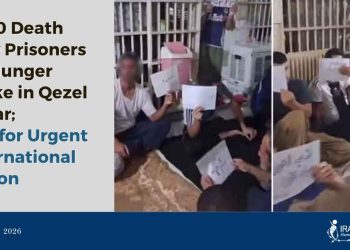
Reports from Qezel Hesar Prison indicate that, since mid-Farvardin 1405 (early April 2026), following the large-scale transfer of detainees and political prisoners from Evin Prison and Greater Tehran Prison (Fashafouyeh) to Qezel Hesar, the population of a closed prison unit increased from approximately 30–40 people to more than 200. Among those transferred were individuals who had previously been held and interrogated in Ward 209 of Evin Prison, a security detention facility operated by Iran’s Ministry of Intelligence.
- Rotational Sleeping and Locked Cells: Extremely limited capacity forces prisoners to rest in shifts or remain seated overnight. Cell doors remain continuously locked, and inmates are deprived of basic open-air exercise, telephone calls, and family visits.
- Psychological Torture and Mock Executions: Detainees transferred from Ward 209 of the Ministry of Intelligence report confinement in extremely small cells, deprivation of clean water and adequate food, and threats of execution as well as mock executions aimed at extracting forced confessions.
- Information Blackout During Emergencies: Complete severance of communication with the outside world coinciding with wartime conditions has inflicted severe psychological pressure and torture on detainees.
Dastgerd Prison (Isfahan): Over 10,000 Detainees in a 4,000-Capacity Facility
- Overcrowding: The presence of over 10,000 prisoners in a facility with a capacity of 4,000 to 5,000 has resulted in a severe shortage of resting space and extreme strain on basic infrastructure.
- Physical Abuse and Medical Neglect: Reports indicate physical abuse, placing prisoners in handcuffs during beatings, deprivation of medical care for sick and elderly inmates, and threats of transferring protesting prisoners to solitary confinement.
Karaj, Malayer, and Gonbad-e Kavus Prisons: Sewage Contamination and Environmental Crisis
- Karaj Central Prison (Ward 2): Detention of 300 to 400 prisoners (predominantly January uprising detainees) in severely overcrowded and unsanitary conditions, confiscation of cooling equipment purchased by prisoners, distribution of synthetic narcotics by state-affiliated actors, and an allocation of only 2 hours of shower time per week, which has led to instances of neurological disorders and suicide.
- Malayer Prison: Widespread outbreak of a severe viral disease (similar to COVID-19). One week following the outbreak and the worsening condition of several patients, there remains a total absence of doctors and medication; extreme malnutrition and complete lack of medical care willfully place prisoners’ lives at grave risk.
- Gonbad-e Kavus Prison: Sewage overflow in the general ward and abandonment of prisoners in a contaminated environment without any sanitation or infrastructural remedy.
Legal Analysis and Explicit Violations of Domestic and International Law
The actions and conditions documented in these reports constitute flagrant, structural, and ongoing violations of the human rights obligations of the Islamic Republic of Iran:
- Violation of the Right to Life and Prohibition of Torture or Cruel, Inhuman, or Degrading Treatment or Punishment (Articles 6 and 7 ICCPR): The deliberate and continuous deprivation of essential medical care, clean drinking water, adequate food, and acceptable living conditions—including leaving prisoners in temperatures exceeding 40°C without effective ventilation or cooling—violates Iran’s obligations under Articles 6 and 7 of the International Covenant on Civil and Political Rights (ICCPR). These deprivations occur despite reports showing that better amenities and exclusive accommodations are provided in exchange for monetary payments; thus, the issue is not merely an incapacity or lack of resources, but a discriminatory and intentional pattern of withholding basic necessities. The continuation of these conditions—particularly when authorities are aware of the resulting dangers and willfully refrain from addressing them—constitutes cruel, inhuman, and degrading treatment, and where threshold criteria are met, torture, placing prisoners’ lives in direct danger. Collectively, this situation constitutes the gradual deprivation of the right to life, termed in this report as “gradual state murder.”
- Non-Compliance with the UN Standard Minimum Rules for the Treatment of Prisoners (The Nelson Mandela Rules):
- Rules 22 to 26: Requirement to provide adequate food of nutritional value, access to clean drinking water, and proper medical and health care services.
- Rules 12 to 17: Requirement to ensure suitable accommodation and sleeping conditions, including adherence to health standards, adequate space, lighting, heating, proper ventilation, and necessary facilities for personal hygiene.
- Rule 11 (Separation of Categories): Requirement to separate different categories of prisoners based on sex, age, criminal record, legal status, detention grounds, and medical needs; including separating unconvicted detainees from convicted prisoners and civil prisoners from criminal detainees.
- Violation of Article 7 of the UN Convention Against Torture (UNCAT): Conducting “mock executions” and death threats to extract confessions constitute direct forms of severe psychological torture.
- Violation of Domestic Legislation (Executive Regulations of the Iranian Prisons Organization, Approved May 2021 / 1400 AP):
- Articles 117 and 118: Obligation of the Organization to provide and implement health and medical services, continuous health monitoring, early medical intervention, and prisoner access to healthcare services.
- Article 121: Mandatory obligation of the health and medical unit to control and combat communicable diseases and health pests, including vermin and rodents, and to take necessary sanitary measures upon contamination.
- Article 128: Explicit declaration that access to clean drinking water meeting health standards is a prisoner’s right, placing a clear duty on the Organization to provide it in every institution.
- Articles 153 and 154: Obligation to supply high-quality raw ingredients, provide food containing adequate calories and vitamins alongside clean drinking water, and adhere to approved dietary plans.
- Article 156: Mandatory oversight of the quantity and quality of sanitary, medical, pharmaceutical, and food equipment and supplies across all stages of procurement, storage, distribution, and consumption.
- Article 157: Mandatory prioritization of welfare amenities, including heating and cooling equipment, by regional directors and heads of institutions, with explicit priority given to political and press prisoners, the elderly, and the sick.
Necessity of Taking Practical and Deterrent Measures to Stop “Gradual State Murder”
The deplorable condition of Iranian prisons demonstrates that the state’s pattern of repression and mistreatment has expanded from interrogation rooms into general wards. Biological, sanitary, and medical deprivations have been weaponized to inflict physical and psychological attrition, break resistance, and in certain cases directly imperil prisoners’ lives.
Therefore, it is imperative that the international community, the UN High Commissioner for Human Rights, the Special Rapporteur on the situation of human rights in the Islamic Republic of Iran, and all states committed to international standards move beyond expressions of regret and formal statements, prioritizing the following immediate, concrete, and deterrent measures:
- Immediate International Access and Monitoring: Exerting pressure on the Islamic Republic to provide effective, independent, and unhindered access to prisons for competent international bodies—including UN experts and the International Committee of the Red Cross (ICRC)—in accordance with their respective mandates and legal mechanisms; including accepting unannounced visits to detention facilities and guaranteeing private access to prisoners without the presence of security personnel.
- Conditioning Diplomatic and Economic Relations: The targeted use of diplomatic, political, and economic leverage, and the conditioning of certain relations and forms of cooperation on the immediate cessation of torture and other cruel, inhuman, or degrading treatment; compliance with legal standards governing the separation and classification of prisoners; and ensuring immediate access to medical care for prisoners who are ill or at serious risk. This should also include the release of prisoners whose continued detention, in light of their severe physical or psychological condition, poses a serious threat to their life or health.
- Documentation and Criminal Prosecution: Rigorously documenting the role and responsibility of judges, prison directors, officers, and other accountable officials in the reported acts and omissions from the perspective of torture, cruel, inhuman, or degrading treatment or punishment, violation of the right to life, and—where elements are met—crimes against humanity; and utilizing all available mechanisms for criminal prosecution, including the exercise of universal jurisdiction by national courts of states with relevant legislation.