Warning: This report contains descriptions of torture, physical and sexual violence, medical neglect, death threats, and the execution of mock hangings.

To protect the prisoner and their family, their identity, as well as the exact time and location of detention, are withheld. This report is compiled based on the direct testimony of this prisoner regarding the arrest, interrogation, transfers between detention facilities, and the physical and psychological aftermath following the temporary release.
The prisoner states that during an extended period of detention in facilities across Tehran and Sanandaj, he and other prisoners were subjected to prolonged solitary confinement, physical beatings, threats, denial of contact with family and legal counsel, deprivation of medical care, forced administration of unidentified pills, three instances of sexual assault, and a mock execution. According to the prisoner, a major portion of these pressures aimed to coerce them into confessing to charges and signing documents whose contents they rejected.
Detention and Solitary Confinement
According to this prisoner, following their arrest, officers blindfolded them and transferred them to an unknown location without providing any reason for the arrest, charges, or destination, placing them directly into solitary confinement.
The first cell measured approximately two by two-and-a-half meters, containing a small toilet and sink within the same space. The lack of ventilation, unhygienic conditions, extreme cold, and poor food quality rendered conditions severe. During their detention in Tehran, they were permitted to shower only once. This restriction, combined with contaminated clothing and a lack of hygiene supplies, resulted in persistent bodily itching and exacerbated skin conditions. Outdoor exercise was allowed sporadically—sometimes spaced a week or more apart—for only a few minutes while blindfolded.
At one point, the prisoner was transferred to an even smaller cell without a toilet. Officers frequently delayed responding to requests to use the restroom, forcing the prisoner on several occasions to relieve themselves inside the cell.
These conditions warrant examination under Article 10 of the International Covenant on Civil and Political Rights (ICCPR) concerning the humane treatment of persons deprived of liberty, as well as the Nelson Mandela Rules on prison conditions.
Isolation and Coerced Confessions
The prisoner states they were completely denied communication with their family throughout their detention in Tehran, leaving their family unaware of their whereabouts and status. Effective access to legal counsel was also denied, preventing any legal consultation prior to interrogations or signing documents. No books, newspapers, watches, or any items to pass the time were provided to the prisoner. They had no way of knowing whether it was day or night.
Interrogations began several days after the transfer to solitary confinement. Upon refusing to accept the charges, the prisoner experienced verbal abuse, threats, shouting, and physical violence. Officers repeatedly presented documents for signature, maintaining intense physical and psychological pressure to force compliance.
Article 7 of the ICCPR strictly prohibits torture and cruel, inhuman, or degrading treatment or punishment, while Article 14 establishes fair trial guarantees and defense rights. The employment of violence and threats to extract confessions or signatures constitutes a grave violation of both provisions.
Physical Abuse and Medical Neglect
Prior to arrest, the prisoner had undergone surgery for a tumor, and the physician had warned against any physical trauma to the surgical site. Nevertheless, officers—fully aware of this medical history—repeatedly struck the prisoner’s face and the site of the surgery. Following certain interrogation sessions, the prisoner suffered severe nasal bleeding for hours without receiving effective medical attention.
The prisoner also reports persistent pain in the kidneys, stomach, liver, legs, and back, alongside chronic headaches and severe physical weakness. Throughout detention, access to diagnostic imaging, laboratory tests, and specialized medical examinations was completely withheld.
Furthermore, the prisoner reports being forcibly administered unidentified medication multiple times in both Tehran and Sanandaj. It was impossible to decline or request information regarding these substances and these medications were forcibly administered to the prisoner, while the prisoner’s necessary personal medications were consistently withheld.
Transfer to Sanandaj and Sexual Violence
After several months, the prisoner was transferred blindfolded to Sanandaj. Prolonged solitary confinement, isolation, and repeated interrogations continued, accompanied by an escalation in beatings and physical pressure.
The prisoner states that during their confinement in Sanandaj, they were subjected to sexual assault on three separate occasions. Due to severe psychological trauma and security considerations, further details have been withheld. This claim must be investigated in full confidentiality, with the victim’s consent, and in adherence to trauma-informed investigative principles. Sexual violence in detention, depending on its context and purpose, falls under the prohibition of torture and other cruel, inhuman, or degrading treatment.
Confinement in Absolute Darkness
Following a refusal to sign a specific document, the prisoner was transferred to a subterranean cell kept in complete darkness. Deprived of both natural and artificial light, they were held in these conditions for several days.
According to the prisoner, this measure was intended to break their psychological resilience. Ultimately, to end the ordeal, the prisoner signed the required document.
The Nelson Mandela Rules explicitly prohibit the use of dark or constantly lit cells and define solitary confinement as the restriction of a prisoner for 22 hours or more a day without meaningful human contact.
Mock Execution
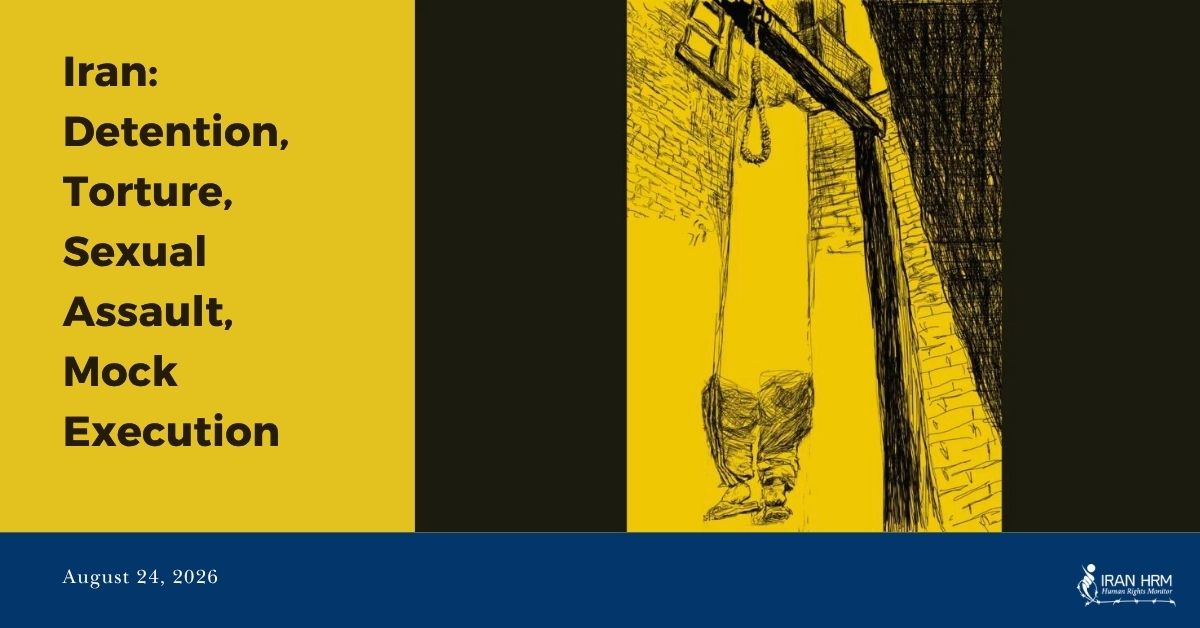
The most severe element of the account involves what the prisoner describes as a mock execution.
Late one night, officers entered the cell and informed the prisoner that a death sentence had been issued and would be carried out immediately. They demanded the prisoner write a will and confess to the charges. Upon the prisoner’s refusal to confess, they were blindfolded and taken to a location presumed to be the execution site. A noose was placed around their neck, causing the prisoner to lose consciousness due to extreme terror and psychological distress.
Later, the prisoner regained consciousness in a facility resembling an infirmary, with their hands and feet bound.
Subjecting an individual to conditions designed to induce the belief that their execution is imminent—especially when combined with torture, threats, and forced confessions—warrants rigorous review under Article 7 of the ICCPR.
Physical and Psychological Consequences
The prisoner reports a weight loss of approximately 10 to 15 kilograms during detention and continues to suffer from physical ailments, chronic pain, weakness, and injuries resulting from physical abuse following release.
Prior and recent detentions have severely deteriorated the prisoner’s mental health. Following one temporary release, the prisoner attempted suicide within the first week. Currently, they suffer from insomnia, fear of the dark, social anxiety, and recurring flashbacks of solitary confinement, interrogation, sexual assault, and the mock execution.
Legal Summary and the Imperative for Investigation
Based on this testimony, the following matters require an immediate, independent, and effective investigation by the UN Fact-Finding Mission on Iran, the UN Special Rapporteur on the situation of human rights in Iran, and the UN Special Rapporteur on Torture, with accountability for the perpetrators:
- Torture, physical beatings, and threats;
- Three alleged instances of sexual violence;
- Prolonged solitary confinement and detention in absolute darkness;
- Forced administration of unknown medications;
- Denial of medical treatment and healthcare;
- Denial of family contact and effective access to legal counsel;
- Coerced signatures and forced confessions; and
- The execution of a mock hanging.
Iran is a state party to the ICCPR; therefore, obligations under Articles 7, 9, 10, and 14 are binding in evaluating these allegations.
Given the history of prior surgery, physical injuries, weight loss, forced medication, and severe psychological trauma, an independent and confidential medical and psychiatric evaluation is imperative. Where feasible, documentation should be conducted in accordance with the standards of the Istanbul Protocol.
Imperative for Immediate Action and Independent International Investigations
This account presents a stark illustration of systemic torture, coerced confessions under duress, and cruel, inhuman, and degrading treatment within the detention centers of the Islamic Republic of Iran. In light of the severity of the physical and psychological harm inflicted upon this prisoner, UN Special Rapporteurs—particularly the Special Rapporteur on Iran and the Special Rapporteur on Torture—must urgently prioritize this case.
The international community, human rights organizations, and states bound by international treaties are obligated to act. Through effective diplomatic pressure, the deployment of independent medical missions operating under Istanbul Protocol standards, and by holding perpetrators and commanding officials accountable, they must intervene to halt systemic torture and human rights abuses in Iranian detention facilities. Impunity for human rights violators only serves to pave the way for further violence and tragedy.