
A Look at the Statistics, Details, and Human Rights Implications
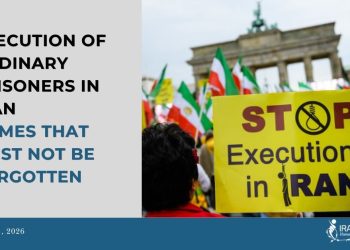
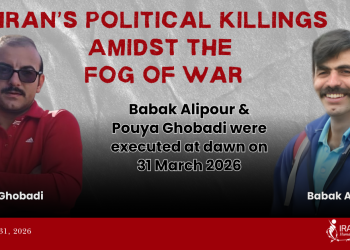
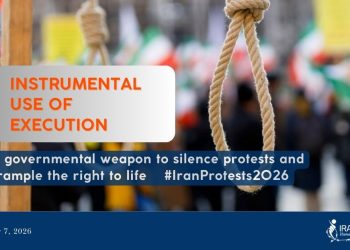
In Khordad 1404(May22-June 21), Iran witnessed an unprecedented wave of executions, raising serious human rights concerns. According to documented reports, at least 140 individuals were executed in various prisons across the country over a span of 21 days—averaging six to seven executions per day. This surge coincided with the outbreak of war on June 13 and has been interpreted as a sign of the instrumental use of executions for intimidation and political repression.

Among those executed were 135 men and 5 women. Additionally, one political prisoner and two individuals accused of espionage were also executed. The concentration of executions on three specific days—May 26, May 28, and June 2—accounting for nearly half of the total executions, has fueled speculation about a coordinated campaign in advance of the wartime crisis.
The executed individuals faced a wide range of charges. The most common were intentional murder, drug-related offenses, moharebeh and baghi (often with political dimensions), espionage, and armed robbery resulting in murder. Human rights organizations have expressed concern over the lack of fair trials, the use of torture, forced confessions, and political motivations in many of these cases.
One notable case was the execution of Mojtaba Kourkour, a political prisoner from Izeh, which took place on June 11—the same day as the birthday of Kian Pirfalak, a child killed during the 2022 protests. The Pirfalak family considered Kourkour innocent. This execution provoked strong public backlash and condemnation from human rights activists, who labeled it a “state-sanctioned killing.”
The execution of five women during this period—including Hafizeh Baloch Zehi and Masoumeh Karbakhsh—was an overlooked aspect of this wave of judicial violence, reflecting the disregard for the specific circumstances of women and mothers.
A glaring violation of international law was the execution of Amirhossein Mohammadi, who was only 17 years old at the time of the alleged crime. Despite Iran’s status as a signatory to the Convention on the Rights of the Child, this execution was carried out, once again calling into question the country’s commitment to its international obligations.
The execution of 18 Baluch prisoners also highlighted the systemic discrimination against ethnic minorities in Iran. Organizations such as Amnesty International have repeatedly pointed to the disproportionate application of capital punishment against minority communities.
Prisons such as Ghezel Hesar in Karaj, Adelabad in Shiraz, Birjand, Qom, and Dastgerd in Isfahan served as central sites for carrying out these sentences. Reports indicate that many of those executed—especially in politically charged cases—were subjected to torture and denied trials that met international legal standards.
In sum, this wave of executions reflects the Iranian government’s systematic use of the gallows as a tool for intimidation, political repression, and exerting pressure on minorities. The coincidence of these events with war and domestic unrest further intensifies the international community’s responsibility in confronting Iran’s blatant human rights violations.