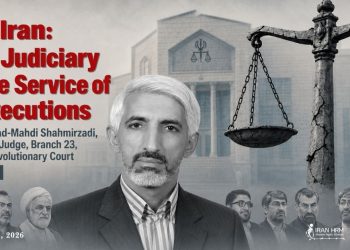

The judicial and security conduct of Judge Seyyed Mousa Assef al-Hosseini in political, security, and protest-related cases of 2022 has not only resulted in the issuance of extremely severe sentences, but has consistently been accompanied by patterns of torture, forced confessions, and secret trials. These patterns—combined with the death sentences he has issued—have led several governments and international institutions, including the United Kingdom, the European Union, Canada, and France, to sanction Assef al-Hosseini for widespread human rights violations. The United Nations has also declared in official statements that his proceedings violate fundamental fair-trial standards.

This report focuses on documented torture practices, judicial and security conduct, and official reactions from international bodies, providing a clear picture of the depth of human rights violations in cases adjudicated by Assef al-Hosseini.
1. Patterns of Torture and Forced Confessions in Cases Under His Authority
1.1 The Case of Children and Young Detainees in Karaj (2022–2023)
In the case of the fifteen children and teenagers arrested during the Karaj protests, defendants stated directly in court that their confessions were extracted under torture and coercion. Reported methods included:
- Severe beatings during arrest and interrogation
- Suspension from behind (“chicken hang”)
- Electric shocks
- Kicks to the head and face causing loss of consciousness
- Simultaneous beating by multiple officers
- Forcing detainees to read pre-written statements
Documented Torture Methods and Forced Confessions in Cases Overseen by Judge Assef al-Hosseini
| Name of Victim | Methods of Torture | Details and Consequences |
| Mohammad-Mehdi Karami (22, laborer; executed 7 January 2023) | Severe beatings; jaw dislocation; broken teeth; wounds on hands and head; “chicken hang” (binding hands and feet behind the back and suspending the body); group beatings; forced reading of pre-written statements in court | No access to medical care; temporary loss of consciousness; forced confession rejected but death sentence carried out. The night before his execution, a fake “pardon” was announced to make him prostrate in gratitude. |
| Seyyed Mohammad Hosseini (18; executed 7 January 2023) | Beaten while handcuffed and blindfolded; kicks to head (causing unconsciousness); iron rod blows to the soles of feet; electric shocks; “chicken hang”; psychological abuse | Confessions legally invalid. His lawyer (Ali Sharifzadeh Ardakani) reported these details on 19 December 2022. Hosseini denied involvement in court. |
| Hamid Ghareh-Hassanlou (53, radiologist; sentenced to 15 years) | Severe beating leading to broken ribs and punctured lung; transferred directly from hospital to court by intelligence officers | His wife, Forouzan Ghareh-Hassanlou, was also tortured: violent house raid (door kicked in, belongings thrown into bathroom), forced false confession (claiming she struck Ajamiān), later retracted. No access to lawyer; the court ignored exculpatory evidence (including rescuing Yaser Esmaeili). |
| Reza Arya (43; sentenced to death) | Abducted from workplace (Karaj Metro Electricity Co.); forced interrogations; psychological pressure by Assef al-Hosseini in court (accusing him of throwing stones despite denial) | Innocence established through video from Mizan News Agency, yet he was coerced to confess. Trial was not public; families were barred. |
| Amir-Hossein Mohammadi (26, theater actor; sentenced to death) | Beaten during arrest (5 November 2022) and interrogation; added suddenly as the 16th defendant without reason | Transferred from prison to court without notice; forced confession under pressure. |
| Other defendants (including Shayan Charani, Mohammad-Amin Akhlaqi, Forouzan Ghareh-Hassanlou) | Psychological pressure for confessions; denial of lawyers; violent house raids; insults and threats | Sentenced up to 25 years. Forced confessions by co-defendants against each other—invalid under international law but accepted under Iranian judicial practice. |
Several defendants were brought to court with visible wounds, bruises, and fractures. Despite requests for medical examination, no independent assessment was conducted. Defendants’ official objections—stating their confessions were “the result of torture”—were never investigated by the judge.
1.2 Psychological and Security Pressure on Defendants and Families
Security forces engaged in:
- Threatening harm to family members
- Long-term denial of visits
- Night-time transfers between detention centers
- Blocking phone calls
- Coercing defendants to sign written confessions
- Threatening families to pressure defendants to cooperate
These methods were so widespread and systematic that multiple families declared the court itself was part of the security apparatus exerting pressure on defendants.
1.3 Torture in Previous Political Cases
In prior political cases—such as those involving political prisoners Ali Moazami and Arzhang Davoudi—reports indicated that defendants appeared in court with signs of beatings while the judge:
- Refused to assess their physical condition
- Denied access to lawyers
- Issued verdicts without any independent investigation
This pattern illustrates the institutionalized disregard for torture allegations in cases overseen by Assef al-Hosseini.
2. Security–Judicial Conduct and Systematic Violations of Due Process
2.1 Secret and Non-Public Trials
Most trials under Assef al-Hosseini were held behind closed doors. Families, media, and independent lawyers were barred. This violates fundamental principles of transparency and public oversight.
2.2 Denial of Chosen Lawyers
In many cases, defendants had access only to state-appointed lawyers who:
- Lacked access to case files
- Were unable to mount meaningful defenses
- Operated under judiciary supervision and risked losing their licenses—or even imprisonment—if they defied instructions
In several cases, lawyers were not allowed to review the case before the hearing.
2.3 Systematic Reliance on Security Agency Reports
In this judge’s process, security-agency reports effectively replaced judicial investigation.
No independent assessments, expert examinations, scene reconstructions, or impartial inquiries were conducted.
2.4 Non-Judicial Conduct Toward Defendants
Multiple defendants stated that the judge:
- Shouted at them
- Threatened them
- Prevented them from presenting full defenses
- Immediately cut them off when they raised torture claims
Such conduct contradicts judicial impartiality and reveals structural discrimination against political and protest-related defendants.
3. Official International Sanctions Against Seyyed Mousa Assef al-Hosseini
3.1 United Kingdom
In February 2023, the UK sanctioned Assef al-Hosseini for:
- Issuing death sentences based on forced confessions
- Denial of fair trials
- Violation of the right to life
Sanctions include an asset freeze and travel ban.
3.2 European Union
In 2023, the EU sanctioned Assef al-Hosseini for his role in suppressing the 2022 protests and directly participating in unfair trials.
Measures include:
- Ban on entering EU countries
- Asset freeze
3.3 Canada
Canada sanctioned him under the Special Economic Measures Act for involvement in executions of protesters and widespread human rights violations.
3.4 France
France, under coordinated EU sanctions, also imposed an asset freeze and travel ban.
3.5 Legal Significance of These Sanctions
These sanctions signal that Assef al-Hosseini’s actions are not merely domestic misconduct but constitute internationally recognized violations of human rights, falling within the scope of international criminal responsibility.
4. United Nations Responses
4.1 UN High Commissioner for Human Rights (OHCHR)
In January 2023, the UN High Commissioner described the executions issued by his court as:
- “Severe violations of human rights”
- “State killing”
- “Instrumental use of the death penalty to suppress dissent”
4.2 UN Human Rights Council Reports
In reports from 2023 and 2024, the Council highlighted:
- Reliance on torture-induced confessions
- Denial of legal counsel
- Trial of minors
- Rapid execution of death sentences
as clear violations of fair-trial standards.
4.3 UN Special Rapporteurs
Several UN experts on extrajudicial executions, torture, and child rights warned that:
- Proceedings under Assef al-Hosseini violate international law
- His actions may constitute “individual criminal responsibility”
- Detained protesters remain at “risk of further executions”
5. Legal Analysis of His Conduct
5.1 Violation of Article 5 of the Universal Declaration of Human Rights
Torture, violent interrogations, and forced confessions directly violate Article 5.
5.2 Violations of Fair-Trial Principles
His conduct breaches Articles 9, 10, and 11 of the Universal Declaration of Human Rights and the International Covenant on Civil and Political Rights.
5.3 Violations of the Convention on the Rights of the Child
Trying minors in a Revolutionary Court, issuing heavy sentences, and ignoring documented torture constitute clear violations of international child-protection obligations.
5.4 Individual Criminal Responsibility
Given his direct involvement in death sentences, denial of fair trials, and disregard for torture allegations, his conduct falls under principles of individual criminal responsibility in international law.
6. Conclusion
Judge Seyyed Mousa Assef al-Hosseini, through death sentences based on torture-tainted confessions, denial of legal counsel, prosecution of children in the Revolutionary Court, and deliberate disregard for security forces’ violence, is one of the leading perpetrators of systematic human rights violations in Iran.
Sanctions imposed by several countries and formal positions of the United Nations and official human-rights bodies show that his conduct is recognized internationally as grave, structural, and organized human rights abuse.
Advancing this case at the international level—including calls for his immediate suspension, independent investigations, and criminal accountability—is essential to prevent future violations.