Iran HRM Monthly Report – February 2026 has been marked by an unprecedented surge in executions, a brutal crackdown on dissent, and the continued systematic use of torture and arbitrary detentions by the clerical regime. The regime’s persistent reliance on capital punishment as a tool for political repression and the instigation of terror has reached alarming levels.

Escalation of Executions Across Iran
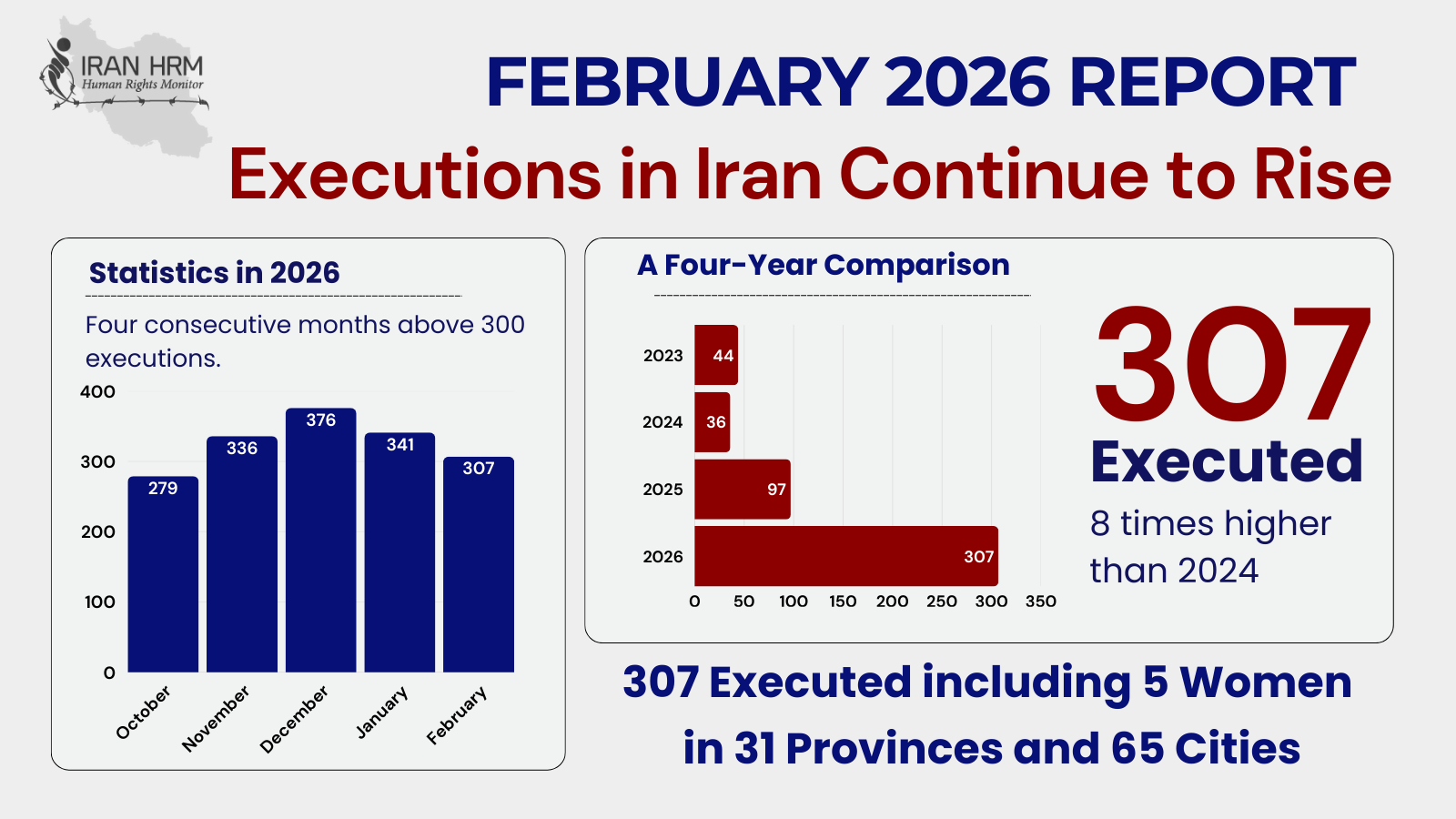
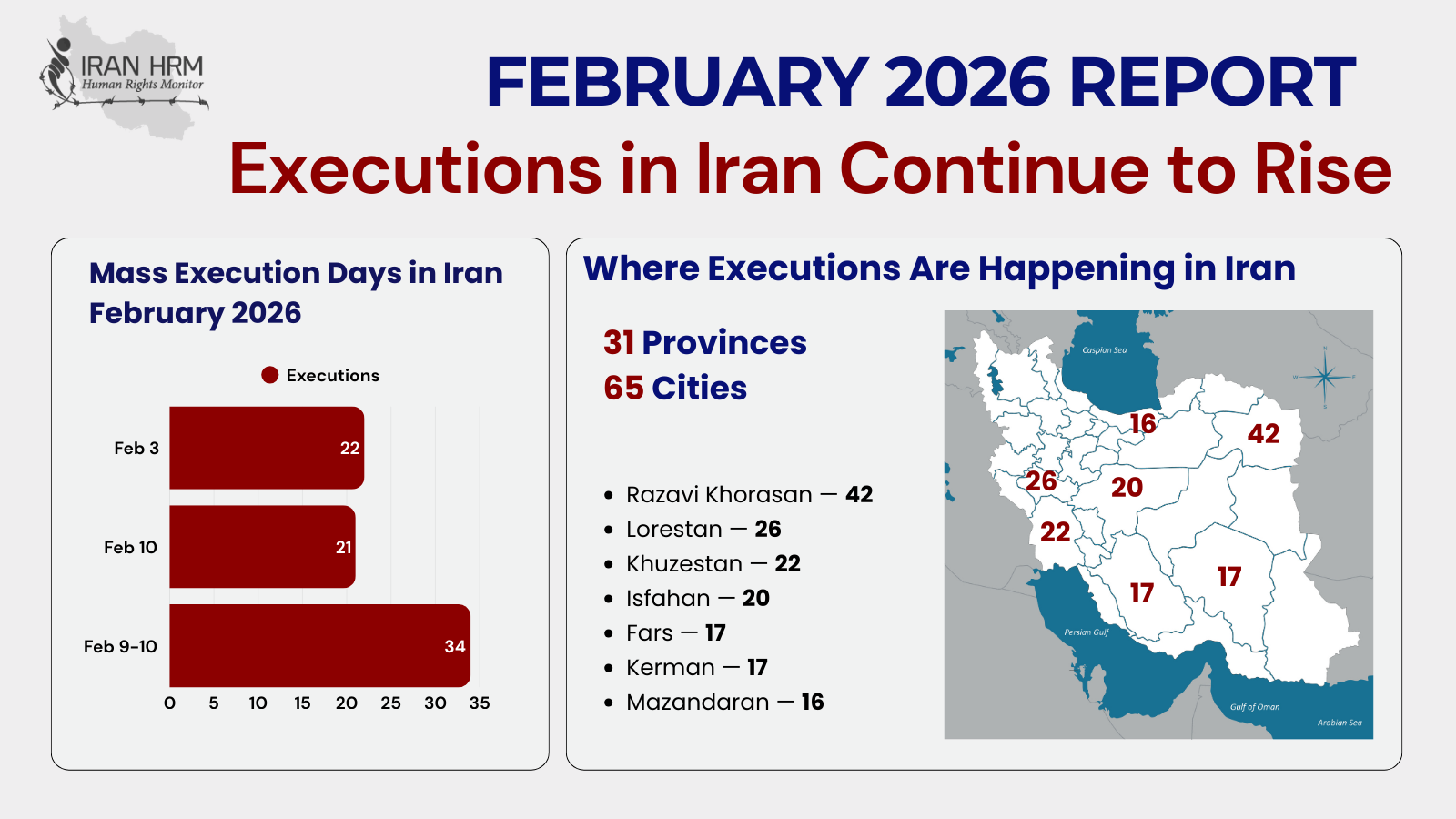
The execution machinery of the Iranian regime, intensified its operations during February, claiming the lives of at least 307 individuals across 31 provinces and 65 cities. This horrifying figure includes 5 women who were sent to the gallows. The scale of executions during this period represents a drastic increase compared to previous years, amounting to more than 4 times the total recorded in the Persian month of Bahman 1403 (76 executions—roughly February 2025), nearly 8.5 times Bahman 1402 (36 executions—roughly February 2024), and about 7 times Bahman 1401 (44 executions—roughly February 2023). This alarming trend underscores the regime’s desperate attempt to maintain its grip on power through sheer brutality and intimidation.
The provinces most severely affected by this wave of executions include Khorasan Razavi with 42 executions, Lorestan with 26, Khuzestan with 22, Isfahan with 20, Fars and Kerman, each with 17, and Mazandaran with 16 executions. These statistics highlight the widespread nature of the regime’s punitive actions, targeting individuals across diverse geographical regions.
This disturbing statistic reflects a regime that has normalized state-sponsored violence and death as primary instruments of governance.
The number of registered executions in January 2026 exceeded 300 for the fourth consecutive month, reaching 341. Registered executions in October, November, and December 2025 were 279, 336, and 376, respectively, indicating a consistent and upward trajectory of state-sanctioned killings.
 Chronology of Executions in February 2026
The month of February witnessed numerous mass executions carried out with callous disregard for human life. A detailed breakdown of reported executions is as follows:
Sunday, February 1: 11 victims were claimed by the regime’s killing machine. Identified individuals included Mostafa Minavand (Semnan), Hekmat Daryaei (Bandar Abbas), Peyman Shiri (Tabriz), Sajjad Dousti (Nowshahr), Amin Nasiri (Sanandaj), Mohammad Ali Moridan (Borujerd), Fardin Kalami (Qom), Behrouz Hazrati (Ardabil), Nasser Hosseini (Qazvin), Manouchehr Mehrabi (Nain), and Shahriar Farahani (Arak).
Monday, February 2: 10 prisoners were executed. Names included Arman Koushki (Nowshahr), Sattar Khalvand (Isfahan), Sharif Mardanpour (Kerman), Sohrab Rafati (Saveh), Yashar Rezaei (Kashan), Mehdi Poushahbaz (Zanjan), Mohammad Jame’ Shorani (Dorud), Arian Shookhi (Qaemshahr), Bagher Mohebbi (Neyshabur), and Hossein Najjar (Gorgan).
Tuesday, February 3: 22 prisoners were hanged. Among them were Farhad and Ahmad Heydari (Qezel Hesar Prison, Karaj), Farhad Karimzadeh and Biuk Namvarzadeh (Tabriz), Ali Mohammadpour (Quchan), and Nasser Shahmoradi and Ahmad Borhani (Gorgan). Additionally, 15 other prisoners were hanged, including Khalil Hemmati (Shiraz), Pouya Lashani (Sabzevar), Moradbeyg Haghighat (Birjand), a prisoner (Bam), Eshagh Miri (Jiroft), Kourosh Nayeri (Yazd), Majid Sohrabi (Malayer), Hirman Sadri (Mahabad), Ali Haghighat-Doust (Lahijan), Tahmaseb Mehrjou (Khaf), Afshin Maleki (Ilam), Hedayat Mirzaei (Borazjan), Bahram Bani-Asad (Ahvaz), Ayoub Lashkari (Rasht), and Saeed Rouhani (Sirjan).
Wednesday, February 4: 18 prisoners were executed. Identified victims included Jafar Shahri (Gonabad), Khan-Morad Azizi (Taybad), Houman Momeni (Esfarayen), a prisoner named Morad-Hassan (Kashmar), Amir-Hussein Norouzi (Ferdows), Moslem Almasi (Sari), Hamed Niktaj (Mahshahr), Ayoub Mashhadi (Bojnurd), Shervin Yari (Behbahan), Kousha Moradi (Bukan), Parham Ferdowsi (Shahrekord), Moharram Abdi (Bushehr), Eskandar Poshtkar (Mashhad), Hojjat Mansouri (Chabahar), Fariborz Mehri (Damghan), Hassan Alaei-Bakhsh (28), Bakhtiar Shahabi, and Iraj Mostafavi (Gorgan).
Saturday, February 7: 16 prisoners were hanged. These included Ali Mirdar (32) (Gorgan), Abolfazl Naghavi (Hamedan), Morad Saheli (Zahedan), Mohammad-Ali Saeidlou (Nahavand), Behzad Mashayekhi (Yasuj), Sosha Moradi (Kermanshah), Ali Sarlak-Abad (Aligudarz), Jafar Faryadi (Dezful), Avin Sorkhi (Sanandaj), Farhad Sheikhi (Karaj), Babak Amraei (25), Mohammad-Qasem Amraei, Ali Fazakhosh-Neshin, and three other unnamed prisoners (Khorramabad).
Sunday, February 8: 12 prisoners were sent to the gallows. Among them were Nasser Eyvazi (30) and Amrollah Sajadi (27) (Ahvaz); Hamid Karyabi (Nain); Danial Abdi (Qom); Parsa Taghi-Zadeh (Qazvin); Younes Bagheri (Tabriz); Nezam Tajik (Bandar Abbas); Rahman Najafi (Arak); Shah-Mirza Qaed-Rahimi (Borujerd); Abbas Khordbin (Semnan); Mehdi Jafarian (Ardabil); and Khaled Hosseini (Nowshahr).
Monday, February 9: 10 prisoners, including one woman, Shahla Dolatabadi, were executed. Other identified victims included Seid-Ali Kalami (Kashan), Keyvan Akbari (Isfahan), Houshang Shoukhi (Saveh), Karim Javadi (Zanjan), Mohsen Rezaei (Dorud), Abedin Ahmadi (Neyshabur), Mohammad Zali-Tabar (Gorgan), Rouzbeh Amanat-Doust (Quchan), and Shayan Tojihi (Qaem Shahr). Additionally, three other prisoners—Mojtaba Amini (Neyshabur), Ali Davtalab, and Mohammad Shah-Rashidi—were executed in Ghezel Hesar Prison between February 9 and 10 (raising the combined total for Feb 9–10 to 34).
Tuesday, February 10: 21 prisoners were executed. Victims included Kazem Faraji-Nejad and Taha Shirzad (Sari), Pirooz Pirvani (and two other unnamed prisoners) (Shiraz), Rajabali Aray (Sabzevar), Afshin Ghanbari (Yazd), Ayoub Sarfi (Khaf), Mahmoud Niazi (Lahijan), Yadollah Mokhtari (Sirjan), Mojtaba Barani (Rasht), Ali Bazargan (Chabahar), Mehrshad Ali-Nia (Damghan), Amin Torkaman (Malayer), Taghi Zalpour (Mahabad), Morad Jahromi (Jiroft), Javad Najjar (Ahvaz), Sina Maleki (Borazjan), Mohammad-Karam Jafari (Ilam), Fariborz Saljoghi (Bam), and Gholam Hassani (Birjand).
Thursday, February 12: 12 prisoners were executed. Their names included Hassan Kamareh-i (Gonabad), Reza Barati (Kashmar), Darvishali Emami (Mashhad), Mohammad Reza Abdollahi (Sari), Peyman Khani (Ferdows), Panjali Ebrahimi (Mahshahr), a prisoner named Aghapour (Bojnurd), Amirhossein Ghadami (Behbahan), Kiarash Lashgari (Bukan), Kayhan Rouzi (Esfarayen), Saeed Adineh (Shahrekord), and Arash Davari (Bushehr).
Saturday, February 14: 16 prisoners were hanged. Identified victims included Valiollah Abdolvali (Dezful), Aryo Moghadam (Karaj), Toomaj Chegeni (Khorramabad), Goudarz Mokhber (Sanandaj), a prisoner (Zahedan), Ghorban Mousivand (Nahavand), Mousa Nejatpour (Hamedan), Kheydan Ahmadi (Kermanshah), Karamshah Saki (Aligudarz), Pourya Shafiei (Yasuj), Salman Mohammadi (Iranshahr), four prisoners (Urmia), and Karim Geraei (Taybad).
Sunday, February 15: 15 prisoners, including one female prisoner, Esmat Najafi, were executed. Identified male victims included Sasan Pazouki (Semnan), Farzad Fazli and Davood Ghafouri (Qom), Reza Karami (Dorud), Mostafa Cheshmi (Qazvin), Hassan Dousti (Tabriz), Foroud Khalili (and one unnamed prisoner) (Arak), Ali Nouri (Nain), Ali-Ashraf Rahmati (Borujerd), Sohrab Daei (Ardabil), Amirhossein Khanmohammadi (Bandar Abbas), Sirous Alizadeh (Nowshahr), and Asghar Esmaili (Shiraz).
Monday, February 16: 15 prisoners were hanged, including one female prisoner, Mina Nasirpour. Other identified victims included Sadegh Manafi (Tabriz), Reza Karami (Dorud), Vahid Barati (Saveh), Sajjad Meshkini (Zanjan), a prisoner named Beigi (Dorud), Mola Sheikhi (Neyshabur), Mohammad Rudbari (Qaemshahr), Khosrow Rafiei (Quchan), Ali Mousavi (and two other unnamed prisoners) (Isfahan), Reza Hatamzadeh (Kashan), Kourosh Azizi (Kerman), and Jamal Hosseini (Gorgan).
Tuesday, February 17: 16 prisoners were executed. While 12 of these names were previously announced, new reports confirmed the execution of Rasul Khani and Mohsen Seyedi (Shiraz), as well as Reza Bigham and another unnamed prisoner (Mashhad).
Wednesday, February 18: 13 prisoners were hanged. These included Khashayar Miri (Qezelhesar Prison, Karaj), Doshambeh Tajik (Chabahar), Khodayar Jahan-Tigh (Kashmar), Morteza Afrashteh (Mashhad), Jalil Shamsi (Damghan), Safa Rajabian (Gonabad), Emad Zeidi (Bushehr), Yaser Ghasemi (Shahrekord), Mojtaba Afshar and Sajjad Ahmadi (Malayer), Meysam Raoufi (Sabzevar), Mohammad Tavakoli (Mahabad), and Esmail Kalhori (Lahijan).
Thursday, February 19: At least 10 prisoners were executed (coinciding with the first day of Ramadan). The victims included Mokhtar Azizian (Bojnurd), a prisoner (Taybad), Rahim Mashayekhi (Ferdows), Milad Ghaedi (Mahshahr), Ali-Jafar Sadeghi (Behbahan), Farez Babaei (Bukan), Mehrshad Panji (Sari), Rahman Omrani (Esfarayen), Hassan Amani/Narouie (Sarakhs), and Javad Zare/Keshani (Torbat Heydarieh).
Extrajudicial Killing in Detention
Beyond the official executions, the regime perpetrated another heinous crime: the murder of Nima Jafari, a 22-year-old worker, in the Bandar Abbas Intelligence Department’s detention center. Arrested on Friday, February 6, his body was handed over to his family on February 12, with authorities falsely claiming suicide. The family was reportedly threatened against publicizing Nima’s murder, a common tactic used to suppress information on state-sponsored violence and extrajudicial killings within detention facilities.
The “No to Execution Tuesdays” Campaign
In a powerful display of civil disobedience and resilience, the “No to Execution Tuesdays” campaign reached its 110th consecutive week on March 3, 2026, transforming from a localized prison hunger strike into a massive grassroots movement. Despite severe state-imposed internet blackouts designed to stifle communication, reports and smuggled footage from across dozens of Iranian cities indicate that “No to Execution” has become a central rallying cry for a new wave of nationwide defiance. This escalation follows the tumultuous uprisings of January 2026 and reflects the growing conviction among campaign members that the era of the current leadership is nearing its definitive end.
The campaign’s participants articulated a profound shift in Iran’s political landscape, stating that the death of the Supreme Leader, Ali Khamenei, represents “the beginning of the end of the ominous Velayat-e Faqih regime and the gateway to democracy.” They emphasized that Iran’s path to freedom would be realized by its people, free from foreign interference, and would not revert to past dictatorships.
Amid ongoing military hostilities and concerns about the safety of detainees, especially following a reported missile strike near Evin Prison, the campaign members expressed deep solidarity with the Iranian public. They issued urgent legal demands, particularly for the immediate implementation of Resolution 211. This emergency protocol, critical for wartime scenarios, mandates:
- The immediate conversion of custodial orders to bail.
- The granting of conditional release or temporary leave to protect the lives of detainees.
- The urgent evacuation of prisoners from high-risk combat zones.
The prisoners warned that the regime’s “killing machine” has not slowed, citing over 65 executions carried out since February 20 alone. This demonstrates the regime’s continued use of executions even amidst internal and external crises.
The campaign credited its survival and expansion to the tireless efforts of the families of the executed and the “justice-seeking” mothers. By transforming personal grief into a public demand for justice, these families have ensured that the campaign remains a powerful social current, spanning across 56 prisons nationwide. The inmates concluded their 110th-week address with a message of unyielding resolve: “Silence is not an option… we do not fear the prison, the chain, or the execution.”
Call to Action
Iran Human Rights Monitor (Iran HRM) strongly condemns these violations and urges the international community—including human rights organizations, the United Nations, and justice advocates—to take immediate, concrete action. The Iranian authorities must be held accountable for grave crimes, and sustained pressure is needed to end the ongoing use of executions and repression against the people of Iran.
The lives of countless Iranians depend on the international community’s urgent and decisive response to these atrocities.