Structure, Function, and Role in Systematic Repression
The Law Enforcement Command of the ruling regime in Iran (FARAJA), as the principal body responsible for “internal security,” has undergone a fundamental transformation in its function and nature over recent decades. While ostensibly tasked with maintaining public order and enforcing the law, in practice it has become part of the regime’s security-political apparatus, playing a central role in suppressing protests, enforcing social control, and implementing ideological policies. An examination of its structure, background, and performance indicates that FARAJA has evolved beyond a conventional police force into an organized instrument for the enforcement of political authority.

Formation Background; From Parallel Institutions to Centralized Security
Following the 1979 revolution, three primary institutions were responsible for internal security: the Shahrbani (urban police), the Gendarmerie, and the Islamic Revolutionary Committees. The Revolutionary Committees, which rapidly expanded across the country, were ideological in nature from the outset and operated not only in policing functions but also in political and social control. Numerous reports from that period indicate arbitrary arrests, violence, and the absence of legal oversight in their operations.
In 1991, with the enactment of the Law on the Formation of the Law Enforcement Force, these three bodies were merged into a unified structure. While officially intended to enhance coordination and centralized command, this merger in practice transferred the ideological and security-oriented approaches of the committees into the police structure, laying the groundwork for a centralized force designed to control internal dissent.
Structural Transformation; From NAJA to FARAJA
In 2021, the structure of the Law Enforcement Force was elevated by direct decision of the regime’s Supreme Leader to the “Law Enforcement Command” (FARAJA). This change elevated the institution from an executive force to a level comparable with major military bodies, expanding its authority, resources, and operational capacity.
Within this new structure, emphasis on security and intelligence dimensions has increased, and entities such as the “FARAJA Intelligence Organization” have been strengthened as independent intelligence arms. This organization is tasked with monitoring the political and social activities of citizens and plays an active role in arrest, interrogation, and control of dissent.
Command Structure and Political Dependence
The commander of FARAJA is directly appointed by the Supreme Leader, and the institution operates under his direct operational and strategic supervision. Although administratively considered part of the Ministry of Interior, its command structure demonstrates direct dependence on the core of political power.
This level of centralization has turned FARAJA into an instrument for implementing overarching security policies; policies that in many cases conflict with fundamental rights of citizens, including freedom of assembly, freedom of expression, and the right to life.
FARAJA Intelligence Organization (SAHFA); Intelligence Arm of Control and Repression
The FARAJA Intelligence Organization (SAHFA), as one of the most critical components of this institution’s security structure, is responsible for internal monitoring of police personnel as well as surveillance of citizens’ political, social, and civic activities. Its head is directly appointed by the Supreme Leader and holds extensive administrative and operational authority.
Its official mission is described as “prevention, detection, and identification of sabotage activities and infiltration by political currents.” However, numerous reports indicate that in practice this mission has resulted in a range of actions including arbitrary arrests, physical and psychological pressure during interrogations, and forced confessions from political and civil activists.
Its role in the processes of arrest and interrogation has made it a key pillar in the cycle of controlling and suppressing dissent.
Special Units of FARAJA; Intervention Force in Protest Suppression
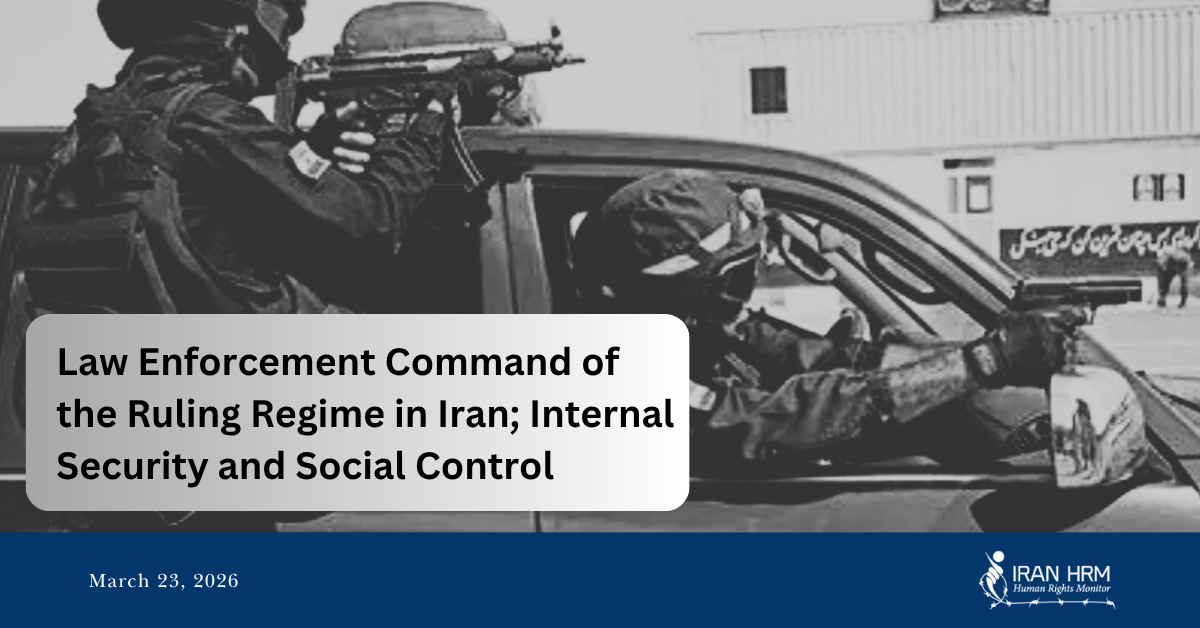
The Special Units of FARAJA constitute the most specialized operational force for confronting protest gatherings. Established in 1991, this unit acts as a strategic reserve force and is typically deployed when regular police forces are unable to control the situation.
Operational Doctrine and Equipment
The command of the Special Units categorizes its missions into three levels: “white status” (normal), “grey status” (limited unrest), and “black status” (nationwide crisis).
Their equipment includes high-range heavy water cannon vehicles, tear gas and dye-spraying systems, and pellet-firing weapons. The use of these weapons at close range has, in numerous cases, resulted in severe injuries, including permanent damage to the eyes and vision of protesters.
There have also been multiple reports of the use of melee weapons such as machetes, axes, and swords in protest scenes, aimed at intimidation, dispersal of crowds, and direct physical coercion.
Pattern of Conduct in Nationwide Protests
An examination of FARAJA’s performance in various protests, from July 1999 to the protests of 2022 and beyond, reveals a relatively consistent pattern:
Widespread and disproportionate use of force
Mass and arbitrary arrests
Transfer of detainees to non-transparent detention centers
Application of physical and psychological pressure to extract confessions
During the November 2019 protests, international reports indicated direct shooting at protesters. In the 2022 uprising, widespread use of pellet weapons, particularly targeting the face and eyes of protesters, was documented.
Arrest, Interrogation, and Forced Confessions
FARAJA’s activities are not limited to street operations. In many cases, detainees are transferred to detention facilities where access to legal counsel, medical services, and family contact is restricted. Documented reports indicate severe physical and psychological pressure aimed at extracting forced confessions.
These confessions are sometimes broadcast through official media and used as tools to legitimize repression.
Budget, Financial Resources, and Operational Capacity
Analysis of FARAJA’s financial resources indicates a significant increase in its capacity for internal control and repression. In the 2025 Iranian budget bill (year 1404), the total budget of seven military and security institutions, including FARAJA, reached approximately 865 trillion tomans; compared to 496 trillion tomans in 2024 (year 1403), reflecting an increase of about 76 percent. Some estimates also indicate a multiple-fold increase in the overall share of the military and security sector during this period.
Within this framework, the government allocated approximately €11 billion from oil revenues to the armed forces in 2025, compared to about €4 billion in 2024.
However, the budget structure lacks sufficient transparency regarding the allocation of resources to specific programs, and information related to initiatives such as enforcement of compulsory hijab is aggregated under general budget lines.
Identification, Surveillance, and Control Technologies
In recent years, FARAJA has extensively used modern technologies to monitor citizens. Artificial intelligence-based facial recognition systems are among the primary tools used to identify women opposing compulsory hijab, operating through cameras installed in public spaces, metro systems, and highways.
Additionally, the use of drones for monitoring public areas and the deployment of applications for reporting by informal agents form part of this institution’s extensive surveillance network.
There are also reports indicating that some surveillance infrastructure has been supplied by foreign technology companies.
Equipment and Operational Vehicles
FARAJA employs a range of specialized equipment to manage protests, including multi-purpose armored vehicles equipped with water cannons and crowd-control systems.
Heavy water cannon vehicles with extended range enable the projection of high-pressure liquids, which can cause physical injuries.
The use of blast-resistant armored vehicles in certain urban operations has also been reported.
Weapons Used Against Citizens
During protests, FARAJA has used a range of weapons with significant human consequences. Pellet-firing weapons have been among the primary tools for controlling gatherings; their use at close range can cause severe injuries, particularly to the face and eyes.
In some cases, reports indicate the use of military-grade weapons and snipers against protesters.
Instances of the use of melee weapons to create fear and impose direct violence have also been documented.
International Positions and Human Rights Condemnations Against FARAJA
The conduct of the Law Enforcement Command of the ruling regime in Iran in dealing with internal protests has received wide international attention.
UN Human Rights Council Resolutions and Positions
The United Nations Human Rights Council has examined and condemned the use of coercive force by Iran’s security forces in its sessions and has called on the ruling regime in Iran to end unlawful use of force, arbitrary arrests, and practices violating human rights.
Warnings have also been issued regarding the language used against protesters, identifying it as a factor contributing to escalation of violence.
Human Rights Sanctions Against the FARAJA Structure
In response to ongoing human rights violations, parts of the FARAJA structure have been subjected to human rights sanctions, including financial restrictions and travel bans. These sanctions reflect the international community’s recognition of the structural nature of these violations.
Ahmadreza Radan; Central Figure in the Implementation of Repressive Policies
At the head of FARAJA’s command structure, Brigadier General Ahmadreza Radan serves as Commander-in-Chief and plays a central role in directing the institution’s policies and operations. His record of command in sensitive regions, involvement in implementing so-called “social security” plans, and participation in suppressing nationwide protests demonstrate a direct link between leadership and operational patterns.
His public statements in March 2026 (Esfand 1404), including describing protesters as “the enemy” and declaring readiness of forces under his command for armed confrontation, reflect an approach that defines civil protests as security threats and facilitates the use of lethal force.
Given his key role in designing and implementing these policies, a detailed and independent report examining his record, responsibilities, and role in human rights violations is warranted and will be addressed in the next section.
Conclusion
Over recent decades, the Law Enforcement Command of the ruling regime in Iran has evolved from a policing institution into a security-political structure with a central role in controlling society. The concentration of power, expansion of surveillance tools, and recurring pattern of forceful response indicate the structural nature of this institution in managing social dissent.
This trajectory has had serious consequences for the human rights situation in Iran and has positioned this institution as one of the principal actors in this domain.