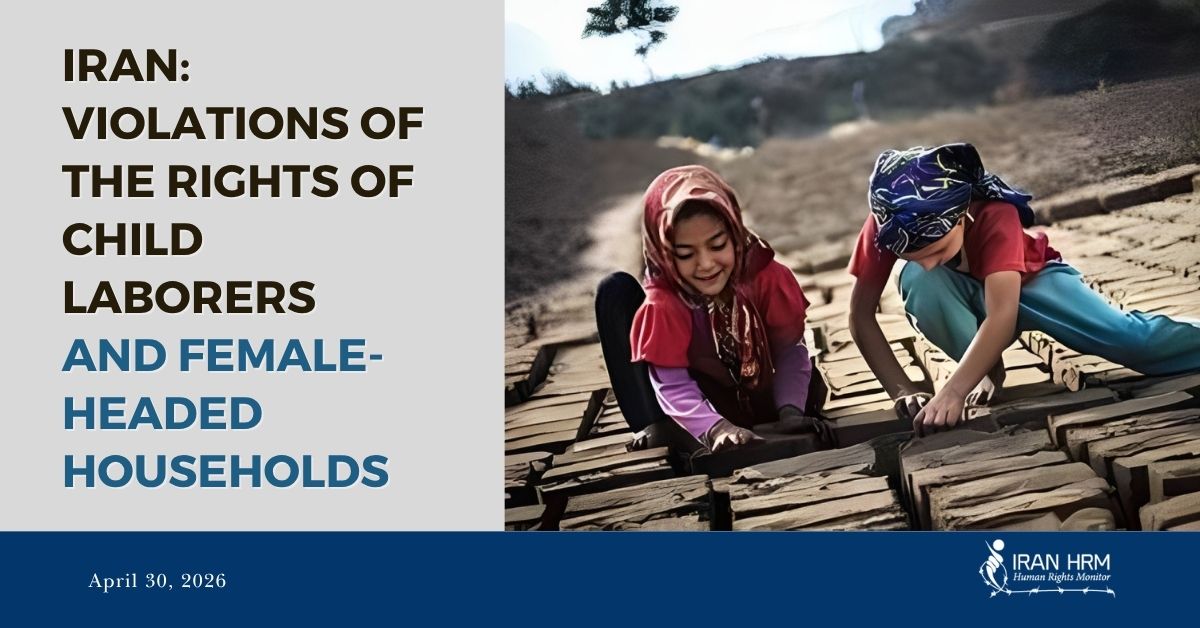
On the occasion of International Workers’ Day, which recalls the struggle for human dignity, decent work, and the protection of labor rights, examining the situation of child laborers in Iran becomes all the more urgent; children who, instead of access to education, safety, and healthy development, are exposed to economic exploitation, violence, and serious risks.
Alongside well-documented forms of child labor such as waste picking, street vending, and work in informal workshops, a more alarming phenomenon has emerged in recent months; the use of children and adolescents within security structures and urban checkpoints.

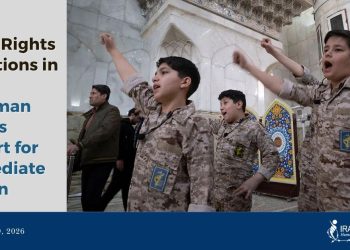
One example of this trend is the killing of Alireza Jafari, an 11-year-old child, on March 10, 2026, at a checkpoint in Tehran; a child who, instead of being in a classroom, was stationed in an environment that became a direct target of attack and lost his life under those conditions. At the same time, official statements regarding the lowering of participation age in security activities to 12 years indicate that the presence of children in such spaces is not an isolated incident, but part of an expanding pattern.
These developments raise a fundamental question; whether the use of children under such conditions is compatible with international obligations concerning child rights.
This report, based on international legal standards and documented evidence, examines how various forms of child labor in Iran; from economic exploitation to involvement in security environments, systematically result in violations of children’s fundamental rights.
Violations of International Child Labor Standards in Iran
Violation of Protection from Economic Exploitation
(Convention on the Rights of the Child, Article 32)
Under Article 32 of the Convention on the Rights of the Child, states are obligated to protect children from economic activities harmful to their health, development, or education. However, in Iran, children are widely engaged in activities such as waste collection, street vending, work in informal workshops, and collecting recyclable materials from garbage.
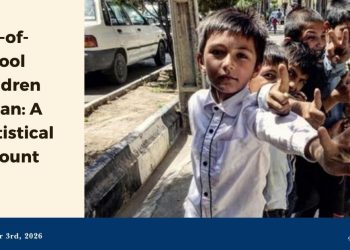
According to official figures, approximately 380,000 children aged 10–14 are engaged in permanent work, and about 370,000 children in the same age group are seasonal workers; meaning that even by official estimates, more than 700,000 children are working in Iran. These figures are widely considered underestimates, with some assessments suggesting the real number may be two to three times higher.
Violation of the Right to Education
(CRC Article 28; ICESCR Article 13)
The right to education is a fundamental right of every child. However, child labor in Iran is directly linked to school dropout and educational deprivation.
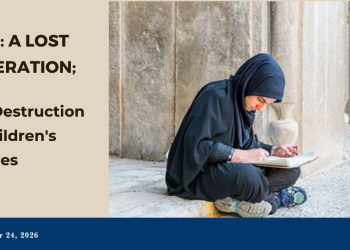
Children who should be in school and safe family environments are instead pushed into street work, informal labor, and hazardous conditions. Reports indicate that child laborers engage in activities such as shoe polishing, cleaning car windows, fortune telling, selling balloons or gum, and collecting waste in busy urban areas; activities that consume long hours and deprive them of education, rest, and normal development.
Violation of the Prohibition of Hazardous Work
(ILO Convention No. 182)
ILO Convention No. 182 defines hazardous work as one of the worst forms of child labor. Activities such as waste picking, street work, heavy labor, and exposure to unsafe environments clearly fall within this category.
In Iran, child laborers often work long hours in polluted environments, high-traffic areas, and unsafe urban spaces. Reports point to physical injuries, exposure to hazardous materials, and long-term health damage affecting these children.
Furthermore, the use of children in checkpoints and security environments exposes them to risks that are considered high even for trained adults.
Violation of Protection from Violence and Abuse
(CRC Article 19)
Children must be protected from violence, abuse, and exploitation. However, child laborers in Iran, particularly those working on the streets or in waste collection, operate in environments with little to no protection.
Available evidence shows that these children, lacking the ability to defend their rights and without effective support systems, are highly vulnerable to exploitation, harassment, and abuse by employers and others. This elevates child labor from an economic issue to one directly affecting the physical safety, psychological well-being, and dignity of children.
Violation of the Right to Special Protection
(ICCPR Article 24)
Under Article 24 of the International Covenant on Civil and Political Rights, children are entitled to special protection. In Iran, however, child laborers not only lack such protection, but are often forced to contribute to family survival due to poverty and absence of social support.
Reports describe children working under physically demanding conditions with minimal income to sustain their families; indicating that instead of being protected, children are carrying the burden of economic crisis.
Use of Children in Security Structures; Aggravated Violations
(CRC Article 38; Rome Statute)
Beyond conventional forms of child labor, the use of children and adolescents in checkpoints and security roles represents a more severe level of rights violation.
In such cases, children are not only deprived of education and safety, but are placed in environments associated with violence, weapons, and direct risk of attack. The case of Alireza Jafari illustrates this pattern. Official statements about the participation of children aged 12–13 in security activities further indicate that this is not an isolated incident, but potentially part of an organized practice.
Section Conclusion
These findings demonstrate that child labor in Iran is not merely a consequence of poverty, but a pattern of interconnected rights violations; including economic exploitation, denial of education, exposure to hazardous work, vulnerability to violence, and absence of protection. The involvement of children in security environments intensifies these violations by placing them in direct danger.
Female-Headed Households; Structural Poverty and the Transfer of Crisis to Children
The situation of female-headed households represents a key structural factor in the persistence of child labor in Iran. Many child laborers come from families where mothers are solely responsible for economic survival.
According to available data, 52 percent of female-headed households lack insurance and pensions, while 70 percent of economically inactive populations are women, reflecting widespread inequality and structural exclusion.
Many women lack access to formal employment and are forced into unstable, uninsured, and low-income jobs such as sewing workshops, carpet weaving, packaging work, street vending, and informal labor. Reported monthly earnings range between 1.9 to 3 million tomans, while minimum household costs reach 28 million tomans, highlighting a severe income gap.
Personal accounts illustrate the human dimension of this crisis. One woman reported selling her hair to cover medical costs for her child, stating:
“I had no job and no other option… but the money wasn’t even enough for one month.”
Other cases include women working in online sales, ride-hailing services, or street vending, all facing unstable income, lack of insurance, and inadequate living conditions.
Women in informal sectors are also exposed to confiscation of goods, harassment, and arrest by authorities, further undermining their economic stability.
Under these conditions, child labor becomes a survival strategy. The lack of social protection, fair wages, and stable employment for women directly contributes to the expansion of child labor. Thus, child labor in Iran reflects not only violations of children’s rights, but also systemic violations of women’s economic and social rights.
Conclusion and International Call
The situation of child laborers and female-headed households in Iran reflects a pattern of interconnected human rights violations; from economic exploitation and denial of education to exposure to violence, insecurity, and structural poverty.
UNICEF, the UN Special Rapporteur on human rights in Iran, the Special Rapporteur on violence against women and girls, the International Labour Organization, and other relevant international bodies are urged to conduct independent and urgent investigations into these conditions; particularly the use of children in checkpoints and security environments, the denial of education, violence and abuse against child laborers, and the lack of effective protection for female-headed households.
The ruling regime in Iran must be held accountable for fulfilling its international obligations regarding child protection, prohibition of hazardous labor, the right to education, social protection, and non-discrimination against women.