Documented human rights reports indicate an alarming surge in the statistics of death penalty sentences, hunger strikes, and waves of arbitrary arrests across the country. The judicial and security apparatus of the Islamic Republic, exploiting the securitized environment, has launched a massive onslaught against various guilds and sectors of society—including academics, lawyers, artists, and former political prisoners. The unfolding trend demonstrates a strategy of public intimidation through the systematic violation of due process and an absolute disregard for international obligations; a mechanism of widespread repression that continues to be left without a material and deterrent response from the international community and human rights organizations.
Death Penalty Sentences and Judicial Procedures Leading to Capital Punishment
Relying on vague case-fabrications and forced confessions, the judiciary has placed the issuance of the harshest punishments and the death penalty for activists on its agenda:
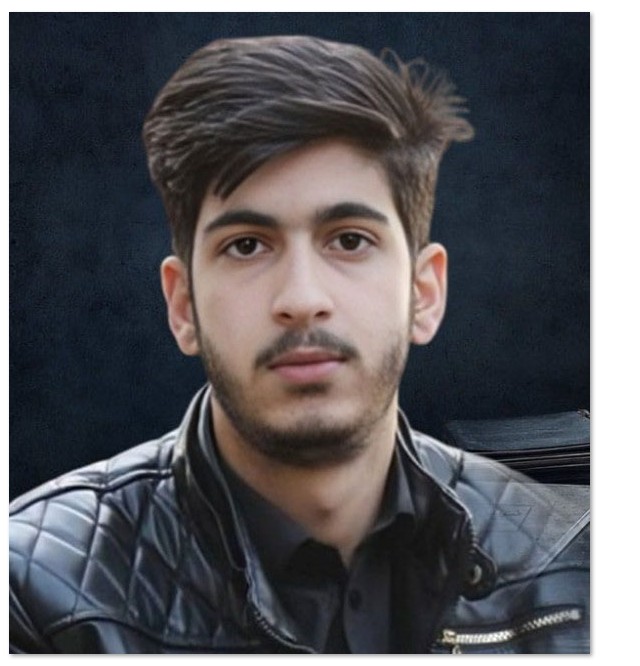 Yasin Shahbakhsh: This 22-year-old Baluch prisoner has been sentenced to the death and 10 years in prison by Branch 2 of the Zahedan Revolutionary Court. This severe ruling was issued based on charges such as “membership in armed groups” and “clashes with military forces,” while reports indicate severe torture and the extraction of forced confessions, and he has rejected all the charges.
-
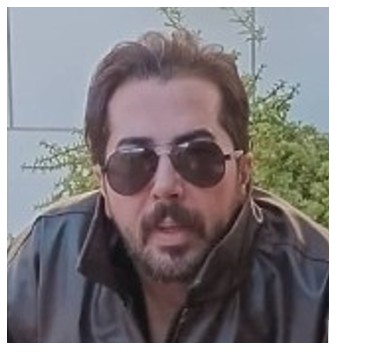
Moslem Zamani: A PhD student in chemistry and a political prisoner from Gachsaran, he faces a new fabricated case after being arrested by the Ministry of Intelligence and enduring solitary confinement in Yasuj. The raising of baseless pretexts such as the discovery of weapons by interrogators has heightened anxieties regarding judicial groundwork to issue heavy sentences and deprive this former political activist of his life.
Long-Term Detention and Attrition Tactics Against Protesters
The Revolutionary Courts, by accusing citizens of grand security charges, have handed down disproportionate and crushing prison sentences for political prisoners:
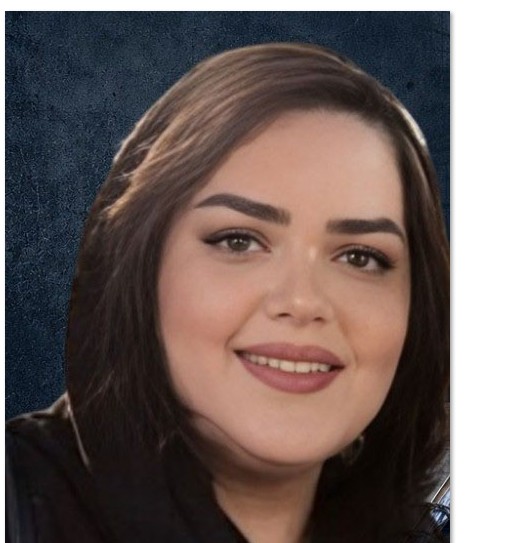 Maryam Babajani: One of the detainees of the January 2026 nationwide protests in Izeh, she has been sentenced by Branch 1 of the Ahvaz Revolutionary Court to a severe and medieval sentence of 32 years, six months, and two days in prison. This sentence was issued by citing security charges and the Law on Intensifying the Punishment of Espionage. Human rights activists have warned about the regime’s utilization of a wartime environment to intensify the repression of protesters under these pretexts.
- Amir-Reza Pedram: One of the protesters detained during the January 2026 nationwide protests in Mashhad (formerly a jeweler), he was sentenced to 6 years of discretionary imprisonment. He endured severe physical and psychological pressures throughout his entire detention and was denied the right to access a defense counsel of his choice. No precise information has been obtained regarding the specific charges leveled against him.
- Esmaeil Sheikhi Nia and Saeid Maghsoudi: The sentences of Esmaeil Sheikhi Nia and Saeid Maghsoudi, detainees of the January 2026 nationwide protests, were affirmed precisely as issued by the Appeals Court of Khuzestan Province. In a joint judicial case, these individuals were sentenced by Branch 1 of the Ahvaz Revolutionary Court on the charge of “disrupting public order” by citing the note to Article 268 of the Islamic Penal Code; each was sentenced to two years in prison, a two-year ban on leaving the country, and one year of mandatory attendance at the Headquarters for Commanding Right and Forbidding Wrong in Izeh county.
- Leila Afarin and Maryam Afarin: An informed source close to the family of these prisoners, while confirming their condition, announced that Leila Afarin, approximately 30 years old, and her sister Maryam Afarin, are sentenced by the Tehran Revolutionary Court to endure one year in prison each under political charges.
Arbitrary Arrests and News Blackouts of Academics and Civil Activists
In a coordinated action, the security forces, have initiated a new wave of arbitrary arrests targeting professors and students without providing any judicial warrants:
- Ariana Kouchaki: An undergraduate industrial engineering student and a class of 2021 (1400) entry at Sharif University of Technology, he was arbitrarily arrested by security forces in Tehran on June1, 2026 (11 Khordad 1405) and transferred to an undisclosed location; no information is available regarding his current condition.
- Amirhossein Bagheri Alavijeh: A master’s student at the University of Arak with a history of prior detention, he was arbitrary arrested by plainclothes agents in the city of Alavijeh in Isfahan Province accompanied by the use of severe physical violence and the confiscation of his family’s electronic devices. Until the compilation of this report, no information is available regarding the primary reasons for his re-arrest, the detaining agency, the leveled charges, and the precise location where this student is being held.
- Amirhossein Saadat: In the early hours of Monday, June 1, 2026 (11 Khordad 1405), Amirhossein Saadat—a 34-year-old student activist, citizen of Abadeh County in Fars Province, and former secretary of the Student Union at Allameh Tabataba’i University—was violently arrested and severely beaten by Intelligence Department forces in Tabriz. He was transferred to an undisclosed location without the presentation of any judicial warrant.
According to informed sources, Intelligence Department agents simultaneously raided the personal residence of the former student activist. While conducting a thorough search of the house, they confiscated and seized his personal belongings, including his mobile phone, laptop, and passport. As of the compilation of this report, no information is available regarding the reasons for his detention, the legal proceedings, or the charges leveled against him.
- Morteza Nemati: A former professor at Shahid Chamran University of Ahvaz and a critic of the
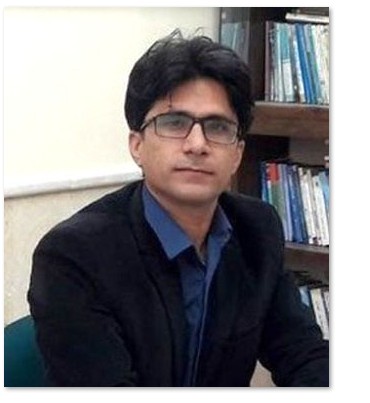 government who had previously been forced out of the university, he reported that a new case had been opened against him and that he had received a summons from the Abdanan Revolutionary Court over what the regime describes as the “criminalization of truth.”
-
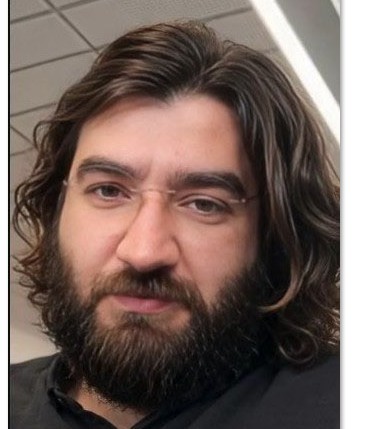
Seyyed Sadra Hosseini: A graduate of the University of Tehran, he was arrested by security forces in Tehran on Monday, June 1, 2026 (11 Khordad 1405) and transferred to an undisclosed location. No information is available regarding his place of detention, or his physical and legal status. Until the compilation of this report, the responsible institutions have provided no explanation regarding the reasons for the arrest or the potential charges against Seyyed Sadra Hosseini.

Hunger Strike Campaign and Retaliatory Deprivation in Evin Women’s Ward
Evin Prison authorities, in a retaliatory reaction, have stripped the fundamental rights of those protesting against the death penalty, which has led to the launch of a hunger strike campaign:
- 8 Political Women Prisoners: Elaheh Fouladi, Forough Taghipour, Sakineh Parvaneh, Shiva Esmaeili, Zahra Safaei, Golrokh Iraee, Marzieh Farsi, and Varisheh Moradi have been deprived of their rights to make phone calls and have family visits due to their protest against death penalty sentences and their solidarity with the “Tuesdays Against Execution” campaign in which they go on hunger strike for the day.
- Nasim Simiari and Lindsey Forman: Nasim Simiari was banned from family visits for conversing with her British cellmate, Lindsey Forman. Lindsey Forman and her husband, Craig Forman, have been stripped of all their rights due to their whistleblowing regarding the situation of executions in Iran and have gone on a hunger strike in protest of this situation. Additionally, Ghazal Marzban is also on a hunger strike in protest against her sentence of 9 years and eight months in prison.
Targeting Artists, Lawyers, and Ideological Minorities
Parallel to street arrests, the machinery of repression engineers the elimination of legal defense networks and cultural currents supporting society:
- Samira Norouz Naseri: On Monday, June 1, 2026 (11 Khordad 1405), Samira Norouz Naseri, a filmmaker and director in Tehran, was arrested following a raid by agents on her residence without any judicial warrant being presented; her home was searched and her professional equipment was confiscated. Until the compilation of this report, no precise information is available regarding the reasons for the arrest, the leveled charges, and the place of detention of this artist.
- Zahra Arefi Mehr: A teacher, children’s literature author, and artist, she was tried in the Sabzevar
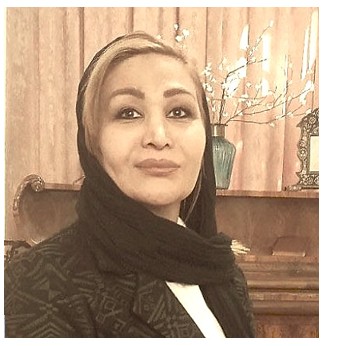 Revolutionary Court for publishing content and images related to the victims of the January 2026 (Dey 1404) nationwide protests in cyberspace; she was arrested without access to a lawyer and transferred to Torbat-e Heydarieh Prison.
- Mehran Ansari and Mehdi Ansari: Mehran Ansari, an attorney-at-law and member of the Fars Bar Association, was sentenced to one year in prison on the charge of “propaganda against the state.” He had been arrested by security forces in Shiraz during the January 2026 (Day of 1404) nationwide protests. Prior to this, his cousin, Mehdi Ansari—an attorney-at-law and member of the Fars and Kohgiluyeh & Boyer-Ahmad Bar Association—was sentenced by the Shiraz Revolutionary Court to 5 years of discretionary imprisonment and a 2-year travel ban.
Baha’i Citizens:
- Roya Ostovar: The sentence of Roya Ostovar, a Baha’i citizen from Isfahan, was precisely affirmed by
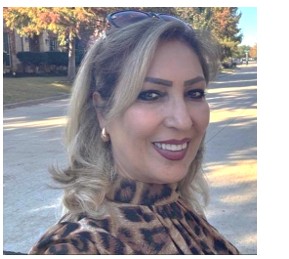 Branch 47 of the Appeals Court of this province. She was previously sentenced by Branch 11 of the Public and Revolutionary Prosecutor’s Office of Isfahan to five years in prison, payment of a cash fine, and deprivation of social rights for a duration of 15 years on the charge of “educational and promotional activities disrupting the Islamic Sharia through creating and managing a WhatsApp group related to the Baha’i faith,” and to one year in prison on the charge of “propaganda against the state through publishing content in cyberspace.”
- Barsa Maleki: Barsa Maleki, a Baha’i citizen residing in Mashhad, was sentenced by the Revolutionary Court of this county to two years and one day in prison, payment of a cash fine, and deprivation of social rights. According to the verdict issued by Branch 1 of the Mashhad Revolutionary Court and communicated to this Baha’i citizen, Mr. Maleki was sentenced—on the attributed charge pursuant to Article 500-bis of the Islamic Penal Code regarding “deviant educational or promotional activity contrary to or disrupting the holy Islamic Sharia”—to two years and one day in prison, payment of an eighty-million-toman cash fine, and deprivation of social rights for a duration of six years.
Judicial Blackouts, Detaining Minors, and Medical Torture
Among the most horrific dimensions of the ongoing crackdown are absolute blackouts in files, the detention of minors, and the enforcement of torture via the denial of medical treatment:
- Javad Alikordi: The brother of human rights defense lawyer Khosrow Alikordi, he has been held in
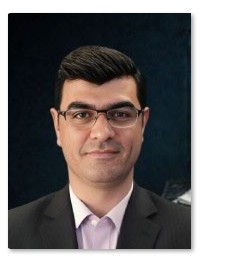 Mashhad’s Vakilabad Prison for months under absolute limbo and a communication ban, and his file is kept in complete silence. His long-term deprivation of phone calls and family visits, alongside the lack of transparency regarding the status of the case and the judicial proceedings, has raised widespread anxieties.
- Ali Raeisi (17-Year-Old Baluch Minor): For nearly two months, this minor has been detained under
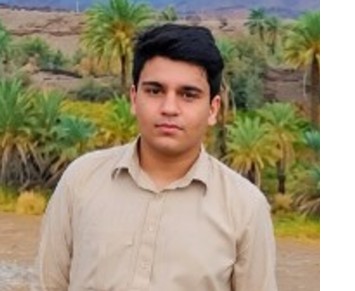 militarized and securitized conditions by agents in Fannuj and transferred to Iranshahr. The reason for his arrest has been stated as “sending messages and publishing content in connection with media opposed to the state.”
- Nader Roudini (50 Years Old) and Younes Roudini (19 Years Old): This Baluch father and son were arrested during a raid by the IRGC Intelligence in the village of Qoush-Sarbazi in Sarakhs without the presentation of an arrest warrant and were transferred to an undisclosed location. Informed sources stated: “The IRGC Intelligence forces provided no explanation regarding the reason for the arrest at the time of detaining them and removed this father and son from the house without communicating charges or presenting a judicial warrant.” Until the moment of compiling this report, no information is available regarding the reasons for the arrest, the place of detention, the health status, and potential charges against these two Baluch citizens, and their family has also failed to obtain any information regarding their fate.
- Mirakbar Hosseini (24 Years Old): A former protester from the 2022 (1401) protests, he was re-arrested and faces a heavy and fabricated charge of “cooperating with the Zionist regime” in Marand Prison without the presentation of any legal evidence. Those close to him have considered these charges baseless and emphasized that the raised claims lack valid evidence.
- Motaleb Ahmadian (Medical Torture): Following several heavy surgeries, due to systematic delays in his transfer to the hospital, this political prisoner’s tumor—which was initially benign—has spread to his liver and gallbladder. The long-term deprivation of this prisoner from treatment and his immediate return to Evin is a clear manifestation of torture and inhuman behavior toward political prisoners.
Legal Assessment: Systematic Violations of International Conventions
The cumulative facts demonstrate open violations of international treaties to which the Iranian government is legally bound:
- Violation of the Prohibition of Torture (Article 5 of the UDHR): Enforcing psychological pressures on Amirreza Pedram, the systematic medical neglect of Motaleb Ahmadian, and the physical torture of Yasin Shahbakhsh constitute explicit examples of inhuman treatment.
- Violation of Personal Security and Arbitrary Detention (Articles 3 & 9 of the UDHR): The extensive execution of arbitrary arrests without judicial warrants obliterates the citizens’ right to security.
- Violation of Fair Trial Standards (Article 10 of the UDHR): The deprivation of access to a chosen lawyer in the cases of Zahra Arefi Mehr and Lindsey Forman, alongside the prolonged limbo of Javad Alikordi, completely destroys the process of a fair trial.
International Inaction: Fueling the Machinery of Repression
These documented facts mirror a multi-layered crackdown in Iran. International law advocates must be asked today: if global bodies, instead of issuing ceremonial statements, had conditioned their diplomatic and economic relations with Tehran on an immediate halt to the death penalty and the release of political prisoners, would the regime still dare to subject a 17-year-old minor or a university professor to such arbitrary detentions and unlawful persecutions in this manner?”
The inaction of international assemblies acts as a green light for the continuation of these crimes, which are saturated with the violation of fundamental human rights and human dignity. The time for genuine accountability and decisive action is right now, and not tomorrow.