
The month of June in Iran serves as a reminder of one of the bitterest events in the history of Iranian prisons; the anniversary of the murder of Alireza Shirmohammadali, a 21-year-old political prisoner who, following his arrest due to online activities and sentence to imprisonment, lost his life after being stabbed in the Greater Tehran Prison (Fashafooyeh). His death was not an ordinary clash among inmates, but rather the result of a chain of decisions and circumstances about which he himself had warned long in advance.

Arrest and Conviction
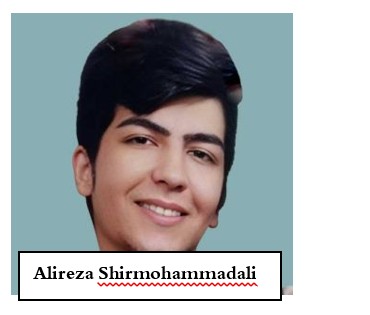 Alireza, a 21-year-old youth from the Naziabad neighborhood of Tehran, was arrested on July 15, 2018 (24 Tir 1397) due to his activities in cyberspace. He was initially held in solitary confinement for 36 days and subsequently transferred to the Greater Tehran Prison. The court sentenced him to eight years in prison on charges including “insulting sanctities,” “insulting the founder of the regime,” and “propaganda against the regime”; a ruling that completely upended the life of this youth and his family. Alireza was the sole breadwinner of his household, and his arrest and imprisonment confronted his family with numerous economic and social difficulties.
The Truth Behind the Charge of “Insulting Sanctities” in Iran
The case of Alireza Shirmohammadali is an example of cases in which religious concepts are utilized within the framework of security charges. In practice, the charge of “insulting sanctities” in many instances is linked not to the religious beliefs of the people, but rather to the criticism of political figures and symbols of the ruling establishment. These charges have become a tool in Iran to restrict freedom of expression and to suppress any critical voice against the government.
Alireza Shirmohammadali’s Warnings Regarding His Own Life: An Alarm Bell That Remained Unanswered by International Bodies
Months prior to being killed, Alireza Shirmohammadali, along with political prisoner Barzan Mohammadi, had repeatedly warned about the conditions in the Greater Tehran Prison. The two went on a hunger strike to protest the unsuitable prison conditions, the lack of physical safety, substandard sanitary conditions, and the practice of holding political prisoners alongside violent offenders. Their hunger strike began in March 2019 (Esfand 1397) and concluded following promises from officials to address their demands.
In a letter published by these two political prisoners in March-April 2019 (Farvardin 1398), they explicitly warned about the existing dangers within the prison. They had declared that the Greater Tehran Prison lacked the minimum necessary standards for holding prisoners, particularly political prisoners, and that the lives of prisoners, especially political ones were in danger.
The Consequence of Inaction Toward Warnings
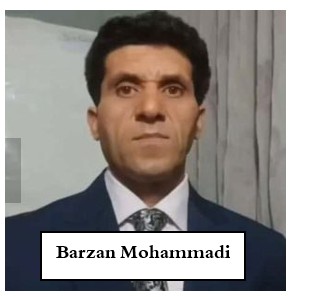
On June 10, 2019 (20 Khordad 1398), two inmates with a history of violent crimes initiated a clash with Alireza Shirmohammadali and Barzan Mohammadi. During this attack, Alireza was targeted with multiple knife strikes and was severely wounded. The ward’s telephone line had been disconnected prior to the incident, and guards were not present at the scene when the attack occurred. Alireza passed away due to the severity of his injuries after being transferred to Firoozabadi Hospital. This was an event that should have awakened the conscience of the international community regarding the mortal danger facing political prisoners in Iran.
Violation of the Principle of Separation of Crimes in This Case
One of the most critical aspects of this case is the violation of the principle of separation of crimes. According to the regulations of the Prisons Organization, political and ideological prisoners must not be held alongside those convicted of violent crimes, murder, organized trafficking, and dangerous offenses. Nonetheless, Alireza Shirmohammadali and many other political prisoners in the Greater Tehran Prison were held alongside ordinary and dangerous criminals. This is a practice that can still be observed in Iran’s prisons today. Alireza had repeatedly protested against this issue, characterizing it as a serious threat to the physical safety of political prisoners.
Violation of the Regulations of the Prisons Organization in Iran
According to the Executive Regulations of the Prisons Organization, the principle of separation and classification of prisoners must be respected, and inmates must be kept segregated based on the type of crime, criminal record, and case status. Furthermore, pursuant to Articles 22 and 39 of the Constitution, the life, dignity, and security of individuals are protected by law, and no authority or institution is permitted to create conditions that divest individuals of their physical safety. On the other hand, the responsibility for protecting the lives of prisoners, rests with the Prisons Organization and the responsible officials, and any negligence in this regard can give rise to legal liability. These violated provisions, combined with the disregard for the prisoners’ official warnings regarding security threats, constitute deliberate negligence in ensuring the physical safety of inmates, and the perpetrators must be held accountable.
Elimination of Dissidents: A Persistent Concern Regarding the Security of Political Prisoners
The case of Alireza Shirmohammadali is not regarded merely as an isolated criminal case inside the prison but has rather transformed into a symbol of the vulnerability of political prisoners to violence and the lack of effective protection. It is necessary to recall that following the protests of December-January 2025 (Dey 1404), approximately 50,000 protesters were arrested and transferred to prisons that, even without them, were already holding inmates severely over their capacity. These statistics clearly embed within themselves the threat of a recurrence of such an event.
Articles Violated in the Case of Alireza Shirmohammadali: The Continuous Recurrence of Violations of Political Prisoners’ Rights
- Article 3 of the Universal Declaration of Human Rights: The right to life and security of person. Officials are obligated to protect the lives of prisoners.
- Article 9 of the Universal Declaration of Human Rights: Prohibition of arbitrary arrest and punishment due to the expression of opinion and peaceful activities.
- Article 19 of the Universal Declaration of Human Rights: The right to freedom of expression and opinion without fear of retribution.
- Article 10 of the International Covenant on Civil and Political Rights (ICCPR): The requirement to treat all persons deprived of their liberty with humanity and to ensure their security.
- The Nelson Mandela Rules, Rules 11 and 93: The necessity of separating prisoners based on the type of crime and ensuring the security of inmates against internal violence and hazards.
The Responsibility of Human Rights Organizations and the Necessity of Practical Action Regarding Iran’s Prisons
The responsibility of the international community, United Nations mechanisms, and human rights organizations regarding the lives of political and ideological prisoners in Iran extends beyond expressing regret or diplomatic condemnations. Bitter experiences such as the passing of Alireza Shirmohammadali demonstrate that “inaction” and the failure to hold Iranian judicial and security officials accountable practically issue a license for the repetition of these tragedies against thousands of detainees and imprisoned protesters.
In this regard, taking the following immediate and practical actions by international bodies is essential:
- Legal Pressure for Direct Inspection and Monitoring: It is necessary for the UN Human Rights Council, the Special Rapporteur on the situation of human rights in Iran (Madam Mai Sato), and the International Committee of the Red Cross (ICRC) to demand unconditional access and unannounced inspections of Iran’s overcrowded prisons (such as the Greater Tehran Prison and prisons in provincial centers and counties) in order to monitor the implementation of the principle of separation of crimes and the preservation of the physical safety of inmates.
- Compelling the Iranian Establishment to Clarify the Status of Detainees: Given the arrest of approximately 50,000 individuals in recent protests, it is essential for the international community to obligate Iranian authorities to transparently disclose precise statistics, locations of detention, and the health status of all transferred individuals, and to put an end to the policy of enforced disappearance and ambiguous case-fabrication under the pretext of “insulting sanctities” and other similar charges which has so far even led to many political executions especially after the recent conflict between Iran and US+Israel.
- Activating Legal Accountability Mechanisms: For international organizations, it is necessary to record documentation related to the deliberate negligence of Prisons Organization officials and judges issuing heavy sentences as evidence of systematic human rights violations. It is essential to remind Iranian judicial authorities that those responsible for the physical elimination or failure to provide security for prisoners will be legally prosecuted in the future based on the principle of Universal Jurisdiction.
Conclusion
Alireza Shirmohammadali is the full reflection of the solitude and defenselessness of political prisoners in Iran. Disregarding his warnings cost the life of a 21-year-old youth. Today, with the entry of tens of thousands of new protesters into the sub-standard and securitized detention centers of the ruling establishment, the alarm bell for the recurrence of “organized murders inside prison” has rung with even greater intensity. The international community must not allow the protection of the lives and dignity of defenseless human beings behind the high walls of Iran’s prisons to be forgotten; transforming these warnings into a practical, urgent, and binding action is the only way to prevent larger crimes in the future.