Executive Summary at a Glance

- Ghaleh Chanan Security Case (2026): The case represents one of the most critical security proceedings against Ahvazi Arab citizens in 2026, following a major security operation on March 9, 2026 [18 Esfand 1404] in the Ghaleh Chanan region of Ahvaz. According to official Ministry of Intelligence statements, the operation resulted in five deaths and multiple arrests.
- Capital Charges Against At Least 12 Citizens: Based on human rights reports and local sources, at least 12 Ahvazi Arab citizens face charges including “Moharebeh” (Enmity against God), “Baghi” (Armed Rebellion), charges carrying the death penalty under Iranian law.
- Systemic Violations of Due Process: Prolonged detention in security facilities, denial of chosen legal counsel, restricted family access, physical and psychological torture, and forced confessions.
- Elevated Risk of Capital Punishment: While final sentences have not been announced at the time of writing, the formal introduction and escalation of capital charges severely heighten the imminent risk of death sentences.
Case Background
On March 9, 2026, security and intelligence forces of the Islamic Republic launched a large-scale raid in the Ghaleh Chanan district of Ahvaz amid severe telecommunication and internet blackouts.
According to the official Ministry of Intelligence narrative:
- 5 individuals were killed.
- 10 individuals were arrested.
However, human rights organizations and families report a higher number of detainees, alongside grave opacity surrounding the identities of those killed and the fate of missing individuals.
Individuals Named in the Case
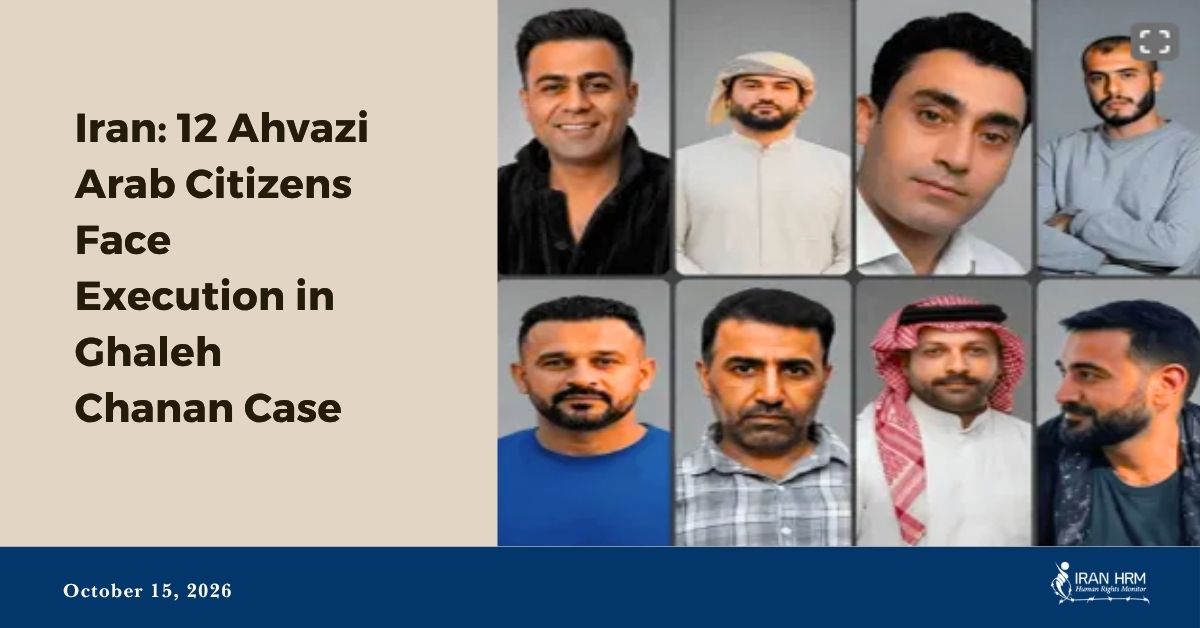
Identified individuals associated with this case include:
- Toufiq Silawi
- Mohammad Neisi
- Hossein Silawi
- Hamed Zouheiri
- Tareq Hassanian
- Bahador Zargani
- Mansour Naseri
- Ahmad Bavifard
- Yousef Hassanian
- Jasem Bavi
- Mohammad Ali Bavi
- Hamid Hassanian
Additionally, the following individuals have been named in connection with injuries, unconfirmed legal status, or untraceable detention:
- Amin Nasseri
- Mahmoud Hassanian
- Haidar Khayati-Pour
Official Narrative of the Islamic Republic
In April 2026, the Ministry of Intelligence issued a statement claiming that during the Ghaleh Chanan operation, five individuals were killed and ten were arrested. The ministry alleged that those detained were involved in forming an opposition group, bombing civilian infrastructure including oil pipelines, launching armed attacks, possessing weapons and ammunition, holding Starlink equipment, and collaborating with foreign entities. To date, Iranian authorities have presented no public or independently verifiable evidence to substantiate these claims.
Current Status of Proceedings
According to the latest available data:
- An interrogation session was held on October 12, 2026 in Branch 2 of the Interrogations Office at the Karoun District Court.
- The subsequent session was set for October 23, 2026.
- The case file has been referred to another branch for severance and further review.
- No final verdicts have been issued as of the compilation of this report.
Formal Charges
Initial Charges
According to reports, initial allegations included:
- Firing at security forces
- Detonating oil pipelines
- Possessing improvised explosive devices
- Collaborating with the US and Israel
- Disrupting public order
Additional Charges
In October 2026, the following severe charges were added:
- Disrupting public order and peace
- “Moharebeh” (War against God) via firing at Basij bases
- “Baghi” (Armed rebellion against the Islamic state)
- Assembly and collusion against national security
Given that “War against God” and “Rebellion” carry mandatory or discretionary death sentences in the Islamic Penal Code, adding these charges drastically elevates the peril of capital punishment.
Serious Human Rights Concerns
Denial of Chosen Legal Counsel
Reports indicate detainees have been systematically denied access to independent defense attorneys. This restriction is enforced within the legal framework of the Note to Article 48 of the Code of Criminal Procedure, which restricts representation in security cases to state-approved lawyers. Such restrictions violate international standards of fair trial, including the right to prompt and unhindered access to legal counsel of one’s choosing, as well as:
- Article 14 of the International Covenant on Civil and Political Rights (ICCPR)
- UN Basic Principles on the Role of Lawyers
Prolonged Incommunicado and Solitary Detention
The detainees were held for months in Intelligence Ministry detention facilities before being transferred to Sheiban Prison on July 22, 2026. Prolonged detention in security centers without effective legal representation represents a primary risk factor for torture, ill-treatment, and coerced confessions.
Allegations of Torture and Coerced Confessions
Multiple sources report physical and psychological torture aimed at extracting forced confessions. Arab human rights activists have questioned the credibility of all charges due to their reliance on statements obtained under severe coercion, in violation of:
- Article 7 of the ICCPR
- Absolute prohibitions against torture under customary international law
Denial of Visitation and Communication
Several detainees have been barred from family visits or phone calls for months. Reports specifically highlight the cases of Tareq Hassanian and Mohammad Ali Bavi, who remained out of contact with their families for extended periods.
Opacity Surrounding the Fate of Missing Persons
Reports indicate serious ambiguity surrounding Amin Naseri, Haidar Khayati-Pour, and Mahmoud Hassanian, with no clear official information published regarding their physical condition or whereabouts. Continued state refusal to provide verifiable information raises grave concerns regarding potential enforced disappearances.
Legal Assessment
Right to Life
Article 6 of the ICCPR recognizes the inherent right to life. The UN Human Rights Committee emphasizes that in capital cases, strict adherence to all fair trial guarantees is an indispensable prerequisite for the legitimacy of any capital sentence.
Right to a Fair Trial
Denial of chosen counsel, prolonged isolation, and documented torture claims directly violate Article 14 of the ICCPR. Any verdict built upon coerced confessions completely invalidates the judicial legitimacy of the proceedings.
Prohibition of Torture
Under Article 7 of the ICCPR, no individual shall be subjected to torture or cruel, inhuman, or degrading treatment. Confessions obtained through torture hold no legal validity.
Unsubstantiated Capital Charges
The charge of “Baghi” represents one of the most severe offenses in Iranian law. No public, independent evidence has been provided to substantiate this charge. Available indicators show the prosecution relies almost entirely on intelligence reports and contested admissions.
Conclusion
The Ghaleh Chanan case has entered a critical stage where at least 12 Ahvazi Arab citizens face the immediate threat of death sentences. Documented reports show the proceedings are marred by severe human rights violations, including the denial of defense counsel, extended security detention, isolation, torture, and forced confessions.
Under these conditions, any issuance or execution of a death sentence prior to an independent, effective investigation into torture claims, forced confessions, and due process breaches violates international fair trial standards, breaches the right to life, and constitutes an arbitrary deprivation of life under international law