Executive Summary
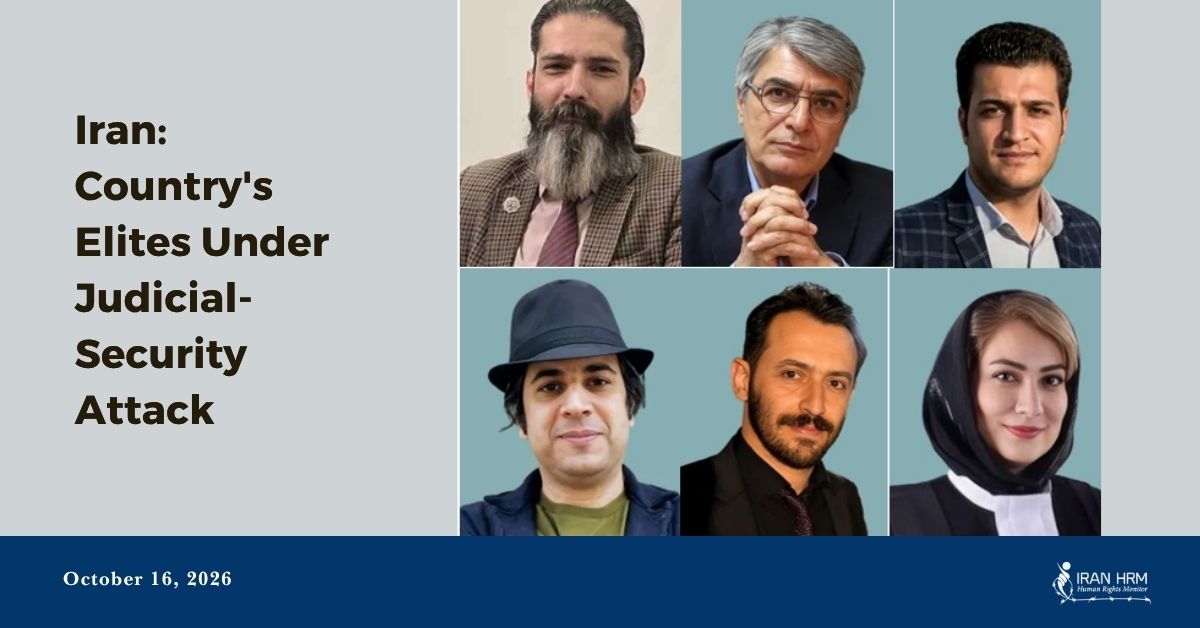
In recent months, the escalation of judicial and security crackdowns against the country’s elites—particularly defense lawyers, university academics, artists, and students—has reached alarming dimensions. Received reports indicate that security agencies and revolutionary courts have targeted the scientific, cultural, and civil structures of the country through arbitrary arrests, depriving prisoners of specialized medical care, issuing heavy prison sentences, and exerting disciplinary pressures. This report examines and documents the details of cases involving defense lawyers, university academics (Dr. Ahmad Rahmi and Alireza Hejbari Nobari), imprisoned artists (Mohtaram Parandin and Arsalan Yazdani), and university disciplinary actions.
Section 1: Structural Suppression of Defense Lawyers and Destruction of the Right to an Independent Defense
The immunity and independence of the legal profession is the cornerstone of a fair trial and guarantees the realization of the right of defendants to a defense before the judiciary. However, the pattern of security-judicial crackdowns in Iran shows that ruling institutions have adopted a retaliatory and criminalizing approach by targeting defense lawyers—especially those representing political, security, and human rights defendants. Arresting lawyers inside the courtroom during defense, fabricating collective cases based on professional activities, and issuing heavy prison sentences send a clear message aimed at intimidating the legal community and stripping defendants of access to independent and courageous lawyers.
- Arrest of Amirsalar Davoudi in Court (Isfahan)
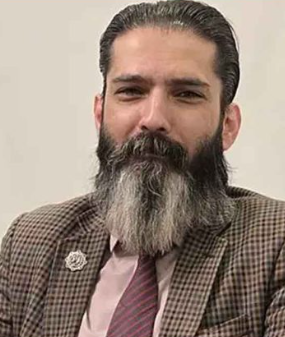
Arrest Details: On Sunday morning, October 11, 2026, around 10:30 AM, Amirsalar Davoudi, a human rights lawyer and attorney-at-law, was arrested by plainclothes agents while attending the Isfahan Revolutionary Court proceedings to defend his client, Mahshad Keshani.
- Ambiguity Regarding Place of Detention: As of the compilation of this report, there is no precise information regarding the arresting agency or his exact place of detention.
- Background and Legal Advocacy: Davoudi had previously raised awareness regarding the case of executed protester Alireza Sepahi and the situation of his fiancée (Mahshad Keshani), describing Sepahi’s execution as unjust.
- Impact on Professional Security: Arresting an attorney inside the courtroom while actively defending a client—regardless of security claims—constitutes a blatant act of retaliation, a direct violation of professional immunity, and an explicit threat to the professional security of all defense lawyers.
- Finalization of Prison Sentences for Mehran Ansari and Mehdi Ansari (Shiraz)
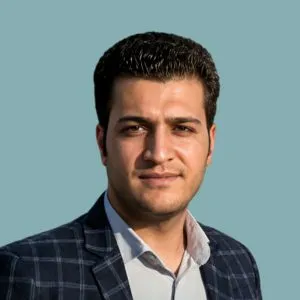
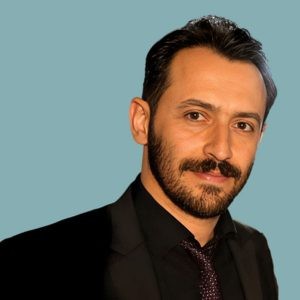
The cases of these two lawyers in Shiraz stem from the ongoing summons and arrests of Fars Province lawyers, where reports had previously emerged regarding the formation of cases against approximately 20 lawyers and the arrest of 12 of them following the protests of January 2026 (Dey 1404).
- Mehran Ansari: An attorney-at-law (born September 1987, holding a law license since 2017) who was previously detained for about a month, has been sentenced to one year of definitive imprisonment on charges of “propaganda against the state.”
- Mehdi Ansari: An attorney-at-law (born June 1989, holding a law license since 2020) with a history of two weeks of detention, has been sentenced to three years of definitive imprisonment on charges of “assembly and collusion against national security.”
- Case Status: The prison sentences of these two lawyers, being relatives, have been finalized and they will be summoned to serve their sentences.
- Collective Case and Identical Sentences for 8 Lawyers (Gilan Province)
The Revolutionary Court branch in Gilan, in a joint case, sentenced eight defense lawyers—namely Masoumeh Pourshahrani, Shadi Falahati, Tahereh Pouresmaeili, Gholamhossein Layeghi, Dalili, Mohammadreza Tak, Hesam Pourahmadi, and Ladan Asfi-Rad (along with another citizen named Kiyan Taharoud)—to similar prison sentences.
- Charges and Sentences: According to the issued verdict, each defendant was sentenced to 7.5 months in prison on the charge of “propaganda against the state” and 15 months in prison on the charge of “insulting the Supreme Leader and the Founder of the Islamic Republic” (totaling nearly two years of imprisonment).
- Bail and Case Content: The core of the case was cited as the publication of critical messages and statements attributed to these individuals. Some of these lawyers had previously been temporarily released on heavy bail (including a 2 billion Tomans bail for Tahereh Pouresmaeili and 500 million Tomans for Masoumeh Pourshahrani).
- Arrest via Ambiguous Summons: Zahra Naghshineh (Tabriz)
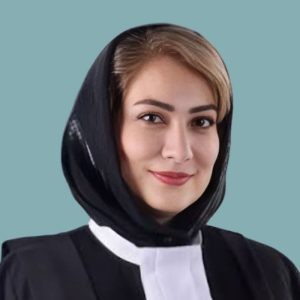
Zahra NaghshinehSummons and Arrest Process: Zahra Naghshineh, an attorney and labor/civil activist (with a background in the Women’s Commission of the Bar Association and the Secretariat for the Elimination of Violence against Women), referred to Branch 15 of the General and Revolutionary Prosecutor’s Office of Tabriz on Wednesday, September 9, 2026 (Shahrivar 18) after receiving a summons, and was immediately arrested.
- Legal Ambiguity in Summons: The official summons stated a charge lacking penal qualification, raising ambiguities regarding the legal basis for her summons and continued detention.
- Origin of the Case: Her case was formed based on a report by the Tabriz Intelligence Department regarding her activities, legal writings, and critical analyses. She continues to be held in Tabriz Central Prison.
Section 2: Purging Universities and the Intersection of Academic Suppression with Security Actions
Scientific and academic institutions in Iran have consistently been pioneering entities in advocacy and critical analysis of power—a reality that has driven the escalation of security pressures to control, purge, and silence the country’s scientific body. Targeting prominent professors and faculty members who support student protests or associations demonstrates the regime’s instrumentalization of disciplinary levers, revocation of teaching licenses, and ultimately illegal arrests and solitary confinement by intelligence agencies. The following cases provide a precise picture of the blatant violation of academic freedom and retaliatory treatment against academic elites.
- Dr. Ahmad Rahimi (Mashhad)
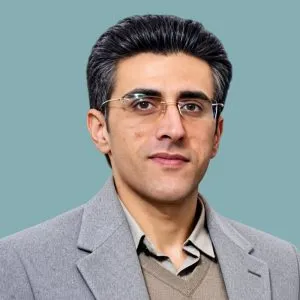
Identity and Professional Background: Holds a Ph.D. in Information Technology (IT), programmer, web designer, member of the National Elites Association, former professor at Ferdowsi University of Mashhad, holder of multiple patents in robotics (including building the “country’s first painting robot”), and author of specialized computer textbooks.
- Arrest and Violation of Fair Trial: He was arrested by the Ministry of Intelligence on March 18, 2026 (Esfand 27, 1404). His wife, Soheila Hosseini, was also arrested at home on the same day. The family had no news about him for a month, after which the case was transferred to the IRGC Intelligence Organization (30 days in solitary confinement under conditions deprived of sanitary facilities, including bathing).
- Denial of Chosen Lawyer and Threat of Execution: The investigating magistrate (Mohsen Vahidian Azimi) prevented his chosen lawyer from accessing the case file and appointed a public defender for him. The magistrate also spoke with his wife about the possibility of issuing an indictment carrying the death penalty. At the final interrogation session on October 12, 2026 (Mehr 20, 1405), Rahimi appeared in handcuffs and shackled in legs, and the magistrate rejected the conversion of his bail order.
- Critical Health Condition: Rahimi suffers from high blood cholesterol and viscosity, osteoporosis, and asthma. The prison doctor warned of the risk of stroke, but the prison warden and IRGC Intelligence prevented his transfer to the hospital. He has been transferred to Vakilabad Prison since June 14, 2026 (Khordad 24).
- Alireza Hejbari Nobari (Professor of Archaeology)
-
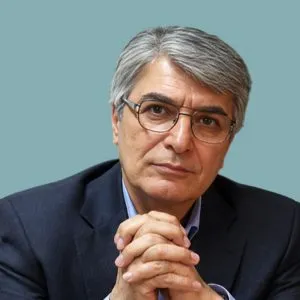
Alireza Hejbari Nobari Arrest by Ministry of Intelligence: Alireza Hejbari Nobari, a professor of archaeology and former faculty member of Tarbiat Modares University (who was barred from teaching at that university after supporting the 2022 protests and had been active at Shiraz University since last year), was arrested by the Ministry of Intelligence on Tuesday, October 6, 2026 (Mehr 14, 1405) after being summoned and reporting for interrogation. Agents confiscated his personal belongings, including his laptop and mobile phone.
- Reason for Arrest: This arrest took place in connection with his support for several of his students and the social activities of student associations. To date, no precise information regarding his exact whereabouts, physical condition, and formal charges has been released, and his family remains in absolute uncertainty.

Tarbiat Modares University Suspension Document:
Mr. Alireza Hejbari Nobari
Respected Faculty Member of the Faculty of Humanities
Greetings,
For the purpose of maintaining educational order in a secure environment and providing educational and research services at the university, in accordance with the authorities delegated to the President of the University, due to efforts to disrupt the educational process of the university, you are suspended for one term starting from the second semester of the 1401-1402 academic year (2022-2023) and deprived of all educational and research domains until investigation by competent authorities.
President of the University
Section 3: Targeted Harassment of the Art Community and Systematic Violation of the Rights of Imprisoned Sick Artists
The crackdown on members of the artistic community reflects the broad scope of suppressing independent identities and any peaceful expression of opinion outside official frameworks. Meanwhile, the judiciary and security apparatus not only use vague charges to imprison and fabricate cases against artists and minority groups, but also employ “white torture”—through the intentional deprivation of prisoners suffering from incurable diseases of surgery and specialized medical services, and transferring them with shackles and humiliation—turning prisoners’ lives into a tool for pressure and additional harassment.
- Mohtaram Parandin (Imprisoned Painter in Evin)
- Critical Health Condition and Cancer Diagnosis: This artist from Kermanshah has spent months imprisoned in the women’s ward of Evin Prison. Due to intentional delays in transferring her to medical centers, her physical condition has severely deteriorated. Medical evaluations have confirmed her affliction with cancer (in addition to thyroid and acute heart disease).
- Severe Health Condition and Deprivation of Necessary Surgery: She suffers from thyroid and acute heart disease, cancer, and two tumors located at the back of her head (near the cerebellum) and throat. The tumor near the cerebellum has caused severe disorders in her vision, speech, and walking. Despite the prison doctor deeming immediate surgery for this tumor necessary, authorities have refused to perform her vital surgery.
- Transfer to Chemotherapy in Handcuffs and Leg Irons: Reports indicate that her transfers to medical centers outside the prison were solely for chemotherapy sessions—transfers that, even during severe physical weakness resulting from chemotherapy, were accompanied by agonizing restrictions such as handcuffs and leg irons. Furthermore, she has been denied essential medication (calcium tablets).
- Arsalan Yazdani (Bahá’í Artist in Tehran)
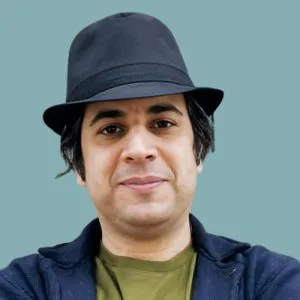
- Arrest for Sentence Execution: Arsalan Yazdani, a Bahá’í artist residing in Tehran, was arrested by Ministry of Intelligence agents on the morning of Saturday, August 22, 2026 (Mordad 31, 1405) and transferred to an undisclosed location to serve his prison sentence. During the arrest, agents searched his home and confiscated his personal belongings, including his laptop and mobile phone.
- Conviction Record: He was previously sentenced by the Tehran Revolutionary Court in December 2023 to a total of 6 years in prison on charges of “membership in the Bahá’í community” and “propaganda against the state,” of which 5 years are enforceable. There is no information regarding his current status, place of detention, or access to a lawyer.
Section 4: Issuing Disciplinary Renders; The Tool for Securitizing University Environments
Disciplinary councils in universities have practically transformed into executive arms of security agencies outside the judicial structure to suppress students’ rights to assembly, protest, and expression of opinion. Issuing primary disciplinary rulings and academic suspensions constitutes a structural process to deprive students of their right to education, disrupt their professional and career paths, and push the country’s scientific atmosphere toward self-censorship and total intimidation.
- Issuance of Primary Disciplinary Renders: Zolfaghar Kalantari, the president of Isfahan University of Technology, announced on October 10, 2026 (Mehr 18, 1405) that following the review of nearly 50 disciplinary cases related to the student protests of winter 2026 (Bahman and Esfand 1404), primary disciplinary rulings have been issued for approximately 30 students.
- Severity of Punishments: The issued rulings are not uniform, with the heaviest announced punishment being a two-term temporary suspension from studies.
- Consequences: The lack of transparency in publishing details of the charges and temporary academic suspensions has seriously disrupted students’ educational processes and intensified the pressure of disciplinary bodies on university spaces.
Section 5: Legal Assessment and Structural Violation of International Obligations
The systematic actions of the security and judicial institutions of the Islamic Republic of Iran in prosecuting, detaining, denying medical care, and trying defense lawyers, university professors, artists, and students go beyond specific legal violations, demonstrating a structural pattern of breaching international human rights obligations and overriding peremptory norms of international law.
- Violation of the Independence of the Legal Profession and Undermining the Right to Effective Defense
- UN Basic Principles on the Role of Lawyers (1990):
- Principle 16 (Guaranteeing function without fear or interference): Under this principle, governments must ensure that lawyers are able to perform all their professional functions without intimidation, hindrance, harassment, or improper interference. The arrest of Amirsalar Davoudi right inside the courtroom during defense, and the arrest of Zahra Naghshineh with a summons lacking penal qualification, are prime examples of retaliatory actions and creating an atmosphere of intimidation for the entire legal community.
- Principle 18 (non-identification of lawyers with clients or clients’ causes): No lawyer shall be identified with their clients or their clients’ legal causes as a result of discharging their professional functions.
- Principle 21 (Right of access to documents and files): The prevention by courts and security agencies of chosen lawyers from accessing case files (such as Dr. Ahmad Rahimi’s case) completely destroys the foundation of independent defense and the guarantee of a fair trial.
- Violation of Academic Freedom and University Independence
- International Covenant on Economic, Social and Cultural Rights (ICESCR) – Article 13 (Right to Education):
- According to General Comment No. 13 of the UN Committee on Economic, Social and Cultural Rights, the right to education can only be enjoyed if “academic freedom” and the independence of educational institutions are guaranteed. The arrest, suspension, and dismissal of prominent professors such as Alireza Hejbari Nobari and Dr. Ahmad Rahimi due to their supportive stances toward students, as well as the issuance of disciplinary rulings and academic deprivations for dozens of students at Isfahan University of Technology, constitute systemic harassment of academic institutions and a blatant violation of academic freedom.
- Violation of the Right to Personal Liberty, Prohibition of Arbitrary Detention, and Enforced Disappearance
- International Covenant on Civil and Political Rights (ICCPR) – Article 9:
- Paragraphs 1 and 2 (Prohibition of arbitrary detention and requirement of prompt notification of charges): Sudden arrests by plainclothes or intelligence ministry agents, house searches, and the seizure of personal belongings without presenting clear legal grounds (such as the cases of Arsalan Yazdani and Alireza Hejbari Nobari) constitute arbitrary detention under the rulings of the UN Working Group on Arbitrary Detention (WGAD).
- House searches, seizure of personal equipment, and interference in private life: These actions without sufficient transparency regarding their necessity and legal basis raise concerns under Article 17 of the ICCPR, which protects individuals against arbitrary or unlawful interference with their privacy, family, home, or correspondence.
- Solitary Confinement and Incommunicado Detention: Long-term detention of prisoners in security solitary confinement (such as Ahmad Rahimi’s 30 days in solitary confinement) and the failure to inform families of the precise whereabouts of detainees amount to forms of “short-term enforced disappearance” and degrading treatment.
- Violation of the Right to Life, Prohibition of Torture, and Humane Treatment of Persons Deprived of Liberty
- International Covenant on Civil and Political Rights (ICCPR) – Articles 6, 7, and 10:
- Article 7 (Prohibition of torture and cruel, inhuman, or degrading treatment) and Article 10 (Humane treatment of prisoners): Denying vital medical services and preventing immediate brain tumor surgery for Mohtaram Parandin despite explicit warnings from the prison doctor, preventing Dr. Ahmad Rahimi’s hospital transfer despite the potential risk of stroke, and using handcuffs and leg irons during the transfer of a cancer-stricken prisoner for chemotherapy sessions constitute explicit physical and psychological torture, intentional abuse, and inhuman and degrading treatment.
- Article 6 (Right to Life): The deliberate refusal of judicial and prison authorities to provide specialized medical care to prisoners facing life-threatening or incurable illnesses is deemed an intentional failure to safeguard the right to life and can entail state responsibility under international human rights law.
- Suppression of Freedom of Expression, Opinion, and Structural Fabrication of Cases
- International Covenant on Civil and Political Rights (ICCPR) – Articles 18 and 19:
- Targeting citizens on the grounds of religious beliefs (such as the conviction of Arsalan Yazdani due to his membership in the Bahá’í community) violates Article 18 (Freedom of thought, conscience, and religion).
- Furthermore, the criminalization of legal analyses, critical writings, and peaceful expression under vague and qualitative headings such as “propaganda against the state” or “insulting sanctities/leadership” (such as the sentences issued for lawyers in Gilan and Fars provinces) constitutes a blatant violation of Article 19 of the Covenant regarding the right to freedom of expression and dissemination of ideas.
Section 6: Conclusion and Recommendations
The documented cases and events in this report clearly demonstrate that judicial and security institutions in Iran employ policies of intimidation, instrumentalization of the law, and white torture (medically deprived and solitary confinement) to pursue a targeted project aimed at eliminating the independence of defense lawyers, suppressing scientific elites, and silencing the voice of the artistic and student communities. These structural behaviors are not temporary judicial deviations, but part of an attrition system designed to dismantle civil society.