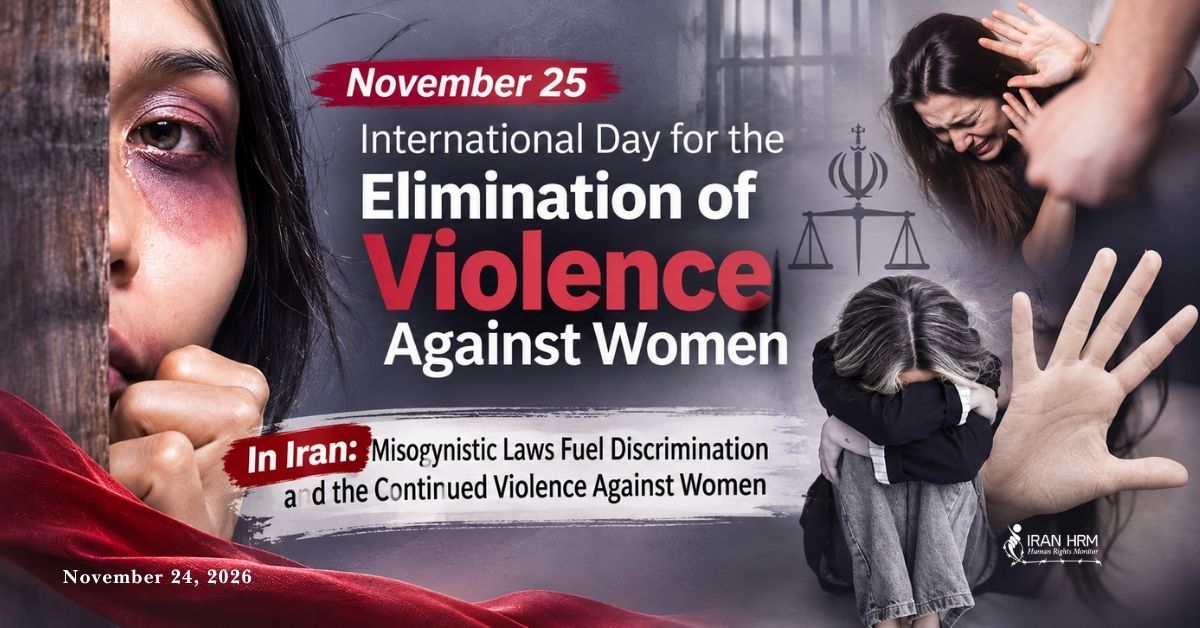
November 25 commemorates the murder of three sisters—Patria, Minerva, and María Teresa Mirabal—in the Dominican Republic. They were killed on November 25, 1960, on the orders of the dictatorship of Rafael Trujillo because of their opposition to his rule. Their murder became a symbol of resistance to political violence against women.

In 1981, women’s rights activists in Latin America and the Caribbean designated the date as a day of action against violence against women. On December 17, 1999, the United Nations General Assembly formally declared November 25 the International Day for the Elimination of Violence Against Women through Resolution 54/134. The day also marks the beginning of the 16 Days of Activism Against Gender-Based Violence, which concludes on December 10, Human Rights Day.
In 2026, the UN campaign emphasizes ensuring justice, protecting survivors, and ending impunity for perpetrators of violence.
On this occasion, as the international community has taken important steps to combat violence against women and strengthen legal protections, women in Iran remain subject to profoundly discriminatory and patriarchal laws under the clerical regime. These laws institutionalize gender inequality and create conditions in which violence persists. Domestic abuse, so-called ‘honour’ killings, child marriage, and the denial of legal protection, together with compulsory hijab, repression, detention, torture, and denial of medical care in prisons, reveal the multiple dimensions of this situation.
Killings of Women: Recent Cases and the Scale of Lethal Violence
The killing of women and girls by husbands, fathers, and other family members is among the deadliest forms of violence against women in Iran. According to figures compiled by the Women’s Committee of the National Council of Resistance of Iran, at least 192 women were killed in 2025. In its March 2026 report, the UN Independent International Fact-Finding Mission on Iran cited at least 176 documented killings during the same year and raised concerns about continuing femicide and shortcomings in the authorities’ efforts to prevent and punish these crimes. The figures come from two sets of documented cases; differences in their scope and collection methods require examination, and the true number of victims remains unknown.
Several killings of women and girls were reported in November 2026. The NCRI Women’s Committee cited the death of Sogand Sayadi, a 16-year-old student in Kermanshah; the killing of Sadaf Haghbin, 23, in Gilan, who was shot by a man seeking to marry her; and the killing of Sogand Moshtaraki, a 14-year-old mother in Kerman Province, reportedly by her husband.
Sogand Sayadi’s case raises urgent questions about the responsibility of state institutions to protect children at risk. According to the Women’s Committee, she warned staff at Razvan Girls’ High School that her father would kill her if she returned home, yet no effective protective action was taken. She died after falling from the fifth floor of a building. Human rights reports allege that her father pushed her; the prosecutor’s office, however, stated that the cause and circumstances of her death remained under investigation. Her father and the school principal were detained in connection with the inquiry.
In another case, Mahsa Barahouei, a 33-year-old Baluch woman and mother of three, died in Saravan on May 2, 2026, of severe burn injuries. According to the Women’s Committee and human rights reports, her husband had severely beaten her before allegedly setting her on fire with gasoline.
According to the NCRI Women’s Committee, at least 92 women and girls were killed between the beginning of 2026 and the end of October, including at least 13 under the age of 18. In October 2026 alone, at least 24 homicide cases involving 26 women and children were recorded. These figures cover only cases identified and reported publicly.
- Fereshteh Yousefzadeh, 38, Dehloran: On October 15, 2026, according to the Women’s Committee, her husband—identified in the report as a member of the Islamic Revolutionary Guard Corps (IRGC)—opened fire on her and her children with a Kalashnikov rifle.
- Yeganeh Hosseinzadeh, 16: Married at 14, she was beaten and then strangled by her husband on October 9, 2026, according to the report. Her mother had previously tried to prevent the marriage.
- Maryam Yarmohammadi, 28, Qeshm: A mother of two who, according to reports, was stabbed to death by her brother, allegedly with the involvement of her husband.
- Mina Soltani, 40, Isfahan: A mother of two reportedly killed by her husband with repeated knife blows after he sent one child out of the house and confined the other in a room.
- Zeinab, 28, Tehran: In October 2026, she was shot dead in a shopping centre after refusing a marriage proposal from her former fiancé.
These cases illustrate that lethal violence against women is not confined to any particular age group, educational background, or social position. In many instances, it is linked to attempts to control women’s lives, forced marriage, opposition to separation, or the rejection of marriage proposals.
Article 301 of Iran’s Islamic Penal Code exempts fathers and paternal grandfathers from qisas (retaliatory execution) for killing their children. This unequal protection of the right to life raises serious questions about the deterrent effect of the law in cases of family violence.
Child Marriage: Legal Discrimination and Deadly Violence Against Girls
Marriage during childhood remains legally permissible in Iran. Article 1041 of the Civil Code allows girls younger than 13 to marry with the permission of a guardian and judicial approval. Such provisions can expose girls to early marriage, high-risk pregnancy, economic dependence, and domestic violence.
In November 2026, the killings of two young women, both married at 13, drew attention to the potentially fatal consequences of this situation. Sogand Moshtaraki, 14, of Soltanabad village in Arzuiyeh County, Kerman Province, died after reportedly being beaten by her husband, just days after giving birth.
On the same day, Sepideh Raeisi, 21, of Jahrom, Fars Province, was shot dead by her husband while four months pregnant and caring for a three-year-old child. According to the Women’s Committee, she had sought separation after years of violence and threats. Her unborn child also died, and her mother was wounded in the attack.
In its report of March 10, 2026, the UN Independent International Fact-Finding Mission emphasized the persistence of legal discrimination against women in Iran and the authorities’ inadequate efforts to prevent and punish femicide. On June 2, 2026, the UN Committee on the Rights of the Child also requested information on protections for girls subjected to child marriage and domestic violence.
Earlier, on December 1, 2025, UN experts highlighted the case of Goli Kouhkan, a Baluch woman forced into marriage at 12 who had endured years of domestic violence. They underscored the need for courts to take histories of gender-based violence into account in criminal proceedings.
Women Without Safe Refuge: Shelter Closures and Economic Abuse
For women facing threats or a risk of being killed by relatives, access to a safe shelter can be a matter of survival. Yet reports in 2026 described the closure of several nongovernmental support centres.
According to a September 2026 report cited by the NCRI Women’s Committee, only five of the 15 nongovernmental safe houses operating in previous years remained, and those still open faced funding shortages and the threat of closure. By contrast, Iran’s State Welfare Organization stated in November 2026 that there were 27 safe houses: 14 government-run and 13 nongovernmental. The discrepancy between reports of five remaining nongovernmental shelters and the official figure of 13 underscores the need for a publicly available list of operational centres, their admission capacities, budgets, and the extent to which women subjected to violence can actually access their services.
In July 2026, Fatima Babakhani, founder of the Mehr Shams-Afarid safe house, warned that unemployment, business closures, and rising living costs had aggravated family tensions. She also identified control over bank accounts, denial of financial resources, restrictions on movement, and isolation from friends and relatives as forms of abuse against women.
For women without independent incomes or alternative accommodation, leaving an abusive relationship may mean homelessness, forcing some to return to dangerous homes. The authorities’ responsibility is therefore not simply to announce the number of shelters, but to ensure immediate, safe, and effective access to protection.
Fifteen Years of Revision and Delay: How the Bill to Protect Women Lost Its Purpose
One of the clearest examples of the legal system’s role in perpetuating discrimination is the fate of the bill intended to address violence against women. After 15 years of amendments and disputes among the government, parliament, and judiciary, it has still not become law.
The original bill, drafted in the Iranian calendar year 1390 (2011–2012) under the title ‘Ensuring Women’s Security Against Violence,’ contained 81 articles. Its provisions expanded to 92 articles in the Iranian calendar year 1392 (2013–2014), but subsequent versions were reduced to 30. Its title was repeatedly changed until, in the Iranian calendar year 1404 (2025–2026), it became ‘Preserving Dignity and Supporting Women and the Family,’ with the words ‘violence’ and ‘security’ removed altogether.
On June 8, 2025, legal scholar Mohsen Borhani criticized the revisions, saying, ‘The bill has no concern for violence against women.’ He noted that numerous protective criminal provisions in the original text had been removed, while provisions favouring men had been introduced.
On June 12, 2025, Majid Ansari, Vice President for Legal Affairs, described the bill as having been ‘transformed beyond recognition.’ On August 27, 2025, Zahra Behrouz-Azar, Vice President for Women and Family Affairs, stated: ‘The bill to protect women against violence was withdrawn by the Cabinet because substantial changes had been made to its substance.’ That statement reflects her account at the time; discussions concerning the withdrawal request and further amendments continued in 2026.
Conversely, on October 22, 2025, Ahmad Fatemi, a member of parliament’s Social Affairs Committee, reported that provisions associated with the Hijab and Chastity Law had been incorporated into the bill intended to protect women. On October 23, 2025, Zohreh Lajevardi, head of the committee’s Women and Family working group, warned against what she called ‘creating conditions for women to flee the family’ and emphasized preventing family disputes from becoming judicial disputes.
In November 2026, Behrouz-Azar reported continued talks aimed at restoring deleted provisions related to criminal-law protections and the possibility of reconsidering the withdrawal request. Nevertheless, as of November 21, 2026, the bill had still not entered into force.
Other discriminatory provisions remain in place. Article 1105 of the Civil Code assigns leadership of the family to the husband; Article 1117 permits a husband, under specified conditions, to prevent his wife from pursuing certain occupations; and Article 18 of the Passport Law generally requires a married woman to obtain her husband’s consent to be issued a passport, subject to statutory exceptions.
Compulsory Hijab and the Continuing Repression of Women
Legal restrictions on women extend beyond the family. Although implementation of the new Hijab and Chastity Law has been suspended, earlier compulsory-hijab provisions remain in force and continue to be enforced through surveillance and policing measures.
On October 17, 2025, Ruhollah Momen-Nasab, an official of Tehran’s Headquarters for the Promotion of Virtue and Prevention of Vice, announced a plan to mobilize approximately 80,000 trained personnel and establish a ‘Hijab and Chastity Situation Room.’ Reports from 2025 also described more than 97,000 hijab warnings issued in Isfahan, electronic surveillance, vehicle seizures, and business closures linked to violations of compulsory-hijab rules.
Addressing the Human Rights Council on March 16, 2026, Sara Hossain, Chair of the UN Independent International Fact-Finding Mission on Iran, stated: ‘Instead of dismantling its entrenched and structural system of discrimination, Iran continues to use compulsory-hijab laws and regulations as tools to repress women and girls.’
Women in Prison: Torture, Denial of Medical Care, and Threats to Life
Women detained in Iran, particularly political prisoners and prisoners of conscience, face inhumane conditions, inadequate medical care, and reported instances of torture and ill-treatment.
In a formal communication dated December 3, 2025, three UN Special Rapporteurs raised concerns about conditions at Qarchak Prison in Varamin, including severe overcrowding, shortages of drinking water, unsanitary conditions, and inadequate medical care. They also expressed concern over reports that three female prisoners died between September 16 and 25, 2025, following delays in medical treatment.
According to the NCRI Women’s Committee, the three women were Somayeh Rashidi, Jamileh Azizi, and Soudabeh Asadi. Rashidi, a political prisoner with epilepsy, was transferred to hospital after recurrent seizures and delays in care. She died in September 2025 after ten days in a coma.
The Women’s Committee has also reported denial of medical treatment to prisoners including Fatemeh Ziaei, Marzieh Farsi, and Shiva Esmaeili. Separate reports concerning Zeinab Jalalian, a Kurdish political prisoner serving a life sentence, describe her premature return to prison following surgery and lack of access to specialist follow-up care.
Executions of women are another dimension of this situation. According to the NCRI Women’s Committee, at least 54 women were executed in the 12 months between October 2025 and October 2026. Some had previously experienced forced marriage, domestic violence, or sexual abuse—circumstances that underscore the need to examine whether their rights to a defence and a fair trial were respected.
Deliberately withholding essential medical care and holding prisoners in dangerous conditions may, depending on the circumstances and severity, constitute inhuman treatment or torture. The Iranian authorities are responsible for safeguarding the lives, health, and dignity of all women in detention.
State Responsibility and the Need for International Action
The cases examined in this report are not simply isolated or unrelated acts of violence. Discriminatory laws, legal permission for child marriage, restrictions on women’s autonomy, weakened protection mechanisms, and state repression have created conditions that seriously threaten women’s safety and fundamental rights.
The 15-year history of the bill to combat violence against women demonstrates that even efforts to create legal protection have been subjected to major substantive revisions, the removal of safeguards, and prolonged delays within the governing institutions.
On the International Day for the Elimination of Violence Against Women, the international community must address the Iranian authorities’ responsibility for maintaining discriminatory laws and violating women’s rights. The UN Human Rights Council, the Special Rapporteur on the situation of human rights in Iran, and the Special Rapporteur on violence against women and girls should prioritize scrutiny of legal discrimination, killings of women, the availability of protective shelters, and abuse of women in detention.
Protecting women in Iran requires action to reform discriminatory laws, guarantee immediate protection for women and girls at risk, conduct independent investigations into acts of violence, and ensure accountability for perpetrators and responsible institutions.
Ending violence against women in Iran will remain impossible without confronting the laws and policies that institutionalize discrimination.