Analysis of the organized and accelerated wave of executions in the first ten days of the January 2026 uprising

1. Execution; The only tool to control an explosive society
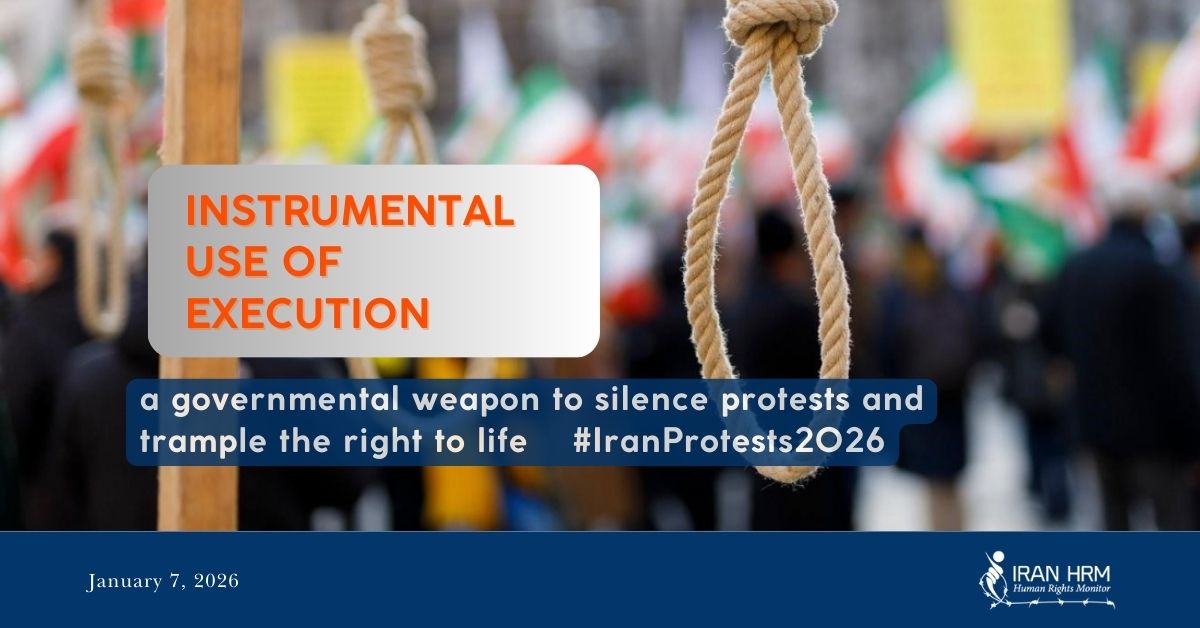
While the nationwide uprising of January 2026 has shaken the foundations of the ruling power and the people are loudly demanding fundamental change, the Islamic Republic regime not only refuses to stop the killings but has also accelerated the execution machine at an unprecedented pace. For this regime, execution is a political necessity and the primary lever for its survival and for social control to prevent more masses from joining the uprising by creating an atmosphere of terror.
2. Horrific statistics of executions in 2025
According to the annual report of Iran Human Rights Monitoring (Iran HRM), the year 2025 ended with an unprecedented record in the last 37 years. The Iranian regime executed at least 2,167 prisoners in various prisons across the country this year, which shows a 118% increase compared to the previous year (993 executions).
3. The killing machine in the first 10 days of the uprising
According to Iran HRM sources, at least 112 prisoners, including one woman, were executed in the first ten days of the uprising (from December 28, 2025, to January 6, 2026).
- January 6: Execution of 14 prisoners in Ilam, Birjand, Khawf, Jiroft, Borazjan, Ahvaz, Rasht, Zanjan, Semnan, Tabriz and Kashan.
- January 5: Execution of 11 prisoners Neyshabour, Doroud, Zanjan, Kashan, Saveh, Isfaha, Bam, Yazd, Gorgan and Kerman.
- January 4: Execution of 16 prisoners in Tabriz, Bandar Abbas, Qazvin, Qom, Semnan, Brojerd, Ardabil, Khoramabad, Karaj, Aligodarz, Kermanshah, Dezful, Hamedan and Nahavand.
- January 3: Execution of three prisoners in Adelabad Prison, Shiraz
- January 2: Execution of five prisoners in Kashmar, Esfarayen, Noshahr, Qochun and Sanandaj
- January 1: Execution of 9 prisoners in Taybad, Bojnourd, Ferdows, Sari, Mahshahr, Isfahan, Behbahan, and Bukan.
- December 31: Execution of 17 prisoners in Ardabil, Qazal Hesar (Karaj), Malayer, Mahabad, Damghan, Chabahar, Shiraz, Mashhad, Bushehr, Kashmar, Shahrekord, Rasht, and Sabzevar.
- December 30: Execution of 10 prisoners in Semnan, Jiroft, Yazd, Borazjan, Ilam, Khawf, Birjand, Bam, and Ahvaz.
- December 29: Execution of 18 prisoners in Tabriz, Sari, Qazvin, Qom, Hamadan, Neyshabour, Gorgan, Zanjan, Isfahan, Doroud, Saveh, Kerman, and Kashan.
- December 28: Execution of 9 prisoners in Arak, Tabriz, Ardabil, Semnan, Qom, Bandar Abbas, Borujerd, and Qazvin.
4. Linking Execution and Suppression
While the clerical regime confronts protesters in the street with live ammunition (at least 31 verified deaths until January 6), it has also set up gallows in prisons with full intensity to stifle the voice of society. Ejei’s order for “swift and short trials” effectively means issuing death sentences without following even the minimum legal procedures.
5. Urgent Obligations of the International Community
With 112 executions in the first ten days of the uprising and at least 31 civilians killed, continued silence from the international community amounts to complicity in these grave violations. Immediate and concrete action is required to uphold international human rights standards:
- Immediate halt to all death sentences against protesters: In light of explicit threats from judicial authorities, the United Nations must secure binding guarantees to prevent the issuance of any new death sentences.
- Urgent referral of the recent executions and violent repression to the UN Security Council: The pattern of mass executions constitutes a clear case of crimes against humanity, requiring international investigation and accountability.
- Diplomatic isolation of the responsible authorities: Suspension of all political and economic engagement until the state fully halts its execution machinery and complies with international human rights norms.
- Ensuring accountability for crimes against humanity: The regime must be held responsible under international law for systematic violations of the right to life, suppression of peaceful dissent, and widespread abuses against its population.
The world is responsible; today’s silence is the license for tomorrow’s massacre.