Week 115 of “No to Executions Tuesdays” Hunger Strike Continues Despite Executions and Internet Blackout
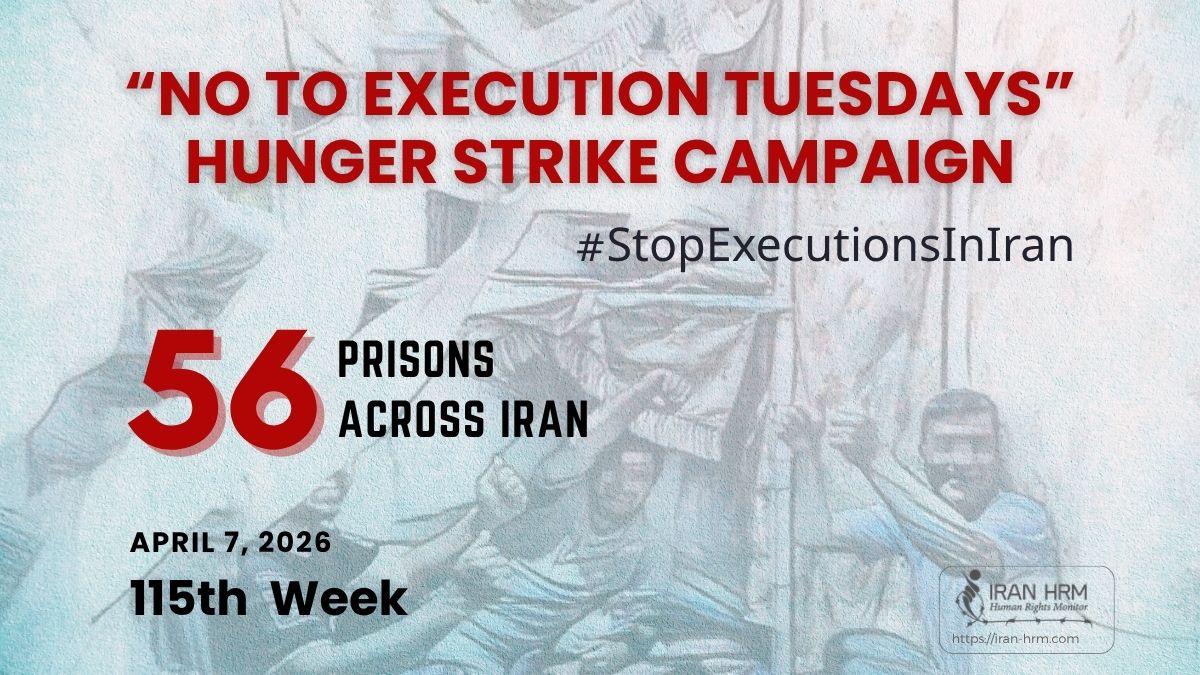
The “No to Executions Tuesdays” campaign, marked by weekly hunger strikes by prisoners across Iran, has entered its 115th consecutive week. Despite escalating repression, executions, and a nationwide communication blackout, the campaign continues inside prisons, demonstrating the persistence and resolve of participating inmates.

This week, the campaign faced a grave escalation: six long-standing members of the movement were executed. Those executed include Vahid Bani Amerian, Mohammad Taghavi, Babak Alipour, Pouya Ghobadi, Abolhassan Montazer, and Akbar Daneshvarkar. These individuals were among the earliest and most consistent participants in the weekly Tuesday hunger strikes.
Their executions follow the earlier killings of two other campaign participants, Behrouz Ehsani and Mehdi Hassani, bringing the number of known members of this movement who have been executed to at least eight.
Due to the ongoing internet shutdown and severe communication restrictions, no official statement from inside prisons has been received this week. Iran HRM will publish any statements as soon as they are received.
Coordinated Transfers and Executions
Reports indicate that on the evening of March 29, prison guard forces violently raided Ward 4 of Ghezel Hesar Prison. Prisoners were beaten and forcibly transferred to solitary confinement and undisclosed locations—a pattern that typically precedes executions.
Following these transfers, executions were carried out over several consecutive days:
- March 30: Akbar Daneshvarkar and Mohammad Taghavi
- March 31: Babak Alipour and Pouya Ghobadi
- April 4: Vahid Bani Amerian and Abolhassan Montazer
A Campaign Under Intensified Pressure
The execution of six veteran participants of the “No to Executions Tuesdays” campaign marks a clear escalation in the state’s response to sustained, prisoner-led resistance. These individuals were not only participants but among the most prominent and longstanding figures of the movement inside prisons.
Their execution, carried out while the campaign remains active, reflects a deliberate attempt to dismantle and intimidate a growing anti-execution movement from within. Yet, the continuation of weekly hunger strikes—and the persistence of organized resistance despite a near-total communication blackout—underscores the prisoners’ determination to oppose the death penalty, even at the highest personal cost.
Iran HRM reiterates its urgent call on the international community to move beyond statements of concern and take concrete, coordinated action to address the ongoing executions and hold Iranian authorities accountable for these violations.