From July 16 to July 22, 2026, within just six days, 5 political prisoners—Mohammad Amini Dehaqani, Aref Khoshkar, Erfan Esfandiari, Gol-Mohammad Mohammadi, and the latest victim today, Mehdi Khanki—have been executed by the Islamic Republic. All five were detained protesters from the January 2026 protests. The killing of five political prisoners in six days—an average of nearly one political execution per day—is unprecedented even in the dark history of political executions by the Islamic Republic, clearly demonstrating the severe escalation of repression in Iran.

On the other hand, 1,500 death-row prisoners convicted of general crimes in Qezel Hesar Prison are on their ninth consecutive day of a dry hunger strike to protest the unjust judicial proceedings that led to their death sentences. The Islamic Republic has left citizens with no alternative for protest other than risking their own lives.
However, the severity of repression is not limited to executions alone. It is a repression that, due to the silence and inaction of the global community and international human rights bodies, has permeated every fabric of Iranian society.
Qezel Hesar Prison
The dry hunger strike by death-row prisoners in eight halls of Unit 2 in Qezel Hesar Prison continues. This strike began on Monday, July 13, 2026, following the transfer of six death-row inmates to solitary confinement, and has persisted without any response or intervention from prison authorities. On the ninth day of the hunger strike, a number of prisoners experienced severe drops in blood pressure and extreme physical weakness, needing assistance from fellow inmates to be transferred to the prison infirmary.
In their statement on the eighth day of the dry hunger strike, these prisoners reached out to the world for help:
“Today marks the eighth day of the dry hunger strike of 1,500 death-row prisoners in Ghezel Hesar Prison and over 5,000 death-row prisoners in prisons across the country; prisoners to whom the noose and death are closer than their jugular vein.”
They further appealed to awakening consciences not to remain silent in the face of the life-threatening danger facing these prisoners. And the dry hunger strike continues…
Issuing of Death Sentences
The issuance of death sentences for political prisoners and protesters from the 2026 (1404) uprisings continues unabated. Most recently, Mojtaba Dehbandi (23) and Kianoush Hamzei Kazeroni (27) were sentenced to death on charges of “enmity against God” and “acting against national security.” These two young men were arrested solely for helping transport and treat injured protesters and are currently held in Adel Abad Prison in Shiraz. The death sentences were issued by Branch 1 of the Shiraz Revolutionary Court, presided over by Judge Mahmoud Saadaati.
Although various human rights organizations—including Iran Human Rights Monitoring—report differing statistics regarding the exact number of political, ideological, and protest-related detainees on death row, compiled data indicates that approximately 165 individuals currently face death sentences, at least 45 of whom are protesters.
And the list continues…
Pressure on Baluch Prisoners
In Zahedan Central Prison alone, since the beginning of Ramadan this year, a number of Baluch citizens have been subjected to intense interrogations and severe pressure following their arrest, with forced confessions extracted from them. Heavy cases have been fabricated against several of these individuals, resulting in severe judicial sentences. Furthermore, the denial of medical care to sick inmates in this prison has crossed all limits, directly resulting in deaths.
In the most recent case, on Wednesday, May 27, 2026, a prisoner named Davoud Mir (approximately 50 years old, married with children), who had been arrested by military forces just three days prior on May 24 and transferred to Zahedan Central Prison, lost his life following a heart attack due to “deliberate delays in transfer and lack of medical attention.”
Another example of medical neglect involving a Baluch political prisoner is Abdulhadi Shahovazi (approximately 33 years old). Despite suffering severe eye damage caused by beatings from regime suppressive forces, prison officials in Zahedan Central Prison have blocked his transfer to external medical facilities. He is currently held in Ward 9 of Zahedan Central Prison.
And the list continues…
Countless Prison Sentences for Baha’i Citizens
Baha’i citizens, as a religious minority, have been systematically subjected to ongoing and escalating repression by the Iranian regime. Their fundamental right to choose their religion has been criminalized by the Iranian government:
 Shideh Tavakkoli, a Baha’i citizen, was sentenced by Branch 15 of the Tehran Revolutionary Court to 11 years in prison, a permanent ban from government and public sector employment, and a monetary fine. The court also confiscated a portion of her assets.
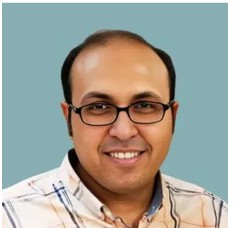 Pezhman Zare, a Baha’i citizen residing in Shiraz, has been detained for over four months and is currently held in prolonged uncertainty in Adel Abad Prison in Shiraz.
 Saeed Hassani, a Baha’i citizen residing in Shiraz who was arrested on June 23, 2026, remains in temporary detention in a solitary confinement cell in Adel Abad Prison.
 Sima Sebto, a Baha’i citizen residing in Shiraz arrested on June 23 and interrogated three times to date, remains in an undecided status in Adel Abad Prison in Shiraz.
And the list continues…
Pressure on Kurdish Prisoners
 Varisheh Moradi, a Kurdish female political prisoner previously sentenced to death whose case was referred back to Branch 15 of the Tehran Revolutionary Court presided over by Judge Salavati (known as the “Judge of Death”), has been indefinitely deprived of phone calls and family visits by order of the judge due to her refusal to appear in court.
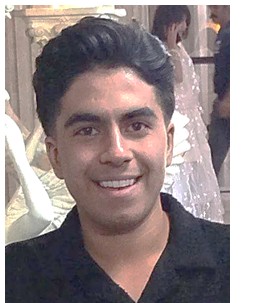 Soroush Karami, arrested during the January 2026 protests and facing the heavy charge of “Moharebeh”, remains in solitary confinement in the security ward of Kermanshah Central Prison (Dizel Abad) without access to legal counsel or family visitation.
Over 300 citizens arrested during the January 2026 protests by military-security forces and transferred to the “security” ward of Kermanshah Central Prison (Dizel Abad) over recent months remain in prolonged uncertainty, deprived of their most basic human rights.
And the list continues…
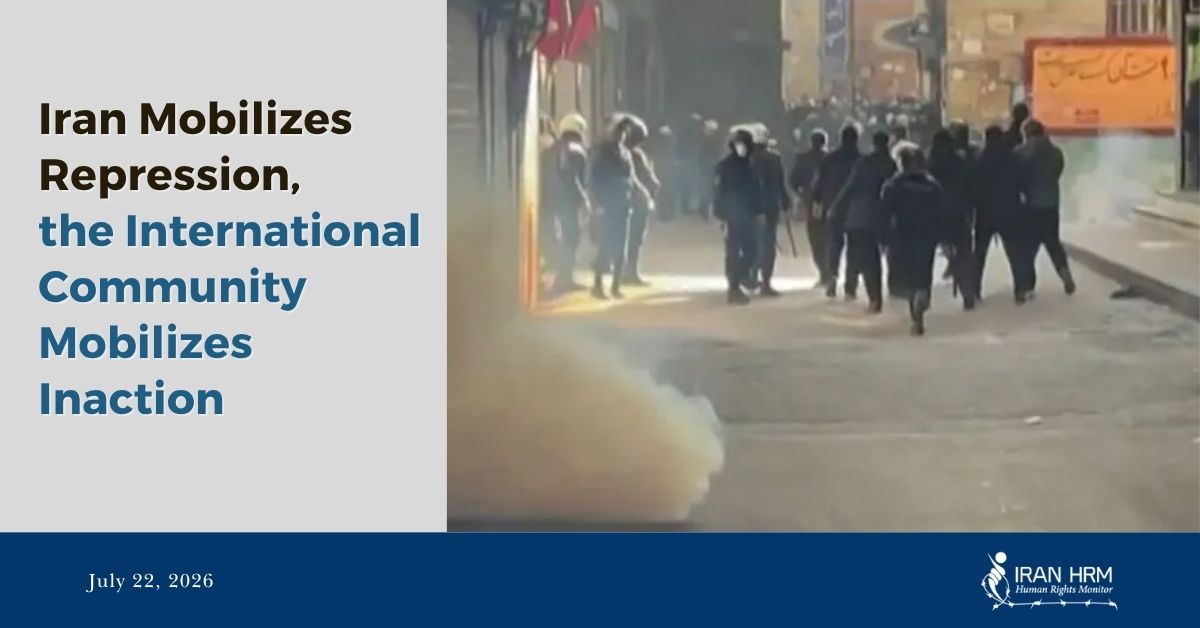
Iran Mobilizes Repression, the International Community Mobilizes Inaction
The facts and documentation of repression in Iran could go on endlessly. But the fundamental and vital question is: While the Islamic Republic is fully mobilized to slaughter and suppress its citizens, what is the actual response of the international community?
How is it that global powers mobilize militarily and diplomatically within hours to prevent disruptions to oil flow and energy security in the Strait of Hormuz, yet display nothing beyond neutral statements and futile “expressions of concern” regarding the frantic acceleration of the execution machine, systematic torture, and the deprivation of human life?
Silence in the face of a regime that seeks its political survival on the gallows is no longer diplomatic passivity; it is blatant complicity in the cycle of killings. The international community, the United Nations, and the Human Rights Council must realize that the time for “passive observation” has come to an end.
If international bodies and democratic governments do not immediately take concrete, tangible, and measurable actions—including suspending political relations, expelling ambassadors, imposing targeted sanctions on judges and perpetrators of these crimes, and conditioning all economic transactions on a complete moratorium on executions—history will record this inaction not as conservative diplomacy, but as a green light to a dictatorship to deprive human beings of their right to life.
Where exactly in history does the international community stand in the face of this machine of repression?