Under international human rights standards—including the International Covenant on Civil and Political Rights (ICCPR), the International Covenant on Economic, Social and Cultural Rights (ICESCR), the Universal Declaration of Human Rights (UDHR), and the United Nations Standard Minimum Rules for the Treatment of Prisoners (The Nelson Mandela Rules)—states and prison administrations are obligated to preserve human dignity, security, physical and mental health, as well as the right to a fair trial and standard living conditions for all persons deprived of their liberty. Furthermore, under domestic laws of Iran, including Articles 22, 29, and 39 of the Constitution and the Executive Regulations of the Prisons Organization, protecting the life, health, and dignity of prisoners and adhering to the principle of separation of offenses are explicitly mandatory.

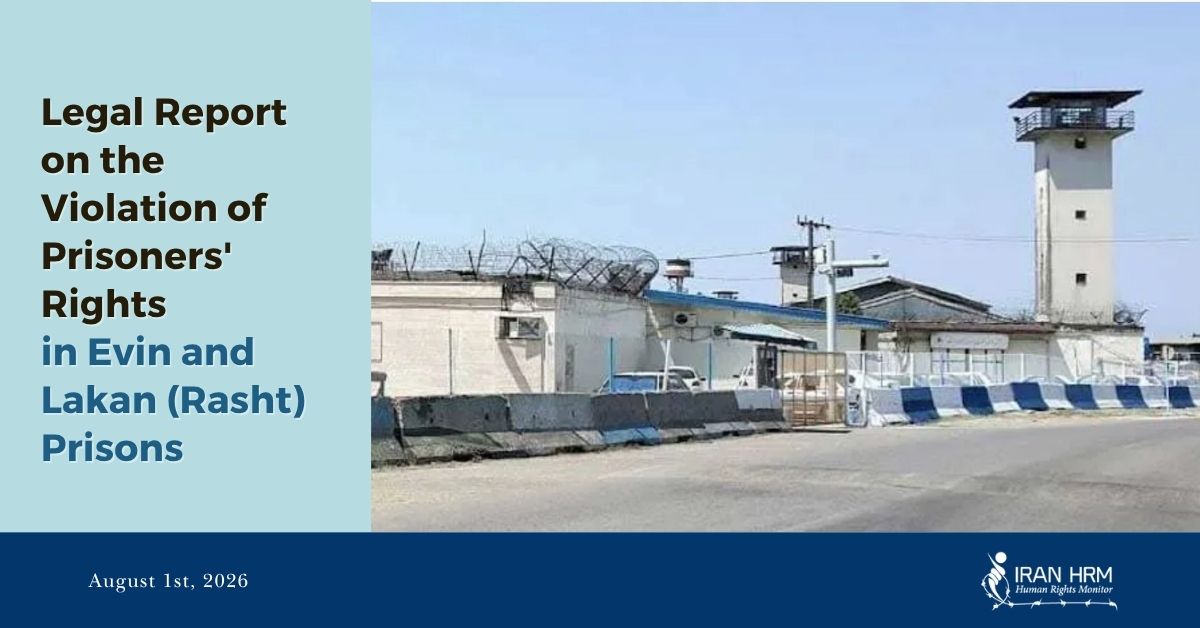
An examination of field reports received from Evin Prison (specifically Ward 7 and Hall 5) and Lakan Prison in Rasht demonstrates a structural, systematic, and widespread violation of these regulations.
Raid on the Ward, Assault, and Illegal Seizure of Personal Belongings
According to recorded reports, on Sunday, July 26, 2026 (4 Mordad 1405), guards at Evin Prison violently raided Hall 5 of Ward 7. During this attack, while physically assaulting prisoners, they confiscated and seized their personal belongings (including clothing, rings, prayer beads, and cigarettes). This operation took place under the direct supervision and management of responsible prison officials, including Youssefi (Vice President of Health at Evin Prison and former head of Brigade 2 at Fashafuyeh Prison), Mohammadi (Internal Manager of Evin Prison), and Mahmoudi (Head of Ward 7).
- Legal Compliance Assessment:
- Prohibition of Cruel and Degrading Treatment: This conduct constitutes an explicit violation of Article 7 of the ICCPR, Article 5 of the UDHR, and Article 39 of the Iranian Constitution (prohibiting the insult and degrading treatment of prisoners).
- Use of Force Regulations: Pursuant to Rules 47 through 49 of the Nelson Mandela Rules, the use of force and physical raids against detainees are permissible only under exceptional, controlled circumstances and in strict accordance with the principle of proportionality. An aggressive intrusion and physical assault against prisoners amount to unlawful violence.
- Seizure of Property: The confiscation, illegal seizure, or expropriation of prisoners’ personal belongings violates Rule 67 of the Nelson Mandela Rules and Article 22 of the Iran’s Constitution (inviolability of property and individual rights).
Health Crisis, Outbreak of Contagious Diseases, and Violation of the Right to Health
According to reports from sources inside the prison, sanitary conditions in Ward 7 of Evin Prison have reached an alarming state. Broken shower facilities in various halls, restricted access to regular bathing, severe overcrowding, outbreaks of skin diseases, and infestations of mice and bedbugs, combined with an acute shortage of detergents and disinfectants, have put the health of prisoners at grave risk.
- Legal Compliance Assessment:
- Right to Health: The failure to provide basic hygiene facilities violates Article 12 of the ICESCR, Article 3 of the UDHR, and Article 29 of the Constitution (right to healthcare and medical services).
- Environmental Health Requirements: Under Rules 15 through 18 of the Nelson Mandela Rules, the prison administration is obligated to provide adequate water, regular bathing facilities, soap/detergents, and clean living conditions free of charge to maintain the personal and general hygiene of detainees.
Non-Compliance with Quarantine Principles and Patient Isolation (Scabies Crisis)
The transfer of prisoners suffering from “scabies”—a contagious skin disease—to the general Ward 7 of Evin Prison without medical screening, effective treatment, or proper quarantine measures has drastically increased the risk of a widespread outbreak in an already overcrowded environment.
- Legal Compliance Assessment:
- Obligation of Medical Care: Under Rules 24 through 35 of the Nelson Mandela Rules, prisoners must enjoy the same standards of health care available in the country. The failure to isolate individuals suffering from infectious diseases constitutes intentional negligence toward life and public health hazards.
Violation of the Principle of Separation and Classification of Offenses
In Ward 7 of Evin Prison, political prisoners are housed alongside ordinary offenders, financial convicts, and foreign nationals. Furthermore, reports highlight that this deliberate lack of separation is utilized as a tool to exert additional pressure and create tension against political prisoners.
- Legal Compliance Assessment:
- Mandatory Separation and Classification: Pursuant to Article 10(2) of the ICCPR, Rules 11 and 12 of the Nelson Mandela Rules, and Articles 69 and 70 of the Executive Regulations of Iran’s Prisons Organization, prisoners must be segregated based on gender, age, nature of offense (specifically separating political prisoners from general criminals), legal status (convicted or pre-trial), and criminal record. Failing to observe this principle jeopardizes the physical and psychological safety of prisoners.
Financial Abuse, Sale of Expired Goods, and Economic Exploitation
The operation of prison stores in Evin and Lakan (Rasht) prisons exerts double pressure on prisoners, particularly underprivileged ones, thereby endangering their right to life and health.
In Evin Prison, low-quality and sometimes expired items are sold to prisoners at prices far above the official market rate and without issuing receipts.
Similarly, in Lakan Prison in Rasht—under the management of Hamid Vaskui (Head of the Prisons Organization of Gilan Province)—reports have emerged regarding financial abuse, embezzlement of official budgets and charity donations, elimination of free hygiene quotas (such as toothbrushes, toothpaste, shampoo, laundry powder, bleach, and hydrochloric acid) followed by their forced sale in the prison store at inflated rates, halving the bread allowance, and extortion for granting legal privileges (such as furlough and conditional release).
- Legal Compliance Assessment:
- Provision of Subsistence and Food Allowance: Under Rule 22 of the Nelson Mandela Rules, every prisoner must be provided at the usual hours with food of nutritional value adequate for health and strength, of wholesome quality and well prepared, and drinking water. Reducing rations and commercializing essential services constitute an explicit violation of the statutory duties of detention facilities.
- Prohibition of Corruption and Abuse of Power: Extortion in exchange for prisoners’ statutory rights and the imposition of illegal fees violate administrative regulations and domestic penal laws regarding official misconduct and financial offenses by public agents.
Reports Regarding Drug Distribution and the Role of Prison Officials
Sources inside Evin Prison report the widespread entry and distribution of narcotics at exorbitant prices. Given the strict security measures, body searches, access controls, and surveillance cameras, the continuous smuggling and distribution of drugs cannot plausibly occur without the knowledge, facilitation, or networked negligence of certain management levels within the prison.
These reports explicitly name Mohammad Haji-Mazdarani (Warden of Evin Prison), Mohammadi (a prison official), and Youssefi (Vice President of Health at Evin Prison), and call for an investigation in relation to their performance in facilitating pressure on prisoners or failing to halt the illegal drug trade.
- Legal Compliance Assessment:
- Supervisory and Administrative Responsibility: The entry of narcotics into a secured prison environment causes physical and mental harm while fostering violence and financial dependence. Under the Executive Regulations of the Prisons Organization, direct responsibility for maintaining security and preventing illicit items from entering rests with the wardens, security heads, and health personnel.
Conclusion and Legal Remedies
Comparing these reports with domestic legislation and international human rights instruments indicates that current conditions in Evin and Lakan (Rasht) prisons constitute a systematic violation of the right to health, immunity from cruel and degrading treatment, and non-compliance with standard detention and procedural rules.
To rectify these conditions and address violations, the following legal measures are deemed necessary:
- Conducting Independent and Transparent Inspections: Dispatching independent international fact-finding and inspection teams to conduct unannounced visits to Ward 7 of Evin Prison and Lakan Prison in Rasht, and to interview prisoners directly without intermediaries.
- Investigation and Accountability by International Bodies: Documenting, pursuing, and legally prosecuting the role and actions of the aforementioned responsible officials—including Mohammad Haji-Mazdarani (Warden of Evin Prison), Hamid Vaskui (Head of the Prisons Organization of Gilan Province), Youssefi (Vice President of Health at Evin Prison), Mohammadi (Internal Manager of Evin Prison), and Mahmoudi (Head of Ward 7)—through reporting mechanisms, UN Special Rapporteurs, and international human rights courts and institutions.
- Mandating Urgent Healthcare and Sanitation Measures: Applying serious pressure and demands by human rights organizations and relevant international bodies on prison authorities to immediately implement quarantine protocols, treat scabies patients, repair and equip sanitary and shower facilities, and distribute free cleaning and hygiene supplies.
- Mandating the Separation of Offenses: International observers must press authorities to immediately organize wards and ensure the complete, unconditional separation of political prisoners from other criminal categories in accordance with the Executive Regulations of the Prisons Organization and binding international standards.