Executive Summary
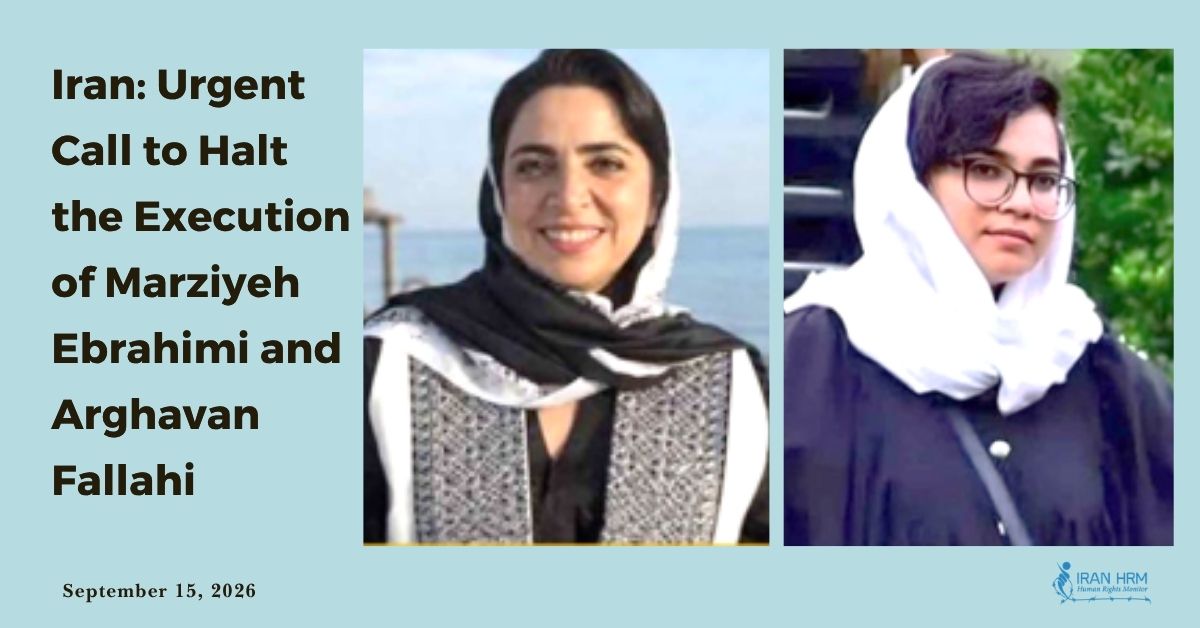
Imminent Threat of Execution Facing Female Prisoners in Iran: The Cases of Marziyeh Ebrahimi and Arghavan Fallahi

This report documents the alarming escalation in the issuance and confirmation of death sentences against female prisoners in Iran, focusing on the legal cases of Marziyeh Ebrahimi and Arghavan Fallahi. These two cases demonstrate a pattern of severe, irreversible capital punishment imposed under conditions that violate international fair trial standards:
- Marziyeh Ebrahimi (32 years old, MS patient): Arrested in April 2026 for taking a photograph of a missile impact site; sentenced to death by the Revolutionary Court of Bandar Abbas on charges including Mofsed-e-filarz (Spreading Corruption on Earth) and “espionage for hostile states,” despite requiring urgent, continuous medical and pharmaceutical care for Multiple Sclerosis (MS) and ulcerative colitis.
- Arghavan Fallahi (Political prisoner, born in 2001): Sentenced to death on charges of Baghi (armed rebellion) by the Tehran Revolutionary Court, a sentence upheld by the Supreme Court; her request for judicial review was rejected despite the total absence of weapons seized (a prerequisite for Baghi) and reports of severe psychological pressure used to extract forced confessions.
Conclusion: These actions constitute explicit violations of Article 6 of the International Covenant on Civil and Political Rights (ICCPR). This report urges United Nations bodies and Special Rapporteurs to intervene immediately to halt these executions and log the responsibility of involved authorities within international accountability mechanisms.
Introduction
The issuance and confirmation of death sentences against female prisoners in Iran remain matters of grave international human rights concern. The application of capital punishment in politically motivated or national security cases—especially under circumstances marked by due process violations, restricted legal counsel, disproportionate charges, and compromised health conditions—requires immediate intervention from international human rights bodies and the global community.
The cases of Marziyeh Ebrahimi and Arghavan Fallahi serve as critical examples of the continuous threat of execution facing female detainees in Iran. Both cases involve heavy security charges, raising profound concerns regarding trial fairness, charge proportionality, and the imminent risk of execution.
Marziyeh Ebrahimi: 32-Year-Old MS Patient Facing Execution
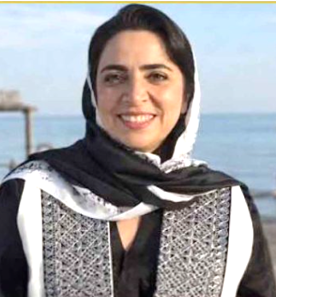 Marziyeh Ebrahimi, a 32-year-old resident of Bandar Abbas suffering from Multiple Sclerosis (MS), was arrested in April 2026. Available records indicate that her arrest stemmed from photographing a missile impact site, an act categorized by judicial authorities as photographing a military installation.
Subsequently, a series of heavy national security charges were levied against her, including:
- Mofsed-e-filarz (Spreading Corruption on Earth)
- Insulting the Supreme Leader
- Intelligence and security activities for Israel and the United States against national security during wartime
- Media and propaganda activities against national security
On August 18, 2026, Branch 1 of the Bandar Abbas Revolutionary Court, presided over by Judge Hajizadeh, sentenced her to death by hanging in Bandar Abbas Prison, alongside complete confiscation of property and permanent dismissal from public service.
This sentence was handed down despite Ebrahimi suffering from MS, ulcerative colitis, and a neurological skin condition. Her physical state demands continuous medical care, regular access to medication, and specialized supervision. Prolonged detention and the severe psychological distress of a death sentence pose an immediate risk to her life.
Imposing the death penalty for photographing a missile impact site raises severe questions regarding the principles of proportionality and the strict limitations on capital punishment under international law.
Arghavan Fallahi: Imminent Execution Risk Following Rejection of Judicial Review
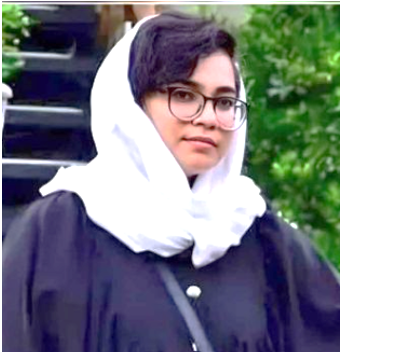 Arghavan Fallahi, a political prisoner born in 2001 and a supporter of the People’s Mojahedin Organization of Iran (PMOI/MEK), faces an imminent risk of execution following the Supreme Court’s rejection of her application for judicial review (E’adeye Dadresi).
In July 2026, Branch 15 of the Tehran Revolutionary Court, presided over by Judge Abolqasem Salavati, sentenced her to death on the charge of Baghi. The sentence was confirmed in August 2026 by Branch 41 of the Supreme Court. With the recent rejection of her judicial review request, the final domestic legal avenue to appeal her sentence has been blocked.
Fallahi was initially arrested in January/February 2025 and transferred to Ward 209 of Evin Prison. Throughout her detention in high-security wards (including Wards 209 and 241), she was subjected to extreme psychological pressure. Reports indicate that interrogators attempted to extract forced confessions linking her to the assassination of two judges, Mohammad Moghiseh and Ali Razini.
Her case exhibits fatal legal flaws: according to her defense counsel, no weapons were ever discovered in her possession, whereas Baghi under Iranian criminal law strictly requires active armed rebellion against the state. Furthermore, accounts of her conduct during the incident at Evin Prison during the 12-Day War (June 13–24, 2025 ) reveal that, despite having the opportunity to escape, she remained to administer first aid to injured prison staff. She utilized her own clothing to stanch the heavy bleeding of a wounded guard until medical responders arrived. These factors, combined with the lack of evidentiary transparency regarding the Baghi charge, fundamentally undermine the legal basis of her death sentence.
Legal and Human Rights Analysis
Both cases demonstrate severe non-compliance with the Islamic Republic of Iran’s international legal obligations. Under Article 6 of the International Covenant on Civil and Political Rights (ICCPR), the death penalty may only be applied under the most exceptional circumstances and strictly for the “most serious crimes”.
The UN Human Rights Committee has clarified that the death penalty should be reserved only for the most serious crimes, which are understood to be limited to offences involving intentional killing.
In the case of Marziyeh Ebrahimi, the nature of the allegations fails to meet this international threshold, highlighting a stark violation of proportionality. In the case of Arghavan Fallahi, the absence of weapons, reported psychological coercion, and forced confession attempts violate basic fair trial guarantees and due process principles. Furthermore, withholding specialized medical treatment from Ebrahimi breaches the right to health and human dignity.
Conclusion
The cases of Marziyeh Ebrahimi and Arghavan Fallahi highlight a recurring pattern wherein capital punishment is utilized against women in political and security-related cases amidst opaque judicial procedures, questionable evidence, restricted legal defense, and severe health neglect. Because capital punishment is irreversible, these procedural violations and legal ambiguities demand the immediate stay of execution and an independent judicial review of both files.
Urgent and Actionable Requests
- To the Special Rapporteur on the situation of human rights in the Islamic Republic of Iran:
The Special Rapporteur is respectfully requested to issue an urgent communication to the Iranian authorities regarding the cases of Marziyeh Ebrahimi and Arghavan Fallahi, seeking a stay of execution, full access to legal counsel, and the safeguarding of fair trial guarantees. - To the Special Rapporteur on extrajudicial, summary or arbitrary executions:
The Special Rapporteur is requested to urgently examine both cases as situations involving a potential risk of arbitrary execution and to engage with the Iranian authorities accordingly. - To the Working Group on Arbitrary Detention:
The Working Group is requested to conduct an independent assessment of the legality of detention, judicial proceedings, and compliance with due process standards in both cases. - To the Special Rapporteur on the right of everyone to the enjoyment of the highest attainable standard of physical and mental health:
The Special Rapporteur is requested to pay particular attention to the medical condition of Marziyeh Ebrahimi and to raise concerns regarding her access to adequate medical care, specialized treatment, and necessary medication while in detention. - To the United Nations High Commissioner for Human Rights:
The High Commissioner is requested to address these cases within the framework of ongoing monitoring of the use of the death penalty in Iran and publicly demand an immediate moratorium on their executions. - To United Nations Member States:
Member States are encouraged to raise the cases of Marziyeh Ebrahimi and Arghavan Fallahi in bilateral and multilateral engagements with the Islamic Republic of Iran and to advocate for the protection of their rights and the suspension of any execution measures. - To the United Nations Human Rights Council:
The Human Rights Council is requested to ensure that these cases are documented within relevant accountability, reporting, and monitoring mechanisms concerning Iran, and that information relating to potential human rights violations is preserved for future accountability processes.