Executive Summary at a Glance
- Amnesty International Warning on Imminent Execution Risk for At Least 20 Protesters: Iran’s Supreme Court has upheld death sentences for at least 20 January 2026 uprising protesters under charges of “enmity against God”, “corruption on Earth”, and “espionage,” including 8 defendants in Isfahan’s “Meydan Alikhani” case, 4 in the “Pakdasht” case, and 8 in individual cases.
- Imposition and Risk of Execution of Juvenile Offenders: Death sentences issued for Erfan Amiri and Matin Mohammadiyan in the Pakdasht case, who were under 18 years of age at the time of the alleged offenses.
- Arbitrary and Retaliatory Executions of At Least 34 Protesters: Execution of at least 34 individuals in connection with the January 2026 uprising following torture-tainted unfair trials.
- Death Sentence for Homayon Shabankareh (22-Year-Old Artist): Issued on charges of “espionage” and “Moharebeh” by Branch 2 of the Karaj Revolutionary Court (presided over by Judge Mehdi Sabzevarnezhad), following 97 days of solitary confinement and an 18-day dry and wet hunger strike, despite his firm denial of espionage charges.
- Heavy and Bulk Prison Sentences in Tehran and Mashhad: 7 protesters sentenced by Branch 23 of the Tehran Revolutionary Court to a combined 60 years and 6 months in prison (including Amir Sabbaghi to 21 years and Abedin Golshani to 16 years) in a joint case with Borzo Rezaei (a protester sentenced to death); 15-year prison sentence issued for Abolfazl Damanjani in Mashhad.
- Wave of Mass Arrests and Potential Enforced Disappearances of 50 Citizens in Qazvin and Ilam: Arrest of 39 citizens in Qazvin and 11 in Malekshahi (Ilam) by the Ministry of Intelligence under security scenarios labeling them “mercenaries of the US and Israel,” without disclosing their names, whereabouts, or access to legal counsel.
Introduction
This report documents a severe escalation in mass repression, unfair trials, and the accelerated execution of death sentences against detainees from the nationwide January 2026 protests. Documented evidence and official records (including Amnesty International’s Urgent Action dated October 16, 2026) demonstrate that the judicial machinery and security apparatus of the Islamic Republic of Iran are using severe physical and psychological torture, forced confessions, capital punishment for juvenile offenders, and bulk long-term imprisonment as instruments of terror to suppress civil dissent.

Amnesty International Warning: Imminent Risk of Execution for At Least 20 Protesters and Execution of 34 Others
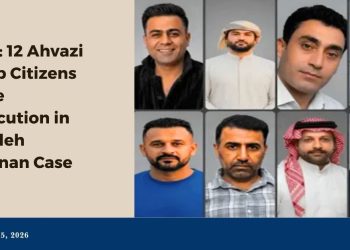
According to Amnesty International’s Urgent Action document (Amnesty International – Urgent Action, October 16, 2026, MDE 13/1573/2026), Iran’s Supreme Court has upheld death sentences for at least 20 protesters arrested in connection with the January 2026 uprising, placing them at imminent risk of execution (Iran HRM has compiled the name of 158 Jan. 2026 protesters sentenced to death). Furthermore, at least 34 individuals arrested in connection with these protests have already been arbitrarily executed. (Iran HRM has compiled the name of 37 executed Jan. 2026 protesters )
A) Executions Carried Out (At Least 34 Cases)
- According to Amnesty International, Iranian authorities have arbitrarily executed at least 34 people in connection with the January 2026 uprising following torture-tainted unfair trials, with at least two executions carried out in public.
- In multiple instances, executions were carried out without prior notice to families and in denial of a final visit, with families learning of the execution via telephone calls.
In one documented instance, a man was executed even though the Supreme Court had granted his request for a retrial and sent the case back to a Revolutionary Court, which refused to retry the case.B) 20
Protesters at Imminent Risk of Execution
- “Meydan Alikhani, Isfahan” Case (8 Protesters):
Abolfazl Ebrahimi, Ali Dashti, Amirhossein Ebrahimi Analouje, Amirhossein Maleki, Javad Talebpour, Mehdi Eskandari, Sepehr Hoonjani, and Shervin Bagherian Jebelli sentenced to death over events on January 8, 2026, on charges including road blockades, property destruction, arson, and alleged involvement in the deaths of four state agents. Forced confessions of several defendants were broadcast in the state media prior to trials and used as evidence.
- “Pakdasht” Case and Risk to Juvenile Offenders (4 Protesters):
Ahad Shokouhian, Ehsan Hosseinpour Hesarlou, Erfan Amiri, and Matin Mohammadiyan sentenced to death in connection with a arson attack on a Basij base inside a mosque in Pakdasht and the death of two Basij officers. Erfan Amiri and Matin Mohammadiyan were under 18 years of age at the time of the alleged offenses.
- Individual Cases with Security and Espionage Charges (8 Protesters):
Ali Rahimi Rigi, Ali-Asghar Peyghambari (known as Alireza), Benyamin Naghdi, Kaveh Arabian, Mehdi Zarif, Mehran Seyedzadeh, Omid Goudarzvand Chegini, and Rasoul Rezaei sentenced to death on charges including “Moharebeh,” “Efsad-fil-Arz,” “espionage,” and “cooperation with hostile states.” In Ali-Asghar Peyghambari’s case, his defense counsel stated that his sole act was mere participation in a peaceful protest.
- Case of Homayon Shabankareh: Death Sentence for a 22-Year-Old Artist
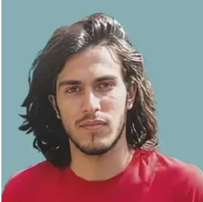
Homayon Shabankareh (born 2003), an artist and animal rights activist who participated in the January 2026 protests, has been sentenced to death by Branch 2 of the Karaj Revolutionary Court.
Arrest, Detention Conditions, and Proceedings
- Arrest: Arrested on May 14, 2026, following a violent raid by security agents on his family home, where his laptop and personal belongings were confiscated.
- Solitary Confinement and Hunger Strike: Subjected to 97 days of solitary confinement in Hall 12 of Karaj Central Penitentiary. Following interrogation, he was placed back in solitary confinement from August 30 to September 30. He engaged in an 18-day wet and dry hunger strike in protest against these conditions.
- Trial and Sentencing: His trial was held on October 8, 2026, before Branch 2 of the Karaj Revolutionary Court, presided over by Judge Mehdi Sabzevarnezhad (known as Sabzevari) alongside Judge Mehdi Razavi. The death sentence for “espionage” and “Moharebeh” was formally served on October 17, 2026.
- Denial of Charges: Shabankareh firmly denied all espionage and collaboration charges. Following 97 days of solitary confinement and interrogation without access to chosen counsel, Branch 2 of the Karaj Revolutionary Court issued the death sentence without providing transparent judicial documentation.
Heavy and Bulk Prison Sentences in Tehran and Mashhad
A) Tehran Case (Branch 23 Revolutionary Court – Totaling 60 Years and 6 Months)
Branch 23 of the Tehran Revolutionary Court sentenced 7 January 2026 protesters in a joint case with Borzo Rezaei (a protester sentenced to death):
- Amir Sabbaghi: 21 years imprisonment.
- Abedin Golshani: 16 years imprisonment.
- Samira Mohebbi: 10 years imprisonment (detained in Qarchak Prison, Varamin).
- Mehdi Sabbaghi: Combined total of 8 years imprisonment on multiple charges.
- Abolfazl Sabbaghi: 2 years and 6 months imprisonment.
- Hamid Sabbaghi: 2 years imprisonment.
- Saeed Javid: 1 year imprisonment.
(The 6 male defendants are held in Greater Tehran Central Penitentiary. Charges: Operational acts against state security, assembly and collusion, membership in opposition groups, and propaganda against the state).
B) Mashhad Case (Branch 5 Revolutionary Court – 15 Years Imprisonment)
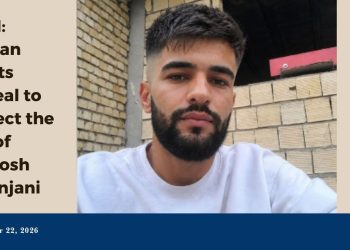
Abolfazl Damanjani, arrested on January 10, 2026, at his place of business, was sentenced to 15 years imprisonment by Judge Yazdankhah in Branch 5 of the Mashhad Revolutionary Court (Charges: Assembly and collusion, propaganda against the state, acting against national security) following interrogation and a period of incommunicado detention. He is held in Vakilabad Prison, Mashhad.
Mass Arrests and Enforced Disappearances in Qazvin and Ilam (50 Citizens)
A) Qazvin Province (Arrest of 39 Citizens)
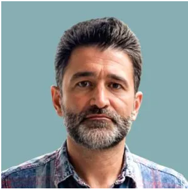
On October 19, 2026, the Ministry of Intelligence announced the arrest of 39 citizens organized into 8 teams. Labeling protests as a “coup” and accusing detainees of being “mercenaries of the US and Israel,” authorities accused 10 detainees of involvement in the deaths of security personnel at a gas station on Babaei Street. The identities, precise arrest dates, detention locations, and legal status of all 39 citizens remain concealed (Aftab News, October 19, 2026).
B) Malekshahi, Ilam Province (Arrest of 11 Citizens)
On October 17, 2026, the Ilam Department of Intelligence announced the arrest of 11 citizens in Malekshahi organized across 3 teams, alleging involvement in shooting at police headquarters and links to the US and Israel. Names, detention sites, and access to legal counsel remain completely undisclosed (ISNA, October 17, 2026).
C) Establishing a public surveillance network and encouraging citizen reporting (mass spying):
Official statements from the Ministry of Intelligence and the Ilam Intelligence Department concluded with an explicit appeal to the public:
“The ever-present nation is requested to report suspicious cases as soon as possible to the Ministry of Intelligence news center (113) or via the ministry’s official channels on domestic messengers Eitaa, Bale, Rubika, and Soroush Plus at @vaja113. (with blue checkmark)”
This action demonstrates systematic efforts to instill public intimidation, encourage state-sponsored citizen surveillance, and pave the way for further arbitrary arrests based on unverified reporting.
Legal Assessment and Potential Violations of Iran’s International Obligations
Based on the evidence compiled in this report—including executions, capital sentences against protesters, allegations of torture and forced confessions, restrictions on access to legal counsel, and the undisclosed status of 50 detainees in Qazvin and Malekshahi—grave concerns arise regarding the Islamic Republic of Iran’s compliance with international human rights obligations.
While definitive legal determination in each case requires review of judicial files, detention conditions, medical records, and verifiable testimonies, existing evidence underscores the necessity of urgent international action to protect lives and clarify the status of detainees.
- Right to Life and International Restrictions on the Death Penalty
(Article 6, International Covenant on Civil and Political Rights – ICCPR)
Article 6 of the ICCPR recognizes the inherent right to life and prohibits arbitrary deprivation of life. In states that have not abolished the death penalty, capital punishment is strictly restricted to the “most serious crimes” and conditioned upon strict adherence to fair trial guarantees. Imposing or executing a death sentence following a trial lacking basic due process constitutes an arbitrary deprivation of life.
Based on records in this report and Amnesty International’s Urgent Action of October 16, 2026, at least 20 protesters face imminent execution and at least 34 have been executed. Allegations of coerced confessions, denial of chosen legal counsel, unfair trials, and lack of essential due process necessitate independent international scrutiny.
Regarding Erfan Amiri and Matin Mohammadiyan, available reports state both were under 18 years of age at the time of their alleged offenses. Article 6(5) of the ICCPR and Article 37(a) of the Convention on the Rights of the Child (CRC) explicitly prohibit capital punishment for crimes committed by persons below 18 years of age. If confirmed, these death sentences directly violate binding international law.
- Prohibition of Torture and Cruel, Inhuman, or Degrading Treatment
(Articles 7 and 10(1), ICCPR)
Article 7 of the ICCPR prohibits torture and cruel, inhuman, or degrading treatment or punishment. Article 10(1) mandates that all persons deprived of their liberty shall be treated with humanity and respect for inherent dignity.
In Homayon Shabankareh’s case, documented prolonged solitary confinement (97 days), an 18-day hunger strike, and capital sentencing following coerced interrogations indicate severe violations. Allegations of physical and psychological torture to extract confessions in other cases further implicate Article 7 and Article 10 mandates, requiring independent and effective investigation.
- Right to Liberty, Security of Person, and Prohibition of Arbitrary Arrest
(Article 9, ICCPR)
Article 9 of the ICCPR guarantees liberty and security of person, prohibiting arbitrary arrest or detention. Detainees must be informed of reasons for arrest, provided prompt access to judicial review, and granted due process guarantees.
The failure of the Ministry of Intelligence to disclose the identities, detention locations, legal status, and access to counsel for the 39 detainees in Qazvin and 11 in Malekshahi creates grave risk of arbitrary detention and enforced disappearance, stripping individuals of legal protection.
- Right to Fair Trial and Inadmissibility of Coerced Confessions
(Article 14, ICCPR)
Article 14 guarantees fair trials by independent and impartial tribunals, adequate time and facilities for defense, and protection against self-incrimination. The broadcast of pre-trial confessions, reliance on statements extracted under coercion or torture, restrictions on chosen legal counsel, and lack of transparency violate core Article 14 guarantees.
In the case of Homayoun Shabankareh, it is necessary to independently examine the relationship between the conditions of detention, allegations of coercion and the resulting confessions, and the court’s reasoning in the death sentence.