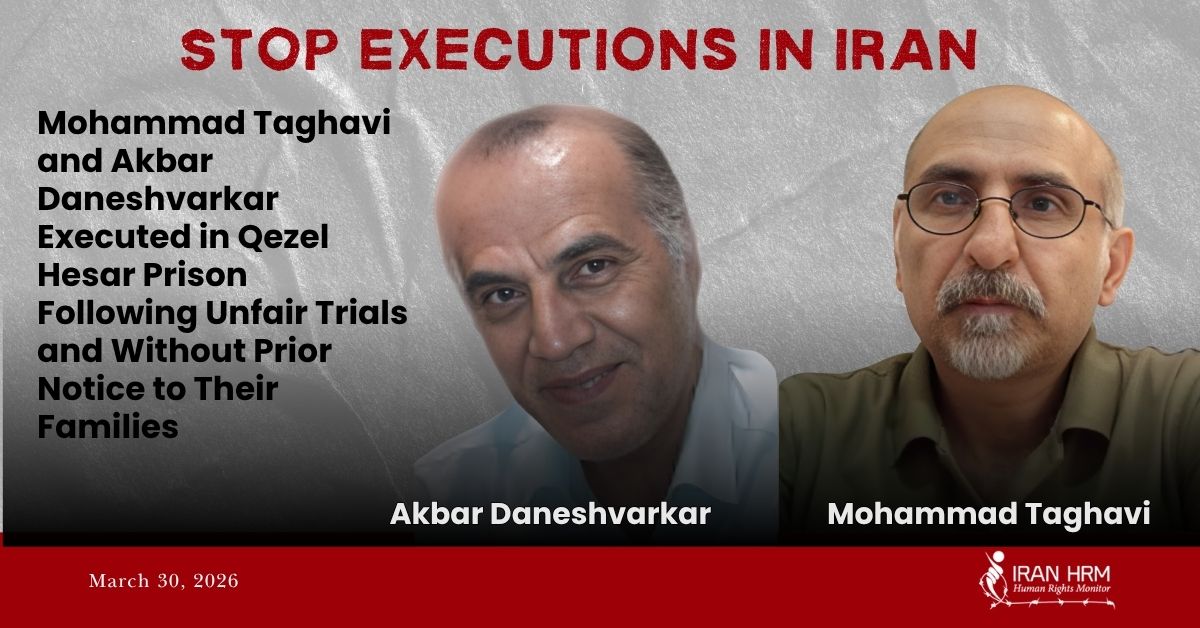
Political and security developments in Iran indicate an intensification of pressure on political prisoners during one of the most sensitive periods in the country. In this context, the execution of two political prisoners, Mohammad Taghavi Sangdehi and Ali-Akbar (Shahrokh) Daneshvarkar, at dawn 30 March 2026 in Qezel Hesar Prison in Karaj has drawn attention to the handling of cases involving political detainees.

These executions were carried out amid numerous reports of violations of fair trial standards, including denial of effective access to legal counsel, the holding of brief court sessions, and reliance on confessions obtained under pressure. The implementation of the death sentences without prior notice to the prisoners’ families and lawyers, and during early morning hours, raises serious concerns regarding compliance with minimum legal safeguards in capital cases.
At the same time, the timing of these executions, under conditions in which the country is experiencing armed conflict, has raised concerns about the use of a crisis environment to reduce both public and international scrutiny over the handling of political prisoners’ cases.
Factual Account
According to available reports, at dawn on Monday, 30 March 2026, two political prisoners, Mohammad Taghavi and Akbar Daneshvarkar, were executed in Qezel Hesar Prison. The news of the executions was published by a media outlet affiliated with the judiciary.
The executions were carried out without prior notification to their families or legal representatives, and the sentences were implemented abruptly.
These executions took place while the country was in a state of war and under military attacks.
According to Article 211 of the Executive Regulations of the Prisons Organization: in critical, wartime, or emergency situations, the primary priority of the Prisons Organization and the judiciary is the “protection of prisoners’ lives” and their transfer to safe locations.
According to the Fourth Geneva Convention, even during armed conflicts, political prisoners who are non-combatants must be granted safety and protection. Secret executions in conditions where access to lawyers and families is disrupted due to the state of emergency constitute a clear “war crime” against civilians.
Structural Concerns Regarding Judicial Proceedings
The issuance of death sentences by Branch 26 of the Tehran Revolutionary Court, presided over by Judge Iman Afshari, must be examined within the framework of documented violations of fair trial standards. The defendants were reportedly denied effective access to legal counsel, and court hearings were conducted within a very limited timeframe. Reliance on confessions obtained under pressure further undermines the credibility of the judicial process. These practices are inconsistent with Iran’s obligations under Article 14 of the International Covenant on Civil and Political Rights.
The charge of “baghi” (armed rebellion), one of the most serious criminal accusations under Iranian law, was applied in a manner extending beyond direct participation in armed activities. Such interpretation effectively allows this charge to be applied to political or organizational activities, raising serious concerns regarding its use in cases involving political prisoners.
Reports also indicate that the executions were carried out while the cases were still under review by the Supreme Court, and that defense lawyers were not informed of the execution date. This raises serious concerns regarding adherence to minimum legal guarantees in capital punishment cases.
Background and Profiles
A review of the lives and backgrounds of Mohammad Taghavi Sangdehi and Ali-Akbar (Shahrokh) Daneshvarkar indicates that both individuals had faced repeated arrests and imprisonment over the years due to their political activities and positions. Their cases reflect a broader pattern affecting individuals who, over several decades, have been subjected to sustained security pressures while maintaining their stated positions.
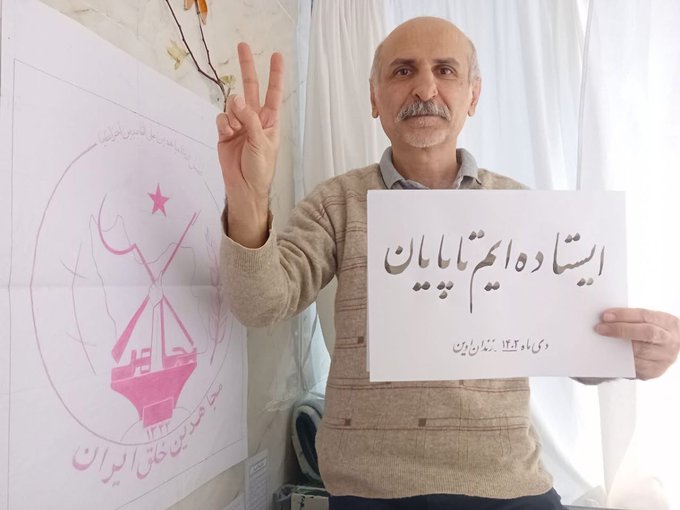
Mohammad Taghavi Sangdehi, born in 1966, held a bachelor’s degree in graphic design from the Faculty of Fine Arts at the University of Tehran and was among political prisoners of the 1980s. He was first arrested in the early years following the revolution and was subsequently detained multiple times on similar charges in later decades. In 2019, he was arrested on charges of supporting the People’s Mojahedin Organization of Iran and, after approximately three years in prison, was released in March 2023. However, only a short time after his release, he was rearrested in March 2024 in Chaldoran and transferred to Ward 209 of Evin Prison.
Throughout his periods of detention, Taghavi was known for refusing to accept the charges brought against him during interrogations. In his most recent detention, despite prolonged solitary confinement and pressure to obtain confessions, he refused to sign interrogation documents and challenged the judicial process during various stages of the proceedings.
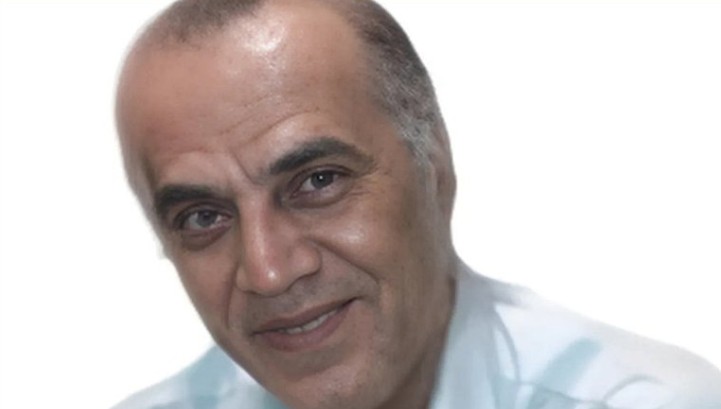
Ali-Akbar (Shahrokh) Daneshvarkar, born on 3 September 1966, was a civil engineer and a graduate of Khajeh Nasir al-Din Tusi University of Technology. He was married and had one child. In the years prior to his arrest, due to political pressures, he had been excluded from formal employment and worked as a freelance engineer and motorcycle courier.
Daneshvarkar was arrested on 3 January 2024 at his residence in Tehran by security forces and transferred to Ward 209 of Evin Prison. After the interrogation phase, he was moved to Ward 4 of the prison. He was prosecuted in a joint case alongside several other political prisoners on charges including “baghi” through membership in the People’s Mojahedin Organization of Iran, “assembly and collusion against national security,” and “forming illegal groups.”
Reports indicate that significant pressure was exerted on both him and his family during detention and interrogation. Nevertheless, Daneshvarkar consistently refused to accept the charges against him and maintained his position throughout the judicial process.
Positions and Resistance of the Prisoners
In the months leading up to their execution, letters and messages smuggled out of prison by Mohammad Taghavi and Akbar Daneshvarkar provide clear evidence of their continued stance.
In a letter written from Evin Prison in December 2024, Akbar Daneshvarkar stated that his trial lasted only a few minutes and that his death sentence was based on confessions obtained under pressure. He wrote: “By remembering the courage of those who sacrificed their lives for the homeland and freedom, I feel no fear or anxiety about the execution of this sentence… I take pride in offering my life as the price of Iran’s freedom.”
The two prisoners, together with other co-defendants, also issued a joint statement from inside prison, announcing their participation in the “No to Execution Tuesdays” campaign. In that statement, they described the judicial system as lacking legitimacy and declared that they did not recognize the proceedings.
Mohammad Taghavi further challenged the judicial process by refusing to attend court sessions and declining to sign interrogation records, reaffirming his adherence to his stated positions.
Detention Conditions
Both prisoners were held for extended periods in Ward 209 of Evin Prison, under conditions of prolonged solitary confinement.
Reports indicate that lengthy interrogations and pressure aimed at extracting confessions constituted a central part of the case process.
Mohammad Taghavi undertook a hunger strike in protest against detention conditions, which led to severe physical weakening. However, he refused to alter his position.
Other Prisoners at Risk
This case also involves several other political prisoners who remain at risk of execution, including Babak Alipour, Vahid Bani Amerian, Pouya Ghobadi, and Abolhassan Montazer.
Reactions
Amnesty International stated in a report regarding this case:
“Six political prisoners — Abolhassan Montazer, Akbar (Shahrokh) Daneshvarkar, Babak Alipour, Mohammad Taghavi Sangdehi, Pouya Ghobadi and Vahid Bani Amerian — are at risk of execution in Iran following grossly unfair trials. Branch 26 of the Tehran Revolutionary Court sentenced them to death in October 2024 on charges of ‘armed rebellion against the state’ (baghi)… The authorities must immediately halt any plans to execute these individuals, quash their convictions, and release them, as their detention is arbitrary due to serious violations of their right to a fair trial.”
The United Nations Special Rapporteur on the situation of human rights in Iran has also expressed concern regarding reports of torture, forced confessions, and denial of access to medical care for these prisoners.
Legal Analysis
Under the International Covenant on Civil and Political Rights, the imposition of the death penalty requires strict adherence to fair trial guarantees.
Available reports in this case, including denial of effective legal representation, reliance on confessions obtained under pressure, and the execution of sentences without prior notice, indicate violations of these standards.
Prolonged solitary confinement and pressure to obtain confessions are also inconsistent with the prohibition of torture and cruel, inhuman, or degrading treatment.
Conclusion
The execution of Mohammad Taghavi and Akbar Daneshvarkar was carried out in a context marked by repeated reports of violations of fundamental rights.
At the same time, the continued issuance and implementation of similar sentences against other political prisoners raises serious concerns regarding their fate and the risk of further executions.
International Condemnation and Urgent Call for Action
The execution of Mohammad Taghavi and Akbar Daneshvarkar, amid serious violations of fair trial guarantees, underscores the need for an effective international response.
Given the risk of further executions involving other political prisoners, urgent action is required to prevent similar outcomes.
Relevant international human rights mechanisms, including those of the United Nations, are expected to utilize available procedures, including formal communications, calls for suspension of executions, and monitoring of detention conditions, in order to prevent further executions.
Emphasis must also be placed on compliance with international obligations concerning fair trial rights, prohibition of torture, and protection of the right to life.
Iran HRM calls on UN Special Rapporteur, Ms. Mai Sato, to formally recommend that UN Member States invoke the principle of Universal Jurisdiction to investigate and prosecute the officials of the Iranian Judiciary and IRGC commanders responsible for these extrajudicial executions. It is time to move beyond ‘monitoring’ and toward ‘international criminal accountability’ to ensure that the fog of war does not become a sanctuary for perpetrators of crimes against humanity.