Repression and Executions Amidst Economic Crisis in May 2026; Intensification of Pressure on the Baloch Minority
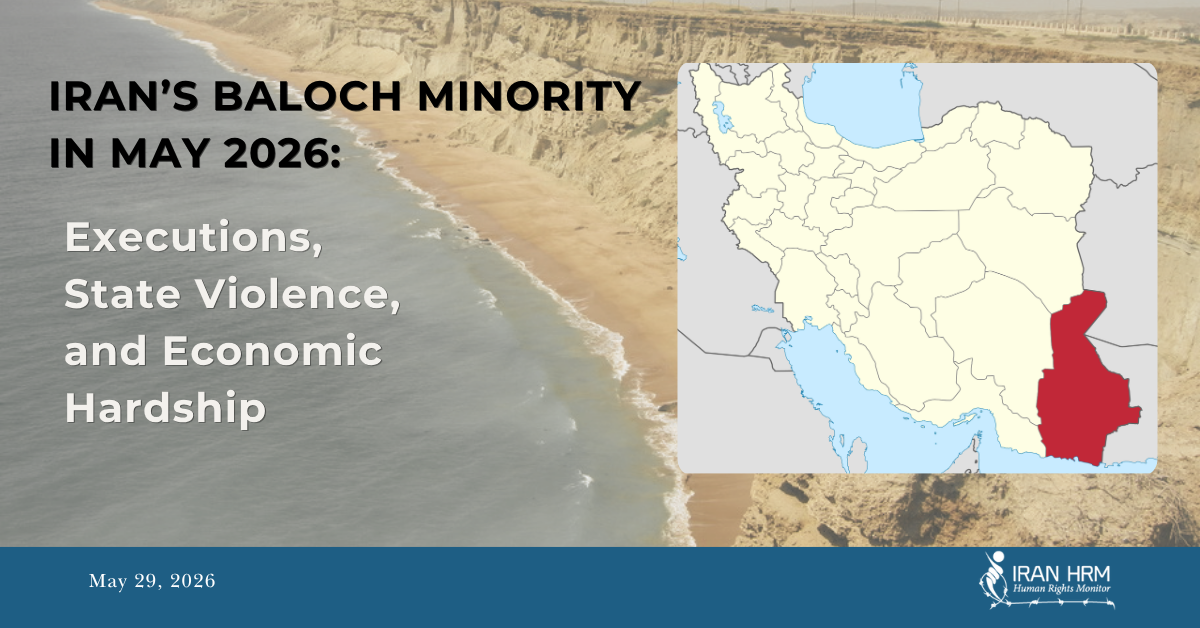
In May 2026, a collection of reports regarding repression, executions, arbitrary arrests, an eroding economic situation, and state killings against the Baloch minority offers a clear yet painful depiction of the intensification of structural pressures in this region. This month not only marked a continuation of previous trends but also demonstrated how the combination of security-driven repression and economic collapse can disrupt the life of a community at all levels.

Reports received from Balochestan this past month, ranging from the surge in executions to warrantless arrests and state killings, indicate that the pattern of treatment toward the Baloch minority has shifted from an intermittent occurrence into a continuous policy of control and elimination. Alongside these pressures, the economic crisis, from widespread unemployment to deprivation of basic services, functions as another tool to weaken this community, reproducing a cycle of vulnerability and instability.
In total, the month of May serves as a reminder that the situation of the Baloch minority is a coherent structure of repression encompassing everything from security to the economy, and from the law to daily life.
Part I: Judicial Raid on the Right to Life; From Political Executions to Unjust rulings
During this period, the execution machinery of the Islamic Republic has targeted the right to life of the Baloch minority in the harshest manner possible, both within political-security contexts and under the guise of common crimes.
- Political and Ideological Executions
- Abdoljalil Shahbakhsh (also known as Shakib): Son of Jalal, from Chah-Ahmad village in Taftan. He was
 arrested amidst the nationwide protests following the Zahedan Black Friday (2022). The Judiciary’s Media Center announced his charges as “Baghi” (armed rebellion) through armed assault on law enforcement bases and membership in the “Ansar Al-Furqan” group. His sentence was carried out in the Central Prison of Zahedan, while forced confessions extracted under torture were simultaneously broadcasted. According to a relative, one of the primary reasons his situation was not media-reported until the execution was the pressure and false promises made by security apparatuses to tribal elders and his relatives. Sources stated that security agencies informed the family and influential local figures that if the case remained unreported, it would be possible to commute or halt the death sentence. Notably, this tactic is a well-known ruse employed by the security and judicial organs of the Islamic Republic.
- Amer Ramesh (20 years old at the time of arrest): He was arrested in October 2024 (Mehr 1403) during a heavy raid by state forces utilizing semi-heavy weaponry (RPGs and mortars) against a herbal medicine s
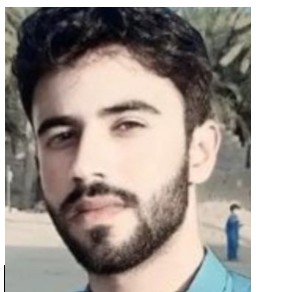 hop in Belingi village, Chabahar, an assault that resulted in the killing of at least 3 individuals and the wounding of 2 others. He was executed in Zahedan Prison on charges of “Baghi” through bombings, membership in Jaish al-Adl, and membership in the dissident “Baloch Freedom Seekers Movement” (allied with the fugitive Abdulghaffar Naqshbandi). He was subjected to torture for the purpose of televised forced confessions.
Methodological Note: The execution of Amer Ramesh was carried out on April 26, 2026 (6 Ordibehesht 1405). Although the primary focus of this report is on the month of May, this fact has been added to the report due to its significance in the engineering of intimidation and the analysis of the pattern of treatment toward protesters.
- Executions Under the Guise of Common Crimes and Drug Offenses
- Heidar Bameri (Moradkhani) – 24 years old: Son of Khomein-Agi, resident and native of Delgan.
- Mehdi Bameri (Moradkhani) – 27 years old: Son of Khan-Mohammad, resident and native of Delgan.
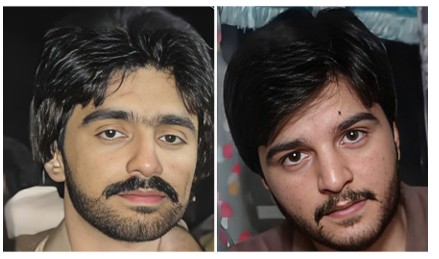 (These two individuals were arrested in a joint case in 2023 in Kahnuj, convicted by the Islamic Revolutionary Court, and executed on May 13, 2026 in Kerman Prison).
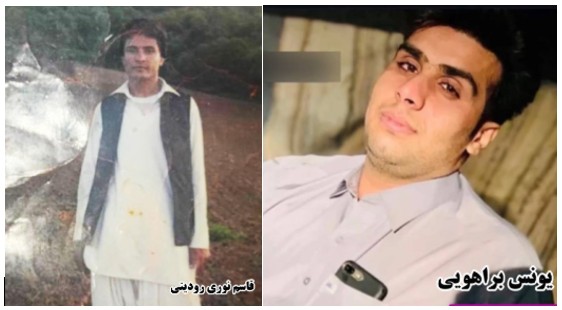
- Younes Brahoui – 29 years old: Son of Amrollah, married, resident and native of Zahedan. He was arrested in 2023 in Sahlabad, Birjand, and was executed on May 12, 2026 (22 Ordibehesht 1405) in Birjand Prison.
- Qasem Noori Roodini – 32 years old: Son of Mohammad, married with two children, native of Zahedan. He was arrested in 2018 in Nain and was sentenced to death by Judge “Parviz Pour-Rezaei” in Branch 2 of the Isfahan Revolutionary Court. Key Legal Point: His death sentence had previously been overturned twice by Branch 27 of the Supreme Court. However, in a sudden move contrary to the Supreme Court’s decision, he was executed on May 5, 2026 (15 Ordibehesht 1405) in Dastgerd Prison, Isfahan. He had become a Hafiz (memorizer) of the Quran while in prison and consistently rejected all charges.
 Structural Analysis; Imposed Poverty and the Cycle of Criminalizing Livelihoods:
An examination of the cases of ordinary executions of Baloch citizens this month reveals that all of these sentences, without exception, were executed under charges related to “drugs”. This excessive prevalence is rooted in a structural and systemic poverty that the ruling regime has deliberately imposed on the geography of Sistan and Balochestan. While this province sits on vast reserves and God-given wealth, such as rich gold mines, the unequal distribution of wealth, the absence of sustainable job opportunities, and the intentional exclusion of indigenous people from economic cycles have effectively blocked the avenues for legal livelihoods. In such an eroding context, the regime, by keeping society impoverished, forces vulnerable strata to choose between the high-risk options of fuel-carrying (Sookht-bari) or unavoidable involvement in drug networks. Ultimately, the very same regime that is the primary culprit in reproducing poverty and driving people toward these informal markets for survival, stands in the position of the prosecutor, sending the victims of this cycle of discrimination to the gallows via the tool of execution.
Legal Documentation and Violations of International Law:
- Violation of Article 6 of the International Covenant on Civil Political and Rights (ICCPR): This article recognizes the right to life as inherent and prohibits its arbitrary deprivation, particularly in cases such as Qasem Noori’s, where the death sentence had been explicitly overturned by the Supreme Court.
- Violation of Article 14 of the Covenant (ICCPR): Total deprivation of the defendants from a fair trial, lack of access to independent legal counsel, and the extraction of forced confessions under torture (Violation of Article 7).
Part II: Security Repression; Arbitrary Detention, Torture, and the Legal Heresy of “Deportation”
The security apparatuses (the Ministry of Intelligence and the IRGC Intelligence) perpetuate an environment of dread and terror among the Baloch minority community through macro-case fabrication, nocturnal raids, and familial hostage-taking.
- Macro-Case Fabrication by the Ministry of Intelligence
On May 19, 2026, the Ministry of Intelligence of the Islamic Republic claimed the arrest of 19 individuals in Sistan and Balochestan under the pretext of membership in 4 “Takfiri terrorist cells” directed by the United States and Zionism. The ministry claimed the seizure of weaponry (including a DShK, two RPG-7s with seven rockets, an American M4 rifle, five Kalashnikovs, six pistols, two military binoculars, and a large quantity of ammunition) and asserted that the majority of the detainees were foreign nationals.
- Nocturnal Raids and Extortion in Zahedan
In recent weeks, military forces have conducted nocturnal raids on the Shirabad, Karimabad, and Moshtarek (Ba’sath) neighborhoods of Zahedan, threatening and apprehending youths—the majority of whom possessed a prior arrest record during the Zahedan Black Friday protests (2022). Local reports confirm that agents extracted financial sums (extortion) from families under pressure and coercion. Furthermore, on May 6 (16 Ordibehesht), agents raided citizens’ residences (predominantly from the Shahbakhsh tribe) without a judicial warrant, detaining at least 4 individuals, confiscating their Starlink satellite internet terminals, and transferring the detainees to an undisclosed location. To date, the families of the detainees have received no information regarding their status or place of detention.
- Enforced Disappearance, Torture, and Critical Medical Conditions of Detainees
- Mohammad Zeraati (23 years old): A laborer, son of Faramarz, native of Iranshahr and resident of Daman. He was detained on May 15, 2026 (25 Ordibehesht 1405) following a third telephonic summons to the prior
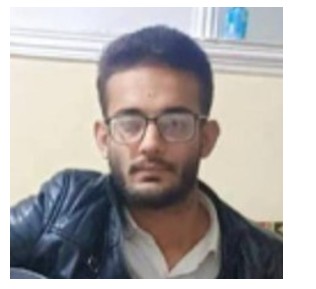 temporary detentions. He suffers from epilepsy, and the deprivation of his vital medication severely jeopardizes his life. He has been denied any telephonic contact with his family. During the first two phases, following interrogations and what his relatives described as acute physical and mental torture, he was abandoned at various points across the city of Zahedan. Upon the third summons, Mohammad approached the office accompanied by family members; however, Intelligence agents barred his relatives from entering, and once he entered, he was denied exit.
- Ministry of Intelligence office in Zahedan (the motive for detention is retaliatory pressure on his family due to his elder brother’s membership in an opposition group). He had previously been subjected to severe physical, psychological, and sexual torture (including the application of electric shocks to his head, and blows delivered to his genitalia, back, and kidneys) during
- Fakhreddin Jafar-Aghaei (40 years old): Married, born in Kerman, and resident of Zabol. He was violently
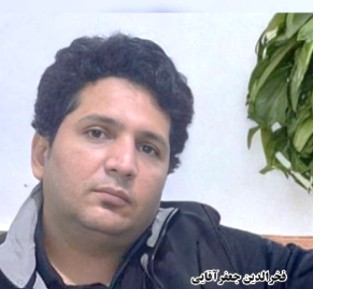 detained by IRGC Intelligence in Zabol on April 8, 2026 (19 Farvardin 1405), and was transferred to Zahedan Prison after spending 10 days in solitary confinement. He remains in a state of indefinite detention on the charge of “propaganda against the state,” and temporary release on bail has been denied. His family is deeply concerned due to his acute dependency on psychiatric medications.
- The Legal Tragedy of Hirmand and Saravan (Hostage-Taking of Children and Deportation)
- The Hirmand Case (Sarani Village – May 18): State agents raided the residence of a family’s relatives without a judicial warrant and detained Kulsoom Rakhshani (23 years old, daughter of Awadh, resident of Shirabad, Zahedan) along with her two minor children, Sara (1.5 years old) and Bibi-Aisha (4 years old—suffering from a severe motor disability in both legs), as well as a 16-year-old adolescent, Ishaq Rakhshani (Kulsoom’s brother-in-law). Furthermore, Azizullah Makeki (Rakhshani)—a 52-year-old local elder who protested the detention of the children—was apprehended.
- Legal Heresy and Tragedy (May 23 / 2 Khordad): The security apparatuses deported Kulsoom Rakhshani and her two minor children (including the disabled child) to Afghanistan under the pretext of being undocumented (lacking national birth certificates/Shenasnameh)! No information is available regarding the fate of the 16-year-old adolescent, Ishaq, and the local elder, Azizullah.
- Analytical Note on the Lack of Birth Certificates: Being undocumented (lacking a Shenasnameh) in Sistan and Balochestan is the result of a complex interplay of poverty, marginalization, historical administrative infrastructure deficits, migration patterns, and security-centered state policies. This issue has not only compromised individuals’ official identity but has systematically deprived them of rudimentary citizenship rights—ranging from education and healthcare to state subsidies and employment. Presently, the ruling regime exploits this structural and self-inflicted deprivation as a pretext to strip indigenous populations of their right to residency in their own homeland, executing their expulsion to a foreign country.
- The Saravan Case (April 28 ): Security forces utilized 5 civilian-plated vehicles to raid a residence, violently detaining Mudasser-Ali Arbab (30 years old, son of Shah-Jan) alongside his spouse and two minor children without a formal notification of charges or a judicial warrant, before transferring them to an undisclosed location. The minor children were returned to relatives at 10:00 AM the same day, but Mudasser-Ali and his spouse remain subjected to a state of enforced disappearance.
Legal Documentation and Violations of International Law:
The actions documented in this section by security and military organs constitute a gross and interlocking chain of violations of international treaties to which the Iranian state is a formal party:
- Enforced Disappearance: The systematic concealment of the location and status of the detainees from the May 6 Zahedan raid, Mohammad Zeraati, Ishaq Rakhshani, Azizullah Makeki, and Mudasser-Ali Arbab and his spouse, constitutes a definitive act of enforced disappearance and a flagrant violation of Article 9 of the International Covenant on Civil and Political Rights (ICCPR).
- Systematic Torture and Cruel Treatment: The infliction of acute physical, mental, and sexual torture upon Mohammad Zeraati, the prolonged solitary confinement of Fakhreddin Jafar-Aghaei, and the deliberate deprivation of both medically vulnerable detainees from accessing life-saving medications (for epilepsy and psychiatric disorders) constitute explicit violations of Article 7 of the ICCPR, which imposes an absolute prohibition on torture and ill-treatment.
- Arbitrary Detention and Familial Hostage-Taking: The apprehension of citizens without judicial warrants (the raids in Zahedan, Hirmand, and Saravan) and the detention of family members as leverage to force the surrender or submission of others, violate Article 9 of the ICCPR and the principle of individual criminal responsibility.
- The Heresy of Deportation and Violation of the Non-Refoulement Principle: The forced expulsion of Kulsoom Rakhshani and her two infants to Afghanistan under the pretext of being undocumented violates peremptory norms of international human rights law. Under international law, the de facto deprivation of nationality and the subsequent deportation of indigenous inhabitants to a foreign territory where they face imminent peril is strictly prohibited.
- Gross Violations of the Rights of the Child and Persons with Disabilities: The detention of infants (1.5-year-old Sara and 4-year-old Bibi-Aisha) and the deportation of a child suffering from severe motor disabilities constitute egregious violations of the Convention on the Rights of the Child (CRC) and the Convention on the Rights of Persons with Disabilities (CRPD), both of which Iran is legally bound to uphold.
- Violation of the Right to a Fair Trial and Transparency: The absolute opacity surrounding the identities, nationalities, and alleged charges of the 19 individuals arrested by the Ministry of Intelligence, alongside the denial of their access to independent counsel, directly violates Article 14 of the ICCPR.
- Extortion and Violation of the Inviolability of the Home: Executing warrantless nocturnal raids on citizens’ homes and extracting financial assets under duress and threats by state agents violate the right to liberty and security of person, as well as the protection against arbitrary interference with the home (Article 17 of the ICCPR).
Part III: State Killings; Indiscriminate Barrages, Execution Shots, and IRGC Landmines
The pattern of extrajudicial physical elimination of the Baloch minority continues outside of any judicial process, manifesting as summary executions on roads and along borders.
- Close-Range Shooting Outside the Province
- Mehran Naroui: Son of Amanullah, native and resident of Qareh-Qach village in Azadshahr, Golestan province. On May 17, 2026 (27 Ordibehesht 1405), military forces in Azadshahr fired upon his motorcycle
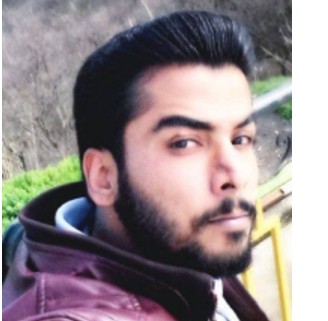 without any prior warning. Following the crash and overturning of the motorcycle, the agents delivered a close-range execution shot (coup de grâce) to him, a fact subsequently verified by the Forensic Medicine Organization. He was buried on May 20 in Sartapeh village. To date, no official entity has released any explanation regarding the motive for the shooting, the rationale behind the use of lethal force, or the details of the case, nor has the outcome of any independent or judicial investigation been announced.
- Indiscriminate Barrage by the Ministry of Intelligence in Iranshahr
On May 11, 2026, around 1:00 PM in the Sarkahooran region of Iranshahr county, Ministry of Intelligence forces opened fire with an indiscriminate automatic barrage directly upon a Peugeot 405 vehicle without any prior stop order or warning, killing the passengers instantly. Consequently, the vehicle caught fire and the bodies of the victims were severely burned within the flames. All four victims were married with children and residents of Abchaki village in the Sarbaz region. The identities of the deceased are:
- Abdolhalim Hamli (50 years old): Son of Abdolkarim.
- Naser Hamli (Jamalzehi) – 43 years old: Son of Abdolrahman.
- Majed Hamli (Jamalzehi) – 41 years old: Son of Abdolrahman (brother of Naser).
- Mansour Jamali (30 years old): Son of Abdolkhaleq.
- Fuel-Carriers and the Narrative of “Armed Bandits” Fabricated in Kerman
- May 14, 2026 (Zahedan-Tehlab Axis, Mirjaveh): Direct and unwarranted shooting by military forces at a fuel-carrier vehicle caused it to ignite. At least two Baloch fuel-carriers (identities unverified) burned alive within the vehicle.
- April 30, 2026 ( Shahdad Desert, Kerman): Law enforcement forces opened fire without warning upon a vehicle transporting Baloch citizens, resulting in the immediate death of all three passengers. The identity of one victim was verified as Omid Alizehi (23 years old, son of Amanollah, from Zahedan), and the other two were identified as his relatives, bearing the same surname, Alizehi. State media (ILNA News Agency) immediately launched a fabrication narrative claiming they were “armed bandits carrying one ton of narcotics” to legitimize this extrajudicial killing, an assertion completely refuted by local sources.
Socio-Economic Context: The absolute deficit of employment opportunities, pervasive poverty, systemic discrimination, and the deliberate absence of economic infrastructure in Sistan and Balochestan have forced fuel-carrying (Sookht-bari) to become the sole avenue for generating income and securing basic survival for many Baloch citizens. Hundreds of fuel-carriers who turn to this high-risk livelihood out of sheer desperation lose their lives annually due to direct military gunfire, high-speed chases causing vehicle rollovers, or fatal fires.
- Geographical Terrorism; Unmarked Landmines of the IRGC
- April 7, 2026 (Lar Border, Zahedan – Reported with delay on May 3 due to internet blackouts): The detonation of a landmine planted by the Islamic Revolutionary Guard Corps (IRGC) resulted in the death of Doran Brahoui (Mohammad-Hasani), 43 years old (married with children, from Taftan), and left another individual severely wounded. Doran’s body was abandoned at the site. His relatives approached local border posts and mortuaries but found no trace of him, until they finally recovered his body and laid him to rest.
- May 8, 2026 (Mirjaveh Border – Mile 69 Safreh): The detonation of an unmarked IRGC landmine caused the immediate death and total mutilation of the body of Abdullah Rigi (known as Abdi), son of Haj Shafi-Mohammad.
Context of Risk: These landmines were previously planted by IRGC forces in border perimeters without any warning signs, fencing, or marking, directly endangering the daily routes used by local Baloch civilians, fuel-carriers, nomadic herders, and pastoralists.
Legal Documentation and Violations of International Law:
- Violation of the UN Basic Principles on the Use of Force and Firearms by Law Enforcement Officials: Opening fire without warning, discharging automatic weapons indiscriminately into civilian vehicles (the Iranshahr barrage), and delivering fatal close-range shots to an incapacitated individual (the Mehran Naroui case) constitute flagrant acts of Extrajudicial, Summary, or Arbitrary Executions.
- Violation of the Inherent Right to Life (Article 6 of the ICCPR): The arbitrary use of lethal force as a primary tool for border control or law enforcement, without adhering to the principles of necessity and proportionality, is a direct violation of international human rights law.
- Breach of International Humanitarian Law Norms regarding Landmines: Planting anti-personnel landmines in areas heavily traversed by civilian populations (herders and local traders) without any markings, warnings, or protective barriers violates basic humanitarian principles and the right to security of person, resulting in indiscriminate warfare tactics against a civilian population.
Part IV: Structural Economic Crisis; Livelihood Hostage-Taking and Employment Discrimination along the Makran Coasts
In tandem with the security apparatus, structural and economic deprivation is weaponized as a tool to subjugate the Baloch minority community.
- Structural Water Scarcity Crisis
- The Marginalized Neighborhoods of Zahedan (May 21): The complete and severe disruption of potable water infrastructure for over a week in the Shirabad and Bazar-e Moshtarek neighborhoods during peak summer temperatures. This crisis is systematically replicated annually during religious holidays (such as Eid al-Adha).
- Dezak, Saravan (Hazrat-e Ali Street – May 6 ): The total absence of a sustainable potable water network. Each household must expend 600,000 Tomans every two days to purchase water from unsanitary mobile water tankers. This imposes an astronomical monthly cost of 9 million Tomans on each Baloch family merely to secure water, amidst a climate of absolute unemployment.
- Health and Displacement Impacts: Reports further indicate that the lack of regulatory oversight regarding the quality of tanker water has induced severe public health anxieties among residents. Beyond the immense economic strain, this manufactured crisis carries severe psychological and sanitary consequences. Documented testimonies emphasize that the continuation of these conditions, in the absence of immediate intervention, will exacerbate regional destabilization and trigger forced displacement and migration.
- Fuel Blockade and Transportation Paralysis
Following newly implemented state policies, free-market fuel quotas have been aggressively slashed to under 100 liters, and fuel cards have been systematically confiscated from gas stations. In a province characterized by extreme geographical dispersion and a total vacuum of public transportation infrastructure, the price of 20 liters of gasoline on the informal market has spiked to between 1 and 1.5 million Tomans. This policy has effectively severed the access of citizens in Chabahar and Zahedan to essential healthcare services, educational institutions, and employment hubs.
- The Zahak Drowning Tragedy
At least 11 Baloch citizens drowned in agricultural irrigation canals and streams within Zahak county due to the absolute lack of protective barriers, warning signs, and basic safety infrastructure. Rather than resolving the underlying structural hazards, Red Crescent officials (Hassan Mosaffa) and the local Governorate (Ali Rastgou) systematically evaded institutional accountability by deflecting blame onto the victims, accusing them of “negligence.”
- Coastal Makran Fishermen and the Chabahar Petrochemical Complex Under Wartime Conundrums
- Unemployment of Coastal Inhabitants: Following the prolonged wartime posture of the state and resulting maritime insecurity, indigenous fishermen and sailors across Chabahar, Konarak, Pasabandar, Minab, Sirik, and Jask have entirely lost their primary source of income due to severe, sweeping military restrictions, triggering mass unemployment.
- Structural Discrimination in the Chabahar Petrochemical Complex (Negin Makran): Indigenous workers are subjected to meager wages ranging between 12 and 15 million Tomans, compounded by a 3-month backlog of unpaid salaries. Since the onset of the recent geopolitical and military crises, out of a total workforce of 3,000, approximately 2,000 workers have been terminated or laid off. The share of indigenous Baloch workers in these layoffs has been disproportionately maximized, while non-indigenous, imported personnel have been heavily retained.
Conclusion and Executive Summary
An analysis of the documented data in this report demonstrates that the Iranian government is executing a comprehensive, multi-dimensional policy of human rights violations against the Baloch minority. Within this framework, the “right to life” is systematically revoked via the judiciary, through summary execution shots in urban streets, and via unmarked landmines deployed along border zones by the IRGC.
On the regulatory and security axis, the detention of minor infants (including a child with severe physical disabilities) and the legal heresy of executing the deportation of undocumented, indigenous citizens to a foreign nation demonstrate that the ruling regime has entirely transgressed all international human rights red lines.
Ultimately, by weaponizing fuel quotas, manufacturing water scarcity, and orchestrating the mass termination of indigenous laborers along the Makran coasts under the pretext of wartime conditions, the Baloch community has been placed under an all-encompassing existential siege. This coherent structure is deliberately engineered to convert the daily life of this minority into a perpetual crisis of survival.