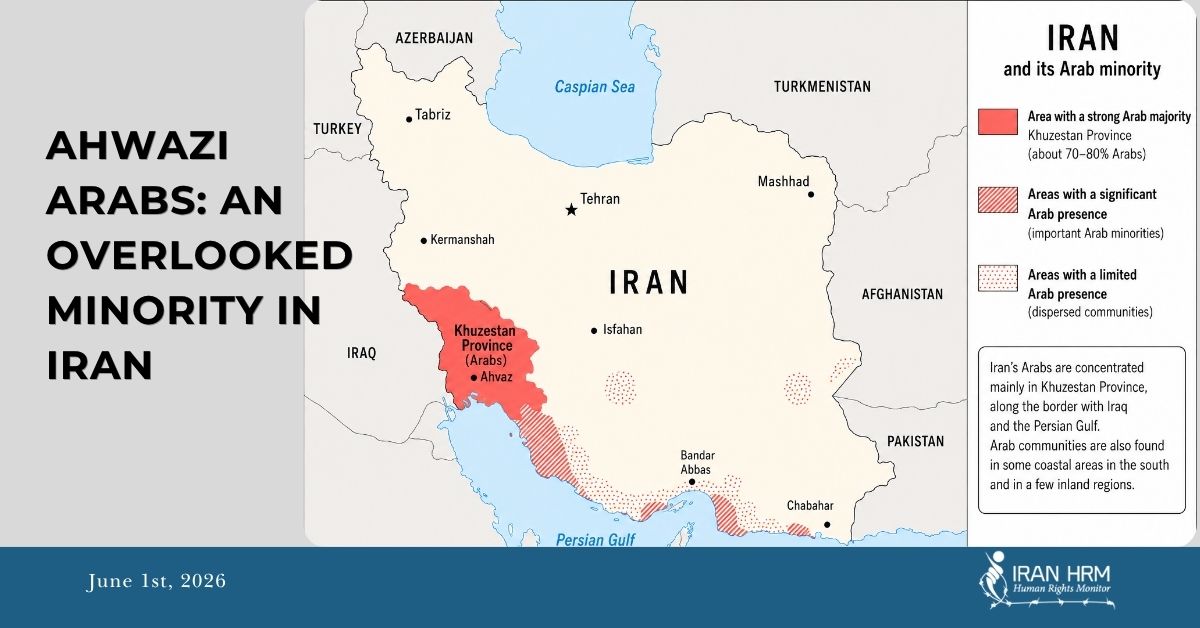
Ahwazi Arabs are one of Iran’s largest ethnic minorities, concentrated primarily in the southwestern province of Khuzestan. Despite living in one of the country’s richest regions in terms of oil, gas and natural resources, many Ahwazi Arab communities experience persistent poverty, unemployment, environmental degradation and political marginalization.

Over the past two years, concerns regarding executions, death sentences, arbitrary detention, deaths in custody, restrictions on cultural rights and economic discrimination have intensified. Human rights organizations, United Nations experts and local documentation have highlighted patterns of repression affecting Arab activists, prisoners, writers, poets, journalists and ordinary citizens.
The cases documented in this report illustrate broader concerns regarding the protection of fundamental rights, including the right to life, freedom from torture, fair trial guarantees, cultural rights and equal access to economic and environmental resources.
Security Repression and Arbitrary Detention
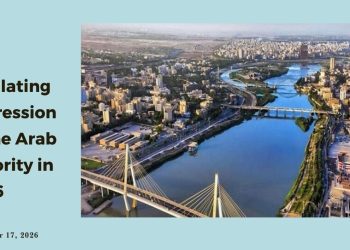
Security operations targeting Ahwazi Arab communities intensified throughout late 2024 and early 2025. Large-scale arrest campaigns were reported in Ahvaz, Shadegan, Ramshir, Kut Abdollah and Khorramshahr, affecting civil activists, researchers, writers, journalists, environmental advocates and community figures.
Among those arrested were writer and researcher Saeed Esmail Mazraeh, journalist and photographer Milad Bahri, former political prisoner Seyed Hashem Mousavi and numerous Arab citizens from Ahvaz, Ramshir and Khorramshahr. Reports indicate that security forces conducted home raids, confiscated personal belongings and transferred detainees to undisclosed locations.
The Public Prosecutor of Ahvaz reportedly acknowledged the arrest of 182 individuals under a public security operation. Human rights documentation suggests that many of those targeted were engaged in cultural, social or civil activities rather than violent conduct. Reports also described transfers to intelligence detention facilities and allegations of psychological pressure and ill-treatment.
Table 1: Selected Cases of Arbitrary Detention and Cultural Repression
| Name | Date | Reported Concern |
| Mostafa Heliji | 2025 | Poet and activist; later sentenced to 13 years imprisonment |
| Reza Hezbavi | 2025 | Poet and activist reportedly subjected to prolonged detention |
| Mohammad Askarawi | July 2025 | 16-year-old poet detained after cultural expression |
| Saeed Esmail Mazraeh | January 2025 | Writer and researcher arrested in Ahvaz |
| Milad Bahri | January 2025 | Journalist and civil activist arrested |
| Seyed Hashem Mousavi | January 2025 | Former political prisoner rearrested |
| Amin Matouri | February 2025 | Previously imprisoned activist rearrested |
| Numerous Arab activists | 2024–2025 | Mass arrests across Ahvaz, Ramshir, Shadegan and Khorramshahr |
Death Sentences, Executions and Deaths in Custody
The use of capital punishment against Ahwazi Arab prisoners remains one of the most serious human rights concerns documented during the reporting period.
Reza Abdali, a 35-year-old Ahwazi Arab from Ahvaz, was arrested in February 2025 and sentenced to death in July 2025. His sentence was reportedly upheld by the Supreme Court in November 2025. Information later referenced by UN experts raised concerns regarding allegations of torture, forced confessions and insufficient evidence of violent conduct.
The cases of Masoud Jamei and Alireza Mardasi similarly attracted international concern. Both prisoners reportedly faced death sentences following proceedings marked by allegations of torture, prolonged solitary confinement, denial of access to lawyers of their choosing and inadequate medical care.
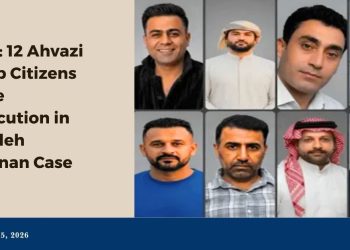
The most significant execution case occurred on 4 October 2025, when six Ahwazi Arab prisoners were executed in Sepidar Prison in Ahvaz. The executed prisoners were Ali Mojadam, Moein Khanfari, Mohammad Reza Moghadam, Salem Mousavi, Adnan Ghobayshavi and Habib Deris.
According to available documentation, the men denied the accusations against them and stated that their confessions had been extracted under torture. Concerns were also raised regarding the lack of fair trial guarantees and the failure to provide adequate notice to their families prior to the executions.
Particularly troubling allegations emerged in relation to Ali Mojadam, who reportedly witnessed the torture of family members in an effort to force a televised confession. Similar allegations of physical and psychological torture were reported in the cases of other defendants.
Table 2: Death Sentences, Executions and Deaths in Custody
| Name | Date | Reported Concern |
| Reza Abdali | 2025 | Death sentence; allegations of torture and forced confession |
| Masoud Jamei | 2025–2026 | Death sentence; torture and fair trial concerns |
| Alireza Mardasi | 2025–2026 | Death sentence; torture and medical neglect concerns |
| Ali Mojadam | October 2025 | Executed in Sepidar Prison |
| Moein Khanfari | October 2025 | Executed in Sepidar Prison |
| Mohammad Reza Moghadam | October 2025 | Executed in Sepidar Prison |
| Salem Mousavi | October 2025 | Executed in Sepidar Prison |
| Adnan Ghobayshavi | October 2025 | Executed in Sepidar Prison |
| Habib Deris | October 2025 | Executed in Sepidar Prison |
| Hassan Saeedi | October 2025 | Reportedly died under torture in detention |
| Amir Abdolnour Nissi | November 2025 | Reportedly died after medical neglect in prison |
| Hossein Ghavi (Silavi) | March 2026 | Death in IRGC Intelligence detention |
| Hashem Eidani | October 2025 | Reportedly shot dead during security operation |
Cultural and Linguistic Rights
Arabic remains the mother tongue of a significant portion of Khuzestan’s population. However, restrictions on education in the mother tongue and recurring pressure against cultural initiatives continue to generate concern among Ahwazi Arab communities.
The cases of Mostafa Heliji and Reza Hezbavi illustrate how literary and cultural activities can become subject to security prosecution. Both men became known for poetry and cultural expression linked to Arab identity. Their arrests and prosecutions were viewed by many observers as part of a broader effort to restrict independent cultural activity.
The case of Mohammad Askarawi is particularly significant. The 16-year-old poet was reportedly detained after writing poetry addressing Arab identity and linguistic rights. His case highlights the vulnerability of minors engaged in peaceful cultural expression and raises concerns under international standards protecting children’s rights.
The arrests of writers, journalists, photographers and researchers during 2025 further demonstrate the narrow space available for independent cultural and civil activity in Ahwazi Arab communities.
Economic Discrimination and Destruction of Livelihoods
Economic marginalization remains a recurring grievance among Ahwazi Arabs. Despite Khuzestan’s central role in Iran’s oil and gas industry, many Arab-populated areas continue to experience high unemployment, inadequate public services and limited economic opportunities.
Local activists have repeatedly reported discriminatory hiring practices in major industries, particularly in the oil, gas and petrochemical sectors. Concerns have also been raised regarding land confiscation and the loss of agricultural livelihoods.
One of the most striking cases documented during the reporting period was that of Ahmad Baladi, a 20-year-old Ahwazi Arab student.
On 2 November 2025, Ahmad Baladi set himself on fire after municipal and police authorities destroyed his family’s food kiosk in Ahvaz. He died nine days later.
According to his family, the kiosk had operated legally for more than twenty-five years and represented the sole source of income for a household of six people. Reports indicate that protests followed his death and that security forces monitored public reactions, while activists and media figures covering the incident faced pressure.
The case became a symbol of broader frustrations regarding economic hardship, administrative practices and the lack of effective remedies available to marginalized communities.
Environment, Water Rights and Hoor al-Azim
Environmental degradation has become one of the most significant human rights challenges facing Ahwazi Arab communities.
In March 2025, United Nations experts raised concerns regarding the deterioration of the Hoor al-Azim wetland and its consequences for local populations. The wetland has historically played an essential role in supporting livelihoods, agriculture, fishing and local ecosystems.
Large-scale water diversion projects, dam construction, industrial activity and environmental mismanagement have contributed to declining water availability, loss of agricultural land and increased displacement pressures.
Environmental concerns have repeatedly triggered protests throughout Khuzestan. Previous demonstrations over water shortages reflected fears that environmental decline could contribute to the gradual displacement of Arab communities from their traditional areas.
Dust storms, water contamination and the degradation of wetlands have also generated serious public health concerns. When viewed alongside patterns of economic exclusion and political repression, these environmental impacts have had a disproportionate effect on Ahwazi Arab communities.
International Concerns and Human Rights Analysis
International human rights mechanisms have repeatedly expressed concern regarding the treatment of Ahwazi Arab prisoners and activists.
In January 2026, UN Special Rapporteurs communicated concerns to Iranian authorities regarding the cases of Reza Abdali, Masoud Jamei, Alireza Mardasi and other prisoners. The communication questioned the use of capital charges, allegations of torture, prolonged solitary confinement and restrictions on access to legal representation.
Amnesty International also raised concerns regarding the execution of six Ahwazi Arab prisoners in Sepidar Prison, emphasizing allegations of torture and unfair trial proceedings.
The cases documented in this report engage multiple rights protected under international human rights law, including the right to life, the prohibition of torture, protection against arbitrary detention, fair trial guarantees, cultural rights, minority rights, access to water and the right to an adequate standard of living.
The detention of a minor poet, deaths in custody, executions following disputed proceedings and the destruction of livelihoods all demonstrate the multidimensional nature of human rights concerns affecting Ahwazi Arab communities.
Conclusion and Call to Action
The cases documented in this report indicate that Ahwazi Arabs continue to face a combination of security repression, judicial abuses, cultural restrictions, economic discrimination and environmental harm.
The death sentence against Reza Abdali, the cases of Masoud Jamei and Alireza Mardasi, the execution of six prisoners in Sepidar Prison, the deaths of Hassan Saeedi, Amir Abdolnour Nissi and Hossein Ghavi, the reported killing of Hashem Eidani, the detention of cultural activists and the case of Ahmad Baladi together illustrate a broader pattern of concern.
International human rights mechanisms, United Nations bodies and independent observers should continue monitoring these developments and seek accountability for alleged violations.
Iranian authorities should halt executions, end torture and arbitrary detention, ensure fair trial guarantees, protect cultural rights and address longstanding economic and environmental grievances affecting Ahwazi Arab communities.