Structural Pattern of Rights Violations in Iranian Prisons: From Health and Nutritional Crises to Clandestine Transfers and Juvenile Detention
Report at a glance

This comprehensive report, backed by documented data from seven Iranian prisons (Langarud in Qom, Urmia, Evin, Zahedan, Vakilabad in Mashhad, Fardis in Karaj, and Qarchak in Varamin), illustrates new dimensions of systematic violations of the fundamental rights of political prisoners and prisoners of conscience:
- Health and Living Conditions Crisis: Widespread outbreak of contagious diseases, bedbugs, and vermin infestation in Qom Prison, alongside severe reductions in food rations and strict water quotas in Zahedan Prison, directly endangering prisoners’ lives.
- Clandestine Transfers and Forced Isolation: Opaque transfer of approximately 30 political prisoners from Tehran to Zahedan, detention in isolated cells, threats against ordinary inmates to enforce total isolation, and denial of family visitation rights.
- Denial of Medical Treatment and Compound Pressures: Neglect of critical medical conditions, including Rezvaneh Sadeghi (retaining three pellets in her head) and Sara Mosiqi (shoulder injury from interrogation beatings), alongside heightened restrictions on death-row prisoners such as Mohammad Javad Vafaei.
- Violations of Children’s Rights: Detention of Diana Taherabadi, a 16-year-old juvenile, in the “Kindergarten” ward of Fardis Prison on heavy charges of Moharebeh (enmity against God), in direct violation of the Convention on the Rights of the Child.
Conclusion: These actions constitute explicit violations of the International Covenant on Civil and Political Rights (ICCPR) and the Nelson Mandela Rules, calling upon United Nations human rights bodies to take immediate action and document these abuses.
Introduction
The situation of political prisoners and prisoners of conscience in Iran remains a matter of grave concern under international human rights law. Documented reports from various prisons across the country indicate that numerous detainees face conditions extending far beyond the inherent restrictions of imprisonment. These include denial of medical services, inhumane living conditions, restricted family contact, remote exile transfers, punitive measures, prolonged pre-trial detention, and severe limitations on basic rights.
This report synthesizes verified data regarding Langarud Prison in Qom, Urmia Central Prison, Evin Prison, Zahedan Central Prison, Vakilabad Prison in Mashhad, Fardis Prison in Karaj, and Qarchak Prison in Varamin, offering a clear overview of the alarming patterns of abuse against political and conscientious detainees in Iran.
Health and Living Conditions Crisis in Langarud Prison, Qom
Information received from Langarud Prison (Qom Central Prison) demonstrates that sanitation levels have reached a critical state. Severe environmental contamination, accompanied by widespread infestations of bedbugs, lice, and other pests, has caused extensive skin diseases and infectious illnesses among inmates.
Simultaneously, outbreaks of respiratory illnesses such as influenza and COVID-19 variants have been reported. A concurrent reduction in daily food rations has further compromised the health and physical well-being of a large number of prisoners.
Such conditions stand in direct conflict with Rules 24 through 35 of the United Nations Standard Minimum Rules for the Treatment of Prisoners (the Nelson Mandela Rules), which mandate states to ensure health and sanitary standards equivalent to those available in the wider community.
Intensified Pressure on Political Prisoners in Urmia Prison
At Urmia Central Prison, pressure on political prisoners continues to escalate. According to available records, prison authorities have confiscated personal belongings—including refrigerators and televisions purchased at the prisoners’ own expense—under the pretext that these items belong to the facility.
The expropriation of personal property and deprivation of basic living amenities serve as punitive measures that place additional psychological and physical strains on political detainees.
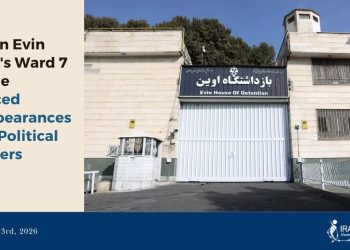
Evin Prison: Visitation Restrictions, Overcrowding, and Violent Raids
At Evin Prison in Tehran, new restrictions have been imposed on female detainees. Allocated times for both cabin and in-person family visitations have been halved, while visiting families are subjected to abusive treatment by prison staff. On September 6, 2026 (15 Shahrivar 1405), prisoners and their families staged a protest against these conditions.
In recent months, inmates at Evin have endured severe summer temperatures exceeding 40°C amid broken cooling systems, bedbug infestations, curtailed yard access, and denial of recreational facilities. Furthermore, in August, prison guard forces raided Ward 7, physically assaulting political prisoners, destroying or seizing personal belongings, and forcibly transferring several inmates. On September 6, an additional 60 prisoners were transferred from Greater Tehran Prison (Fashafuye) to Ward 7, exacerbating severe overcrowding and resource deficits.
Starvation and Inhumane Conditions in Zahedan Prison
Reports from Zahedan Central Prison reveal alarming nutritional deficits among detainees. The quantity and quality of food provided are dangerously low, barely sufficient to prevent starvation and entirely inadequate for adult nutritional requirements.
Conditions in solitary confinement are significantly worse. Detainees in these units frequently receive no breakfast, while daily food is sometimes limited to approximately ten spoonfuls of irregularly served rice. Drinking water is restricted in some cases to just two glasses per day, and evening meals frequently consist of a small piece of bread and a single egg. Such severe deprivation constitutes cruel, inhuman, and degrading treatment.
Mohammad Javad Vafaei: Compound Deprivation in Vakilabad Prison, Mashhad
On September 3, 2026 (12 Shahrivar 1405), prison guards raided the cell of Mohammad Javad Vafaei, a political prisoner under sentence of death in Vakilabad Prison, Mashhad. During the raid, officers seized his minimal exercise equipment and revoked his access to newspapers. This follows a prior decision denying him permission to attend his father’s funeral.
Restricting a prisoner’s access to physical activity, news, and critical family events illustrates the routine deployment of punitive measures against political detainees.
Fardis Prison, Karaj: Prolonged Detention, Denial of Medical Care, and Child Prosecution
Information from Fardis Prison in Karaj raises grave concerns regarding three detainees: Rezvaneh Sadeghi, Diana Taherabadi, and Narges Alishahi.
Rezvaneh Sadeghi
 Rezvaneh Sadeghi has been held in detention since December 2025/January 2026. Three firearm pellets remain embedded in her head, yet authorities have failed to provide necessary medical surgery to remove them. Transparent details regarding her access to care and legal proceedings remain unavailable.
Diana Taherabadi
 Diana Taherabadi, a 16-year-old juvenile, is held in the “Kindergarten” section of Fardis Prison—a unit designated for minor detainees. She faces charges of Moharebeh (enmity against God) for allegedly setting fire to a police booth during protests in January 2026. This charge carries severe penalties under Iranian criminal law, including the death penalty. The prosecution of juveniles on security charges carrying capital penalties violates the principle of the best interests of the child and Iran’s commitments under the Convention on the Rights of the Child.
Narges Alishahi
Transparent information regarding Narges Alishahi remains lacking, raising ongoing concerns over her access to legal counsel, family communications, and necessary medical evaluation.
Sara Mosiqi in Qarchak Prison: Interrogation Assault and Medical Neglect
 Sara Mosiqi, a 42-year-old architectural engineer serving a six-year sentence in Qarchak Prison, Varamin, was subjected to physical beatings during interrogation that resulted in a severe shoulder injury. Despite requiring specialized care, effective medical treatment has been denied.
Her charges include “insulting the Supreme Leader,” “insulting Khomeini and sacred values,” and “collaboration with hostile states.” Her continued detention without specialized medical treatment for injuries sustained in custody requires urgent, independent investigation.
Clandestine Transfers of Political Prisoners to Zahedan Prison
Information received from Zahedan Central Prison indicates that approximately 30 political prisoners were secretly transferred from Tehran to Zahedan during recent conflict periods. These transfers were conducted without legal transparency, and no official information regarding the prisoners’ identities, legal grounds, or current status has been disclosed.
Upon arrival, these individuals were placed in isolated cells across different sections to prevent contact with the general prison population. General inmates were told that the transferees led national protests in January 2026.
Political detainees in Zahedan are permitted outdoor access only once a week under strict isolation to prevent interaction with other inmates. Furthermore, prison officials have threatened general prisoners with new criminal charges or extended sentences if they attempt to communicate with political detainees. Additionally, at least three inmates in Zahedan face alleged links to the People’s Mojahedin Organization of Iran (PMOI/MEK). Despite their detention in this prison, no information is available regarding their identity, case status, sentences issued, or conditions of confinement.
Banishing prisoners hundreds of kilometers away from their families effectively eliminates regular visitation and severely impedes legal defense.
Legal Analysis
The documented practices in this report demonstrate grave non-compliance with Islamic Republic of Iran’s domestic and international legal obligations.
These actions violate provisions of the International Covenant on Civil and Political Rights (ICCPR), specifically the rights to liberty and security of person, humane treatment during detention, family communication, legal representation, and fair trial guarantees. Furthermore, withholding medical treatment, imposing extreme living conditions, enforcing solitary isolation, and exiling prisoners far from their families breach the UN Standard Minimum Rules for the Treatment of Prisoners (Nelson Mandela Rules), particularly Rules 24 through 35 concerning healthcare and human dignity.
Conclusion
The cases detailed in this report reflect systematic patterns of abuse against political prisoners and prisoners of conscience in Iran. Deprivation of medical care, restricted family contact, remote exile, punitive living conditions, prolonged pre-trial detention, and structural repression endanger the lives and dignity of detainees. The international community must evaluate these violations not as minor administrative oversights, but as serious, systematic human rights abuses requiring immediate international scrutiny.
Urgent and Actionable Calls
- To the Special Rapporteur on the situation of human rights in the Islamic Republic of Iran: Investigating conditions in Langarud (Qom), Evin, Zahedan, Vakilabad (Mashhad), Fardis (Karaj), and Qarchak (Varamin) prisons in upcoming reports and demanding formal explanations from Iranian authorities regarding detainee treatment.
- To the Special Rapporteur on torture and other cruel, inhuman or degrading treatment or punishment: Publishing an independent report on medical neglect, detention conditions, physical abuse, and forced transfers of political detainees in Iran.
- To the Working Group on Arbitrary Detention: Reviewing the legal status of detainees held in prolonged pre-trial detention, without access to legal counsel, or in incommunicado conditions.
- To the Committee on the Rights of the Child and related UN mechanisms: Intervening specifically in the case of Diana Taherabadi and other juveniles prosecuted under national security charges.
- To the Special Rapporteur on Iran, Special Rapporteur on Torture, and Working Group on Arbitrary Detention: Issuing joint urgent communications to the Iranian government regarding medical neglect, forced transfers, and detention conditions in the aforementioned facilities.
- To the Office of the UN High Commissioner for Human Rights (OHCHR): Documenting cases of medical deprivation, isolation, remote transfers, and inhumane conditions within ongoing monitoring mechanisms to ensure future accountability.
- To the UN Human Rights Council: Maintaining continuous oversight of the situation of political prisoners in Iran and pressing Iranian authorities to grant unhindered access to independent international monitoring bodies.
- To International Accountability Mechanisms: In the event of continued deprivation of medical care, inhumane conditions of detention, secret transfers of political prisoners, enforcement of forced isolation, and other severe human rights violations, the UN Human Rights Council is requested to specifically investigate these matters within the framework of accountability and documentation mechanisms related to Iran, and to document the responsibility of individuals and entities involved in these violations for potential future accountability.