Executive Summary

- Expansion of Extrajudicial Pressures: Reports have emerged regarding SIM card restrictions, banking blockades, house searches, and the confiscation of personal belongings of civil society activists in Khorasan provinces.
- Criminalization of Trade Union Activity: Teachers’ union and labor activists face subpoenas, arrests, fabricated charges, and judicial sentences due to their pursuit of livelihood demands and professional rights.
- Widespread Arrests and Searches: At least 59 teachers, retired educators, and university professors were arrested during the period under review. House raids and the confiscation of personal items have also been documented.
- Prolonged Detention and Medical Neglect: Cases of long-term detention, enforced incommunicado holding, deteriorating health conditions, and denial of medical treatment among union activists have been reported.
- Pressure on Trade Unions: Teachers’ trade associations, union representatives, and civil activists face mounting restrictions, where even protests against executions or advocacy for union rights have met with severe security responses.
Introduction
In 2026, pressure on Iranian civil society extended beyond political activists to encompass a broad spectrum of journalists, civil rights advocates, teachers, retirees, and trade unionists. Evidence compiled in this report demonstrates that civil activism and trade union work are increasingly met with security, judicial, and extrajudicial measures.
Alongside subpoenas, arrests, and judicial sentences, numerous reports have been published detailing house searches, confiscation of personal belongings, restriction of access to communication and banking services, harassment of families, and keeping activists in prolonged pre-trial detention. This pattern has been particularly evident among teachers’ union activists, where demands regarding the state of education, teachers’ livelihoods, retirees’ rights, and the quality of the educational system have been met with security crackdowns rather than institutional accountability.
Extrajudicial Pressures Against Civil Society Activists
Reports published from Khorasan provinces indicate heightened pressure on civil society activists, journalists, and political figures. These pressures have not been limited to summonses and arrests; cases of SIM card restrictions or banking blockades targeting certain activists have also been documented. Notable individuals affected include Nasrin Hassani (a journalist based in Bojnourd) and Esa Khan Hatami (a political activist based in Esfarayen).
In an era where mobile phone numbers serve as the primary tool for identity verification and access to banking, administrative, judicial, and public services, restricting them exerts a severe impact on individuals’ daily lives. Furthermore, depriving citizens of access to banking services outside transparent legal procedures imposes a heavy socio-economic burden on activists and their families.
Criminalization of Teachers’ and Labor Union Activities
According to reports received by Iran Human Rights Monitor (Iran HRM), on June 27, 2026 [6 Tir 1405], Branch 3 of the Ahvaz Revolutionary Court sentenced five cultural and labor union activists—Ahmadreza Nochian, Mohammadzaman Kamrava, Manijeh Afshari, Maryam Zalaki-Nejad, and Kowsar Mombini—to three years of suspended imprisonment and a two-year ban on leaving the country.

These sentences were handed down while union protests by teachers and retirees were primarily centered around key civil and professional demands:
- Wage equalization (pension adjustments)
- Improvement of livelihood conditions
- Implementation of protective labor laws
- Enhancement of educational quality
Union activists have consistently emphasized the civil and professional nature of these demands; nevertheless, they have repeatedly faced summonses, detentions, judicial cases, and harsh sentences.
Statement by Teachers’ Trade Associations Against the Death Penalty
Beyond advocating for professional and livelihood demands, independent teachers’ unions have articulated clear stances on fundamental human rights issues. On August 6, 2026 [15 Mordad 1405], the Teachers’ Trade Association of Iran (Tehran) issued an official statement condemning the surge in death sentences and executions. Highlighting public demonstrations by prisoners’ families and citizens under the slogan “No to Execution,” the association characterized these protests as evidence of growing societal opposition to state execution policies and repression.
Emphasizing that “the right to life is the most fundamental human right and the cornerstone of all other rights and freedoms,” the trade association stated: “From the perspective of human rights and divine religions, the death penalty is the most extreme form of state-sanctioned deprivation of the right to life; an irreversible punishment that, in the event of judicial error, leaves no possibility for remedy and violates inherent human dignity.” The statement further underscored that the death penalty neither reduces crime nor establishes sustainable security but rather perpetuates a cycle of violence. Such principled stances by trade unions have been met with heightened security sensitivities and increasing pressure from authorities.
House Searches and Detentions of Cultural Union Activists
In mid March and early April 2026 [end of Esfand 1404 and early Farvardin 1405], the homes of several teachers’ union activists in various cities were raided and searched by security forces, including:
- Mojtaba Goudarzi
- Manouchehr Aghabeigi
- Mohammad Habibi
- Parvin Salimi
- Masoud Zeinalzadeh
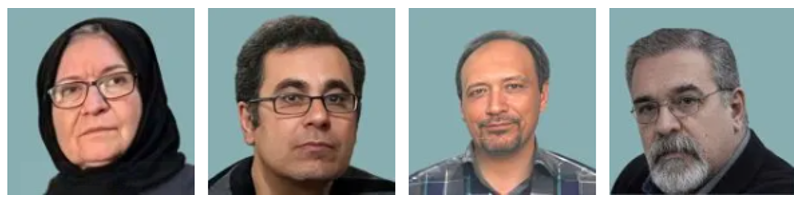
During these operations, personal communication devices and items belonging to family members were confiscated. Reports indicate that Manouchehr Aghabeigi was arrested following the search of his residence and transferred to an undisclosed location, with no precise information available regarding his condition for a period of time.
Prominent Cases of Arrest and Prolonged Detention
Siamak Chehrazi: Detention, Hunger Strike, and Legal Limbo
One of the most prominent cases during the period under review involves Siamak Chehrazi, a teachers’ union activist in Khuzestan. He was arrested by security forces at his home on March 28, 2026 [8 Farvardin 1405]. Following his transfer to Sheiban Prison in Ahvaz, he went on a hunger strike to protest the increasing execution of political prisoners. His family was threatened by authorities at the time of his arrest not to speak publicly about his case.
According to reports:
- He was formally charged in Branch 12 of the Interrogation Office of the Ahvaz Revolutionary Court;
- Charges of “Propaganda against the state” and “Insulting the Supreme Leader” were leveled against him. This is despite the fact that at the time of his arrest, the initial stated reason was the “use of anti-filtering software (VPNs)”—a rationale later escalated to security charges during the interrogation phase;
- Despite the expiration of initial detention orders, his detention has been extended more than four times, leaving him in prolonged legal limbo;
- No transparent trial or fair legal proceedings have been conducted to address his case.
Arrest of Rasoul Bodaghi, Ghaffar Dindar, and Other Teachers
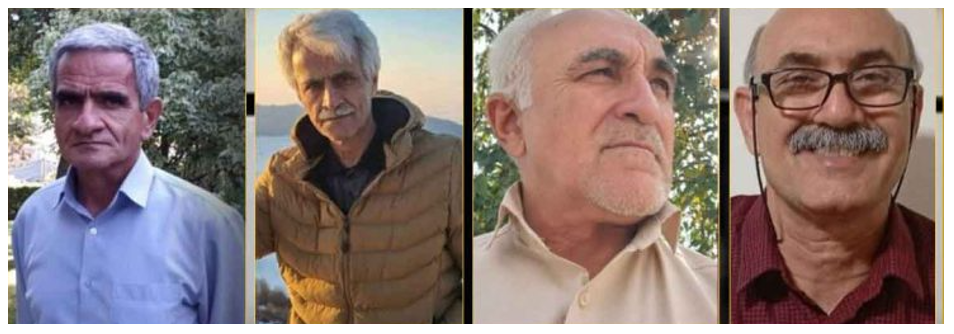
On September 25, 2026 [3 Mehr 1405], Rasoul Bodaghi and Ghaffar Dindar, two trade union activists and members of the Islamshahr Teachers’ Association, were arrested while traveling to Nourabad Mamesani. Reports indicate that their arrest was executed violently, with physical assault and without presenting a judicial warrant. Several other teachers present at the location were also detained.
Trade union organizations emphasized that they had traveled to Nourabad Mamesani solely to visit a colleague, and that the gathering was entirely social and unrelated to organizational or political activities.
Deteriorating Condition of Rashid Hessami in Detention
The case of Rashid Hessami, a teacher and civil activist from Qorveh, highlights grave concerns regarding the physical well-being of detainees. According to published information:
- Rashid Hesami was arrested on September 14, 2026 at his home in Ba’athat neighborhood of Qorveh, without a judicial warrant, with the use of violence, and after a full search of the house.
- He suffered a severe physical breakdown while being held at the IRGC Intelligence Detention Center in Qorveh;
- Following a critical drop in his vital signs, he was emergency-transferred to a hospital in Sanandaj;
- Reports indicate that he was deprived of essential medications and subjected to physical strain and pressure;
- According to some reports, he was admitted to the security ward of the hospital and remained unconscious as of September 27, 2026 [5 Mehr 1405].
If confirmed, these reports raise serious violations regarding the right to health, prohibition of torture, and access to vital medical care.
Reza Amanifar: Continued Detention under Unclear Conditions
Another deeply concerning case involves Reza Amanifar, inspector for the Coordinating Council of Iranian Teachers’ Trade Associations. Reports show that he has remained in detention since April 4, 2026 [15 Farvardin 1405], and:
- Clear information regarding his exact place of detention has been withheld;
- He suffers from polycystic kidney disease;
- He urgently requires specialized medical treatment outside prison facilities;
- He was transferred to a physician only once, while restrained in handcuffs and leg fetters;
- He was summoned to appear before the Revolutionary Court on September 1, 2026 [10 Shahrivar 1405].
History of Judicial Harassment Against Reza Amanifar
Reza Amanifar has previously faced judicial prosecution on multiple occasions due to his trade union activities, including:
- A fine of 240 million IRR in 2024 [1403];
- Acquittal in another case in 2023 [1402];
- Four months of discretionary imprisonment in connection with union activism in 2023- 2024 [1402].
Pressure on Reza Moslemi to Extract Forced Confessions
According to reports received, Reza Moslemi, a member of the Hamedan Teachers’ Trade Association, has been in detention since January 9, 2026 [19 Dey 1404]:
- During his detention, he has been subjected to intense pressure by security interrogators to extract forced confessions and accept false charges—a practice violating due process and fair trial guarantees;
- Due to his wife being Kurdish and from Sanandaj, pressure on him has escalated, with interrogators demanding he confess to ties with Kurdish political parties—charges that carry severe judicial and security consequences;
- No official report regarding court proceedings, a verdict, or a change in his legal status has been published;
- His place of detention remains unconfirmed or undisclosed in available reports;
- No information has been released regarding his access to legal counsel or phone contact with his family.
Additional Judicial Cases and Status of Releases
Numerous reports have documented new sentences or cases opened against teachers, including:
- Eyman Shahvandi was sentenced to one year of discretionary imprisonment by Branch 1 of the Shiraz Revolutionary Court.
- Masoud Farhikhteh, a trade union activist and political prisoner, faces new judicial charges.
- Mahmoud Siddiqipour was sentenced to a fine on charges of “publishing false information online.”
- Mohammad Ali Zahmatkesh, a teachers’ union activist in Fars Province, was temporarily released on a bail of 700 million Toman after completing initial detention procedures.
These cases have been brought forward despite the fact that the underlying activities cited consist of criticism of the educational system and advocacy for teachers’ union rights.
Legal Analysis
The findings of this report raise profound concerns regarding the Islamic Republic of Iran’s obligations under international law, including:
- Article 19 of the International Covenant on Civil and Political Rights (ICCPR): Freedom of expression
- Article 21 of the ICCPR: Freedom of peaceful assembly
- Article 22 of the ICCPR: Freedom of association and trade union activity
- Article 9 of the ICCPR: Prohibition of arbitrary arrest and detention
- Article 14 of the ICCPR: Right to a fair trial
- Article 8 of the International Covenant on Economic, Social and Cultural Rights (ICESCR): Right to form and join trade unions and defend professional interests
Reports of forced confessions, prolonged pre-trial detention, denial of medical treatment, house searches lacking legal authorization, and the punishment of union activism directly violate these binding international commitments.
Conclusion
The cases documented in this report demonstrate that civil and trade union activism, particularly within the teaching community, is increasingly met with security and judicial responses. Arrests, home raids, confiscation of personal items, coercion for forced confessions, medical neglect, criminal convictions, and the restriction of union operations reflect a systematic trend in which civil and professional grievances are managed through security apparatuses rather than accountable dialogue.
The existence of at least 45 documented cases of arrest involving teachers, retired educators, and university professors during the period under review demonstrates that these are not isolated incidents, but rather a concerning pattern of shrinking civic and union space:
- 28 teachers and teachers’ union activists
- 5 retired teachers
- 12 university professors
This is a verified minimum figure, based solely on cases reported and covered by credible human rights news outlets.