Following the execution of at least 19 political prisoners within 54 days, which has triggered a wave of global condemnation and stirred world public opinion against these killings, Iran’s Chief Justice has pulled back the curtain on the true nature of this regime—namely, its total lack of regard for international human rights. According to a report by Rokna News Agency dated April 30, 2026, he stated before a gathering of judicial officials and heads of justice departments:

“The political and propaganda apparatus of the invading enemy, composed of vile and wicked elements, says ‘so-and-so criminal should not face the consequences of his actions and be executed’; who do you think you are to engage in such rhetoric?! We will certainly not falter or show leniency in the trial and legal punishment of that criminal whose hands are stained with the blood of our people, and we pay no heed to the rhetoric of the arrogant and their propaganda loudspeakers.”
Of course, the world now knows that the “blood-stained hands” Eje’i refers to are derived, first, from confessions under torture, which possess no judicial value and must not and cannot form the basis of any sentence. Secondly, if punishment for stained hands were the rule, he himself is the first person who should be dragged to the trial. This ridiculous inversion of truth comes out of Eje’i’s mouth while the apparatus under his command is the largest machine for producing crime and bloodshed in Iran, and his own hands, along with those of other criminals, are stained with the blood of thousands of innocents and protesters.
UN Statement: An Earthquake in the Regime’s Judicial Pillars
Mohseni-Eje’i’s escalating nervous reactions are a direct response to the joint statement by Volker Türk and Mai Sato on April 29, 2026. This statement challenged the international legitimacy of the issued sentences by highlighting “vague security charges” and “confessions under torture.”
Volker Türk, the UN High Commissioner for Human Rights, in a statement published on April 29, 2026, condemned the severe repression of protests and widespread human rights violations in Iran. This statement was supported by Ms. Mai Sato through a post on the X platform.
I deplore Iran’s brutal crackdown on dissent. At least 21 people have been executed and thousands arrested under vague national security charges since February. Reports of disappearances and torture in detention are deeply troubling.https://t.co/n8g25lcB2K pic.twitter.com/JGoyrMFhJf
— Volker Türk (@volker_turk) April 29, 2026
I echo UN Human Rights High Commissioner Volker Türk’s statement on Iran and join him in calling on the Iranian authorities to halt executions, release those arbitrarily detained, and restore internet access immediately. https://t.co/EQfYlyB70g The use of national security…
— Mai Sato (@drmaisato) April 29, 2026
Both UN human rights officials emphasize the repetitive pattern of using vague security charges to silence dissenting voices, issuing death sentences based on forced confessions under torture, and the persecution of ethnic and religious minorities. Volker Türk declared that since the beginning of the conflict, at least 21 executions have been announced by the government, stating that the use of the death penalty—especially in the context of protests and political unrest—is a clear violation of Iran’s international obligations and must stop immediately.
Mai Sato had also previously warned that internet blackouts have hidden the true dimensions of the killings and executions, and the number of victims may be significantly higher than official statistics.
Unprecedented Acceleration in Sending Protesters and Political Prisoners to the Slaughterhouse
- Sasan Azadvar
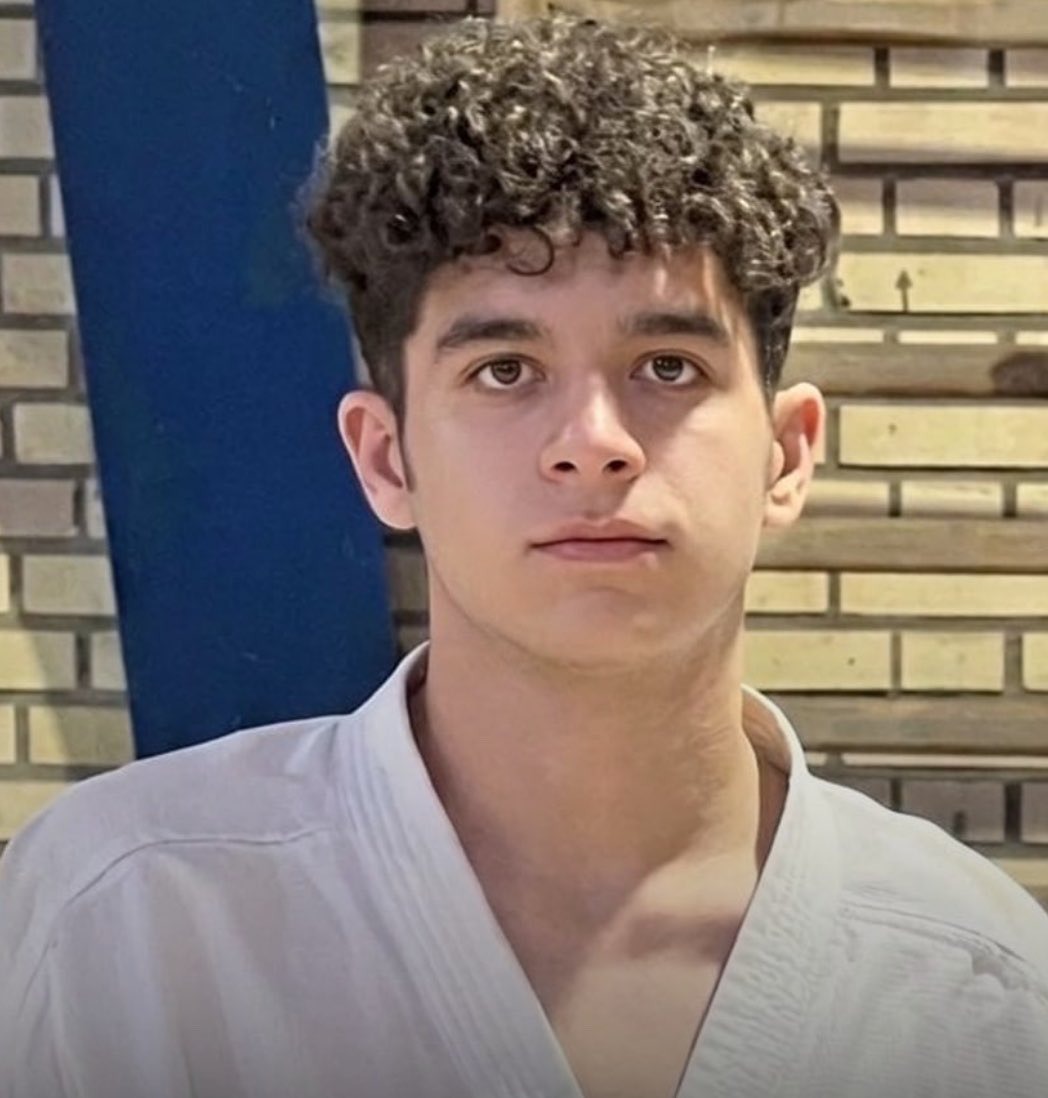
Sasan Azadvar, one of the detainees of the January 2026 protests and a karate champion from Isfahan Province was executed at dawn on April 30. Legal sources state that his case lacked independent evidence and the death sentence was based solely on confessions obtained under torture. He was 21 years old. Sources close to Sasan Azadvar’s family have announced that he was subjected to severe physical and psychological torture during his detention. According to these sources, security interrogators attempted to force him to accept the charges through continuous pressure, threats, and torture. This torture was applied in such a way that he was ultimately forced to make confessions against himself; confessions which, according to informed sources, formed the primary basis for the issuance of the death sentence.
The Unknown Fate of Nasir Bekrzadeh, Yaqoub Karimpour, and Mehrab Abdollahzadeh
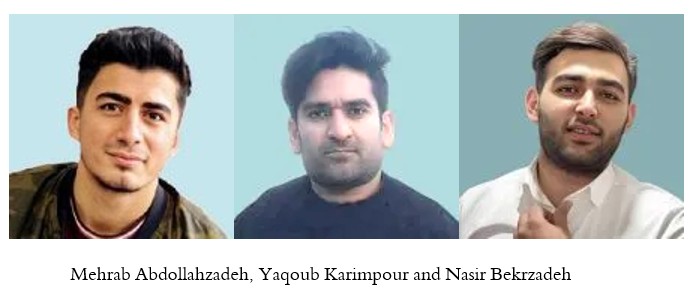 On Thursday, April 30, simultaneous with increasing concerns over the intensification of the wave of executions of political prisoners in Iran following the start of the war, reports from Urmia Prison indicate the sudden and separate transfer of three prisoners sentenced to death—Nasir Bekrzadeh, Yaqoub Karimpour, and Mehrab Abdollahzadeh—to unknown locations. As of the time of this report, none of these three prisoners have returned to their respective wards, and informed sources have warned of the possibility of the imminent execution of their sentences.
-
- Nasir Bekrzadeh: Informed sources have stated that on Thursday morning, Nasir Bekrzadeh, along with two other prisoners, was summoned to the Prison Execution Office to meet with the official in charge of executing sentences for the Public and Revolutionary Prosecutor’s Office. According to these sources, after the meeting, the other two prisoners returned to the ward, but Nasir Bekrzadeh was taken out of the prison in a refrigerated vehicle and transferred to an unknown location. This method of transfer has raised serious concerns about his condition and the possibility of a secret execution. Nasir Bekrzadeh, 26, and from Urmia, has been sentenced to death on charges of “espionage.” A few days ago, in an open letter, he completely rejected the charges, warned of the danger of his imminent execution, and requested support from public opinion and human rights organizations.
- Yaqoub Karimpour: Regarding Yaqoub Karimpour, sources have reported that he was taken out of Urmia Prison on Thursday morning under the pretext of being sent to the Medical Examiner’s Office but has not yet returned to the prison. Karimpour, who has a disability, was arrested on June 16, 2025 (26 Khordad 1404) by Ministry of Intelligence forces. According to reports, after being held for more than two months in the Ministry of Intelligence detention center, he was subjected to severe physical and psychological pressure to extract forced confessions. He was subsequently sentenced to death by Branch 1 of the Urmia Revolutionary Court on charges of “Corruption on Earth through Espionage” without access to a lawyer of his choice and in a brief process criticized by legal observers. Informed sources say his case has not yet been assigned to a branch in the Supreme Court and remains in a state of uncertainty.
- Mehrab Abdollahzadeh: Regarding Mehrab Abdollahzadeh, it is reported that two days ago, after a verbal altercation with one of the guards in the visiting hall of Urmia Prison, he was transferred to solitary confinement by order of the prison warden. This morning, another prisoner who was held in the same cell with him returned to the ward, but there is no information regarding the fate of Mehrab Abdollahzadeh. This situation has intensified concerns about his potential transfer to another location and the proximity of his execution. Mehrab Abdollahzadeh was arrested on October 22, 2022 (30 Mehr 1401) during nationwide protests and, according to informed sources, was subjected to pressure and torture for 38 days to accept involvement in the protests and the killing of a Basij member. He was sentenced to death in September 2024 (Shahrivar 1403), and his sentence has been upheld by the Supreme Court.
- Saeed Zarei Kordshuli, Hamidreza Fathi, Abdolreza Fathi, and Hamidreza Sabet-Ray
The death sentences for Saeed Zarei Kordshuli, Hamidreza Fathi, Abdolreza Fathi, and Hamidreza Sabet-Ray—detainees of the January 2026 nationwide protests in Marvdasht—have been issued by Branch 1 of the Shiraz Revolutionary Court, presided over by Judge Seyyed Mahmoud Sadati. Informed sources have announced that these defendants were subjected to severe physical and psychological torture during their detention to confess to charges including the killing of a Basij member. Reports indicate that the primary evidence in the case is based on confessions obtained under pressure, beatings, and electric shocks. According to published testimonies, including statements by former political prisoner Aboozar Barghahi in a published audio file, the defendants in this case—Saeed Zarei Kordshuli, Hamidreza Fathi, Abdolreza Fathi, and Hamidreza Sabet-Ray—were held in solitary confinement and tortured with electric shockers. Regarding Saeed Zarei Kordshuli, it has been stated that he suffered serious eye damage as a result of severe torture. Furthermore, Hamidreza Fathi’s arm was broken due to the torture inflicted. Additionally, reports of bone fractures and severe physical injuries have been published regarding the other defendants. It is worth noting that Seyyed Mahmoud Sadati was previously involved in the case of the Afkari brothers and has been placed under sanctions by the United States government.
- Mohammad Reza Tabari
Mohammad Reza Tabari, a 50-year-old citizen originally from Bojnord and a resident of Islamshahr, who was arrested during the January 2026 nationwide protests, has been sentenced to death on the charge of “Moharebeh” (enmity against God). Being the owner of a carpentry workshop in the “Ourin” area of Islamshahr, he surrendered himself to the police after learning he was under pursuit following his participation in the January 8 protests in Baharestan, Tehran.
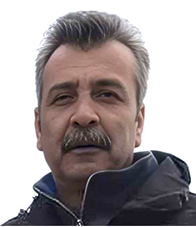
Branch 26 of the Tehran Revolutionary Court, presided over by Judge Iman Afshari, sentenced Mohammad Reza Tabari to death on charges of “Moharebeh” through the use of a firearm and “operational action in favor of opposition groups.” This sentence was issued while he was deprived of access to a lawyer of his choice and a fair trial throughout all stages of the legal proceedings. Mohammad Reza Tabari was transferred to Ghezel Hesar Prison in Karaj on January 10 and is currently being held there.
- Arrest of Families of Executed Political Prisoners
Akram Daneshvarkar (54) and Azam Daneshvarkar, sisters of the executed political prisoner Akbar Daneshvarkar (who was executed on March 30, 2026), were arrested on Monday, April 18, 2026. They were arrested during their repeated daily visits to Qezel Hesar, the Medical Examiner’s office, and the Judiciary to claim the body of their brother, Akbar.
To intimidate the families of other executed political prisoners, the “Executioner’s Judiciary” has charged Akram and Azam with “assembly and collusion against internal security and disruption of public order,” subsequently sending them to Qarchak Prison in Varamine.
The “crime” of these two sisters was 20 days of persistent inquiries to receive their brother’s body and requesting to know his place of burial.
Additionally, Ms. Masoumeh Azhini (63), sister of political prisoner Mahmoud Azhini (who was hanged in the 1988 massacre), was also arrested on April 4, 2026. She was arrested while she had moved from Tehran to the outskirts of Gorgan due to the war; her current location remains unknown.
Masoumeh had previously been arrested in 2019 for seeking justice for her brother and was imprisoned for one year in Fardis Prison, Karaj. Since then, she has been under constant intelligence surveillance and pressure, facing repeated summons and threats.
Conclusion and Necessity of Action
The recent remarks by the Chief Justice should not be viewed from a position of strength, but rather as a product of the absolute desperation of a regime that knows no language other than bullets and the noose for communicating with its citizens. A government trapped in a whirlpool of unsolvable crises sees its only way of survival in injecting terror and erecting gallows in streets and prisons. His statements are a clear example of a “confession to impunity” regarding the regime’s crimes.
While the joint emphasis by Mr. Volker Türk and Ms. Mai Sato on stopping executions in Iran is highly commendable and necessary to show the Islamic Republic that the global conscience for human rights is still alive, we all know that statements alone cannot stop the executions or free political prisoners.
Ejei’s remarks from yesterday clearly demonstrate this reality.
Therefore, it is the responsibility of the democratic governments of the world to prevent further executions by pressuring this human rights-violating, war-criminal, and genocidal regime.
Democratic countries can help stop executions and free political prisoners through the following concrete actions:
- Closing the embassies of the Islamic Republic.
- Expelling diplomats and agents of the Islamic Republic from their countries.
- Conditioning all relationships—economic, political, and diplomatic—on the cancellation of death sentences and the release of political prisoners.
- Utilizing the principle of Universal Jurisdiction to bring the perpetrators to justice, especially the judges who issue death sentences for political prisoners and detained protesters, as well as their torturers.
The world has the power to stop this criminal regime, but does it have the will?
*Update: Nasir Bekrzadeh and Yaqoub Karimpour were executed on May 2, 2026.