“A society should be judged not by how it treats its highest citizens, but its lowest ones.”

— Nelson Mandela
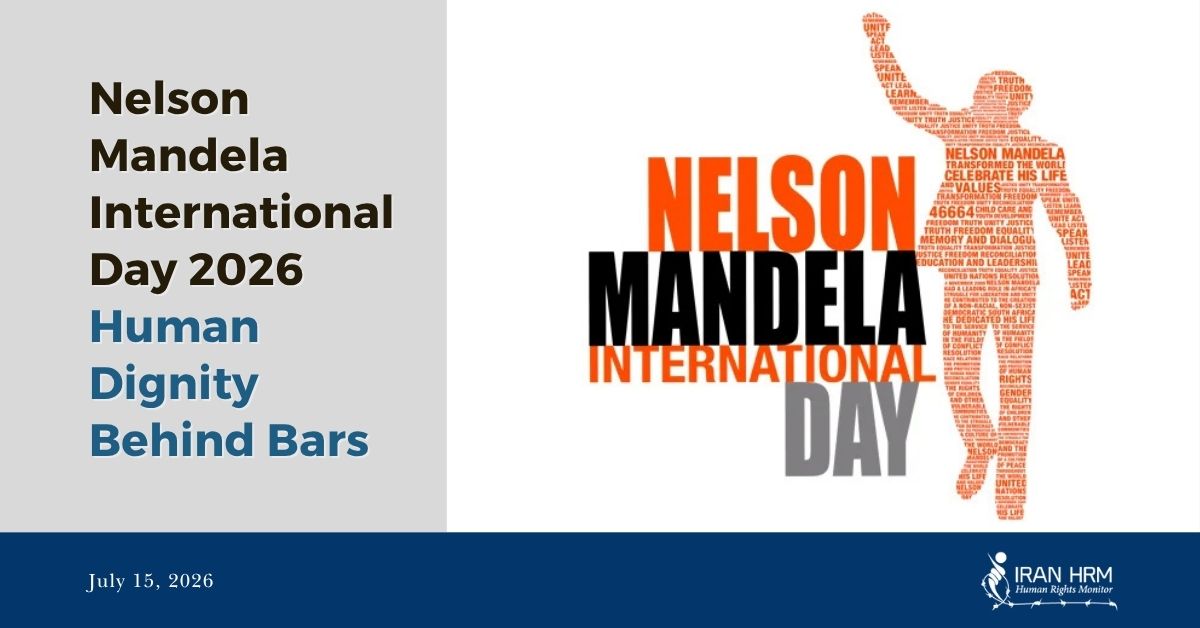
Nelson Mandela International Day, observed annually on 18 July, commemorates the birth of Nelson Mandela and serves as a global reminder of the shared responsibility of governments, public institutions, and the international community to uphold human dignity, justice, equality, peace, and respect for fundamental human rights. Through establishing this international day, the United Nations General Assembly called upon States and individuals alike to draw inspiration from Mandela’s legacy in building societies founded on justice, inclusion, and the rule of law.
One of the clearest measures of this commitment is the treatment of individuals deprived of their liberty. The United Nations Standard Minimum Rules for the Treatment of Prisoners, renamed the Nelson Mandela Rules in 2015, constitute the principal international standard governing the protection of prisoners’ rights. They establish minimum safeguards concerning the prohibition of torture, access to adequate healthcare, humane conditions of detention, restrictions on prolonged solitary confinement, proper classification of prisoners, and the preservation of family contact and access to legal counsel.
Published on the occasion of Nelson Mandela International Day 2026, this report examines the extent to which detention facilities administered by the Iranian authorities comply with these internationally recognized standards. The documented evidence presented herein demonstrates that violations of the Nelson Mandela Rules are neither isolated nor incidental. Rather, they reveal recurring and systemic patterns involving the denial of medical care, torture and ill-treatment, inhumane detention conditions, prolonged solitary confinement, forced labour, and the persistent absence of accountability.
International Legal Framework
The Nelson Mandela Rules represent the most authoritative international benchmark governing the treatment of persons deprived of their liberty. They establish minimum standards concerning healthcare, safety, sanitation, humane treatment, disciplinary measures, prisoner classification, and the protection of human dignity.
Although the Mandela Rules are generally regarded as soft law, many of their provisions reflect binding obligations arising under international human rights law, particularly Articles 7 and 10 of the International Covenant on Civil and Political Rights (ICCPR), to which Iran is a State Party. These obligations require all persons deprived of liberty to be treated with humanity and respect for their inherent dignity and prohibit torture and other cruel, inhuman or degrading treatment or punishment.
However, available documentation indicates a significant gap between these international obligations and the realities prevailing within prisons administered by the Iranian authorities. Evidence collected from documented cases points to recurring and structural violations affecting prisoners’ fundamental rights, including denial of medical treatment, torture, prolonged solitary confinement, inhumane detention conditions, arbitrary prisoner transfers, forced labour, and the absence of effective accountability mechanisms.
The following sections assess these documented patterns against the standards established by the Nelson Mandela Rules and international human rights law.
Systematic Denial of Medical Care: A Violation of the Right to Health and a Tool of Ill-Treatment
Access to adequate healthcare is a fundamental right of every person deprived of liberty. The Nelson Mandela Rules require that prisoners receive healthcare equivalent to that available in the community, without discrimination, and that medical decisions remain independent from political or security considerations.
Available evidence indicates that, within prisons administered by the Iranian authorities, denial of medical care has evolved into a recurring pattern of human rights violations. Delays or refusals to transfer seriously ill prisoners to external medical facilities, restrictions on access to essential medication, and disregard for professional medical recommendations have become common practices. In numerous cases involving political prisoners, prisoners of conscience, and civil society activists, these measures have extended beyond administrative negligence and have instead functioned as instruments of coercion and punishment.
According to documented reports, dozens of prisoners have died in recent years following the denial or delay of essential medical treatment. One comprehensive report alone documented the deaths of 96 prisoners in 30 prisons across 18 provinces, many of whom could likely have survived had they received timely access to specialized medical care. The highest number of recorded deaths occurred in the prisons of Urmia and Zahedan, raising additional concerns regarding the disproportionate impact of these practices on members of ethnic minority communities.
Numerous individual cases further demonstrate that the denial of healthcare extends well beyond chronic illness. Prisoners have reportedly been deprived of life-saving medication, cancer treatment, emergency surgery, and specialized care following serious injuries. The prolonged denial of specialized medical treatment for Zeynab Jalalian, restrictions on cancer medication for Marzieh Farsi, delays in treating Aida Najaflou following a spinal fracture, and the deaths of Behnam Mahjoubi and Sasan Niknafs constitute only a small number of documented examples illustrating this broader pattern.
Taken together, the available evidence suggests that the denial of healthcare in many Iranian prisons cannot be explained solely by inadequate resources. Rather, it reflects a systematic practice through which medical deprivation is used to inflict physical and psychological suffering, in direct contradiction to the Nelson Mandela Rules and Iran’s obligations under international human rights law.
Inhumane Conditions of Detention and Degrading Living Conditions
Rules 12 to 17 of the Nelson Mandela Rules require States to ensure that all places of detention provide adequate accommodation, ventilation, lighting, sanitation, drinking water, nutrition, and sleeping facilities consistent with human dignity.
However, documented evidence indicates that conditions in many prisons administered by the Iranian authorities fall far below these minimum standards. In numerous instances, poor detention conditions appear not merely to reflect inadequate infrastructure but to constitute a deliberate means of inflicting physical hardship and psychological pressure upon prisoners.
This pattern became particularly evident following the transfer of women political prisoners from Evin Prison to Qarchak Prison. Without receiving adequate medical attention after injuries sustained during the June 2025 explosion at Evin Prison, the prisoners were transferred to severely unsanitary facilities reportedly lacking adequate ventilation and basic sanitary services. Following their return to Evin Prison, many were reportedly held in underground corridors and prayer halls without proper beds, heating, or sufficient sanitary facilities, while being exposed to persistent dampness, sewage odours, rodent infestation, food shortages, and inflated prices for basic necessities.
The consequences have been especially severe for pregnant women, mothers with infants, elderly prisoners, and detainees suffering from serious medical conditions. Reports indicate that some imprisoned mothers were denied access to infant formula and other essential childcare supplies, while prisoners with chronic illnesses continued to be held in environments incompatible with their medical needs. Cases involving Fatemeh Ziaei and Shiva Esmaeili further demonstrate how inadequate detention conditions have compounded the denial of necessary medical treatment.
Taken together, these documented conditions indicate that the continued detention of vulnerable prisoners in overcrowded, unsanitary, and medically unsuitable environments may amount to cruel, inhuman, or degrading treatment under international human rights standards.
Violation of Prisoner Classification and Punitive Transfers
Rule 11 of the Nelson Mandela Rules requires that prisoners be classified according to their legal status, age, gender, criminal history, and the nature of their offences in order to ensure their safety and well-being.
Nevertheless, political prisoners and prisoners of conscience in Iran have repeatedly been held alongside individuals convicted of violent offences or transferred to inappropriate prison wards as a punitive measure.
The killing of Alireza Shirmohammadal, a 21-year-old prisoner of conscience who was housed with violent offenders in Tehran Greater Prison, remains one of the clearest examples of the consequences of failing to ensure proper prisoner classification.
Similarly, the forced transfer of dozens of women prisoners within Evin Prison, which reportedly resulted in violent confrontations, together with the punitive transfers of Amin Khazri and Hamid Haj Jafar Kashani to facilities or wards incompatible with their legal status, suggests that prisoner transfers have, in certain cases, been used as instruments of intimidation, punishment, and psychological pressure rather than legitimate correctional measures.
Such practices undermine prisoners’ safety and are incompatible with the protective purpose of Rule 11 of the Nelson Mandela Rules.
Prolonged Solitary Confinement, White Torture, and the Misuse of Psychiatric Institutions
Rules 43 to 45 of the Nelson Mandela Rules prohibit prolonged solitary confinement and any measure capable of causing severe physical or psychological suffering. The Rules further emphasize that medical and psychiatric services must never be used as instruments of punishment or coercion.
Available evidence indicates that prolonged solitary confinement, deprivation of meaningful human contact, restrictions on family visits, denial of access to reading materials, and prolonged judicial uncertainty continue to be employed against political prisoners and prisoners of conscience in Iran. Human rights experts have consistently described the cumulative psychological impact of these practices as “white torture.”
Particularly alarming are documented cases involving the misuse of psychiatric institutions against political dissenters. The case of Roya Zakari, who was reportedly transferred directly to the secure ward of a psychiatric hospital following her arrest, together with the case of Behnam Mahjoubi, who died after being forcibly transferred to a psychiatric facility, raises serious concerns regarding the use of medical institutions to punish, discredit, or silence dissent.
Such practices are incompatible with the Nelson Mandela Rules, international medical ethics, and the principle of informed and independent medical care.
Forced Labour and Economic Exploitation
Rules 96 to 104 of the Nelson Mandela Rules provide that prison labour must respect human dignity, be performed under safe conditions, and never constitute forced labour or economic exploitation.
Nevertheless, available reports indicate that tens of thousands of prisoners in Iran work in workshops operated by the Prison Organization and the Prison Cooperative Foundation while receiving minimal remuneration and lacking adequate labour protections. In several detention facilities, including Qarchak Prison and Vakilabad Prison, women prisoners have reportedly undertaken physically demanding work for extremely low wages simply to obtain basic hygiene products and daily necessities.
These practices raise serious concerns regarding the compatibility of prison labour arrangements in Iran with international standards prohibiting forced labour and economic exploitation of persons deprived of their liberty.
Protection of Prisoners’ Lives and the Duty of Care During Emergencies
Under the Nelson Mandela Rules, prison authorities bear full responsibility for safeguarding the life, physical integrity, and security of all persons deprived of their liberty. This obligation applies at all times, including during emergencies, civil unrest, or armed conflict, and requires authorities to take all reasonable measures to prevent foreseeable harm.
Documented evidence suggests that, in several recent incidents, this duty of care was not effectively fulfilled. During the unrest at Dastgerd Prison in 2026, reports alleged the use of live ammunition and tear gas inside prison facilities, resulting in the death and injury of several prisoners. Additional reports indicated that some victims’ families were denied timely access to the bodies of their relatives and that independent investigations into the circumstances of their deaths were not permitted.
Similarly, during the airstrikes that damaged sections of Evin Prison in June 2026, available information indicates that despite the escalating security risks, adequate measures were reportedly not taken to protect or evacuate prisoners. As a result, prisoners, prison staff, medical personnel, and civilians present near the prison reportedly lost their lives. Regardless of the source of the attack, prison authorities remained under a legal obligation to take all feasible measures to protect those under their custody.
Impunity and the Absence of Accountability
Effective implementation of the Nelson Mandela Rules requires independent oversight, prompt investigation of allegations of torture and deaths in custody, effective complaint mechanisms, and accountability for those responsible for serious human rights violations.
However, available evidence indicates that numerous allegations involving deaths in custody, denial of medical care, torture, and other serious violations have not been subjected to independent, impartial, and effective investigations. In many documented cases, victims’ families have been denied access to the truth regarding the circumstances of the deaths of their relatives and have not obtained justice or effective remedies.
The repeated dismissal of findings issued by United Nations human rights mechanisms, together with the absence of independent monitoring of detention facilities, has contributed to an environment in which serious violations can continue without meaningful accountability. Such impunity undermines both the rule of law and the protection of the fundamental rights of persons deprived of their liberty.
Conclusion
Nelson Mandela International Day is not merely a commemoration of an extraordinary leader; it is an annual reminder that the dignity of every human being must be protected, including those who have been deprived of their liberty.
The Nelson Mandela Rules have become the universally recognized benchmark for assessing the treatment of prisoners and the extent to which States respect human dignity within places of detention.
The documented evidence presented in this report indicates that violations of the Nelson Mandela Rules in prisons administered by the Iranian authorities are not isolated or exceptional incidents. Rather, they reveal recurring and systemic patterns involving denial of medical care, torture and other forms of ill-treatment, prolonged solitary confinement, inhumane conditions of detention, arbitrary prisoner transfers, forced labour, and the persistent absence of accountability.
These patterns are incompatible with Iran’s obligations under international human rights law, including the International Covenant on Civil and Political Rights, and raise serious concerns regarding the protection of the rights to life, dignity, health, and freedom from torture.
As Nelson Mandela once observed:
“A society should be judged not by how it treats its highest citizens, but its lowest ones.”
The treatment of prisoners therefore remains one of the clearest indicators of a State’s commitment to justice, human dignity, and the rule of law. The continuing pattern of documented violations highlighted in this report underscores the urgent need for sustained international attention and effective action to protect the rights of persons deprived of their liberty in Iran.
Recommendations
In light of the findings presented in this report, the United Nations, its relevant human rights mechanisms, and States committed to the protection of human rights are encouraged to:
- Call for regular, independent, and unrestricted access by international monitoring mechanisms to prisons and detention facilities in Iran.
- Support prompt, impartial, and independent investigations into deaths in custody, allegations of torture, denial of medical care, and other serious human rights violations.
- Examine appropriate avenues for accountability, including the application of international legal mechanisms and, where applicable, the principle of universal jurisdiction for those responsible for serious violations.
- Encourage the International Labour Organization (ILO) to assess prison labour practices in Iran in light of international standards prohibiting forced labour and economic exploitation.
- Urge the authorities to ensure full implementation of the Nelson Mandela Rules, including access to independent medical care, humane detention conditions, protection of vulnerable prisoners, and effective safeguards against torture and other forms of cruel, inhuman, or degrading treatment.