Executive Summary at a Glance
- Securitization of Education: While hundreds of thousands of children face educational poverty and out-of-school marginalization, the Parliament of the Islamic Republic has mandated the Ministry of Education to implement programs related to “countering infiltration” and allocated a dedicated budget line for it.
- Widespread Educational Deprivation: According to national statistics and a report by the Parliamentary Research Center, the total number of dropouts and out-of-school children across all levels is estimated at over 928,000, of which only 140,000 belong to the primary school level.
- Collapse of Public Education and Teacher Crisis: The share of ordinary public schools among top University Entrance Exam (Konkur) rankings has dropped to zero. The average national exam scores of public-school students have fallen below the passing threshold (8.96), and the decline in educational quality is exacerbated by non-specialized recruitment (“avalanche-style hiring”) and severe classroom overcrowding.
- Poverty and the Commodification of Education: Tuition for non-profit (private) schools has reached up to 223 million Tomans, and the cost of a basic stationery kit has hit 15 million Tomans—amounts that make education an inaccessible commodity for millions of children.
- Escalation of Social Harm Among Children: Thousands of children have been driven into child labor, and official authorities report smoking rates between 20% to 30% among the country’s student population—a situation posing a severe threat to the future of the new generation.
- Failure of the Child Protection System: Instances of out-of-school children, child labor, abandoned infants, and the rise of social harm indicate that existing support mechanisms have failed to protect children’s fundamental rights.
Introduction
While hundreds of thousands of Iranian children face poverty, educational deprivation, child labor, declining quality of public education, addiction, and lack of minimum growth and development opportunities, governance priorities in the Islamic Republic of Iran—rather than focusing on child rights and investing in their future—have shifted toward securitizing the educational environment, ideological control, and expanding surveillance mechanisms.

The evidence compiled in this report demonstrates that violations of children’s rights in Iran are not the result of a single isolated factor. Widespread educational deprivation, the proliferation of child labor, families’ inability to afford educational expenses, the collapse of public-school quality, increasing psychological and social harm among students, and growing educational inequality have all formed within the context of policies that have marginalized public education and child welfare.
Under conditions where tens of thousands of children are deprived of education, the cost of schooling for millions of families has reached a level where even procuring stationery and basic school necessities has become difficult. Simultaneously, the continuous decrease in education’s share of public resources and the allocation of governance capacity to security priorities have increasingly weakened public education and restricted equal opportunities for children.
This report argues that these cumulative trends are not merely scattered social or economic problems; rather, they constitute a structural pattern of child rights violations whose consequences threaten not only the lives of children today, but also the future of Iran’s human, educational, and social development.
Securitization of Education Instead of Investment in Children
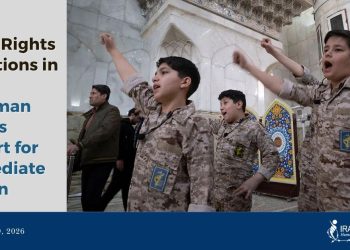
While the educational system suffers from resource shortages, quality decline, and rising dropout rates, the Parliament of the Islamic Republic approved Article 9 of the “Countering Infiltration” bill. Under this article, the Ministry of Education is obligated to incorporate “enemy infiltration” and related instruction into educational content in consultation with the Ministry of Intelligence and the Supreme Council of the Cultural Revolution. Necessary resources for implementing these policies must also be allocated in the annual national budget.
This approach reflects the prioritization of security considerations in the educational system at a time when the Ministry of Education’s share of the total national budget has plummeted from over 15% to below 10%, and children face deeper crises such as poverty, school dropouts, falling educational standards, and a lack of learning facilities.
Widespread Educational Deprivation and Its Hidden Dimensions
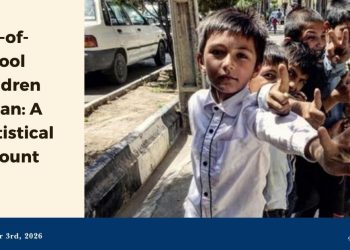
According to official statistics from the Ministry of Education, 140,562 children at the primary level were out of school in the past year. Of this number:
- 55.45% were boys and 44.55% were girls.
- 54,445 individuals were first-grade entry age.
- The highest numbers belonged to Sistan and Baluchestan, Tehran, Razavi Khorasan, and Khuzestan provinces.
Re-evaluating Statistics Based on the Parliamentary Research Center Report
Comprehensive reports by the Parliamentary Research Center (titled “Examining the Status of Out-of-School Children in Iran”) reveal that the 140,000-figure announced by the Ministry covers only the primary school level (the tip of the iceberg). Factoring in lower and upper secondary levels, the overall number of dropouts and out-of-school children in the country is estimated at over 928,000.
The Role of Poverty and Structural Discrimination
Even within official statistics, economic factors account for a significant portion of educational deprivation. The Ministry of Education stated that at least 2,491 cases of school non-attendance were directly caused by family financial poverty. Employment, lack of a guardian, unfit guardianship, and other social harms were also cited among the causes.
In underprivileged regions, 44.55% of female dropouts are directly linked to financial poverty and the prevalence of child marriage and forced unions (with at least 86 primary-school marriages officially registered). These figures demonstrate that economic poverty has become a direct barrier to children exercising their right to education.
Poverty, Inflation, and the Exclusion of Children from Education
The sharp rise in living costs has directly impacted children’s ability to attend school. Economic reports indicate that within just five months, household purchasing power dropped by approximately 24%, while point-to-point inflation reached 84.4%.
Under these conditions:
- Tuition fees for non-profit (private) schools range from approximately 30 million to 223 million Tomans (equivalent to approximately USD 130–964 at the prevailing free-market exchange rate or USD 218–1,623 at the official exchange rate).
- The cost of a basic stationery kit has reached approximately 13 to 15 million Tomans (equivalent to approximately USD 56–65 at the prevailing free-market exchange rate or USD 95–109 at the official exchange rate).
For millions of low-income families, these expenses mean the gradual exclusion of their children from quality educational opportunities or even formal education altogether.
Collapse of Public Education Quality and the Teacher Recruitment Crisis
Beyond educational deprivation, the quality of public education is facing a severe crisis. According to reports by Shargh Newspaper:
- The share of ordinary public schools among the top 40 Konkur (Iran’s National University Entrance Examination) rankings dropped to zero in 2024.
- This figure remained at zero in 2025.
Additionally:
- The average final examination grade for ordinary public schools was reported at 8.96—below the passing threshold.
- Class density in many schools ranges between 35 to 45 students.
- In certain regions, the student-to-teacher ratio has reached 57.43 students per teacher.
This situation demonstrates that the principle of equal educational opportunity has been effectively undermined, and public schools—which should serve as instruments to reduce inequality—have themselves turned into mechanisms reproducing inequality.
“Avalanche-Style Hiring” of Teachers
According to the Parliamentary Research Center report, the Ministry of Education resorted to hasty and non-specialized recruitment to compensate for acute teacher shortages. This included employing 26,331 service-purchase personnel, conscript teachers, and seminary students without completing required pedagogical and educational training courses. This policy, described as “avalanche-style hiring of human resources,” has funneled unqualified personnel into ordinary public schools, further accelerating the collapse of public education quality.
Child Labor: A Direct Product of Poverty and Deprivation
Official reports indicate that approximately 7,000 child workers and street children are covered by State Welfare Organization services. However, even official authorities admit that this figure includes only identified children. The presence of extensive child labor networks in major cities signals a direct link between economic poverty, school dropout, and child exploitation.
When families lose the ability to cover basic living and educational expenses, children are forced into the informal labor market—a process that transmits the cycle of poverty to the next generation.
Mental Health Crisis and Widespread Tobacco Use
One of the most alarming aspects of available data concerns the psychological and social well-being of students. The Director of Treatment at the Anti-Narcotics Headquarters stated that 20% to 30% of the country’s 16-million student population smoke cigarettes or have chosen smoking as their entry point into substance use.
Described by official authorities as a threat to the “country’s future human capital,” this situation highlights the failure of developmental/educational policies and the absence of resilience-building and support mechanisms in schools.
Vulnerable Children and the Collapse of Social Protection
Reports of infant abandonment, including a recorded case in Nurabad, Lorestan, offer another picture of the weak social protection system. Alongside this, official reports from the State Welfare Organization regarding the transfer of abandoned infants to nurseries demonstrate that this phenomenon is not an isolated exception, but part of a deeper social crisis in which absolute poverty and institutional inefficiency threaten the life and basic survival of children even before they reach school age.
Legal Analysis and Violation of International Conventions
The findings of this report demonstrate explicit violations of the Islamic Republic of Iran’s international obligations under the Convention on the Rights of the Child (CRC) and the International Covenant on Economic, Social and Cultural Rights (ICESCR):
- Article 6 of the CRC (Right to Survival and Development): Failure to provide minimum social and economic protection to guarantee child survival and development, particularly amidst reports of poverty, child labor, educational deprivation, and infant abandonment.
- Article 28 of the CRC (Right to Free and Compulsory Education): Nearly 1 million out-of-school children, a shrinking education budget share, and extreme commodification preventing equal access for children.
- Article 29 of the CRC (Aims of Education): Securitization and ideologization of educational content through the inclusion of “countering infiltration” topics in curricula, rather than focusing on enhancing students’ scientific, social, and personal capacities.
- Article 32 of the CRC (Protection from Economic Exploitation): Lack of effective policies to prevent children from entering the labor market, alongside a direct link between household poverty, school dropouts, and the growth of child labor.
- Article 33 of the CRC (Protection Against Narcotic Drugs): Failure to protect educational environments from the influx of tobacco and psychotropic substances, and lack of effective measures to prevent the spread of smoking and addictive substances among children and adolescents.
Conclusion
The findings of this report demonstrate that child rights violations in Iran are not merely the result of a single factor. Economic poverty, educational deprivation, falling public school quality, expanding child labor, psychological and social pressures, and the prioritization of security policies over educational investment have collectively created a cycle that threatens the future of a large portion of Iran’s children.
Under these circumstances, the issue is not merely today’s children being deprived of education; it is the restriction of life opportunities, employment, social participation, and human development for the country’s future generation.
Sources (in Farsi)
From Wiping Car Windows to the Classroom: Has the Fate of Working Children in Tehran Changed?
Tuition for Non-Profit (Private) Schools Ranges from 30 to 223 Million Tomans.
The Population of Out-of-School Children in Iran Has Reached the Threshold of One Million
Statistical Center of Iran: 930 Thousand Students Dropped Out of School in the Past Academic Year