Executive Summary

During the reporting period, the Baluch minority in Iran continued to face a range of interconnected human rights violations, affecting rights ranging from the right to life and the right to a fair trial to the rights to education, health, identity, development, and equal participation in public life.
During Mehr and Aban 1405 (September–November 2026), multiple executions of Baluch prisoners were reported, including prisoners charged with political and security-related offences. At the same time, reports pointed to the persistence of structural problems in prisons across the province, including Zahedan Central Prison, Zabol Prison, and Iranshahr Prison. The killing of fuel carriers continued economic deprivation, the expansion of security-oriented approaches, and the prolonged crisis affecting people without identity documents further indicate that the Baluch population faces multiple forms of structural deprivation and discrimination.
This report argues that the situation of the Baluch population cannot be adequately explained by examining isolated cases of execution, arrest, or poverty. Rather, the evidence points to an interconnected pattern of economic deprivation, security control, limited participation in development, a disproportionate burden of the death penalty, and the continued denial of fundamental rights.
Historical Background: From Zahedan’s Bloody Friday to the First Anniversary of the Nationwide Protests of 2026
The current situation of the Baluch community cannot be examined separately from the political and security developments of recent years. During the nationwide protests of 2022, Sistan and Baluchestan Province became one of the country’s principal centers of public protest. The events of Zahedan’s Bloody Friday subsequently became one of the most significant symbols, in the collective memory of the Baluch population, of state violence against protesters.
In the years that followed, numerous reports documented the continuation of security-related arrests, the fabrication of cases against Baluch activists, the issuance of harsh sentences, the execution of Baluch prisoners, and the intensified presence of security institutions in the province. Meanwhile, many families of victims of the protests and Baluch civil society activists have continued to express concerns about the lack of effective accountability for human rights violations.
As the first anniversary of the nationwide protests of December 2025-Janvier 2026 approaches, many of the developments examined in this report—including the increase in executions, pressure on political prisoners, the continuation of security-oriented measures against fuel carriers, and the expanding presence of security institutions in the everyday lives of Baluch residents—are unfolding against a backdrop in which the consequences of the nationwide protests and the subsequent crackdown remain ongoing.
This historical background is essential to understanding the current situation of the Baluch population. Many of the security policies discussed in this report have developed in an environment in which state institutions have increasingly viewed the Baluch community through a security lens. This approach risks resulting in the management of the community’s social, economic, cultural, and civil demands primarily through security measures, rather than addressing them through legal and development-oriented mechanisms.
Executions and the Right to Life
Executions Documented During the Reporting Period
Between September–November 2026, multiple executions of Baluch individuals were documented in prisons across Iran. Among these cases, two involved political and security-related charges, while several others concerned ordinary criminal charges, including murder.
With regard to political and security-related cases, Omar Dorostaran was executed at Zahedan Central Prison on 12 October 2026, and Mohammad Aref Shahbakhsh was executed at the same prison on 7 November 2026. Earlier, since the beginning of 1405, Amer Ramesh, Abdoljalil Shahbakhsh, Elias Zeynaldini, and Mohammad Afrokhteh had also been executed on security-related charges or charges connected to military and security institutions. These cases have raised concerns among human rights organizations regarding fair trial guarantees and judicial transparency.
In addition, several other executions of Baluch individuals in non-political cases were documented during the reporting period. These included:
- Mohammad Amin Atashgar, 25, from Zabol, who was executed at dawn on 15 November 2026 at Zabol Central Prison.
- Hamzeh Morai Khalis (Naroui), 23, from Zahedan who was executed at dawn on 17 November 2026 at Zahedan Central Prison.
Although these cases were not political in nature, they demonstrate, alongside other documented cases, that the use of the death penalty continues at a high rate in Sistan and Baluchestan Province and against Baluch individuals.
Political and Security-Related Executions in 2026
According to reports, at least six Baluch prisoners had been executed between 21 March and 7 November 2026, on political or security-related charges, or on charges involving the killing of individuals affiliated with security and military institutions.
These individuals were:
- Amer Ramesh
- Abdoljalil Shahbakhsh
- Elias Zeynaldini
- Mohammad Afrokhteh (Charag)
- Omar Dorostaran
- Mohammad Aref Shahbakhsh
Reports concerning several of these cases indicate that confessions were coerced, prisoners were denied effective access to legal counsel, arrests were followed by periods of enforced disappearance or incommunicado detention, and executions were carried out without prior notification to family members. The average age of these six prisoners was reported to be approximately 29, indicating that a significant proportion of the Baluch individuals executed in political cases were young adults.
The Case of Elias Zeynaldini
The case of Elias Zehi-Din is one of the particularly concerning cases during this period. He was executed on 16 May 2026, after spending approximately eleven years in prison. His family had not been informed before the execution and was denied a final visit with him. Furthermore, no clear information has been made public regarding whether he had effective access to independent legal counsel. Unlike some other cases, news of his execution was not published by the official media of the Islamic Republic of Iran; it was first documented by human rights organizations.
Warnings About Baluch Prisoners on Death Row
On 13 November 2026, Molavi Abdolhamid, the Sunni Friday prayer leader of Zahedan, stated in his Friday sermon that, according to information he had received, approximately 7,000 prisoners convicted of drug-related offences across the country were at risk of execution, including around 2,000 from Sistan and Baluchestan Province. Calling for a complete halt to executions, he emphasized that ending executions was one of the most important demands of the people of the province.
Although these figures require independent verification, their public presentation by the most prominent Sunni religious leader in Baluchistan reflects the depth of public concern over the expansion of the use of the death penalty against Baluch citizens.
Disproportionate Focus of Executions on Baluch Citizens
Data compiled by Baluch human rights organizations indicate that the implementation of the death penalty in Iran has had a disproportionate impact on the Baluch community. According to a report by the Baluchistan Human Rights Documentation Network, at least 143 Baluch citizens were executed in 29 prisons across Iran in 2025. The Network reported that this figure accounted for approximately 9 per cent of all executions documented by these organizations in the country, while Baluch people constitute approximately 5 to 6 per cent of Iran’s population.
This statistical disparity indicates that Baluch citizens have been subjected to the death penalty at a rate exceeding their proportion of the national population. Furthermore, the majority of executed Baluch individuals had faced drug-related charges, and many came from deprived areas and low-income families. This situation raises concerns about the impact of structural discrimination, poverty, unequal access to fair trial guarantees, and the widespread use of the death penalty against marginalized communities.
The Baluchistan Human Rights Documentation Network has also reported that at least 766 Baluch citizens were executed in prisons across the country between the beginning of 2017 and the end of 2025.
These figures have been recorded against the backdrop of the fact that Baluch people constitute approximately 5 to 6 per cent of Iran’s population. Human rights organizations have therefore repeatedly warned about the disproportionate concentration of executions among Baluch citizens.
Baluch Political Prisoners: From Individual Cases to a Structural Pattern
An examination of security-related cases involving Baluch citizens reveals a recurring set of concerns at the stages of arrest, interrogation, and judicial proceedings. Published reports describe arrests by intelligence agencies; physical and psychological pressure to extract confessions; restrictions on effective access to lawyers and family members; reliance on contested confessions; and a lack of clarity regarding the evidence supporting security-related charges. These concerns have been reflected in several cases, including those of Hamidreza Kohkan and three other Baluch citizens, Misagh Rahmatzadeh, and reports concerning the situation of Baluch prisoners in Zahedan Central Prison.
In the case of Hamidreza Kohkan, Mohammad Kharout Dinmohammadi, Ahmadali Kohkan, and Khaled Kashani, Branch 103 of Zahedan Criminal Court Two issued a total of 17 years and one day of discretionary imprisonment in August–September 2026. According to the published report, the case was initiated on the basis of a report by the Intelligence Department and security enforcement authorities. The same report refers to allegations of torture and restrictions on access to legal counsel in the records of some of those convicted, including Hamidreza Kohkan. In another case, Misagh Rahmatzadeh, an approximately 18-year-old Baluch citizen, has been sentenced to death on charges including moharebeh (enmity against God). Reports indicate that he was arrested without a judicial warrant being presented, subjected to physical and psychological pressure to extract a confession, and that no clear information has been made available about the evidence supporting the charges or the judicial proceedings. Reports received from Zahedan Central Prison also indicate that a number of Baluch prisoners have faced intensive interrogations, pressure to admit to charges, and restrictions on effective access to independent legal counsel, while confessions they have contested were relied upon in judicial proceedings.
These cases form part of a broader context of concerns regarding the treatment of Baluch citizens and other ethnic minorities in Iran. Independent United Nations experts have also warned about an increase in arbitrary arrests, enforced disappearances, torture, coerced confessions, and the implementation of death sentences against Baluch and Kurdish citizens.
Taken together, these reports, despite differences in the charges and sentences involved, raise serious questions about compliance with fair trial guarantees, the reliability of confessions obtained under pressure, access to legal counsel, and the transparency of judicial proceedings in security-related cases involving Baluch citizens. The recurrence of such concerns across different cases underscores the need to examine them not merely as isolated incidents, but within the framework of a broader pattern in the judicial and security-related treatment of Baluch citizens.
Conditions in Prisons and Detention Facilities in Sistan and Baluchestan: A Systematic Pattern of Violations of Prisoners’ Rights
Conditions in detention facilities and prisons in Sistan and Baluchestan Province, particularly Zahedan Central Prison, Iranshahr Prison, and Zabol Prison, point to a structural crisis and systematic violations of prisoners’ fundamental rights. A comprehensive examination of these facilities indicates that the conditions of detention go beyond local administrative shortcomings and are in clear conflict with international human rights standards, including Article 10 of the International Covenant on Civil and Political Rights (ICCPR), which requires the humane treatment of prisoners, and the United Nations Standard Minimum Rules for the Treatment of Prisoners (the Nelson Mandela Rules).
- Zahedan Central Prison: A Convergence of Humanitarian Crises and Labor Exploitation
As one of the province’s largest prisons, Zahedan Central Prison, with 13 wards and dozens of solitary confinement cells (some sections of which are located in underground spaces without adequate ventilation), is a major site of security-related pressure and deprivation of basic necessities. Credible reports point to the following conditions:
- Humanitarian and living-conditions crisis: Severe overcrowding, an extreme shortage of beds and sleeping space, very poor-quality and, in some cases, non-potable food and inadequate food rations, as well as exorbitant prices for essential goods in the prison shop, placing additional financial pressure on low-income families.
- Denial of medical care: Deliberate restrictions on access to specialized medical services and transfers to healthcare facilities outside the prison.
- Forced labor and exploitation of prisoners on open-prison status: Approximately 150 prisoners classified as being on “open-prison” status are reportedly deployed to perform municipal services without receiving any legally mandated wages, while also being required to cover their own transportation costs. This practice constitutes clear economic exploitation and raises serious concerns under international conventions prohibiting forced labor.
- Iranshahr Prison: Inhuman Conditions and a Health Crisis
Conditions at Iranshahr Prison are characterized by severe overcrowding, the breakdown of basic hygiene standards, and a serious lack of adequate healthcare services.
- Critical conditions in Ward 4: Conditions in this ward, marked by the spread of violence, the absence of psychological and physical security, and the lack of basic necessities for daily life, are wholly incompatible with human dignity. Local observers and human rights monitors have described the conditions there as resembling a “slaughterhouse.”
- Punitive and involuntary transfers: Alarming reports have emerged of the sudden and forced transfer of prisoners on open-prison status from Iranshahr to Zahedan Central Prison. In addition to causing further hardship for their families, these transfers pose a serious threat to prisoners’ lives due to the deterioration of health conditions and the shortage of medical facilities.
- Zabol Prison: Institutionalized Secrecy and the Absence of Independent Oversight
Information about Zabol Prison remains extremely limited due to the prevailing security environment and policies restricting access to information. Nevertheless, available evidence points to the continuation of similar crises in this facility. The lack of transparency, prisoners’ limited access to legal information, and the difficulties faced by independent human rights organizations in monitoring the handling of cases have created an environment in which the prison is shielded from accountability.
Human Rights Assessment and Conclusion
A comparative analysis of conditions in Zahedan, Iranshahr, and Zabol prisons indicates that the problems described are not isolated incidents or temporary administrative failures. Rather, they reflect a province-wide and systematic pattern of security-driven prison management in Iran’s marginalized regions. This approach, in addition to constituting structural discrimination against Baluch and political prisoners, represents a clear violation of Iran’s international obligations to protect the rights to life and health and to prohibit torture and other forms of ill-treatment.
Structural Poverty, Underdevelopment, and Baluch Fuel Carriers
Why Fuel Carrying?
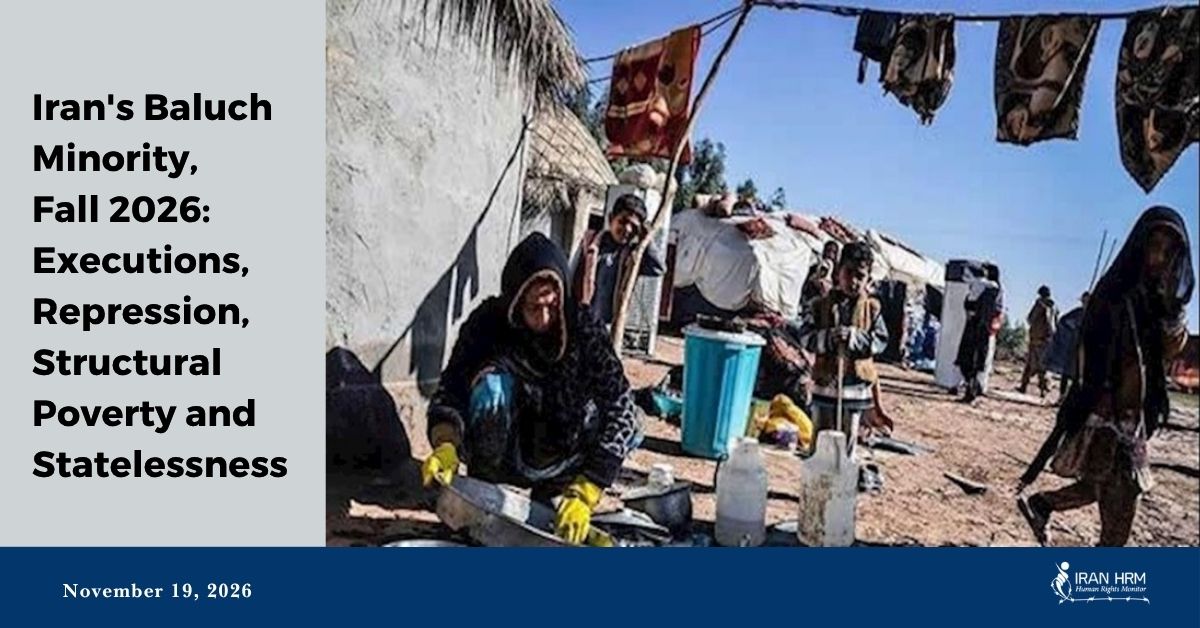
Despite its rich and valuable mineral resources—including copper, gold, antimony, chromite, titanium, manganese, and construction stone—direct access to international waters and the Sea of Oman, a strategic border location adjoining Pakistan and Afghanistan, and exceptional economic potential in international transit (including the ocean-going port of Chabahar), cross-border trade, fisheries, and tropical agriculture, Sistan and Baluchestan Province remains one of the most deprived and underdeveloped regions of Iran.
This profound gap between the region’s natural wealth and the living conditions of its indigenous population is a direct consequence of unbalanced development policies, inadequate allocation of public development funds, a shortage of sustainable industrial investment, and the marginalization of local communities in decision-making processes and the management of the region’s economic resources. As a result of this discriminatory structure, high unemployment, chronic poverty, and the lack of safe and formal employment opportunities have left a large proportion of the young workforce and household breadwinners facing livelihood dead end.
Within this context, fuel carrying cannot be regarded merely as an individual choice, an administrative offence, or an informal economic activity. For thousands of Baluch families, in the absence of government support mechanisms and equal economic opportunities, it has become the last—and often the only—“survival strategy” available to secure the bare necessities of life and preserve human dignity in the face of structural poverty.
A Security-Based Response to an Economic Problem
Rather than addressing the underlying economic causes of this phenomenon, the authorities’ response has largely been security-driven.
During September–November 2026, cases were documented in which Baluch fuel carriers were killed as a result of gunfire by military forces or during pursuits. These included the killings of Ali Brahoui and Vahid Gorgij.
Reports have also emerged concerning the laying of landmines along routes used by fuel carriers in border areas.
In addition to the incidents discussed earlier in this report, on 17 November 2026, military forces stationed along the “Gasht” axis in Saravan opened fire on fuel-carrying vehicles without prior warning. According to local reports, at least three vehicles overturned as a result of the shooting and ensuing pursuit, and local sources described the condition of their occupants as critical.
According to local sources, fear of arrest or other security-related repercussions has made the transfer of some injured individuals to medical facilities difficult. This indicates that the consequences of the security-driven approach are not confined to the moment of shooting but also affect victims’ access to medical care.
An examination of these incidents indicates that, rather than addressing the economic and developmental factors underlying fuel carrying, the prevailing approach continues to rely on security and law-enforcement measures—an approach that has resulted in the continued killing and injuring of Baluch fuel carriers.
The Crisis of Legal Identity and Individuals Without Birth Certificates in Sistan and Baluchestan
- The Scale of the Backlog of Identity-Related Cases
One of the most chronic and deeply rooted human rights crises in Sistan and Baluchestan is the presence of tens of thousands of people without birth certificates or official identity documents. The implicit acknowledgment by official institutions, including the National Organization for Civil Registration, that thousands of nationality-determination cases in the province remain pending and unresolved is evidence of the scale of this structural crisis. This situation has deprived a significant population of their most basic civil rights.
- Human Consequences and Multiple Layers of Human Rights Violations
Under international law, the absence of identity documents goes far beyond a simple administrative deficiency. It constitutes a serious violation of Article 16 of the International Covenant on Civil and Political Rights (the right to recognition as a person before the law), s well as Article 7 of the Convention on the Rights of the Child (the right to immediate birth registration, a name, and the acquisition of nationality) and Article 24 of the same Convention (the right to the highest attainable standard of health and access to healthcare services).In practice, individuals without birth certificates face the following forms of systematic deprivation:
- Denial of access to education and healthcare: Children without official identity documents are often prevented from exercising their right to education. Disturbing field reports have also documented cases in which children have been denied access to essential medical services, including in medical emergencies and intensive care units.
- Economic and social exclusion: Exclusion from formal employment, social insurance, government subsidies, legal property ownership, and pension entitlements traps these individuals in a cycle of intergenerational poverty.
- The Role of the State: The Securitization of Identity and the Perpetuation of the Crisis
The persistence of this crisis over several decades cannot be attributed solely to administrative inefficiency; rather, it stems from structural and policy-related factors. Complex and protracted administrative procedures, the security-oriented approach adopted by state institutions toward the identity of the region’s residents, and the presumption that applicants are “non-Iranian” have deliberately prolonged and complicated the resolution of these cases.
Conclusion
The absence of birth certificates in Sistan and Baluchestan is therefore a profound human rights challenge that directly undermines fundamental principles of non-discrimination, the right to identity, the right to health, and the right to development. It requires urgent attention and intervention by international monitoring mechanisms.
Baluch Women: At the Intersection of Ethnic and Gender-Based Discrimination and Deprivation of Legal Identity
Baluch women in Iran face multiple and overlapping forms of deprivation arising at the intersection of ethnic, gender-based, economic, and geographic discrimination. Restricted access to employment opportunities, education and healthcare services, the lack of identity documents, and the consequences of security-driven policies have created conditions in which Baluch women and girls, particularly those from low-income families and families without birth certificates, face heightened risks.
One example of this situation was reported in 21 October–20 November 2026 in Yazd Province. Military and law-enforcement forces raided the homes of Baluch families without birth certificates in Zarach County, arresting ten families and transferring them to a foreign nationals’ detention camp. Women, children, and elderly people were among those detained. According to the Baluchistan Human Rights Documentation Network, five of these families were deported to Afghanistan, while the other five were removed from Yazd and transferred toward the foreign nationals’ detention camp in Zahedan. Among the individuals whose identities were established were several women and girls and a two-month-old infant. Reports also indicate that the facility where these families were held lacked basic health and welfare provisions. This occurred despite published information indicating that the families had maintained identity-related case files with official authorities since the 1980s yet had continued to be denied birth certificates.
This incident demonstrates that the deprivation of Baluch women’s legal identity is not limited to difficulties in accessing education, healthcare, or employment. It can also expose them to arrest, detention in camps, and deportation from the country. Under such circumstances, women and children from families without birth certificates face the risk of losing their security, homes, and family ties without their legal status and nationality having been clearly determined.
The consequences of executions, arrests, shootings of fuel carriers, and other security-related measures also frequently have a direct impact on the lives of Baluch women. The killing or arrest of male family members can leave women responsible for providing for and caring for their families, particularly in regions affected by chronic poverty, unemployment, and a shortage of stable employment opportunities. This places additional economic and social burdens on women who are heads of households.
From a human rights perspective, the situation of Baluch women cannot be analyzed solely through the lens of gender-based discrimination or ethnic discrimination in isolation. What emerges is an intersection of multiple forms of deprivation that exposes women to simultaneous violations of their rights to equality and non-discrimination, personal security, legal identity, health, education, and an adequate standard of living. This situation underscores the need for particular attention from United Nations mechanisms addressing women’s rights, minority rights, and economic, social, and cultural rights.
Legal Framework and Human Rights Assessment
The Islamic Republic of Iran is a State Party to the International Covenant on Civil and Political Rights (ICCPR), the International Covenant on Economic, Social and Cultural Rights (ICESCR), the Convention on the Rights of the Child (CRC), and the International Convention on the Elimination of All Forms of Racial Discrimination (ICERD). These treaty obligations require the Iranian government to respect and ensure the fundamental rights of all individuals within its jurisdiction, without discrimination on grounds of race, ethnicity, gender, language, religion, social origin, or other status. These rights include the rights to life, liberty and security of person, a fair trial, humane treatment of persons deprived of their liberty, work, education, health, an adequate standard of living, and birth registration and legal identity.
The Right to Life and the Death Penalty
Article 6 of the International Covenant on Civil and Political Rights protects the inherent right to life and prohibits the arbitrary deprivation of life. In countries that have not abolished the death penalty, this article restricts its imposition to the most serious crimes, pursuant to a final judgment rendered by a competent court and subject to the limitations and safeguards established under the Covenant. The UN Human Rights Committee has emphasized that violations of fair trial guarantees in proceedings resulting in a death sentence may render the imposition of the death penalty arbitrary and contrary to Article 6.
Reports concerning the execution of Baluch prisoners in 2026, including the cases of Amer Ramesh, Elias Zeynaldini, Omar Dorostaran, and Mohammad Aref Shahbakhsh, raise serious concerns regarding compliance with fair trial guarantees, effective access to legal counsel, the use of contested confessions, notification of families, and the circumstances surrounding the implementation of death sentences. In cases where families have reportedly not been informed of the execution date or have been denied a final visit with the prisoner, questions also arise regarding notification procedures, compliance with legal requirements, and the circumstances in which the sentence was carried out. These cases, together with allegations of confessions obtained under pressure and restrictions on access to legal counsel, underscore the need for an independent examination of whether the proceedings complied with Articles 6 and 14 of the Covenant.
Furthermore, the high proportion of Baluch citizens among those executed, relative to their share of the population, raises concerns about possible ethnic discrimination in the application of severe penalties. A legal assessment of this issue requires a careful and comparable examination of the statistics, the nature of the charges, judicial proceedings, and the application of penalties across different population groups. In this regard, the prohibition of discrimination and the right to equal protection of the law, particularly under Articles 2 and 26 of the Covenant and Articles 2 and 5 of the Convention on the Elimination of Racial Discrimination, are of particular importance.
Fair Trial Rights and Political Prisoners
Articles 9 and 14 of the International Covenant on Civil and Political Rights protect, respectively, the right to liberty and security of person, safeguards against arbitrary arrest, and the right to a fair trial. Article 7 of the Covenant prohibits torture and cruel, inhuman, or degrading treatment or punishment. In addition, Article 14 emphasizes the rights of the defense, including the right to adequate time and facilities to prepare a defense and access to legal counsel.
Reported patterns in certain security-related cases involving Baluch citizens—including arrests by intelligence agencies, prolonged detention without contact or information being provided to families, restrictions on access to legal counsel, allegations of confessions obtained under pressure, and a lack of transparency in judicial proceedings—raise serious concerns about compliance with these obligations. If substantiated, such practices may be incompatible with the requirements of Articles 7, 9, and 14 of the Covenant. The use of confessions obtained through torture or ill-treatment also conflicts with fair trial guarantees and the absolute prohibition of torture.
Prisoners’ Rights and Conditions of Detention
Under Article 10 of the International Covenant on Civil and Political Rights, all persons deprived of their liberty must be treated with humanity and with respect for their inherent dignity. The United Nations Standard Minimum Rules for the Treatment of Prisoners, known as the Nelson Mandela Rules, provide more detailed standards concerning conditions of detention, food, hygiene, healthcare, contact with family members, and access to legal advice. In particular, Rules 22 and 24 address food and healthcare, Rule 58 concerns regular communication and visits with family members, and Rule 61 addresses confidential access to legal counsel.
Reports concerning Zahedan Central Prison, Iranshahr Prison, and Zabol Prison describe overcrowding, inadequate healthcare services, poor detention conditions, restrictions on family contact, and hygiene-related problems. If substantiated, these conditions may be incompatible with the obligation to treat prisoners humanely and preserve their dignity, particularly under Article 10 of the Covenant and the standards set out in the Nelson Mandela Rules. The recurrence of similar reports from several detention facilities raises the need to examine whether repeated and structural patterns exist. However, a definitive assessment of the scope and nature of such patterns requires access to independent information, medical records, official statistics, and effective monitoring of prisons.
The Rights to Work, Livelihood, and an Adequate Standard of Living
Articles 6 and 7 of the International Covenant on Economic, Social and Cultural Rights recognize, respectively, the right to work and the right to just and favorable conditions of work. Article 11 of the Covenant also guarantees everyone’s right to an adequate standard of living, including adequate food, clothing, and housing, and to the continuous improvement of living conditions. States are required to take steps towards the progressive realization of these rights using the maximum of their available resources and, under Article 2(2), to guarantee the rights recognized in the Covenant without discrimination.
In Sistan and Baluchestan, fuel carrying cannot be examined solely as a security issue or an economic offence. This report indicates that the practice has emerged in the context of poverty, unemployment, unbalanced development, limited employment opportunities, and a lack of sustainable sources of income. Under such circumstances, the unlawful or disproportionate use of lethal force against fuel carriers, in addition to potentially violating the right to life, can severely affect the security and livelihoods of their families. An examination of this situation must therefore address both the conduct of law-enforcement and security forces and the measures taken by the government to tackle economic deprivation and provide employment and livelihood opportunities.
The Rights to Identity, Birth Registration, Education, and Health
Article 16 of the International Covenant on Civil and Political Rights guarantees every person’s right to recognition as a person before the law. Article 24(2) of the same Covenant requires the immediate registration of every child after birth, while Article 24(3) recognizes every child’s right to acquire a nationality. Article 7 of the Convention on the Rights of the Child likewise recognizes the right to immediate birth registration, a name, and the right to acquire a nationality. Article 8 of the Convention requires States to respect and protect a child’s identity, including nationality, name, and family relations, and to provide appropriate assistance and protection with a view to re-establishing the child’s identity if they have been unlawfully deprived of any elements of it.
The crisis affecting individuals without birth certificates in Sistan and Baluchestan has left a number of children and families facing serious barriers in practice to accessing education, healthcare, insurance, formal employment, and other public services. This situation is not merely an administrative problem; it can affect the effective enjoyment of a range of fundamental rights. Articles 12 and 13 of the International Covenant on Economic, Social and Cultural Rights also guarantee, respectively, the right to the highest attainable standard of physical and mental health and the right to education. With regard to children, Articles 24 and 28 of the Convention on the Rights of the Child likewise affirm the rights to health and education.
In assessing this situation, it is essential to distinguish between the absence of a birth certificate, lack of nationality, and the risk of statelessness, as these are legally distinct concepts. The absence of identity documents does not, in itself, establish that a person is stateless. However, prolonged deprivation of birth registration and identity documents can obstruct access to legal rights and public services and increase the risk of statelessness. The government is therefore required to establish effective, transparent, and accessible mechanisms for determining individuals’ identity and nationality status, particularly that of children, and to prevent their deprivation of fundamental rights on the basis of their documentation status.
The Rights of Baluch Women and Multiple Forms of Discrimination
The situation of Baluch women must be examined with due regard to the overlapping effects of gender-based, ethnic, economic, and geographic discrimination. These women may simultaneously face barriers to education, healthcare, employment opportunities, personal security, and the enjoyment of legal identity. Such deprivation, particularly in marginalized areas and among families without birth certificates, can increase the vulnerability of women and girls and prevent them from effectively and equally enjoying their fundamental rights.
Although the Islamic Republic of Iran is not a State Party to the Convention on the Elimination of All Forms of Discrimination against Women (CEDAW), it is nevertheless obligated, under Articles 2 and 3 of the International Covenant on Civil and Political Rights and Articles 2(2) and 3 of the International Covenant on Economic, Social and Cultural Rights, to guarantee the rights recognized in these two Covenants without gender discrimination. Furthermore, the International Convention on the Elimination of All Forms of Racial Discrimination (ICERD) obliges the Iranian government to prohibit and eliminate racial and ethnic discrimination in the enjoyment of fundamental rights, including economic, social, and cultural rights. Article 5 of this Convention emphasizes equal enjoyment of rights such as personal security, education, health, and employment.
In cases where Baluch women and girls are exposed to violence, arbitrary arrest, ill-treatment, or denial of effective legal protection, the government’s obligations under Articles 7, 9, and 26 of the International Covenant on Civil and Political Rights are also engaged. The government is required to provide effective protection against violence and threats to personal security and to ensure that women, regardless of ethnicity, economic circumstances, or identity status, have access to effective remedies and legal protection mechanisms.
With regard to the rights of girls, Articles 2, 19, 24, and 28 of the Convention on the Rights of the Child address, respectively, non-discrimination, protection from violence, the right to health, and the right to education. Accordingly, the exclusion of Baluch girls from education or healthcare services because of the absence of birth certificates, poverty, or ethnic discrimination must be assessed in light of Iran’s obligations under this Convention.
Reports concerning the arrest and transfer of Baluch families without birth certificates from Yazd Province to detention camps, and the risk of their deportation, are among the cases that illustrate the multiple consequences of these forms of deprivation. The presence of women and children among those detained, reports of the absence of basic health and welfare facilities, and the uncertainty surrounding the legal status of some family members underscore the need for particular attention to their security, health, human dignity, and family unity. This situation should be examined in light of the government’s obligations concerning the prohibition of arbitrary detention, the humane treatment of persons deprived of their liberty, the protection of children, and non-discrimination.
Overall, the situation of Baluch women is not merely an issue of gender-based discrimination; it is an example of the intersection and compounding effects of ethnic, gender-based, economic, and identity-related deprivation. A legal assessment of this situation therefore requires simultaneous consideration of Iran’s obligations under the International Covenants on Civil and Political Rights and on Economic, Social and Cultural Rights, the Convention on the Rights of the Child, and the Convention on the Elimination of All Forms of Racial Discrimination. International human rights mechanisms should also take into account the cumulative effects of these forms of discrimination and the structural barriers that prevent Baluch women and girls from enjoying equal rights and protection.
Concluding Remarks and Recommendations
The evidence examined in this report indicates that the situation of the Baluch minority in Iran cannot be analyzed solely through the lens of any single issue, such as executions, poverty, or the crisis of legal identity. What is unfolding in Sistan and Baluchestan is a combination of interconnected human rights violations and deprivations that begins with birth and identity registration, continues through access to education, healthcare, employment, and development, and, in some cases, culminates in arrest, imprisonment, the use of lethal force, and the implementation of death sentences. This situation underscores the need to examine the cumulative effects of deprivation and discrimination on the lives of Baluch individuals and families.
The findings of this report indicate that a significant proportion of the problems identified in Baluchistan are structural and recurring in nature. The disproportionate share of Baluch citizens in execution statistics, concerns regarding compliance with fair trial guarantees in security-related cases, reported prison conditions, the crisis affecting individuals without birth certificates, chronic economic deprivation, and the continued shooting and killing of Baluch fuel carriers together paint a picture of multilayered discrimination and deprivation. The concurrence and persistence of these issues underscore the need for closer scrutiny of the role of government policies and practices in creating and perpetuating this situation.
One of the key findings of this report is the predominance of a security-oriented approach to many of the province’s social, economic, and civil issues. While a substantial proportion of the existing problems stem from underdevelopment, poverty, historical deprivation, and restricted access to fundamental rights, the response of government institutions has, in numerous cases, taken a security and law-enforcement-oriented form. This approach is evident in the treatment of fuel carriers, the handling of security-related cases, the response to social demands, and certain aspects of the crisis affecting individuals without birth certificates. Rather than addressing the root causes of deprivation, the continuation of such an approach risks intensifying the cycle of insecurity, poverty, and violations of fundamental rights.
The situation of Baluch women and girls also demonstrates that the effects of these deprivations are not experienced equally by everyone. Women and girls, particularly in low-income families and families without birth certificates, may simultaneously face ethnic and gender-based discrimination, restricted access to education and healthcare, economic insecurity, and the consequences of security-related measures. Reports concerning the arrest and transfer of Baluch families without birth certificates, including the presence of women and children among those detained and their poor detention conditions, illustrate this heightened vulnerability. The situation of Baluch women must therefore be examined not merely within the framework of gender-based discrimination, but with due regard to the overlapping and mutually reinforcing effects of ethnic, gender-based, economic, and identity-related discrimination.
In the months leading up to the first anniversary of the nationwide protests of 21 December 2025– 20 January 2026, international attention to the situation of the Baluch population is of particular importance. This period is not merely a chronological milestone; it is an important opportunity to recall the consequences of the crackdown on the protests, pursue accountability for human rights violations, and help prevent the recurrence of violent responses to protesters and civil demands. In light of the history of security crackdowns in Sistan and Baluchestan and the concerns raised in this report regarding arrests, the use of lethal force, judicial proceedings, and restrictions on civil liberties, increased international monitoring ahead of this anniversary could play an important role in identifying and preventing potential new violations. Furthermore, given that the Independent International Fact-Finding Mission on the Islamic Republic of Iran is mandated to investigate and document serious human rights violations in connection with the protests that began on 28 December 2025, drawing the Mission’s attention at this juncture to the specific situation of the Baluch minority and the documentation concerning Sistan and Baluchestan is of added importance. The persistence of the concerns raised in this report indicates that the problem is not confined to isolated or temporary incidents, but is connected to broader patterns of discrimination, chronic deprivation, security-based responses to social demands, and restrictions on equal enjoyment of fundamental rights. Examining this situation requires simultaneous consideration of the State’s responsibility for direct human rights violations and its obligations to remove structural barriers to the enjoyment of economic, social, cultural, and civil rights.
Accordingly, the Special Rapporteur on the situation of human rights in the Islamic Republic of Iran; the Special Rapporteur on extrajudicial, summary or arbitrary executions; the Special Rapporteur on minority issues; the Special Rapporteur on extreme poverty and human rights; the Special Rapporteur on violence against women and girls, its causes and consequences; and the Working Group on discrimination against women and girls are urged to consider and examine the situation of the Baluch minority within the scope of their respective mandates. The Working Group on Arbitrary Detention is also requested to examine reported cases of arbitrary detention involving Baluch citizens, particularly cases involving allegations of arrest without a warrant, incommunicado detention, or deprivation of legal safeguards. The Special Rapporteur on torture and other cruel, inhuman or degrading treatment or punishment may also follow up, within the scope of the mandate, on allegations concerning confessions obtained under pressure, ill-treatment in detention facilities, and prison conditions.
Furthermore, in light of its mandate to investigate serious human rights violations and their underlying structural causes, including discrimination based on ethnicity and gender, the Independent International Fact-Finding Mission on the Islamic Republic of Iran may consider the documentation concerning the situation of the Baluch population and the consequences of security-related measures in Sistan and Baluchestan in its ongoing investigations. The Committee on the Rights of the Child and other mechanisms concerned with economic, social, and cultural rights may also play an important role in following up on these issues, given the various dimensions of the legal identity crisis, deprivation of education and healthcare, and the impact of this situation on Baluch women and children.
These mechanisms are urged to independently examine the information and reports submitted, seek explanations from the Iranian government regarding the matters of concern, initiate communications and urgent correspondence with the government where appropriate, and issue specific recommendations aimed at preventing the recurrence of violations, ensuring accountability, eliminating discrimination, and improving Baluch citizens’ equal access to fundamental rights. The situation of the Baluch population should not be reduced to a separate assessment of a number of executions, arrests, or instances of economic deprivation. Rather, the cumulative and intergenerational effects of discrimination and deprivation on an ethnic and religious minority, as well as the structural barriers to their equal enjoyment of human rights, must remain at the center of attention.