
In the months following the nationwide protests of 2025, a new wave of arrests, summonses, criminal prosecutions, and professional restrictions targeted lawyers across Iran. From Shiraz and Mashhad to Tehran, Rasht, Tabriz, Ahvaz, Ilam, Jiroft, and Yazd, attorneys representing protesters, political prisoners, civil society activists, justice-seeking families, and victims of human rights violations increasingly became the subjects of security-related cases themselves.

A review of documented cases between January 2024 and June 2026 indicates that the repression of independent lawyers has evolved beyond the prosecution of a small number of prominent attorneys. It has become a structural policy aimed at controlling the right to legal defense. This policy advances through three parallel mechanisms: the exclusion of independent lawyers from political and security-related cases, the weakening of the independence of the Bar Association, and restrictions on the right to choose legal counsel through Article 48 of Iran’s Code of Criminal Procedure.
Independent estimates indicate that more than 50,000 individuals were detained during the nationwide protests of 2025. At the same time, United Nations human rights experts and mechanisms expressed concern regarding widespread arbitrary arrests, denial of access to legal counsel, prolonged detention in security facilities, and reports of enforced disappearances. In such circumstances, access to independent legal representation has become one of the most important safeguards for the protection of detainees’ fundamental rights.
Through an examination of the cases of Mohammad Najafi, Taher Naghavi, Mohammadreza Faghihi, Khosrow Alikordi, Nasrin Sotoudeh, Shima Ghoosheh, Bahar Sahraeian, Elham Zeraatpisheh, and dozens of other lawyers, this report demonstrates that the repression of independent legal professionals has become an integral component of the broader architecture of political repression in Iran. The objective is not merely to punish individual lawyers. Rather, it is to restrict the possibility of independent legal defense in political and security-related cases and to leave society without effective legal protection at moments when citizens need it most.
 Chapter One: Mapping the Repression
An examination of cases documented between January 2024 and June 2026 shows that pressure on lawyers in Iran is no longer confined to isolated incidents. Across multiple cities, a recurring pattern has emerged involving summonses, arrests, prosecutions, professional sanctions, and security-related pressure against lawyers engaged in political, civil, and human rights cases.
The geographical spread of these cases, extending from Mashhad and Shiraz to Rasht, Tehran, Ahvaz, Tabriz, Ilam, Yazd, and Jiroft, indicates that the legal profession has increasingly become a primary target of the country’s security and judicial apparatus.
Mashhad: A Case Against the Legal Community
In Mashhad, at least 17 lawyers were targeted in a collective prosecution. Several received prison sentences and financial penalties. A significant portion of the allegations concerned social media activity and public commentary regarding protest-related cases. This case represents one of the most extensive collective actions against lawyers in recent years.
Rasht: The Securitization of Professional Activity
In Gilan Province, at least six lawyers were prosecuted on charges including “propaganda against the state,” “assembly and collusion against national security,” and “spreading false information.” Reports indicate that even private communications on social media platforms were used as evidence in criminal proceedings.
Shiraz: A Wave of Coordinated Arrests
In Shiraz, the arrests of Mohammad Hadi Jafarpour, Mehdi Ansari, Jafar Keshavarz, Jafar Zarei, Sepideh Taheri, and several other lawyers and trainee attorneys constituted one of the largest waves of lawyer arrests recorded in a single city. Some were released only after posting substantial bail, while their cases remain open.
Yazd: Mass Summonses
In Yazd, at least 20 lawyers were summoned by judicial and security authorities. The scale of these summonses demonstrated that the pressure was no longer directed solely at specific individuals but increasingly targeted the legal profession as a whole.
Tehran, Tabriz, Ahvaz, Jiroft, and Ilam
In Tehran, Shima Ghoosheh was arrested and transferred to Ward 209 of Evin Prison. In Tabriz, Abolfazl Ranjbari faced security-related charges. In Ahvaz, Ebrahim Parsamehr and Alireza Farzaneh Jajarmi were arrested. In Jiroft, Teymour Salari remained in detention. In Ilam, Hossein Shokri was subjected to judicial prosecution.
Viewed individually, each of these cases may appear to be an isolated event. Considered collectively, however, they reveal a different picture: a nationwide policy in which independent lawyers, particularly those involved in political, human rights, and protest-related cases, have themselves become targets of the security and judicial authorities.
These developments raise a fundamental question: why has pressure on independent lawyers intensified at the same time as political and security-related arrests have increased? The answer lies in the years preceding this latest wave, when actions against a limited number of prominent lawyers gradually evolved into a structural model for controlling the right to defense.
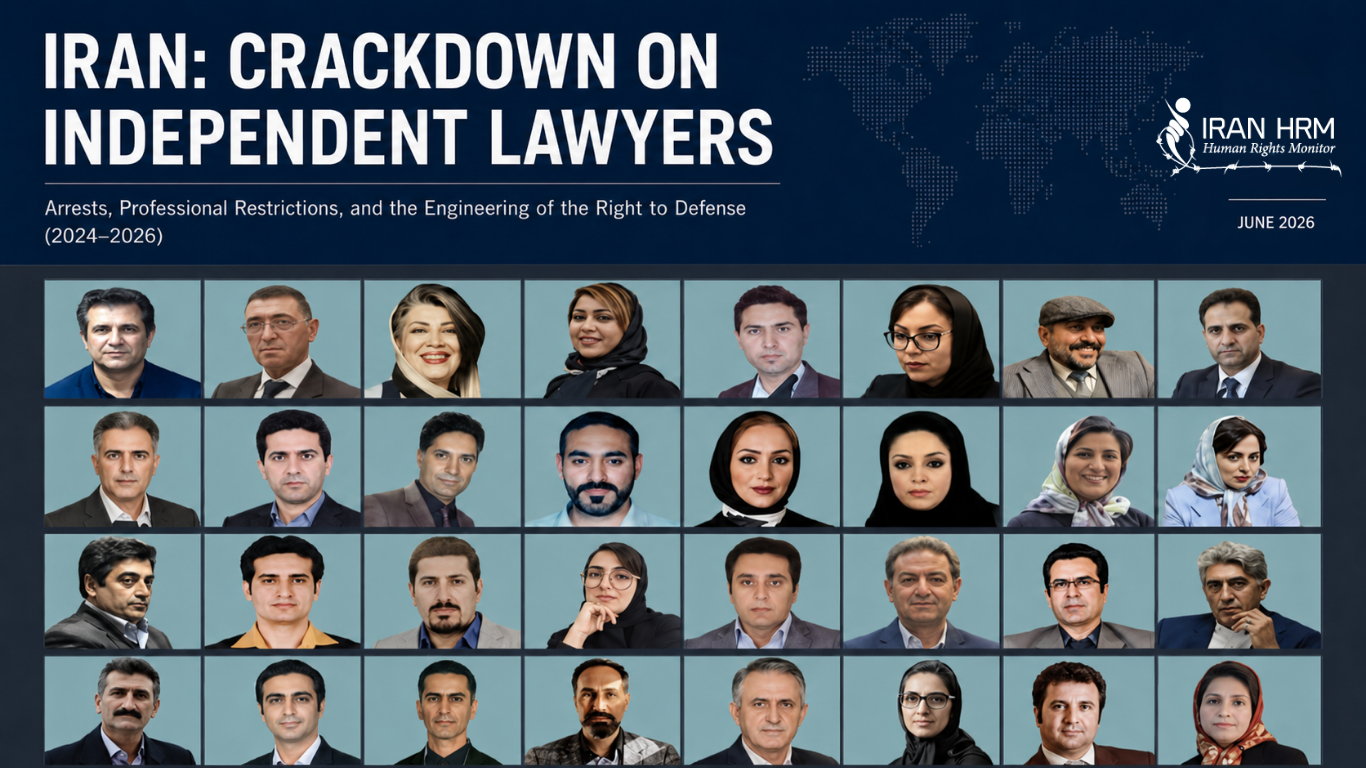
Table1- Independent Lawyers Subjected to Arrest, Prosecution, or Professional Sanctions in Iran (2024–2026)
| Lawyer | Lawyer | Lawyer |
|---|---|---|
| Abolfazl Ranjbari | Fatemeh Rohandeh | Mohammadreza Faghihi |
| Alireza Farzaneh Jajarmi | Hossein Shokri | Mohsen Darginnejad |
| Amir Bahadorifar | Jafar Keshavarz | Nazanin Salari |
| Bahar Sahrayian | Jafar Zarei | Nasrin Sotoudeh |
| Behnam Nezhadi | Javad Alikordi | Sepideh Taheri |
| Dariush Ganjehpour | Mahmoud Taravat-Roy | Shohreh Haddadian |
| Ebrahim Parsamehr | Masoud Ahmadian | Sima Ghousheh |
| Elham Zeraatpisheh | Masoud Shirmardi Shahghasemi | Taher Naqavi |
| Enayatollah Keramati | Mehdi Karimi | Teymour Salari |
| Estareh Ansari | Mehdi Razavifard | Zohreh Javani |
| Mohammad Hadi Jafarpour | ||
| Mohammad Najafi | ||
| Mohammad Tarighat Esfanjani |
Chapter Two: From Individual Cases to Networked Repression
The wave of arrests targeting lawyers in 2025 and 2026 did not emerge in isolation. Before the collective cases in Mashhad, Rasht, Shiraz, and Yazd, the contours of this policy were already visible in actions against lawyers representing political prisoners, protesters, civil society activists, and justice-seeking families.
Before examining the most significant cases, a fundamental question must be addressed: what types of lawyers have been disproportionately subjected to prosecution and pressure?
A review of documented cases demonstrates that the majority of targeted lawyers worked in fields the authorities considered politically sensitive or security related. These included representation of political prisoners, protesters, justice-seeking families, journalists, women’s rights activists, labor activists, ethnic and religious minorities, and victims of human rights violations.
This pattern indicates that the pressure has not been randomly distributed. The target is not merely a group of well-known attorneys. Rather, it is a particular model of legal practice; one that seeks to create a balance between citizens and political power through independent representation.
Arak: The Lawyer Who Investigated a Death in Custody
Mohammad Najafi, one of Iran’s best-known defenders of political prisoners, faced a series of judicial and security cases after pursuing accountability in the death-in-custody case of Vahid Heydari. Years of imprisonment, additional sentences imposed while incarcerated, and ultimately the permanent revocation of his law license transformed his case into one of the clearest examples of the repression of independent lawyers in Iran.
Tehran: A Lawyer Defending Political Prisoners
Taher Naghavi, a lawyer representing political prisoners and advocating for the rights of ethnic minorities, was arrested in February 2024. He was later sentenced to six years’ imprisonment, deprivation of social rights, and a travel ban. Multiple reports also documented denial of medical treatment and concerns regarding his prison conditions.
Mashhad: Counsel for Justice-Seeking Families
Khosrow Alikordi, lawyer for the Abolfazl’s family Adinehzadeh and several political prisoners, faced imprisonment, internal exile, professional restrictions, travel bans, and limitations on his online activities. His case was among the earliest examples combining criminal punishment with professional exclusion.
Tehran: Suspension and Professional Elimination
Mohammadreza Faghihi, a board member of the Association for the Defense of Prisoners’ Rights, was sentenced to five years in prison and a two-year suspension of his law license. As in other cases, the punishment extended beyond imprisonment and directly targeted his ability to continue practicing law.
At first glance, these cases appear unrelated. They occurred in different cities, involved different accusations, and unfolded at different times. Yet closer examination reveals a striking commonality. Nearly all of these lawyers were involved in cases the authorities classified as “security-related”; including matters involving political prisoners, protesters, justice-seeking families, civil society activists, women’s rights defenders, and ethnic or religious minorities.
In other words, the target was not merely an individual lawyer. What came under attack was a particular form of legal advocacy. Lawyers were tolerated only so long as their work remained within boundaries acceptable to the authorities. Once legal representation became a vehicle for documenting human rights violations, challenging unfair proceedings, or defending victims of repression, the lawyers themselves became vulnerable to prosecution.
At this stage, repression remained largely individualized. However, these cases laid the groundwork for a subsequent phase in which entire networks of lawyers across multiple cities came under simultaneous pressure.
As protests expanded and the number of detainees increased, the authorities’ interest in controlling legal defense intensified. It was at this point that the repression of independent lawyers became intertwined with legal and institutional mechanisms, giving rise to what many legal experts describe as the “engineering of the right to defense.”
From Individual Cases to a Structural Pattern
The list of lawyers arrested, summoned, prosecuted, or professionally restricted is more than a collection of names. It demonstrates that pressure on Iran’s legal community has not been limited to a few cities, a handful of cases, or several prominent figures.
A review of these cases reveals a consistent pattern: a substantial proportion of the targeted lawyers represented political prisoners, protesters, justice-seeking families, civil society activists, women’s rights defenders, and victims of human rights violations. For this reason, these cases cannot be understood merely as a series of unrelated judicial proceedings.
The central question is what connects these seemingly separate cases. Are they isolated incidents, or do they reflect a structural policy aimed at controlling the right to defense and restricting citizens’ access to independent legal representation?
The second part of this report examines the legal and institutional mechanisms underpinning this process, including Article 48 of the Code of Criminal Procedure, restrictions on the right to choose counsel, and what many legal scholars describe as the systematic “engineering of the right to defense.”