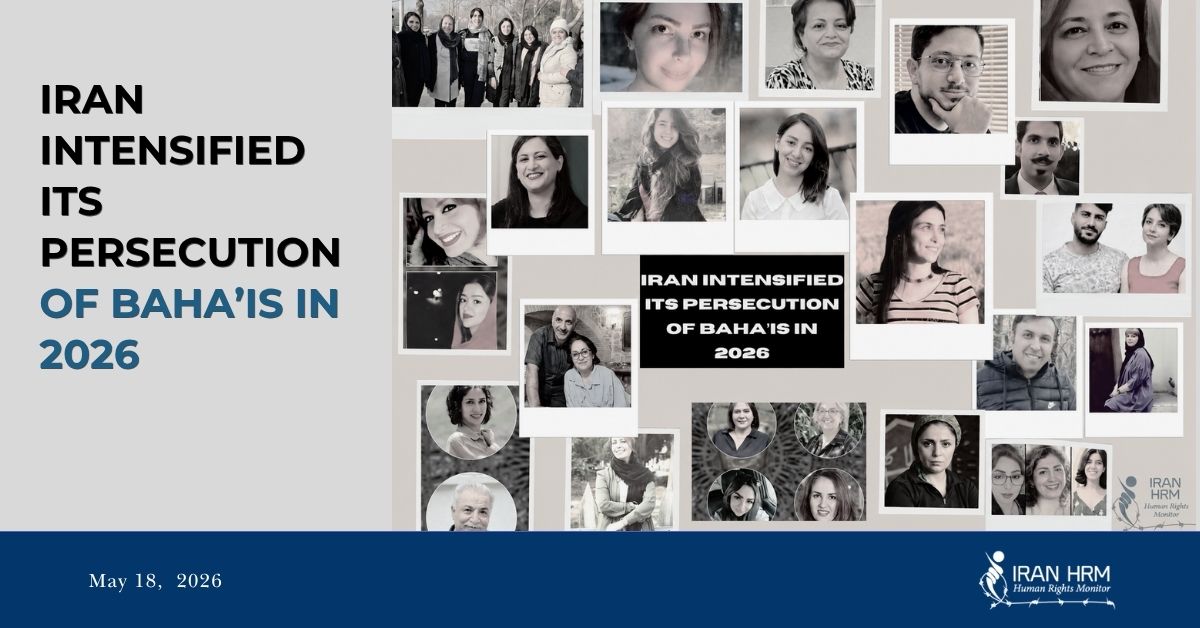
In the spring of 2026, the raid carried out by security agents on the home of a 66 year old Baha’i woman in Shiraz was not an isolated security operation. Accusing her of “cooperation with Israel,” agents searched the home of Afsaneh Jazabi for hours, confiscating books, religious images, mobile phones, personal documents, and even gold jewelry belonging to the family. The agents then threatened both her and her ill 85 year old mother with the confiscation of their home and transfer to an undisclosed location. During the raid, the elderly mother suffered a severe drop in blood pressure. Despite her condition, the family was forced to sign a statement declaring that no damage had been inflicted on the property during the operation.

This incident was one of dozens of documented cases recorded during a renewed wave of repression targeting Iran’s Baha’i community in early 2026. The campaign included mass arrests, property seizures, prolonged solitary confinement, denial of medical treatment, pressure for forced confessions, threats against children and family members, and an escalation of state-sponsored hate propaganda.
An examination of testimonies, legal records, and documented incidents from multiple cities across Iran demonstrates that what is unfolding against the Baha’i community is not a collection of isolated human rights abuses. Rather, it reflects a coordinated and multilayered state policy aimed at the gradual removal of this religious minority from Iran’s social, economic, cultural, and civic life.
Repression as Official State Policy
The Baha’i community in Iran has faced systematic persecution since the establishment of the ruling clerical system. Unlike officially recognized religious minorities listed under Article 13 of the Constitution, Baha’is are denied any formal legal recognition, creating the foundation for their exclusion from many fundamental civil rights.
This repression is not merely the result of arbitrary actions by security institutions. It is rooted in official state policy. The most significant document in this regard remains the confidential memorandum issued by Iran’s Supreme Revolutionary Cultural Council on February 25, 1991, which outlined a national strategy designed to “block the progress and development” of the Baha’i community.
According to this policy, Baha’is were to be:
- denied employment in public institutions;
- expelled from universities once identified;
- prevented from economic and social advancement;
- and subjected to constant judicial and security pressure.
Over time, this strategy evolved from direct physical repression into a broader system of institutional exclusion intended to remove Baha’i citizens from meaningful participation in public life.
By 2026, this strategy had intensified significantly. Security and judicial authorities launched a new wave of prosecutions under accusations such as “spying for Israel,” “propaganda against the state,” “acting against national security,” and “religious activities contrary to Islamic law.”
The repeated use of these accusations reveals a broader attempt by Iranian authorities to frame religious identity itself as a national security threat.
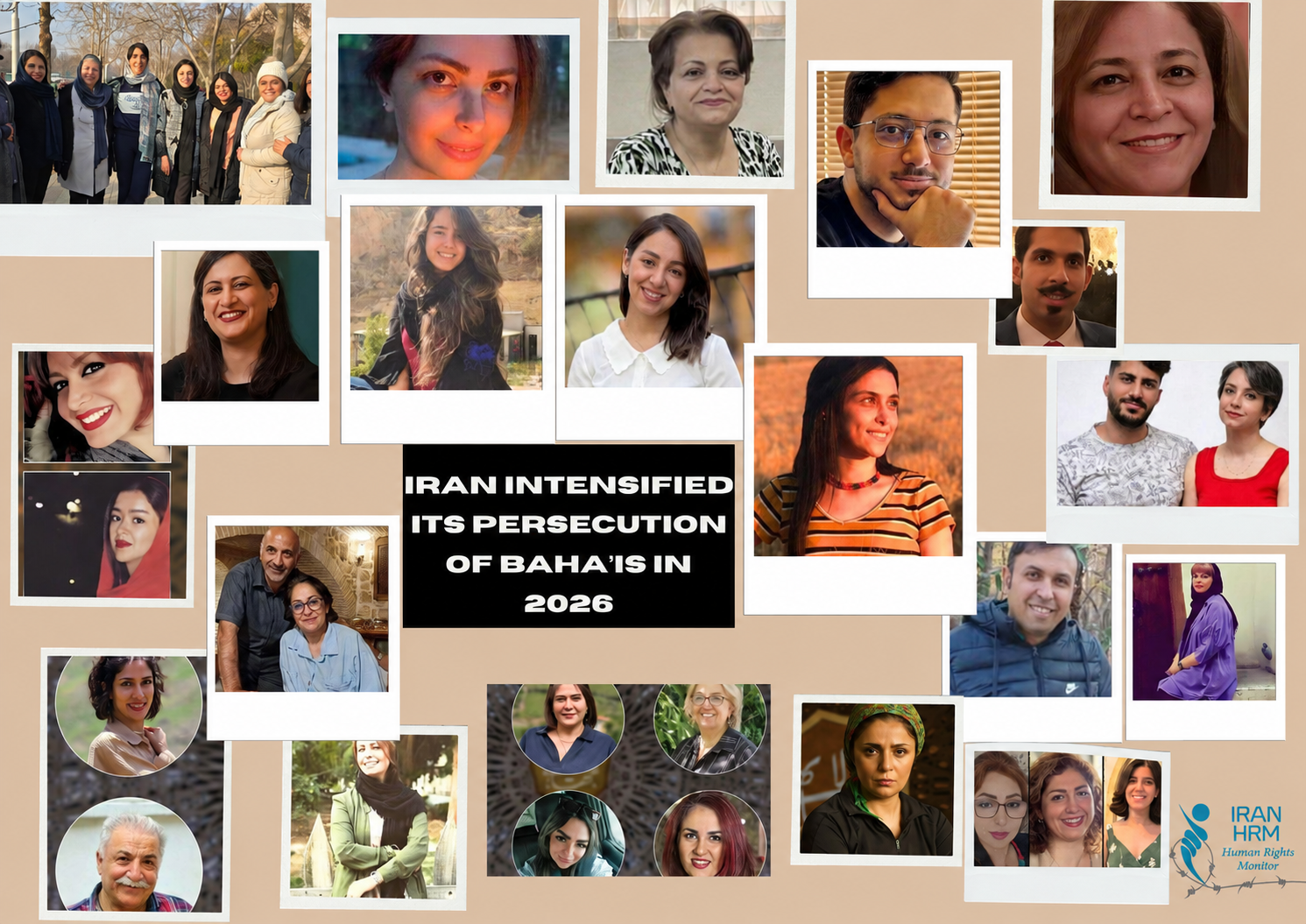 Table 1. Structural Mechanisms of Repression Against the Baha’i Community
| Sector | Mechanism of Repression | Structural Objective |
| Education | University expulsions and educational bans | Blocking social advancement |
| Economy | Property confiscation, business closures, banking restrictions | Economic impoverishment and forced displacement |
| Judiciary | Arrests, imprisonment, solitary confinement, forced confessions | Collective intimidation |
| Culture | Destruction of cemeteries and religious symbols | Erasure of communal identity |
| Civil Life | Administrative restrictions and denial of services | Civil exclusion |
Spring 2026; A New Wave of Arrests and Security Pressure
The months of April and May 2026 witnessed a sharp increase in arrests of Baha’i citizens across Iran. A recurring pattern emerged in many of these cases: sudden raids by security agents, searches of private homes, confiscation of electronic devices and personal belongings, intimidation of family members, prolonged detention without clear legal status, and denial of legal transparency.
In Shiraz, one of the main centers of anti-Baha’i repression, several citizens were arrested over consecutive weeks.
Sara Sepehri, a 41-year-old Baha’i citizen, was arrested on April 9, 2026 after Intelligence Ministry agents raided her home. Agents first searched the residence of her disabled mother before forcing entry into Sepehri’s apartment upstairs by breaking the door. All of her electronic devices and work-related materials were confiscated. The arrest occurred despite her ongoing medical treatment and her responsibility for caring for her disabled mother.
Behzad Yazdani and his wife Romina Khazali were also arrested in April by the Intelligence Organization of the Islamic Revolutionary Guard Corps. Reports indicate that Khazali, who had recently undergone stomach surgery and was suffering from severe illness, was denied access to medication and medical care while detained. Prison authorities reportedly refused to deliver medicine sent by her family.
In another case, Behzad Basiri, Mandana Sotoudeh, and Mahsa Sotoudeh were arrested in Shiraz, while their families remained without information regarding their whereabouts for weeks.
Pezhman Zare, a Baha’i citizen and father of a 10-month-old child, effectively disappeared following his arrest in March 2026. Despite the family’s efforts to secure his release through bail, authorities have continued to refuse his freedom.
In Sari, Romina Goli was arrested at her home and transferred to prison under accusations including “propaganda against the state” and “religious activities contrary to Islamic law.”
In Yazd, Flora Samadani was arrested following a raid on her home, and for an extended period no information was available regarding her place of detention.
Anisa Fanaiyan, a Baha’i resident of Semnan, was rearrested despite a previous Supreme Court order suspending her sentence. She had been sentenced to eight years in prison for charitable activities, including providing free educational assistance to Afghan and underprivileged children.
The pattern visible across these arrests demonstrates a coordinated effort to create fear and instability within the Baha’i community. In many cases, family members were psychologically pressured, homes were searched for without transparency, and detainees were denied access to lawyers or immediate communication with relatives.
Table 2. Documented Arrests of Baha’i Citizens in Spring 2026
| Name | City | Date | Status |
| Sara Sepehri | Shiraz | April 9, 2026 | Detained without clear legal status |
| Romina Khazali | Shiraz | March 29, 2026 | Denied medical treatment in detention |
| Behzad Yazdani | Shiraz | March 28, 2026 | Arrested by IRGC Intelligence |
| Mandana Sotoudeh | Shiraz | April 1, 2026 | Prolonged incommunicado detention |
| Mahsa Sotoudeh | Shiraz | March 29, 2026 | Arrested by IRGC Intelligence |
| Romina Goli | Sari | May 9, 2026 | Temporary detention and transfer to prison |
| Flora Samadani | Yazd | May 3, 2026 | Place of detention undisclosed |
| Anisa Fanaiyan | Semnan | May 11, 2026 | Eight year prison sentence enforced |
| Shakila Ghasemi | Kerman | Continuing detention in 2026 | Prolonged solitary confinement |
| Pezhman Zare | Shiraz | March 2026 | Enforced disappearance in practice |
Economic Pressure as a Tool of Repression
One of the most significant developments of 2026 was the expansion of economic punishment as a systematic tool against the Baha’i community.
In previous years, economic pressure had largely focused on sealing businesses, denying employment opportunities, or blocking professional licenses. In 2026, however, the strategy escalated into widespread confiscation of property, freezing of bank accounts, seizure of personal assets, and restrictions on financial activity.
In Yazd Province, judicial authorities announced the confiscation of assets belonging to 51 individuals accused of “cooperation with the Zionist regime.” The confiscated assets reportedly included bank accounts, residential properties, vehicles, and company shares.
In West Azerbaijan Province, authorities similarly announced the seizure of assets belonging to 129 individuals described as “anti-security elements.”
In Isfahan Province, several Baha’i citizens reported learning through automated banking notifications that their accounts and financial assets had been frozen, despite the absence of transparent legal proceedings or opportunities for defense.
At the same time, multiple reports documented the confiscation of gold jewelry, personal valuables, books, and electronic devices during raids on Baha’i homes. In Shiraz, security agents repeatedly removed religious materials and personal belongings during searches.
These actions indicate that economic repression is not merely punitive. It has become part of a broader strategy intended to dismantle the financial foundations of the Baha’i community and pressure its members toward economic exclusion and social displacement.
Table 3. Documented Cases of Property Seizure and Financial Repression
| Province | Number of Individuals | Type of Seizure | Official Justification |
| Yazd | 51 individuals | Bank accounts, property, company shares | “Spying and cooperation with Israel” |
| Isfahan | More than 20 individuals | Banking restrictions and asset freezes | “Illegitimate wealth” |
| West Azerbaijan | 129 individuals | Widespread property confiscation | “Anti-security activities” |
| Shiraz | Multiple cases | Gold jewelry and personal belongings | Security-related accusations |
Torture, Solitary Confinement, and Forced Confessions
Among the cases documented in 2026, reports involving torture and pressure to obtain forced confessions became especially alarming.
The cases of Borna Naeimi and Peyvand Naeimi stand among the clearest examples.
Borna Naeimi, a 29 year old Baha’i citizen and father of a young child, was arrested in March 2026. Reports indicate that he was subjected to severe torture, electric shocks, and mock executions while held in detention facilities operated by the Intelligence Organization of the Revolutionary Guard.
According to testimonies, interrogators repeatedly threatened his family and child in an attempt to force him into confessing to fabricated accusations.
In the same case, Peyvand Naeimi was reportedly subjected to extreme psychological pressure and repeatedly subjected to mock execution threats.
Shakila Ghasemi, a 26 year old Baha’i woman from Kerman, spent more than three months in temporary detention and prolonged solitary confinement. Reports indicate that the psychological pressure and isolation caused severe anxiety attacks and repeated transfers to the prison medical unit.
Romina Khazali’s denial of medical treatment while recovering from surgery also reflects a broader pattern in which access to healthcare is deliberately used as a mechanism of pressure against detained Baha’is.
These cases reveal the systematic use of psychological and physical torture in order to construct security-related cases against members of the Baha’i community.
Table 4. Documented Cases of Torture and Psychological Pressure
| Name | Type of Abuse | Intended Objective |
| Borna Naeimi | Electric shocks and mock execution | Forced confession |
| Peyvand Naeimi | Repeated death threats and mock executions | Security case fabrication |
| Shakila Ghasemi | Prolonged solitary confinement | Psychological breakdown |
| Romina Khazali | Denial of medical treatment | Physical and psychological pressure |
Restrictions on Burial Practices and Destruction of Baha’i Cemeteries
Pressure against the Baha’i community in Iran has extended beyond arrests and imprisonment. In several regions, even burial rights and mourning practices have become targets of discrimination and repression.
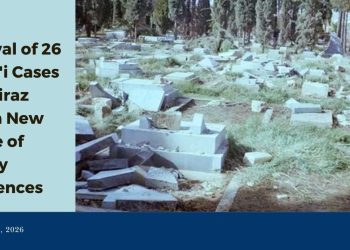
In Rafsanjan and Kerman, reports documented severe restrictions on Baha’i burials, interference with funeral ceremonies, pressure on families during mourning rituals, and limitations imposed on access to cemeteries.
Some families were reportedly forced to bury relatives under degrading or unsafe conditions without access to proper burial facilities or religious rites.
At the same time, inflammatory rhetoric promoted by state-affiliated religious figures has intensified hostility against Baha’is and contributed to an atmosphere in which discriminatory practices are normalized.
The destruction or restriction of Baha’i cemeteries is not merely an administrative issue. It represents an attempt to erase the visible historical and cultural presence of the Baha’i community from Iranian society.
State Propaganda and the Securitization of Religious Identity
Throughout 2026, media outlets affiliated with Iranian authorities intensified propaganda campaigns against the Baha’i community.
In official narratives, Baha’is were repeatedly labeled as “spies,” “agents of Zionism,” “deviant sect members,” and “traitors.”
As regional tensions and internal political crises deepened, security institutions increasingly attempted to portray Baha’i religious identity itself as a threat to national security.
As a result, many arrests carried out during 2026 were pursued not as matters of religious freedom, but under the framework of national security prosecutions.
This securitization of religious identity enabled authorities to justify arbitrary arrests, property seizures, prolonged detention, torture, and systematic social exclusion.
International Legal Analysis
The documented actions carried out against Iran’s Baha’i community during 2026 constitute serious violations of international human rights law and Iran’s treaty obligations.
Arbitrary arrests, denial of fair trial rights, confiscation of property, pressure for forced confessions, denial of medical care, and systematic religious discrimination directly violate protections guaranteed under the International Covenant on Civil and Political Rights.
The use of psychological and physical torture, prolonged solitary confinement, threats against family members, and denial of healthcare also violate the absolute prohibition against torture and cruel, inhuman, or degrading treatment.
The sustained and systematic nature of these abuses, particularly in the areas of economic exclusion, social marginalization, and civil deprivation, raises serious concerns that these practices may constitute systematic religious persecution under international human rights law.
The cumulative pattern documented across multiple provinces indicates that the repression of Baha’is in Iran has evolved beyond isolated acts of discrimination and increasingly reflects a coordinated strategy of institutional exclusion.
International Reactions and Growing Global Concern
The escalation of repression against Iran’s Baha’i community in 2026 triggered growing concern among United Nations officials, international human rights bodies, and members of European parliaments.
Mai Sato, the United Nations Special Rapporteur on the situation of human rights in Iran, expressed serious concern during the spring of 2026 regarding what she described as the “scapegoating” of Baha’is amid Iran’s political and security crises. She warned that following the military escalations of June 2026, Iranian authorities expanded the scope of capital punishment through emergency legislation targeting vaguely defined national security offenses.
Sato emphasized that religious minorities, particularly members of the Baha’i community, faced heightened risks of arbitrary prosecution under accusations linked to espionage, national security, and alleged cooperation with foreign actors.
In January 2026, the United Nations Human Rights Council voted to extend the mandate of the Independent International Fact-Finding Mission on Iran (FFMI), stressing the urgent need to investigate severe patterns of state violence and repression in Iran, including the impact of these policies on religious minorities.
Volker Türk, the United Nations High Commissioner for Human Rights, also called for an immediate halt to executions in Iran and condemned the country’s expanding system of digital repression, internet shutdowns, and restrictions targeting civil society and vulnerable communities.
In May 2026, the European Parliament adopted a resolution titled “The Intensified Persecution of Baha’is in Iran.” The resolution specifically referred to cases of enforced disappearance, confiscation of property, arbitrary detention, and state-sponsored hate speech against the Baha’i community.
The resolution further condemned systematic discrimination targeting Baha’is in education, employment, and access to public services.
At the same time, 125 members of European parliaments issued a joint statement demanding the immediate release of imprisoned Baha’i women, including Boshra Mostafavi and Anisa Fanaiyan, and urging Iranian authorities to end the criminalization of peaceful religious identity.
Despite mounting international concern, arrests, property seizures, and judicial pressure against Baha’is continued throughout 2026 and intensified in several provinces across Iran.
Conclusion
What the Baha’i community in Iran experienced throughout 2026 cannot be understood merely as a collection of isolated human rights violations.
The documented pattern of coordinated arrests, fabricated security cases, torture and forced confessions, denial of medical treatment, confiscation of property, economic exclusion, hate propaganda, and attacks on religious and cultural practices reveals the existence of a structured policy intended to gradually eliminate this religious minority from public life in Iran.
Within this system, Baha’i citizens are not only deprived of fundamental rights, but are progressively excluded from economic participation, education, civil life, and the preservation of their communal and historical existence.
The continuation of these policies places the Baha’i community at growing risk of long-term social exclusion, institutionalized discrimination, and irreversible damage to religious freedom in Iran.
Appendix A. Partial List of Detained or Prosecuted Baha’i Citizens in 2026
- Sara Sepehri
- Romina Khazali
- Behzad Yazdani
- Mandana Sotoudeh
- Mahsa Sotoudeh
- Pezhman Zare
- Romina Goli
- Flora Samadani
- Anisa Fanaiyan
- Shakila Ghasemi
- Borna Naeimi
- Peyvand Naeimi
- Minoo Andakhs
- Frank Zabihi
- Riyaz Behrad
- Vafa Kashefi
- Didar Ahmadi
- Boshra Mostafavi
- Elna Naeimi
Appendix B. Documented Patterns of Abuse Against the Baha’i Community in 2026
- Arbitrary arrests
- Prolonged detention without legal clarity
- Extended solitary confinement
- Denial of medical treatment
- Confiscation of personal and religious belongings
- Freezing of bank accounts and property seizures
- Threats against family members
- Pressure for forced confessions
- State-sponsored hate propaganda
- Restrictions on burial practices and destruction of cemeteries